
In the realm of energy storage systems, lithium-ion batteries (LIBs) have emerged as pivotal components due to their high energy density and extended cycle life. Among these, the lifepo4 battery, which utilizes lithium iron phosphate (LiFePO4) as the cathode material and graphite as the anode, stands out for its superior safety profile and long-term stability. However, the operational lifespan of a lifepo4 battery can be significantly compromised under elevated temperatures, a common scenario in many applications such as electric vehicles and grid storage. As a researcher delving into the intricacies of battery degradation, I aim to unravel the complex aging mechanisms that afflict lifepo4 batteries under high-temperature cycling conditions. This study focuses on a commercial 280 Ah prismatic lifepo4 battery, subjected to cyclic aging at 45°C, to systematically investigate the sources of capacity fade and performance decline. Through a combination of electrochemical analysis, material characterization, and post-mortem examinations, I will elucidate the primary factors driving degradation, with an emphasis on structural changes in electrodes, loss of active lithium, and parasitic side reactions. The insights gained here are crucial for advancing the design of more durable lifepo4 batteries and improving predictive models for battery health management.
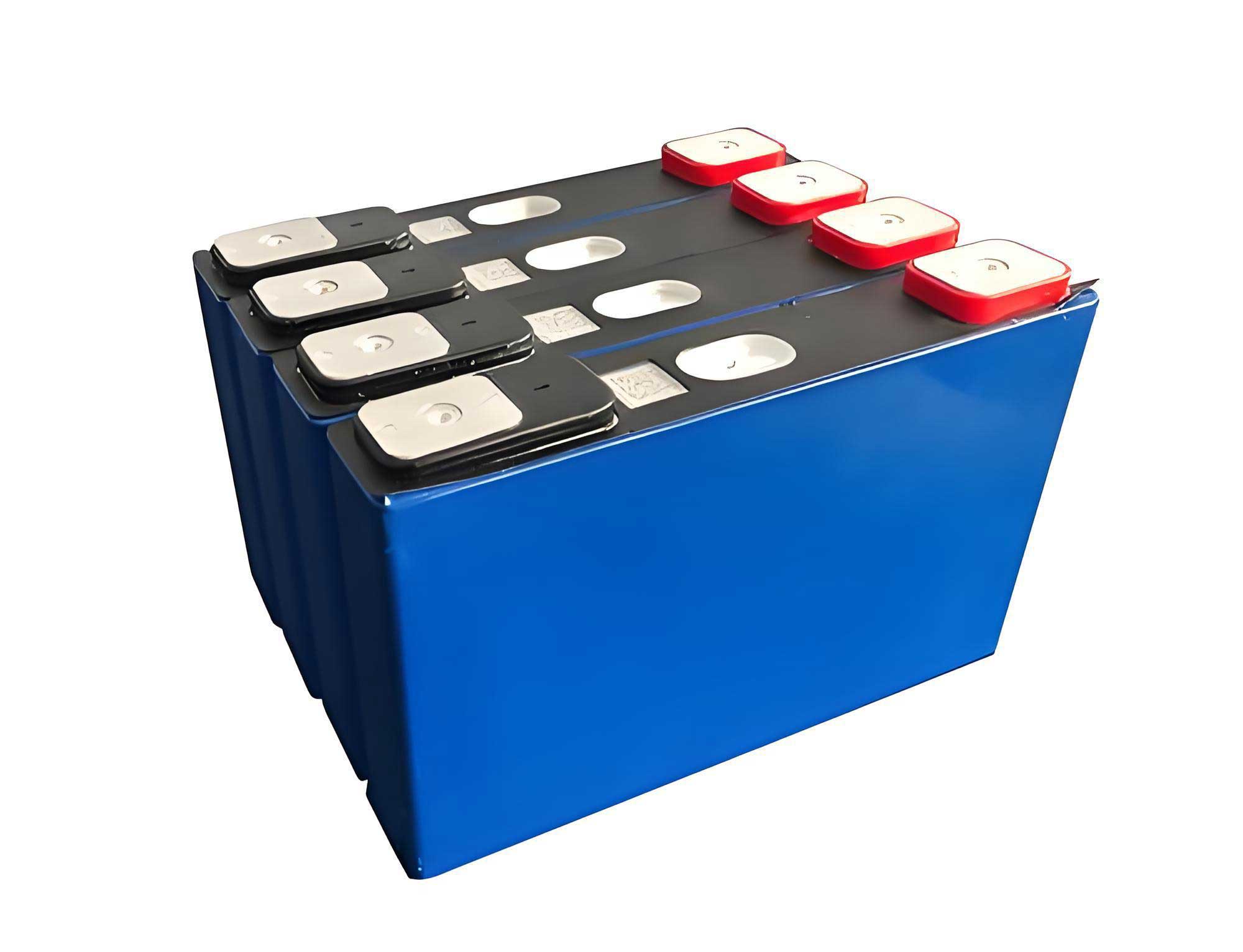
The degradation of a lifepo4 battery under high temperatures is a multifaceted process involving interdependent chemical and physical transformations across all cell components. While prior studies have often isolated individual degradation modes—such as electrolyte decomposition, cathode dissolution, or graphite anode aging—a holistic understanding of their interactions in a full-cell configuration remains incomplete. In this work, I adopt a comprehensive approach to trace the evolution of degradation from the initial cycles to end-of-life conditions, corresponding to a state-of-health (SOH) as low as 60%. By correlating electrochemical signatures with material-level changes, I seek to establish a detailed degradation roadmap for lifepo4 batteries under thermal stress. The findings will not only clarify the dominant failure modes but also provide actionable guidelines for enhancing battery longevity through material engineering and operational strategies.
Experimental Framework and Methodology
To probe the high-temperature aging behavior, I selected a commercial 280 Ah prismatic lifepo4 battery with a nominal voltage range of 2.5–3.65 V. The cathode comprised LiFePO4 particles, the anode consisted of artificial graphite, and the electrolyte was a mixture of LiPF6 salt in organic carbonates (DMC, EMC, EC) with additives like VC and FEC. The separator was a polyethylene membrane coated with Al2O3 on the cathode side. All testing was conducted in a controlled environment at 45°C to accelerate aging processes.
The cycling protocol involved constant-current constant-voltage (CC-CV) charging at 1 C to 3.65 V, followed by a CV hold until the current dropped below 0.05 C, a 30-minute rest, and then constant-current discharging at 1 C to 2.5 V. This cycle was repeated until the battery reached approximately 60% SOH, defined as the ratio of actual capacity to initial capacity. For comparison, a fresh lifepo4 battery (100% SOH) was also analyzed. At strategic intervals—specifically at 100%, 90%, and 60% SOH—cells were disassembled in an inert atmosphere after full discharge. Electrodes were harvested, rinsed with DMC, dried, and punched into discs for further analysis.
To assess the intrinsic properties of electrode materials, I assembled CR2032 coin cells using the harvested electrodes as working electrodes, lithium metal as counter/reference electrodes, and fresh electrolyte. Galvanostatic cycling at 0.1 C was performed to evaluate specific capacities and voltage profiles. Material characterization included scanning electron microscopy (SEM) for morphology, X-ray diffraction (XRD) for crystal structure, Raman spectroscopy for carbon ordering, X-ray photoelectron spectroscopy (XPS) for surface chemistry and SEI layer thickness, and gas chromatography-mass spectrometry (GC-MS) coupled with ion chromatography (IC) for electrolyte composition analysis. Additionally, differential voltage (dQ/dV) analysis was employed to deconvolute capacity contributions from different lithiation stages in the graphite anode.
Electrochemical Performance and Differential Voltage Analysis
The cyclic aging of the lifepo4 battery at 45°C revealed a progressive capacity fade, as illustrated in the capacity retention curve. The battery exhibited a relatively linear decay until about 67% SOH, after which a rapid drop occurred, culminating in 58% capacity retention after 4750 cycles. This accelerated fade in later stages suggests that degradation mechanisms may become synergistic or that critical thresholds are crossed, leading to catastrophic failure. The charge-discharge voltage profiles showed a shortening of plateaus and increased polarization over cycles, indicative of rising internal resistance and loss of active material.
A more nuanced view emerged from dQ/dV analysis during charging. The dQ/dV curves for a lifepo4 battery typically feature three peaks corresponding to the staging transitions of lithium intercalation into graphite. Let these peaks be denoted as Peak 1, Peak 2, and Peak 3, from lower to higher voltages. In the fresh lifepo4 battery, these peaks are distinct, but with aging, significant changes were observed. Peak 1 remained relatively stable in position but slightly shifted from 3.301 V to 3.324 V at 60% SOH. In contrast, Peak 2 diminished in intensity by 53% and broadened, indicating increased polarization and possible structural disordering in the graphite. Peak 3 gradually faded and eventually merged with Peak 2 by 80% SOH, vanishing entirely by 60% SOH. This fusion and loss of peaks signify both active lithium loss and deterioration of anode material properties.
To quantify these changes, I integrated the areas under each peak to estimate the capacity associated with each lithiation stage. The results are summarized in Table 1, which clearly shows a drastic reduction in the combined area of Peaks 2 and 3, underscoring the pivotal role of graphite degradation and lithium inventory depletion in the capacity fade of lifepo4 batteries under high temperatures.
| SOH (%) | Peak 1 Area (Ah) | Peak 2 Area (Ah) | Peak 3 Area (Ah) | Combined Peak 2+3 Area (Ah) |
|---|---|---|---|---|
| 100 | 45.2 | 78.5 | 56.3 | 134.8 |
| 90 | 44.8 | 65.1 | 42.7 | 107.8 |
| 60 | 43.5 | 36.9 | 0 | 36.9 |
The dQ/dV analysis can be mathematically represented by differentiating the charge capacity (Q) with respect to voltage (V). For a lifepo4 battery, the voltage profile during charging is influenced by the cathode’s two-phase reaction and the anode’s staging behavior. The derivative highlights phase transitions and can be modeled as:
$$ \frac{dQ}{dV} = \sum_{i} \frac{dQ_i}{dV} $$
where \( Q_i \) represents the capacity from each electrochemical process. The attenuation of peaks correlates with loss of active sites and increased overpotentials, which can be described by an empirical degradation function:
$$ \Delta Q_{\text{loss}} = A \cdot e^{-E_a/(RT)} \cdot t^n $$
Here, \( \Delta Q_{\text{loss}} \) is the capacity loss, \( A \) is a pre-exponential factor, \( E_a \) is the activation energy, \( R \) is the gas constant, \( T \) is temperature, \( t \) is time or cycle number, and \( n \) is an exponent. For the lifepo4 battery at 45°C, the rapid fade beyond 67% SOH suggests \( n > 1 \), indicating accelerated degradation kinetics.
Structural and Morphological Evolution of Electrodes
Cathode Analysis: LiFePO4 Stability
Post-mortem SEM imaging of LiFePO4 cathodes revealed that up to 90% SOH, the particles maintained their integrity with minimal cracking. However, at 60% SOH, visible cracks and fractures appeared, likely due to repetitive lattice stress from lithium extraction/insertion during cycling. These microcracks can isolate active material, reduce electronic conductivity, and exacerbate side reactions. XRD patterns further illuminated structural changes. The diffraction peaks for the FePO4 phase, notably the (020) and (200) reflections, intensified with aging, pointing to an increase in lithium-deficient phases. This implies that not all lithium ions are re-incorporated into the cathode during charging, leading to irreversible active lithium loss. The lattice parameters can be calculated using Bragg’s law:
$$ 2d \sin \theta = n\lambda $$
where \( d \) is the interplanar spacing, \( \theta \) is the diffraction angle, \( n \) is the order, and \( \lambda \) is the X-ray wavelength. Shifts in peak positions indicated slight lattice distortions, but overall, the LiFePO4 structure remained relatively robust compared to the anode.
To isolate the cathode’s contribution to capacity fade, I performed half-cell tests on harvested electrodes. The results, summarized in Table 2, show that after electrochemical relithiation, the LiFePO4 cathode retained 94% of its initial reversible capacity at 60% SOH. This confirms that active material loss in the cathode is minor (≈6%), whereas active lithium loss is substantial. The specific capacity can be expressed as:
$$ C_{\text{cathode}} = \frac{Q_{\text{discharge}}}{m_{\text{active}}} $$
where \( m_{\text{active}} \) is the mass of active material. The decline in \( C_{\text{cathode}} \) with aging is primarily attributed to lithium vacancy formation rather than structural collapse.
| SOH (%) | Charge Specific Capacity (mAh/g) | Discharge Specific Capacity (mAh/g) | Capacity Retention vs. Fresh (%) |
|---|---|---|---|
| 100 | 158.0 | 156.0 | 100 |
| 90 | 152.4 | 151.7 | 96.5 |
| 60 | 147.6 | 147.1 | 94.0 |
Anode Analysis: Graphite Degradation
The graphite anode exhibited far more dramatic changes. SEM images showed that fresh graphite particles had smooth surfaces, but with aging, the surfaces became rough and covered with deposits. By 60% SOH, deep grooves and exfoliation were evident, signaling severe structural damage. XRD analysis confirmed this: the (002) peak shifted from 26.56° to 26.74°, indicating an increase in interlayer spacing or disorder. Raman spectroscopy provided further evidence: the intensity ratio of the D-band (∼1350 cm−1, disorder-induced) to the G-band (∼1580 cm−1, graphitic order) surged from 0.302 in the fresh anode to 0.859 at 60% SOH. This heightened disorder compromises the anode’s ability to intercalate lithium efficiently and promotes excessive SEI growth.
The half-cell tests on graphite electrodes revealed a stark capacity loss. As shown in Table 3, the initial charge capacity plummeted by 45.5% at 60% SOH, underscoring that graphite failure is a dominant degradation mode in high-temperature cycled lifepo4 batteries. The capacity fade can be modeled considering the loss of active sites due to structural damage:
$$ C_{\text{anode}} = C_{\text{max}} \cdot (1 – \alpha \cdot N) $$
where \( C_{\text{max}} \) is the maximum theoretical capacity, \( \alpha \) is a degradation rate constant, and \( N \) is the cycle number. The severe drop aligns with the observed structural disintegration.
| SOH (%) | Initial Charge Specific Capacity (mAh/g) | Initial Discharge Specific Capacity (mAh/g) | Capacity Loss vs. Fresh (%) |
|---|---|---|---|
| 100 | 336.0 | 360.0 | 0 |
| 90 | 345.0 | 423.0 | −2.7 (increase due to relithiation) |
| 60 | 196.2 | 228.0 | 45.5 |
Ancillary Degradation Factors: SEI, Electrolyte, and Separator
Solid Electrolyte Interphase (SEI) Evolution
The SEI layer on the graphite anode plays a critical role in the longevity of a lifepo4 battery. XPS depth profiling revealed that the SEI thickness increased from approximately 43.7 nm in the fresh battery to 82.5 nm at 60% SOH. This thickening consumes active lithium and electrolyte, exacerbating capacity fade. The growth kinetics can be described by a parabolic law:
$$ \delta_{\text{SEI}} = k \cdot t^{1/2} $$
where \( \delta_{\text{SEI}} \) is the thickness and \( k \) is a temperature-dependent rate constant. At 45°C, the enhanced ionic mobility and reaction rates drive accelerated SEI formation and restructuring. The XPS spectra showed that carbonate species (COOR) dominated the SEI composition, and their signal attenuation with sputtering time confirmed the layered structure. The normalized intensity decay, when plotted against sputtering time, provided the thickness estimate. The continual SEI growth not only depletes lithium inventory but also increases charge-transfer resistance, as evidenced by the broadening dQ/dV peaks.
Electrolyte Decomposition and Consumption
GC-MS and IC analysis of electrolyte extracted from cycled lifepo4 batteries highlighted significant compositional changes. As summarized in Table 4, the concentrations of key components dwindled with aging. The additives VC and FEC, vital for forming stable SEI, were nearly exhausted by 60% SOH. The solvent EC decreased from 41.6 wt% to 35 wt%, and the lithium salt LiPF6 dropped from 14 wt% to 10.9 wt%. These reductions stem from continuous decomposition reactions at both electrodes, producing gaseous and solid byproducts that further degrade cell performance. The overall electrolyte decomposition can be represented as a series of parasitic reactions:
$$ \text{LiPF}_6 \rightarrow \text{LiF} + \text{PF}_5 $$
$$ \text{EC} + e^- \rightarrow \text{Organic compounds} + \text{Li}_2\text{CO}_3 $$
These reactions are thermally activated, with rates following Arrhenius behavior. The loss of electrolyte volume and conductivity contributes to increased polarization and capacity fade in the lifepo4 battery.
| Component | 100% SOH | 90% SOH | 60% SOH |
|---|---|---|---|
| LiPF6 | 14.0 | 12.5 | 10.9 |
| EC | 41.6 | 38.2 | 35.0 |
| EMC | 12.3 | 11.0 | 9.4 |
| DMC | 31.1 | 30.8 | 29.7 |
| VC | 0.5 | 0.2 | 0.0 |
| FEC | 0.5 | 0.3 | 0.0 |
Separator Fouling and Impedance Rise
Examination of the separator from the 60% SOH lifepo4 battery revealed severe fouling. SEM-EDS analysis identified particulate deposits clogging the pores, especially on the cathode side, where the Al2O3 coating had partially delaminated. This clogging impedes ion transport, elevating internal resistance. I measured the gas permeability of separator samples from different locations (front, middle, rear) in the jellyroll. The time to pass 100 mL of air increased from 190 s for a fresh separator to 279 s (front), 300 s (middle), and 526 s (rear) in the aged cell. This gradient suggests that degradation is non-uniform, with the innermost regions suffering more from electrolyte depletion and byproduct accumulation. The increased tortuosity can be modeled using the Bruggeman relation:
$$ \kappa_{\text{eff}} = \kappa_0 \cdot \epsilon^{1.5} $$
where \( \kappa_{\text{eff}} \) is the effective ionic conductivity, \( \kappa_0 \) is the bulk conductivity, and \( \epsilon \) is the porosity. The reduced porosity from fouling decreases \( \kappa_{\text{eff}} \), contributing to the polarization observed in voltage profiles.
Synthesis of Degradation Mechanisms and Mathematical Modeling
Integrating all findings, I propose a comprehensive degradation model for lifepo4 batteries under high-temperature cycling. The primary driver is the structural degradation of the graphite anode, which initiates a cascade of secondary effects. The graphite disorder and fracture reduce active sites for lithium intercalation, directly lowering capacity. Concurrently, the damaged surfaces catalyze continuous SEI growth, consuming active lithium and electrolyte. The lithium loss is compounded by the formation of lithium-deficient phases in the cathode, though the cathode itself remains structurally sound. Electrolyte decomposition depletes conductive species and generates deposits that foul the separator, increasing impedance. These processes are thermally accelerated, leading to the observed nonlinear capacity fade.
To quantify the contributions, I estimate that at 60% SOH, active lithium loss accounts for approximately 49.2% of capacity fade, graphite anode degradation contributes 45.5%, and cathode active material loss is about 4%. The remaining fade is due to increased resistance from SEI and separator fouling. A semi-empirical model for capacity retention \( \text{SOH}(t) \) can be formulated as:
$$ \text{SOH}(t) = 1 – \beta_1 \cdot (1 – e^{-k_1 t}) – \beta_2 \cdot t^{m} – \beta_3 \cdot \sqrt{t} $$
where \( \beta_1 \), \( \beta_2 \), \( \beta_3 \) are coefficients representing loss from lithium inventory, anode structural damage, and SEI growth, respectively; \( k_1 \), \( m \) are rate constants; and \( t \) is time or cycles. This model captures the initial rapid loss from SEI formation, the linear decay from anode degradation, and the asymptotic loss from lithium depletion.
The interplay between these mechanisms can be visualized as a feedback loop: graphite damage → enhanced SEI growth → electrolyte consumption → increased polarization → further stress on electrodes → more damage. This explains the accelerated fade beyond 67% SOH in the lifepo4 battery. Moreover, the high temperature lowers activation barriers for all these reactions, as described by the Arrhenius equation:
$$ k = A e^{-E_a/(RT)} $$
For the lifepo4 battery, operating at 45°C instead of 25°C can increase degradation rates by a factor of 2–3, depending on the specific process.
Implications for Battery Design and Future Directions
Understanding these degradation pathways is pivotal for improving the durability of lifepo4 batteries. To mitigate graphite degradation, strategies such as using more resilient carbon composites, applying protective coatings, or optimizing particle morphology could be employed. Enhancing SEI stability through advanced electrolyte additives—like dual-salt systems or novel film-forming agents—could reduce active lithium loss. Additionally, separator design with higher thermal stability and anti-fouling properties would help maintain ionic conductivity over extended cycles.
From a monitoring perspective, dQ/dV analysis proves to be a powerful diagnostic tool for tracking anode health in lifepo4 batteries. By detecting peak shifts and intensity changes, early signs of degradation can be identified, enabling proactive maintenance or replacement. Furthermore, incorporating temperature management systems to keep batteries within an optimal range (e.g., 20–30°C) would significantly prolong lifespan.
Future research should focus on real-time, in situ characterization techniques to capture dynamic changes during cycling. Multiscale modeling coupling electrochemical, thermal, and mechanical effects could predict degradation under varying operational profiles. Also, exploring alternative anode materials with better thermal stability, while retaining compatibility with LiFePO4, may offer longer-lasting lifepo4 battery variants.
Conclusion
In this extensive investigation, I have dissected the high-temperature degradation mechanisms of a commercial lifepo4 battery through a combination of electrochemical testing and meticulous material analysis. The key finding is that the capacity fade under 45°C cycling is predominantly driven by the structural deterioration of the graphite anode, which accounts for nearly half of the total loss. This anode failure triggers a series of cascading effects: relentless SEI growth consuming active lithium, electrolyte decomposition depleting critical components, and separator fouling raising internal resistance. While the LiFePO4 cathode exhibits minor structural degradation, it suffers from lithium deficiency due to irreversible lithium loss. The synergy of these processes, accelerated by elevated temperature, leads to the characteristic nonlinear capacity decay, with a sharp drop in the later stages of life.
This comprehensive understanding not only clarifies the aging behavior of lifepo4 batteries but also provides a foundation for designing more robust energy storage systems. By targeting anode stability and SEI management, manufacturers can enhance the high-temperature performance of lifepo4 batteries, ensuring their reliability in demanding applications. As the demand for efficient and long-lasting energy storage grows, continued research into these degradation mechanisms will be essential for advancing the next generation of lifepo4 battery technologies.