
The quest for sustainable and cost-effective energy storage solutions has never been more urgent, given the escalating global energy demand, depletion of fossil fuels, and pressing environmental concerns. Renewable energy sources like wind, solar, and nuclear power have garnered significant attention, but their widespread adoption hinges on the development of efficient, scalable, and economical energy storage systems. Among these, lithium-ion batteries (LIBs) have dominated the market since their commercialization in the 1990s. However, the limited availability of lithium resources (only about 20 ppm in the Earth’s crust) and the high cost of lithium-based components pose substantial barriers to large-scale deployment. In contrast, sodium, the fourth most abundant metal in the Earth’s crust (2.74%), exhibits chemical similarities to lithium, making sodium-ion batteries a promising alternative for next-generation secondary batteries. Sodium-ion batteries could potentially supplant lithium-ion batteries in many applications, offering a more sustainable path forward.
Carbon materials have been extensively explored as anode materials for sodium-ion batteries due to their abundance, non-toxicity, and high chemical stability. However, conventional graphite and silicon-based anodes used in lithium-ion batteries exhibit poor electrochemical performance in sodium-ion systems, necessitating the search for viable alternatives. Despite advances, many carbon materials suffer from high manufacturing costs and complex synthesis processes. Recently, biomass-derived carbons have emerged as environmentally friendly precursors, leveraging green plants, terrestrial and aquatic vegetation, and organic waste. Biomass is the third-largest energy source globally, after coal and petroleum, and its conversion into carbon via pyrolysis provides a green and versatile route for energy storage applications. Biomass-derived carbons often possess unique morphologies, such as fibrous or nanosheet structures, which are advantageous for high-performance energy storage devices.
In this study, we focus on hemp stalk powder as a low-cost, widely available, and easily processable carbon source for sodium-ion battery anodes. Hemp-derived carbon features a distinctive arrayed porous structure, which can store sodium ions in its macropores and facilitate rapid ion and electron transport. We employ a simple method involving high-concentration alkali activation followed by high-temperature calcination to produce porous carbon materials with short-range order and long-range disorder. The electrochemical performance of these materials is thoroughly evaluated, demonstrating their potential as high-capacity, stable anodes for sodium-ion batteries. This work aims to contribute to the development of low-cost, high-performance carbon materials for sodium-ion batteries, with a particular emphasis on achieving a high proportion of low-voltage plateau capacity.
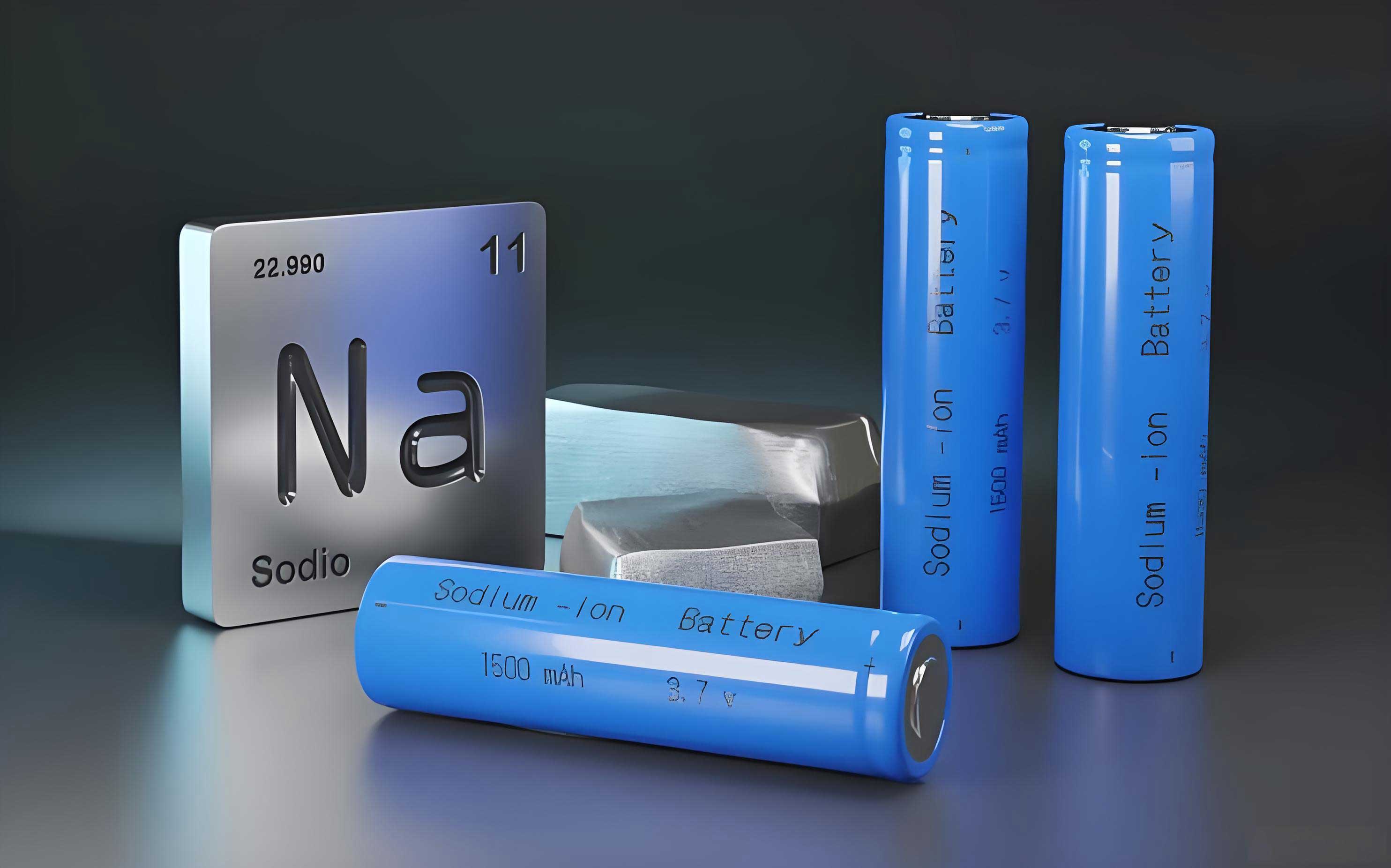
The growing interest in sodium-ion batteries stems from their potential to address resource limitations associated with lithium-ion batteries. Sodium-ion batteries operate on similar principles, where sodium ions shuttle between the cathode and anode during charge and discharge cycles. The anode material plays a critical role in determining the overall performance, including capacity, rate capability, and cycle life. Hard carbon materials, characterized by their disordered structure with localized graphitic domains, have shown promise for sodium-ion battery anodes due to their ability to accommodate sodium ions via adsorption and pore-filling mechanisms. The capacity of a sodium-ion battery anode can be expressed in terms of specific capacity, often measured in milliampere-hours per gram (mAh g-1), and is influenced by factors such as porosity, surface area, and graphitization degree. The specific capacity $C$ can be calculated using the formula:
$$C = \frac{I \times t}{m}$$
where $I$ is the current (in amperes), $t$ is the time (in hours), and $m$ is the mass of the active material (in grams). For sodium-ion batteries, achieving a high capacity, especially in the low-voltage plateau region (below 0.1 V), is desirable as it indicates efficient sodium-ion storage in micropores, leading to enhanced energy density.
Biomass precursors like hemp stalks are rich in cellulose, hemicellulose, and lignin, which upon carbonization yield carbon frameworks with inherent porosity. The use of alkali activators like potassium hydroxide (KOH) further enhances porosity through chemical etching, creating a hierarchical pore structure that benefits ion diffusion and electrolyte wetting. The degree of graphitization and disorder in the carbon matrix can be tuned by varying the calcination temperature, which directly impacts the electrochemical behavior in sodium-ion batteries. To quantify structural disorder, Raman spectroscopy is commonly used, where the intensity ratio of the D band (around 1350 cm-1) to the G band (around 1580 cm-1), denoted as $I_D/I_G$, serves as an indicator. A higher $I_D/I_G$ ratio suggests more defects and disorder, which can be beneficial for sodium-ion storage in hard carbon materials.
In this investigation, we prepared hemp-derived carbon materials at three different calcination temperatures: 900°C, 1100°C, and 1300°C. The materials were labeled as HB-900, HB-1100, and HB-1300, respectively. Their structural and electrochemical properties were systematically analyzed to identify the optimal conditions for sodium-ion battery anode applications. The following sections detail the experimental methodology, characterization results, and electrochemical performance, supported by tables and formulas to summarize key findings.
Experimental Methodology
The hemp stalk powder was sourced from agricultural waste in Heilongjiang Province, China. Other reagents, including potassium hydroxide (KOH), absolute ethanol, and deionized water, were obtained from Sinopharm Chemical Reagent Co., Ltd. Argon gas was supplied by Harbin Liming Gas Co., Ltd. The equipment used included an oil bath heater, high-temperature oven, tube furnace, magnetic stirrer, vacuum filtration apparatus, coating machine, argon-filled glove box, field-emission scanning electron microscope (SEM), transmission electron microscope (TEM), X-ray diffractometer (XRD), Raman spectrometer, and electrochemical workstation.
The preparation of hemp-derived carbon anodes involved several steps. First, 5 g of hemp stalk powder was mixed with 5 g of KOH in 100 mL of deionized water. The mixture was homogenized and then activated at 100°C until complete water evaporation. The resulting solid was placed in a ceramic boat and calcined in a tube furnace under an argon atmosphere. The calcination was performed at temperatures of 900°C, 1100°C, and 1300°C, with a heating rate of 5°C per minute and a holding time of 5 hours. After cooling, the samples were washed repeatedly with deionized water and ethanol to remove impurities, filtered, and dried to obtain the final carbon materials: HB-900, HB-1100, and HB-1300.
For electrochemical testing, sodium-ion half-cells were assembled in an argon-filled glove box. The working electrode was prepared by mixing the hemp-derived carbon, conductive carbon black, and polyvinylidene fluoride (PVDF) binder in a weight ratio of 80:10:10, dispersed in N-methyl-2-pyrrolidone (NMP) to form a slurry. The slurry was coated onto copper foil, dried at 120°C under vacuum, and cut into discs. Sodium metal was used as the counter and reference electrode, and a glass fiber separator soaked with 1 M NaClO4 in a mixture of ethylene carbonate and diethyl carbonate (EC:DEC = 1:1 by volume) served as the electrolyte. The cells were tested using a battery cycler for galvanostatic charge-discharge measurements, cyclic voltammetry, and electrochemical impedance spectroscopy.
Structural Characterization and Analysis
The structural properties of the hemp-derived carbon materials were investigated using XRD, Raman spectroscopy, SEM, and TEM. The XRD patterns, shown in Figure 1(a) of the original work, reveal distinct differences among the samples. HB-900 exhibits a broad “bread-like” peak around 25°, indicative of soft carbon with low crystallinity. In contrast, HB-1300 displays a sharp peak at the same position, suggesting a higher degree of graphitization. HB-1100 shows an asymmetric diffraction peak with a broad tail, characteristic of hard carbon materials that combine ordered and disordered regions. This short-range order and long-range disorder are favorable for sodium-ion storage, as they provide active sites for ion adsorption and intercalation.
Raman spectroscopy further elucidates the structural disorder. The spectra, depicted in Figure 1(b) of the original work, feature D bands at approximately 1350 cm-1 and G bands at around 1580 cm-1. The intensity ratio $I_D/I_G$ is calculated to assess the defect density. For HB-900, $I_D/I_G = 0.97$, reflecting a relatively high disorder. HB-1300 has $I_D/I_G = 0.91$, indicating increased graphitization. Notably, HB-1100 exhibits $I_D/I_G = 1.05$, with a pronounced D band, which aligns with typical hard carbon features. The Raman data can be summarized using the formula for the disorder parameter $R$:
$$R = \frac{I_D}{I_G}$$
where a higher $R$ value correlates with greater structural disorder, often enhancing sodium-ion storage capacity in hard carbons.
Table 1 summarizes the XRD and Raman parameters for the three samples, highlighting the structural evolution with calcination temperature.
| Sample | Calcination Temperature (°C) | XRD Peak Position (2θ) | $I_D/I_G$ Ratio | Inferred Structure |
|---|---|---|---|---|
| HB-900 | 900 | ~25° (broad) | 0.97 | Soft carbon, highly disordered |
| HB-1100 | 1100 | ~25° (asymmetric) | 1.05 | Hard carbon, short-range order |
| HB-1300 | 1300 | ~25° (sharp) | 0.91 | Graphitic carbon, higher crystallinity |
SEM and TEM images of HB-1100, as shown in Figure 2 of the original work, reveal a well-preserved arrayed porous morphology inherited from the hemp stalk precursor. The carbon skeleton remains intact after alkali activation and calcination, with uniform pore distribution and no structural collapse. This robust framework facilitates efficient electron conduction and ion diffusion. TEM analysis confirms the presence of curled graphene-like sheets with 2–10 layers, forming closed pores around 10 nm in size. These nanoscale pores are crucial for sodium-ion storage via pore-filling mechanisms, contributing to the low-voltage plateau capacity in sodium-ion batteries.
The porous structure can be described using the Brunauer-Emmett-Teller (BET) model for surface area analysis, though not explicitly measured here. The pore volume $V_p$ and surface area $S$ influence the sodium-ion storage capacity, often modeled by the equation for adsorption capacity $Q$:
$$Q = k \cdot S \cdot \exp\left(-\frac{E_a}{RT}\right)$$
where $k$ is a constant, $E_a$ is the activation energy, $R$ is the gas constant, and $T$ is the temperature. For sodium-ion batteries, the low-voltage plateau capacity is primarily attributed to sodium-ion filling of these micropores, which can be approximated by a pore-filling model:
$$C_{plateau} = \alpha \cdot V_{micro} \cdot \rho_{Na}$$
where $C_{plateau}$ is the plateau capacity, $\alpha$ is a proportionality constant, $V_{micro}$ is the micropore volume, and $\rho_{Na}$ is the density of sodium ions in the pores.
Electrochemical Performance in Sodium-Ion Batteries
The electrochemical properties of the hemp-derived carbon materials were evaluated in sodium-ion half-cells. Rate capability tests were conducted at current densities ranging from 0.05 A g-1 to 1 A g-1, as shown in Figure 3(a) of the original work. HB-1100 delivered specific capacities of 301, 282, 245, 230, and 201 mAh g-1 at 0.05, 0.1, 0.2, 0.5, and 1 A g-1, respectively. This excellent rate performance is attributed to the hierarchical porous structure, which enables rapid sodium-ion transport and electrolyte penetration. The capacity retention at high currents underscores the material’s suitability for fast-charging sodium-ion battery applications.
Galvanostatic charge-discharge profiles for HB-1100 at 0.1 A g-1 are presented in Figure 3(b) of the original work. The initial discharge curve shows irreversible capacity below 1 V, associated with solid electrolyte interface (SEI) formation and electrolyte decomposition. In subsequent cycles, the curves stabilize, with a notable plateau below 0.1 V. The proportion of capacity below 0.1 V reaches 53.3%, and below 0.3 V, it amounts to 73.0%. This high plateau capacity ratio is advantageous for sodium-ion batteries, as it enhances energy density. The capacity contributions can be broken down into three regions: (i) above 1 V, due to defect-associated adsorption; (ii) between 1 V and 0.1 V, from surface adsorption; and (iii) below 0.1 V, from pore filling. The total specific capacity $C_{total}$ can be expressed as:
$$C_{total} = C_{defect} + C_{surface} + C_{pore}$$
where $C_{defect}$, $C_{surface}$, and $C_{pore}$ represent capacities from defect sites, surface adsorption, and pore filling, respectively. For HB-1100, $C_{pore}$ dominates, accounting for over half of the total capacity.
Long-term cycling stability was tested at 0.5 A g-1 for 200 cycles, as depicted in Figure 3(c) of the original work. HB-900, HB-1100, and HB-1300 exhibited specific capacities of 161, 225, and 166 mAh g-1, respectively. HB-1100 demonstrated the highest capacity and remarkable stability, with a capacity retention of 97.3% after 200 cycles. The Coulombic efficiency, excluding the first cycle, remained near 100%, indicating minimal side reactions. The first-cycle Coulombic efficiency was 52%, which is typical for hard carbon anodes due to SEI formation. The cycling performance highlights the structural integrity of HB-1100, as the carbon framework withstands repeated sodium-ion insertion and extraction without degradation.
Table 2 compares the electrochemical performance of the three samples, emphasizing the superiority of HB-1100 for sodium-ion battery anodes.
| Sample | Specific Capacity at 0.5 A g-1 (mAh g-1) | Plateau Capacity Ratio (below 0.1 V) | Capacity Retention after 200 Cycles (%) | First-Cycle Coulombic Efficiency (%) |
|---|---|---|---|---|
| HB-900 | 161 | ~45% (estimated) | ~95% | ~50 |
| HB-1100 | 230 | 53.3% | 97.3 | 52 |
| HB-1300 | 166 | ~40% (estimated) | ~96% | ~55 |
The enhanced performance of HB-1100 can be rationalized by its optimal balance of disorder and porosity. At 1100°C, the carbonization process yields a hard carbon-like structure with sufficient defect sites for sodium-ion adsorption and well-developed micropores for plateau capacity. In contrast, HB-900 is too disordered, leading to excessive irreversible reactions, while HB-1300 is overly graphitized, reducing the pore volume and sodium-ion storage sites. This trade-off between graphitization and disorder is critical for designing high-performance anodes for sodium-ion batteries.
Further insights can be gained from electrochemical impedance spectroscopy (EIS), though not detailed in the original work. The charge-transfer resistance $R_{ct}$ and diffusion coefficient $D_{Na}$ are key parameters that influence rate capability. The Warburg impedance, related to ion diffusion, can be modeled using the equation:
$$Z_w = \sigma \omega^{-1/2}$$
where $\sigma$ is the Warburg coefficient and $\omega$ is the angular frequency. A lower $\sigma$ indicates faster sodium-ion diffusion, which is expected for HB-1100 due to its porous network.
Discussion and Implications
The results underscore the potential of hemp-derived carbon as a viable anode material for sodium-ion batteries. The use of biomass waste aligns with circular economy principles, reducing environmental impact and costs. The simple synthesis route—alkali activation followed by calcination—is scalable and industrially feasible. Compared to other biomass precursors, hemp stalks offer a unique porous architecture that can be easily tailored through temperature control.
The high plateau capacity ratio of HB-1100 is particularly noteworthy, as it directly contributes to the energy density of sodium-ion batteries. In practical applications, such anodes could enable sodium-ion batteries with performance metrics approaching those of lithium-ion batteries, but at a lower cost. Future work could focus on optimizing the alkali-to-precursor ratio, exploring different activation agents, or combining hemp carbon with other materials (e.g., sulfur or phosphorus) to further enhance capacity.
Moreover, the performance of hemp-derived carbon anodes in full sodium-ion battery cells should be evaluated, pairing them with suitable cathodes like sodium layered oxides or polyanionic compounds. The overall cell voltage $V_{cell}$ and energy density $E$ can be estimated using:
$$V_{cell} = V_{cathode} – V_{anode}$$
$$E = C_{anode} \times V_{cell} \times \beta$$
where $\beta$ is a factor accounting for mass ratios and electrolyte contributions. With an anode capacity of 230 mAh g-1 and a typical cathode voltage of 3–4 V, sodium-ion batteries using hemp carbon anodes could achieve competitive energy densities.
In conclusion, this study demonstrates that hemp stalk powder, after alkali activation and calcination at 1100°C, produces a hard carbon material with excellent electrochemical properties for sodium-ion battery anodes. The material exhibits a high specific capacity, superior rate capability, and outstanding cycling stability, with a significant portion of capacity in the low-voltage plateau region. These findings pave the way for low-cost, high-performance sodium-ion batteries, contributing to the advancement of sustainable energy storage solutions. As research on sodium-ion batteries progresses, biomass-derived carbons like hemp carbon will likely play a pivotal role in commercializing this technology.
To further illustrate the advantages, consider the cost analysis. The raw material cost for hemp stalks is negligible, often considered agricultural waste. The activation and calcination steps are energy-intensive but comparable to processes for other carbon materials. A simplified cost model can be expressed as:
$$Cost_{total} = Cost_{precursor} + Cost_{activation} + Cost_{calcination} + Cost_{processing}$$
Given the abundance of hemp, $Cost_{precursor}$ approaches zero, making hemp-derived carbon economically attractive for large-scale sodium-ion battery production.
In summary, the integration of hemp-derived carbon anodes into sodium-ion batteries represents a promising stride toward sustainable and affordable energy storage. Continued optimization and real-world testing will be essential to translate these laboratory achievements into commercial applications, ultimately supporting the global transition to renewable energy.