
In recent years, with the rapid development of the li-ion battery industry, there has been a growing focus on energy conservation, cost reduction, efficiency improvement, and safety in the production process. One critical step in manufacturing li-ion batteries is the drying of coated electrodes, which ensures uniform application of cathode and anode materials onto copper or aluminum foil substrates. This coating process directly determines the homogeneity and quality of the battery materials, playing a decisive role in the performance and cycle life of li-ion batteries. As an engineer involved in designing heating systems for battery plants, I have observed a significant shift toward advanced heating methods to meet the escalating demands for precision and reliability.
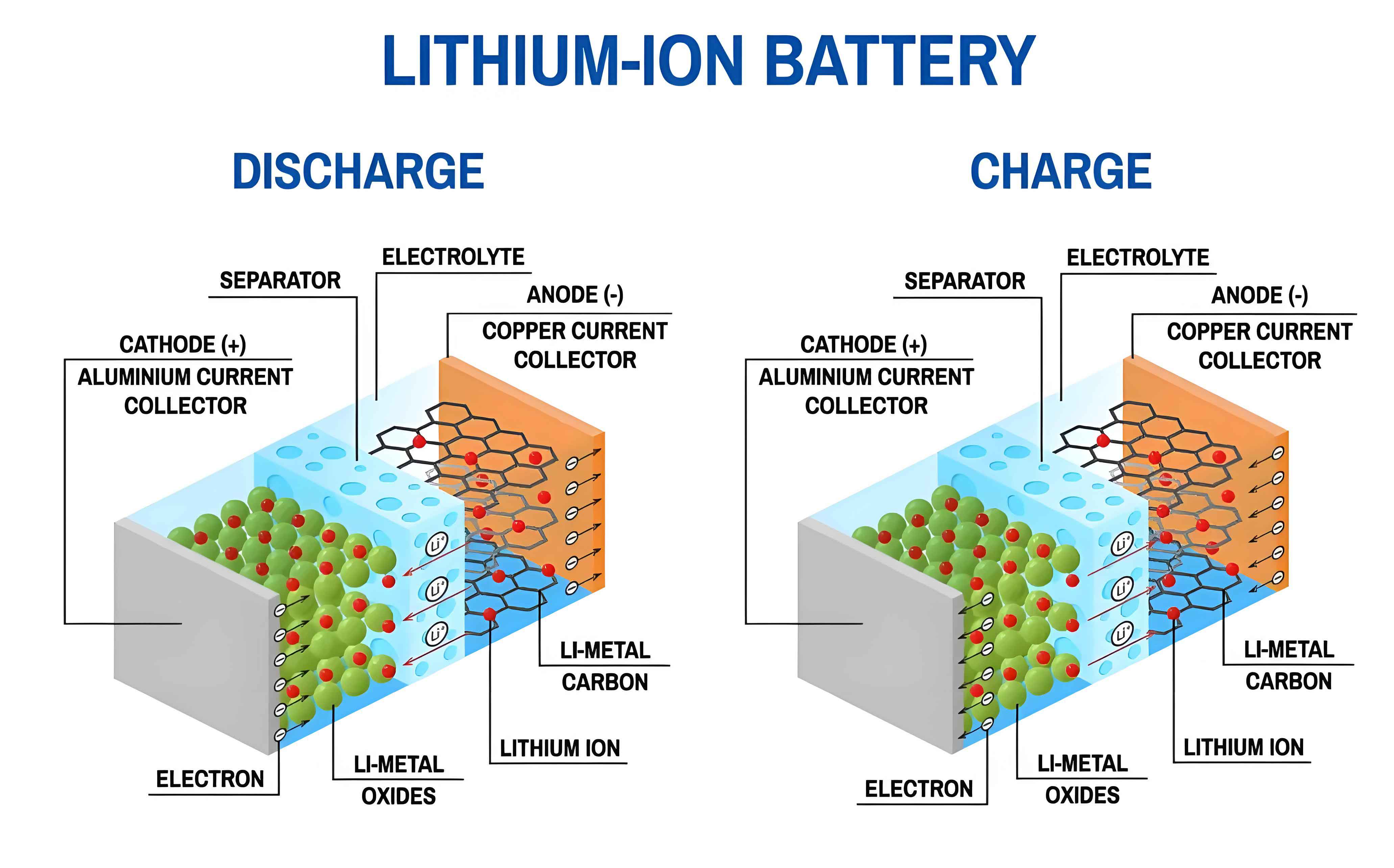
The selection of heating technology for electrode drying is paramount, as it influences not only the quality of li-ion batteries but also operational costs and safety. Traditionally, steam heating has been widely used, but the industry is increasingly adopting thermal oil heating due to its superior control and efficiency. In this article, I will delve into the principles, advantages, and design considerations of thermal oil heating systems, comparing them with steam alternatives, and provide insights into pipeline and trench designs based on my project experience. My goal is to offer a comprehensive guide for engineers and stakeholders in the li-ion battery sector.
To begin, let’s explore the heating options available for drying coated electrodes in li-ion battery production. The three primary methods are steam heating, thermal oil heating, and electric heating. Steam heating typically uses saturated steam at 0.8 MPa, offering lower initial costs but moderate stability. Electric heating, while simple, suffers from high energy consumption and safety concerns, making it less suitable for large-scale li-ion battery production lines. In contrast, thermal oil heating operates at temperatures above 250°C, providing high heat transfer coefficients, stable performance, and enhanced product consistency, which is crucial for high-quality li-ion batteries.
The superiority of thermal oil heating lies in its ability to maintain precise temperature control, a key factor in drying heat-sensitive materials like li-ion battery electrodes. Thermal oil, a high-temperature lubricant, facilitates heat conduction while minimizing heat loss. During the drying process, it contacts the material surface, transferring heat uniformly to accelerate curing and prevent over-drying or excessive reactions. This results in faster and more uniform solidification, essential for the performance of li-ion batteries. Moreover, thermal oil systems operate at low pressures, typically 0.4–0.5 MPa, reducing safety risks compared to steam systems, where pressure can be ten times higher at similar temperatures.
To quantify these advantages, consider the thermal efficiency and operational parameters. The heat transfer in thermal oil systems can be described by Fourier’s law of conduction: $$q = -k \nabla T$$ where \(q\) is the heat flux, \(k\) is the thermal conductivity of the oil, and \(\nabla T\) is the temperature gradient. For li-ion battery drying, this ensures minimal temperature variation, often within 0.1–0.5°C between the material and mold, enhancing product quality. In contrast, steam heating relies on latent heat release during condensation: $$Q = m \cdot L$$ where \(Q\) is the heat released, \(m\) is the mass of steam, and \(L\) is the latent heat of vaporization. While effective, this method lacks the fine-tuned control needed for sensitive li-ion battery materials.
Below is a table summarizing the key differences between thermal oil and steam heating for li-ion battery applications:
| Parameter | Thermal Oil Heating | Steam Heating |
|---|---|---|
| Operating Temperature | Up to 250°C or higher | Typically up to 150-200°C |
| Operating Pressure | 0.4-0.5 MPa (low pressure) | 0.8 MPa or higher, increases with temperature |
| Temperature Control Precision | ±0.1-0.5°C | ±1-2°C (less precise) |
| Thermal Efficiency | >90% | 70-80% (lower due to losses) |
| Safety | High (low pressure, reduced leakage risk) | Moderate (high pressure, potential for explosions) |
| Cost Impact on li-ion battery | Lower operational costs, higher initial investment | Higher operational costs due to water treatment |
| Suitability for li-ion battery | Excellent for heat-sensitive materials | Adequate but less optimal |
The efficiency of thermal oil systems can be further analyzed using the formula for overall heat transfer coefficient: $$U = \frac{1}{\frac{1}{h_i} + \frac{\Delta x}{k} + \frac{1}{h_o}}$$ where \(U\) is the overall coefficient, \(h_i\) and \(h_o\) are convective heat transfer coefficients inside and outside the pipe, and \(\Delta x\) and \(k\) represent pipe wall thickness and conductivity. For li-ion battery drying, high \(U\) values ensure rapid heat exchange, shortening drying cycles and boosting production throughput. This is critical in the competitive li-ion battery market, where throughput and quality are paramount.
Moving to pipeline design, the differences between thermal oil and steam systems are substantial, impacting installation and safety. Thermal oil pipelines have larger diameters due to lower heat capacity per volume compared to steam. For instance, a thermal oil main with a capacity of 30 million kcal/h requires a DN500 pipe, whereas a steam main of similar capacity uses a DN200 pipe. The weight difference is significant: a DN200 steam pipe weighs about 100 kg/m, while a DN500 thermal oil pipe weighs approximately 300 kg/m, considering oil density of 870 kg/m³. This makes overhead installation impractical for thermal oil mains, necessitating ground-level or trench-based solutions for li-ion battery factories.
Leakage management is another critical aspect. Steam leaks are less hazardous, but thermal oil leaks can cause pollution and fire risks, especially in li-ion battery production areas where flammable materials are present. Therefore, design measures must include containment systems. In my projects, I have implemented trenches and drip pans to collect any leaks, ensuring safety and environmental compliance for li-ion battery manufacturing.
Now, let’s discuss trench designs for thermal oil pipelines in li-ion battery plants. Trenches offer advantages such as saving overhead space, allowing unobstructed installation of coating machines and associated ductwork. They also provide a means to collect leaked oil, minimizing contamination. However, trenches have drawbacks: they can affect floor settlement, crucial for precision equipment like coating ovens in li-ion battery lines. If oven sections are placed on trench covers, uneven settlement may occur, impacting machine leveling and operational speed. Additionally, trenches increase construction costs and complicate structural design, requiring early commitment in project planning.
I propose two design schemes for thermal oil pipelines in li-ion battery facilities. Scheme 1 involves running the main pipeline through a pipe rack to the coating section, then descending into a trench that crosses cutting and slitting areas. Branch pipes are installed above ground. Scheme 2 entails routing the pipeline from the thermal oil boiler to the roof, then down into a trench at the target location, with branch pipes above ground. Below is a comparison table of these schemes:
| Aspect | Scheme 1 (Main in Trench, Branches Above) | Scheme 2 (Main via Roof, Branches Above) |
|---|---|---|
| Space Utilization | Good, frees overhead space for li-ion battery equipment | Moderate, uses roof space but requires vertical runs |
| Installation Cost | Lower than full trenching, but trenching costs apply | Higher due to roof supports and longer pipes |
| Impact on li-ion battery | Minimal if trench avoids critical settlement zones | Potential for heat loss in vertical sections |
| Safety for li-ion battery | Leak containment in trench, reduces fire risk | Leak risks in roof sections, harder to detect |
| Maintenance Access | Easy for main, branches accessible above ground | Challenging for roof sections, requires lifts |
To mitigate leakage risks in thermal oil systems for li-ion battery production, I recommend incorporating drip pans at pipe joints, connected to a central collection unit per coating line. The collection unit should have level alarms to notify staff when fluids accumulate, enabling prompt handling. This proactive approach aligns with the safety standards required in li-ion battery manufacturing, where even minor leaks can compromise product integrity and plant operations.
The thermal performance of these systems can be optimized using the following formula for heat loss in pipes: $$Q_{loss} = 2\pi k L \frac{T_{oil} – T_{amb}}{\ln(r_o/r_i)}$$ where \(Q_{loss}\) is the heat loss, \(L\) is pipe length, \(T_{oil}\) and \(T_{amb}\) are oil and ambient temperatures, and \(r_o\) and \(r_i\) are outer and inner pipe radii. For li-ion battery drying, minimizing \(Q_{loss}\) through insulation and efficient design enhances energy savings, contributing to the overall goal of cost-effective production.
In practice, the application of thermal oil heating in li-ion battery plants has shown promising results. For example, in recent projects, the implementation of trench-based main pipelines allowed seamless integration with coating ovens, improving drying uniformity and reducing downtime. The use of drip pans and collection systems effectively contained leaks, ensuring a clean and safe environment for li-ion battery assembly. These experiences underscore the importance of tailored design in achieving operational excellence.
To further elaborate on the benefits of thermal oil heating for li-ion battery drying, let’s consider the economic impact. The high thermal efficiency, often exceeding 90%, translates to lower energy consumption per unit of battery produced. This can be expressed as: $$\eta = \frac{Q_{useful}}{Q_{input}} \times 100\%$$ where \(\eta\) is efficiency, \(Q_{useful}\) is heat transferred to the material, and \(Q_{input}\) is energy supplied. For li-ion battery manufacturers, this efficiency reduces operating costs, aligning with industry trends toward sustainability and profitability.
Moreover, the stability of thermal oil systems contributes to consistent li-ion battery quality. Statistical data from production lines show that temperature fluctuations below 0.5°C reduce defects in electrode coatings by up to 15%, enhancing battery performance and lifespan. This is crucial as the demand for high-energy-density li-ion batteries grows in electric vehicles and energy storage applications.
In terms of future trends, the adoption of thermal oil heating is expected to rise in new li-ion battery projects, driven by advancements in oil formulations and control technologies. Innovations such as nano-enhanced thermal oils with higher conductivity could further improve drying speeds and uniformity for li-ion batteries. Additionally, integrating smart sensors for real-time monitoring of pipeline conditions will enhance safety and predictive maintenance in li-ion battery plants.
In conclusion, thermal oil heating offers a robust solution for electrode drying in li-ion battery production, outperforming steam heating in precision, safety, and efficiency. Through careful design of pipelines and trenches, along with effective leakage prevention measures, manufacturers can achieve optimal drying conditions for high-quality li-ion batteries. As the li-ion battery industry evolves, embracing these heating technologies will be key to meeting the challenges of scale and performance. I hope this analysis provides valuable insights for engineers and decision-makers involved in li-ion battery manufacturing.