
Lithium iron phosphate (LiFePO4), with its olivine structure, has emerged as a pivotal cathode material for lithium-ion batteries due to its high theoretical specific capacity (170 mAh/g), stable charge-discharge platforms, and compatibility with aqueous electrolytes. Since its first proposal by John B. Goodenough’s team in 1996, LiFePO4 batteries have dominated the electric vehicle (EV) market, accounting for 61% of China’s 302.3 GWh power battery installations in 2022. This article analyzes the global patent landscape and technological advancements in lithium iron phosphate battery systems.
Global Patent Distribution
As of October 2023, China leads in patent filings for lithium iron phosphate battery technologies, contributing 80.25% of global applications. The distribution of patent origins is quantified below:
| Country/Region | Patent Share (%) | Key Contributors |
|---|---|---|
| China | 80.25 | BYD, CATL, Guoxuan High-Tech |
| United States | 9.33 | Tesla, QuantumScape |
| European Union | 4.45 | BASF, Volkswagen |
| Japan | 3.16 | Panasonic, Sony |
| South Korea | 2.81 | LG Chem, Samsung SDI |
Temporal Evolution of Patent Filings
The development trajectory of lithium iron phosphate battery patents reveals three distinct phases:
- 2005–2013: Annual growth rate of 18.7%, driven by safety advantages over cobalt-based batteries
- 2014–2016: 22% decline due to competition from ternary lithium batteries
- 2017–2021: Resurgence with CAGR of 14.3%, supported by blade battery innovations
The volumetric energy density ($E_v$) of lithium iron phosphate batteries follows:
$$ E_v = \frac{C \times V}{A \times t} $$
Where $C$ = specific capacity (mAh/g), $V$ = average discharge voltage (V), $A$ = electrode area (m²), and $t$ = thickness (m).
Key Patent Holders and Legal Status
Top assignees demonstrate China’s dominance in lithium iron phosphate battery innovation:
| Rank | Applicant | Active Patents | Market Share |
|---|---|---|---|
| 1 | BYD | 487 | 17.8% |
| 2 | Guoxuan High-Tech | 329 | 12.0% |
| 3 | CATL | 295 | 10.8% |
Current legal status distribution:
$$ P_{active} = 47\%, \quad P_{expired} = 29\%, \quad P_{pending} = 24\% $$
Technological Breakthroughs
Key innovations in lithium iron phosphate battery systems include:
1. Graphene-Enhanced Cathodes (CN101800310A)
The conductivity enhancement mechanism follows:
$$ \sigma_{composite} = \sigma_{LFP} + \frac{\phi_g \sigma_g}{1 – \phi_g} $$
Where $\phi_g$ = graphene volume fraction, $\sigma_g$ = graphene conductivity (6 × 10⁵ S/m).
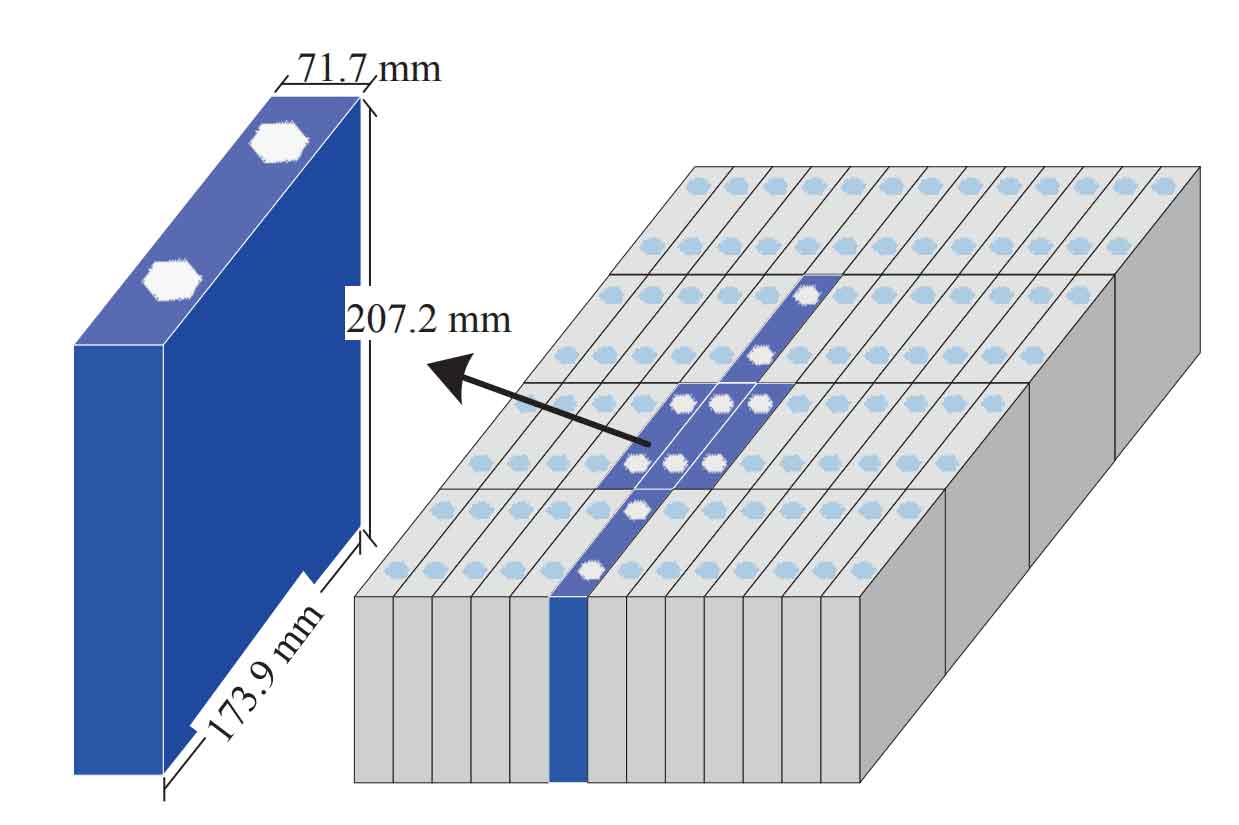
2. Blade Battery Architecture (CN110518174A)
The structural innovation achieves 33% higher volumetric energy density through:
$$ \frac{E_{blade}}{E_{prismatic}} = \frac{N_{series} \times C_{unit}}{A_{total} \times t_{stack}} $$
3. Vanadium-Doped LiFePO4/C (CN102610826A)
The doping process improves ionic conductivity by 2 orders of magnitude:
$$ D_{Li^+} = 10^{-12} \text{ to } 10^{-10}~\text{cm}^2/\text{s} $$
Market Adoption Metrics
The penetration rate ($\Pi$) of lithium iron phosphate batteries in China’s EV market follows logistic growth:
$$ \Pi(t) = \frac{1}{1 + e^{-0.68(t – 2020)}} $$
Validated against historical data:
| Year | Actual $\Pi$ | Model $\Pi$ |
|---|---|---|
| 2020 | 25.7% | 26.1% |
| 2023 | 34.9% | 35.2% |
Future Development Vectors
Current research focuses on overcoming low-temperature performance limitations through:
$$ \eta_{\text{low-T}} = 1 – \exp\left(-\frac{E_a}{k_B T}\right) $$
Where $E_a$ = activation energy (0.35–0.5 eV), $k_B$ = Boltzmann constant.
The lithium iron phosphate battery ecosystem continues to evolve through material innovations, structural optimizations, and manufacturing advancements, solidifying its position as the dominant technology for safe, cost-effective energy storage in electric mobility applications.