
I approach the global frontier of clean energy through the lens of tandem perovskite solar cells because this technology sits at the intersection of materials science, device physics, policy strategy, and industrial transformation. The rise of perovskite solar cells has been unusually rapid. In little more than a decade, laboratory power conversion efficiencies have moved from a few percent to levels that challenge mature photovoltaic technologies. Yet the most consequential frontier is not the single-junction perovskite solar cell alone. It is the tandem perovskite solar cell, in which a wide-bandgap perovskite absorber is stacked with a narrower-bandgap bottom cell, often silicon or tin-lead perovskite, to harvest a broader portion of the solar spectrum. This architecture offers a credible route beyond the single-junction detailed-balance limit and has therefore become a central object of global research competition.
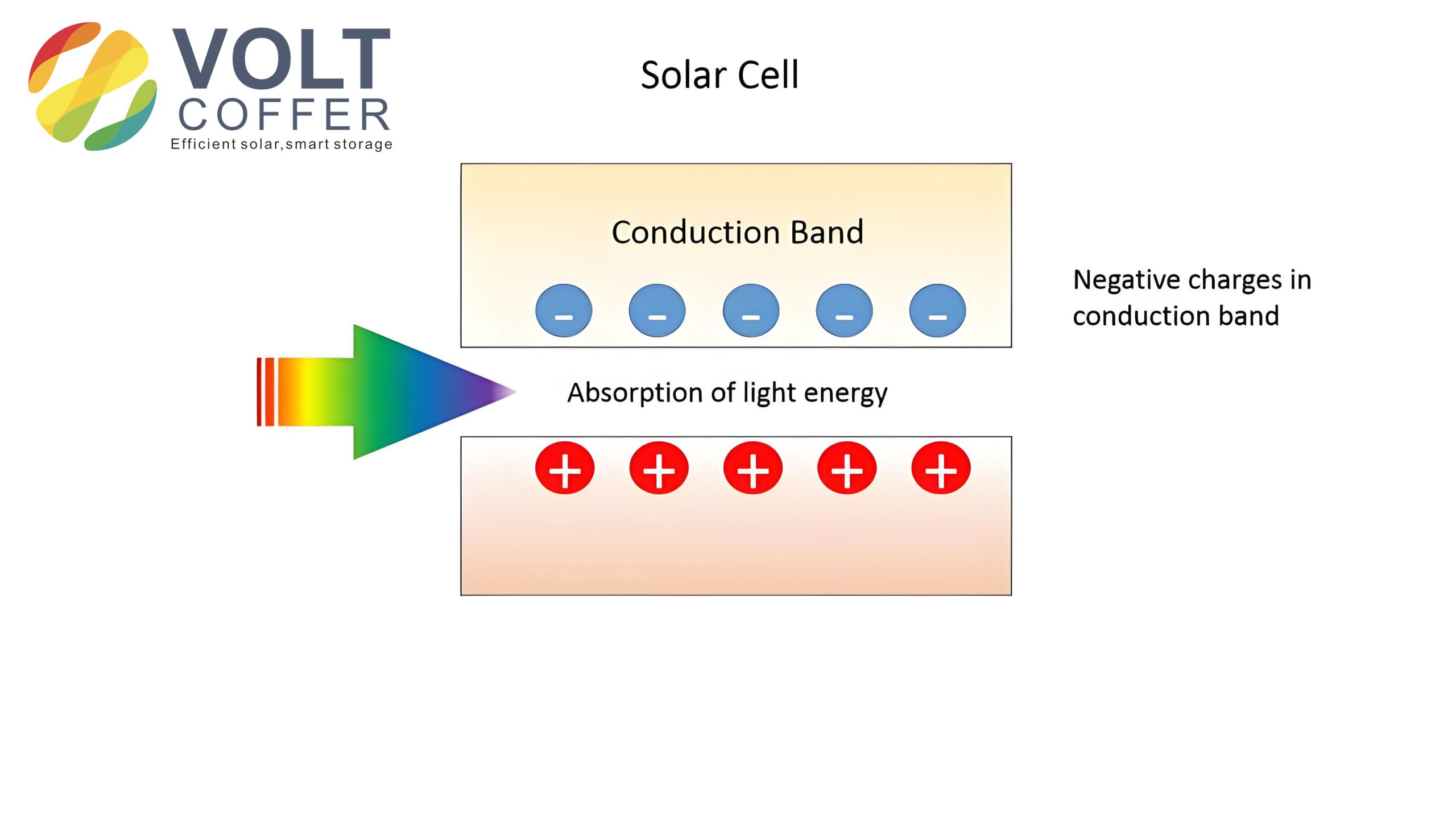
My analysis is motivated by three observations. First, perovskite solar cells have demonstrated an extraordinary efficiency trajectory, but single-junction devices face both thermodynamic and practical ceilings. Second, tandem perovskite solar cells can exceed those ceilings by improving spectral utilization, current matching, and voltage addition. Third, the global research landscape is not evenly distributed. It is shaped by national innovation systems, cross-border collaboration, institutional concentration, and the gradual shift from fundamental material discovery toward manufacturability, stability, and commercial deployment. I therefore combine bibliometric mapping with quantitative device and policy reasoning to interpret the global frontier of tandem perovskite solar cells.
1. Research Motivation and Analytical Position
I begin from the premise that clean energy transitions are not driven by a single invention but by overlapping technical, economic, and institutional learning curves. Solar photovoltaics has become the most scalable renewable generation technology because its costs have fallen dramatically and its deployment has become modular. Within this broader field, perovskite solar cells have introduced a new materials platform with high absorption coefficients, tunable bandgaps, low-temperature solution processability, and rapidly improving certified efficiencies. Tandem perovskite solar cells extend this platform by stacking absorbers with complementary bandgaps.
The fundamental advantage of tandem perovskite solar cells can be expressed through the spectral matching condition. For an ideal two-terminal tandem device, the top and bottom subcells must produce nearly equal currents because they are connected in series:
$$ J_{top}(E) \approx J_{bottom}(E) $$
At the same time, the open-circuit voltages add, while the short-circuit current is limited by the smaller of the two subcell currents:
$$ V_{oc,tandem} = V_{oc,top} + V_{oc,bottom} – V_{loss} $$
$$ J_{sc,tandem} = \min(J_{sc,top}, J_{sc,bottom}) $$
The power conversion efficiency of a tandem perovskite solar cell is therefore:
$$ \eta_{tandem} = \frac{J_{sc,tandem} V_{oc,tandem} FF_{tandem}}{P_{in}} $$
These equations explain why bandgap engineering is so important. A wide-bandgap perovskite top cell absorbs high-energy photons and transmits lower-energy photons to the bottom cell. The bottom cell may be silicon, copper indium gallium selenide, or a narrow-bandgap tin-lead perovskite solar cell. When both subcells are perovskite-based, the result is an all-perovskite tandem perovskite solar cell, which offers low-temperature processing and flexible form factors but faces additional challenges in tin oxidation, phase stability, and interlayer diffusion.
| Tandem architecture | Top cell | Bottom cell | Main advantage | Main challenge |
|---|---|---|---|---|
| Perovskite-silicon tandem | Wide-bandgap perovskite solar cells | Crystalline silicon | Leverages mature silicon supply chain and high efficiency | Textured surface passivation, thermal stability, current matching |
| All-perovskite tandem | Wide-bandgap perovskite solar cells | Narrow-bandgap Sn-Pb perovskite solar cells | Low-temperature processing, flexible and lightweight potential | Sn oxidation, phase segregation, interlayer stability |
| Perovskite-CIGS tandem | Wide-bandgap perovskite solar cells | CIGS | High spectral complementarity and thin-film integration | Interface recombination, alkali diffusion, scale-up |
| Perovskite-organic tandem | Wide-bandgap perovskite solar cells | Organic bulk heterojunction | Solution processing and mechanical flexibility | Limited bottom-cell stability and lower current |
| Triple-junction perovskite/perovskite/silicon | Wide-bandgap perovskite | Medium-bandgap perovskite and silicon | Higher theoretical efficiency and better spectral splitting | Complex fabrication, current matching, tunnel junctions |
In my reading of the field, tandem perovskite solar cells are not merely an incremental improvement over perovskite solar cells. They represent a change in design logic: from optimizing one absorber to coordinating multiple absorbers, interfaces, tunnel junctions, and encapsulation systems. This shift explains why the research frontier has moved from simple efficiency records toward stability mechanisms, scalable deposition, and module-level reliability.
2. Data and Bibliometric Method
I use the Web of Science core collection as the main literature source because it provides a consistent international index of peer-reviewed articles. The retrieval window is 2015 to 2025, with the last update in November 2025. I focus on document type “article” and remove noise such as editorials, corrections, and unrelated records. The final corpus contains approximately 2,550 articles related to tandem perovskite solar cells. The search logic combines perovskite terms with tandem, multi-junction, stacked solar, and silicon-related terms.
| Retrieval component | Purpose | Representative terms |
|---|---|---|
| Perovskite identity | Capture the absorber family | perovskite, perovskite solar cells, perovskite tandem |
| Tandem identity | Capture stacked device concepts | tandem solar cell, multi-junction, stacked solar |
| Silicon coupling | Capture perovskite-silicon architectures | perovskite/silicon, perovskite-Si, silicon tandem |
| Document type | Improve analytical reliability | article |
| Time window | Cover the emergence and acceleration phases | 2015-2025 |
I analyze the corpus using bibliometric visualization tools, including CiteSpace and VOSviewer, together with online bibliometric platforms. I examine temporal growth, country distribution, institutional concentration, author collaboration, keyword co-occurrence, cluster structure, and burst detection. I clean keywords by merging synonyms and removing generic terms such as “perovskite,” “solar cell,” and “tandem solar cell” when they do not add discriminating information. This allows me to identify deeper research fronts around defect passivation, interface engineering, wide-bandgap perovskite solar cells, self-assembled monolayers, and inverted device structures.
To quantify growth, I use the compound annual growth rate:
$$ CAGR = \left(\frac{N_t}{N_0}\right)^{1/(t-t_0)} – 1 $$
To interpret collaboration networks, I consider degree centrality, betweenness centrality, and link strength. A country or institution with high degree centrality is well connected. A node with high betweenness centrality acts as a bridge between otherwise separate clusters. The co-occurrence strength between two keywords is:
$$ S_{ij} = \sum_{k} w_{k} I(i \in k) I(j \in k) $$
where \( I(\cdot) \) is an indicator function and \( w_k \) is a weight assigned to document \( k \). These measures help me distinguish between mature research themes and emerging frontiers in tandem perovskite solar cells.
3. Temporal Evolution and Policy Drivers
The publication record of tandem perovskite solar cells shows three broad phases. The first phase, from 2015 to 2018, is an emergence phase. Annual output remains below 150 articles. Early work demonstrates the feasibility of two-terminal perovskite-silicon tandem devices using tunnel junctions and establishes the basic architecture. The second phase, from 2019 to 2021, is a technology攻坚 phase. Annual output rises from roughly 150 to 221 articles, with a temporary dip in 2019 and slower growth in 2021. The third phase, from 2022 onward, is a rapid growth phase. Annual output reaches 441 articles in 2024 and 531 articles in 2025 by mid-November, indicating strong and sustained global momentum.
| Year | Annual articles | Phase | Dominant research emphasis |
|---|---|---|---|
| 2015 | 36 | Emergence | Proof of concept for perovskite-silicon tandem |
| 2016 | 64 | Emergence | Optical modeling and tunnel junction design |
| 2017 | 90 | Emergence | Transparent electrodes and recombination layers |
| 2018 | 150 | Emergence | Wide-bandgap perovskite optimization |
| 2019 | 141 | Technology攻坚 | Interface passivation and current matching |
| 2020 | 216 | Technology攻坚 | Bifacial and semi-transparent devices |
| 2021 | 221 | Technology攻坚 | Bandgap tuning and carrier transport layers |
| 2022 | 295 | Rapid growth | Defect passivation and phase segregation control |
| 2023 | 365 | Rapid growth | Self-assembled monolayers and inverted devices |
| 2024 | 441 | Rapid growth | All-perovskite tandems and large-area modules |
| 2025 | 531 | Rapid growth | Stability, scalability, and industrialization |
The phase transitions align with policy acceleration in several major economies. National energy innovation plans, investment tax credits, demonstration programs, and roadmaps for next-generation photovoltaics have created strong demand signals. These policies do not directly create scientific discoveries, but they reduce uncertainty, mobilize capital, and coordinate actors across laboratories, equipment suppliers, and manufacturers. In my view, the policy-driven acceleration of tandem perovskite solar cells is a clear example of mission-oriented innovation. The field is not left solely to market pull; it is actively shaped by state capacity and strategic competition.
Using the annual data, I estimate growth rates for selected periods. From 2015 to 2018, the average annual growth is high in relative terms because the base is small. From 2019 to 2021, growth slows as the field confronts reproducibility and stability bottlenecks. From 2022 to 2025, growth reaccelerates as all-perovskite tandems, self-assembled monolayers, and interface engineering produce both efficiency gains and stronger commercialization narratives.
| Period | Start count | End count | Approximate CAGR | Interpretation |
|---|---|---|---|---|
| 2015-2018 | 36 | 150 | 60.9% | Small-base emergence |
| 2018-2021 | 150 | 221 | 13.8% | Consolidation and bottleneck exploration |
| 2021-2025 | 221 | 531 | 24.5% | Industrialization-oriented acceleration |
4. Spatial Distribution and Collaboration Networks
The geography of tandem perovskite solar cells is highly uneven. China leads by a substantial margin, with approximately 1,202 articles, nearly half of the corpus. Germany follows with about 318 articles, the United States with about 317, South Korea with about 186, the United Kingdom with about 159, India with about 149, Australia with about 137, Switzerland with about 131, Japan with about 127, and Saudi Arabia with about 125. This distribution reflects a combination of research capacity, industrial policy, and long-term public investment.
| Rank | Country | Articles | Share of corpus | Network role |
|---|---|---|---|---|
| 1 | China | 1,202 | 47.1% | Core hub and scale leader |
| 2 | Germany | 318 | 12.5% | Core hub in engineering and materials |
| 3 | United States | 317 | 12.4% | Core hub in national laboratory and university research |
| 4 | South Korea | 186 | 7.3% | Strong device and industry linkage |
| 5 | United Kingdom | 159 | 6.2% | Interface science and collaboration bridge |
| 6 | India | 149 | 5.8% | Emerging scale and materials research |
| 7 | Australia | 137 | 5.4% | Silicon photovoltaics and characterization |
| 8 | Switzerland | 131 | 5.1% | High-efficiency tandem records and collaboration |
| 9 | Japan | 127 | 5.0% | Materials reliability and industrial roadmaps |
| 10 | Saudi Arabia | 125 | 4.9% | Bridge to Asian and European networks |
I observe a core-periphery structure in the international collaboration network. China, the United States, Germany, and South Korea occupy central positions. Saudi Arabia and Singapore act as bridges, connecting otherwise separate regional clusters. European countries display dense intra-regional collaboration, which amplifies shared research infrastructures and mobility programs. The network is not simply a map of output; it is a map of strategic complementarity. Countries with strong silicon industries collaborate with countries that excel in perovskite materials. Countries with advanced characterization facilities collaborate with countries that can rapidly fabricate and test devices.
I use a simple collaboration intensity index to compare bilateral ties:
$$ C_{AB} = \frac{N_{AB}}{N_A + N_B – N_{AB}} $$
where \( N_{AB} \) is the number of co-authored articles between country A and country B, and \( N_A \) and \( N_B \) are their total articles. This index helps identify partnerships that are disproportionately intense relative to the size of the two research systems. In tandem perovskite solar cells, the strongest ties often join materials synthesis groups with device engineering groups, and device groups with industrial scale-up partners.
| Network feature | Observation | Interpretation |
|---|---|---|
| Core nodes | China, United States, Germany, South Korea | High output and high connectivity |
| Bridge nodes | Saudi Arabia, Singapore, Switzerland | Facilitate cross-regional knowledge flow |
| Regional clusters | Dense European collaboration | Shared funding frameworks and mobility |
| Complementarity | Silicon expertise paired with perovskite expertise | Technology integration requires diverse capabilities |
| Periphery | Smaller output from many countries | Opportunity for targeted capacity building |
5. Institutional and Team Collaboration Patterns
At the institutional level, national academies, federal research associations, and specialized universities dominate. I avoid identifying exact institutional names here, but the pattern is clear. The highest-output organizations are large national research systems with long-term public funding and multidisciplinary teams. A leading Chinese national academy appears first by a wide margin, followed by German federal research networks, a Swiss federal institute, a Chinese academy-affiliated university, a United States energy department system, and several research-intensive Chinese universities. This distribution shows that tandem perovskite solar cells require sustained investment in synthesis, characterization, device fabrication, and stability testing.
| Institution type | Representative scale | Core strength | Collaboration style |
|---|---|---|---|
| National academy | Very high output | Materials, physics, device integration | Multi-team and multi-country |
| Federal research network | High output | Engineering, thin films, scale-up | Public-private partnerships |
| Technical university | High output | Interface science and characterization | International academic exchange |
| Energy department system | Medium-high output | National laboratory infrastructure | Mission-oriented consortia |
| Research-intensive university | Medium-high output | Novel passivation and wide-bandgap absorbers | Cross-institutional student mobility |
| Industry-linked institute | Growing | Module fabrication and reliability | Joint development agreements |
Author collaboration networks reveal a similar structure. A relatively small number of prolific researchers and teams account for a large share of high-impact work. These teams specialize in different parts of the tandem perovskite solar cell stack. Some focus on wide-bandgap perovskite crystallization and phase stability. Others focus on narrow-bandgap tin-lead absorbers. Others focus on charge transport layers, tunnel junctions, transparent electrodes, and encapsulation. The most productive teams are not isolated; they form dense clusters that exchange materials, methods, and benchmark data.
The collaboration pattern can be described as “strong-strong complementary.” Instead of pairing a leading group with a peripheral group simply to increase output, the most effective collaborations combine distinct capabilities. A team with expertise in silicon bottom cells may partner with a team that can produce high-quality wide-bandgap perovskite solar cells. A team with advanced spectroscopy may partner with a team that can fabricate full tandem devices. This complementarity is essential because tandem perovskite solar cells are systems-level devices. A record efficiency cannot be achieved by optimizing one layer in isolation.
6. Knowledge Structure: Keywords, Clusters, and Bursts
Keyword co-occurrence analysis shows that the field is organized around several tightly connected themes. The largest nodes include perovskite/silicon tandem solar cells, all-perovskite tandem solar cells, high efficiency, defect passivation, interface engineering, and wide-bandgap perovskite. These terms are not separate silos. They co-occur frequently because efficiency improvements in tandem perovskite solar cells depend on interface quality, defect management, and bandgap optimization.
| Cluster label | Core keywords | Research logic | Maturity |
|---|---|---|---|
| Perovskite solar cells | perovskite solar cells, absorber, crystallization | Base materials and device fundamentals | Mature |
| High efficiency | high efficiency, power conversion efficiency, certified efficiency | Performance benchmarking | Mature and active |
| Solar cells | solar cells, photovoltaic, photovoltaics | Broader technology context | Mature |
| Light trapping | light trapping, optical simulation, transparent electrode | Photon management and optical design | Consolidating |
| Inorganic perovskite solar cells | inorganic perovskite, Cs-based perovskite | Thermal stability and wide-bandgap options | Emerging |
| Tandem solar cells | tandem solar cells, perovskite/silicon, all-perovskite | Stacked device architecture | Core and expanding |
| Device stability | device stability, degradation, encapsulation | Lifetime and reliability | Critical frontier |
| Phase segregation | phase segregation, halide migration, ion migration | Wide-bandgap perovskite instability | Critical frontier |
The timeline structure of the clusters suggests a clear evolution. Early clusters focus on light trapping, transparent electrodes, electron transport layers, and optical simulation. These are foundational for making tandem devices optically and electrically compatible. Middle-period clusters focus on bandgap, vacuum deposition, bifacial solar cells, and wide-bandgap materials. Recent clusters focus on self-assembled monolayers, inverted perovskite solar cells, defect passivation, and phase segregation. This sequence indicates a shift from optical design to interface and defect engineering, and finally toward stability and industrialization.
Burst detection provides additional insight. The earliest burst terms include light trapping, transparent electrodes, electron transport layers, and optical simulation. These terms dominated the period when researchers were learning how to manage light in stacked devices. From 2020 to 2022, burst terms include bifacial solar cells, transparent electrodes, photovoltaic cells, wide-bandgap materials, black silicon, and organic tandem solar cells. This period reflects exploration of device architectures and spectral management. From 2022 to 2025, burst terms include perovskite-silicon tandem solar cells, semi-transparent perovskite solar cells, interface modification, phase segregation, self-assembled monolayers, inverted perovskite solar cells, and defect passivation. These are the current frontiers of tandem perovskite solar cells.
| Burst term | Start year | End year | Strength | Interpretation |
|---|---|---|---|---|
| Light trapping | 2015 | 2019 | 2.59 | Optical management in stacked devices |
| Transparent electrode | 2015 | 2020 | 1.26 | Contacts and semi-transparent top cells |
| Electron transport layer | 2015 | 2022 | 2.61 | Charge extraction and interface control |
| Optical simulation | 2016 | 2020 | 1.98 | Current matching and absorption modeling |
| Planar perovskite solar cells | 2018 | 2018 | 1.31 | Simplified device architecture |
| Band gap | 2019 | 2020 | 2.66 | Bandgap tuning for tandem perovskite solar cells |
| Vacuum deposition | 2020 | 2023 | 1.64 | Scalable and uniform film formation |
| Bifacial solar cells | 2020 | 2022 | 2.96 | Rear-side light harvesting |
| Wide band gap | 2021 | 2023 | 1.40 | Top-cell absorber engineering |
| Black silicon | 2022 | 2023 | 2.56 | Textured silicon bottom cells |
| Organic tandem solar cells | 2022 | 2023 | 2.99 | Alternative bottom-cell concepts |
| Perovskite-silicon tandem solar cells | 2022 | 2023 | 2.23 | Dominant industrial route |
| Semi-transparent perovskite solar cells | 2022 | 2025 | 2.43 | Top-cell transparency and bifaciality |
| Interface modification | 2023 | 2023 | 1.63 | Recombination and energy-level alignment |
| Phase segregation | 2023 | 2025 | 3.44 | Halide instability in wide-bandgap perovskites |
| Self-assembled monolayers | 2023 | 2025 | 2.01 | Hole-selective contacts and passivation |
| Inverted perovskite solar cells | 2023 | 2025 | 1.50 | p-i-n architecture for tandems |
| Defect passivation | 2024 | 2025 | 1.49 | Suppression of non-radiative recombination |
7. Research Hotspots and Frontiers
I identify three major hotspots in the global frontier of tandem perovskite solar cells: tandem structure exploration, efficiency improvement pathways, and wide-bandgap perovskite material development. These hotspots are interconnected. Tandem structure exploration defines the device platform. Efficiency improvement pathways address losses within that platform. Wide-bandgap perovskite development supplies the top cell that makes the platform possible.
7.1 Tandem Structure Exploration
The two dominant routes are perovskite-silicon tandem solar cells and all-perovskite tandem solar cells. Perovskite-silicon tandem solar cells can leverage the mature silicon photovoltaic supply chain, existing manufacturing infrastructure, and decades of reliability knowledge. They are therefore the most likely near-term commercial route. All-perovskite tandem solar cells offer lower processing temperatures, potentially lower costs, and compatibility with flexible substrates. However, they face more severe materials stability challenges, especially in tin-lead bottom cells and wide-bandgap top cells.
| Dimension | Perovskite-silicon tandem | All-perovskite tandem |
|---|---|---|
| Bottom cell | Silicon | Sn-Pb perovskite |
| Efficiency potential | Very high, above 40% theoretically | Very high, above 40% theoretically |
| Commercial readiness | Higher | Lower |
| Process temperature | Silicon bottom cell requires high-temperature steps | All low-temperature solution processing possible |
| Flexibility | Limited by silicon wafer | High potential |
| Key challenge | Textured surface passivation and thermal stability | Sn oxidation and phase segregation |
| Supply chain fit | Strong with existing photovoltaic industry | Requires new manufacturing ecosystem |
Triple-junction perovskite/perovskite/silicon devices are also emerging. They add a medium-bandgap perovskite layer between the wide-bandgap top cell and the silicon bottom cell. This architecture can improve spectral splitting and reduce thermalization losses, but it increases fabrication complexity and demands precise current matching. I expect triple-junction devices to remain a frontier research topic while two-terminal perovskite-silicon and all-perovskite tandems move toward pilot production.
7.2 Efficiency Improvement Pathways
Efficiency improvement in tandem perovskite solar cells depends on reducing non-radiative recombination, improving charge extraction, and matching currents between subcells. Interface engineering and defect passivation are the most frequently discussed strategies. Interface engineering modifies energy-level alignment, reduces trap density, and suppresses ion migration. Defect passivation uses molecules, polymers, or inorganic layers to coordinate undercoordinated ions and halide vacancies. Self-assembled monolayers have become especially important because they can form uniform hole-selective contacts on textured surfaces and reduce interface losses.
The efficiency of a tandem perovskite solar cell can be decomposed into several loss channels:
$$ \eta_{tandem} = \eta_{abs} \times \eta_{carrier} \times \eta_{junction} \times \eta_{collection} \times \eta_{module} $$
where \( \eta_{abs} \) is the absorption efficiency, \( \eta_{carrier} \) is the carrier generation and separation efficiency, \( \eta_{junction} \) is the tunnel junction or recombination junction efficiency, \( \eta_{collection} \) is the charge collection efficiency, and \( \eta_{module} \) is the module integration efficiency. Each term can be targeted by specific innovations. For example, textured light management improves \( \eta_{abs} \). Passivation improves \( \eta_{carrier} \). Tunnel junction design improves \( \eta_{junction} \). Transparent electrode optimization improves \( \eta_{collection} \). Laser scribing and interconnection improve \( \eta_{module} \).
| Loss channel | Physical origin | Mitigation strategy | Recent frontier |
|---|---|---|---|
| Optical loss | Reflection, parasitic absorption, incomplete absorption | Texturing, anti-reflection coatings, transparent electrodes | Black silicon and light trapping |
| Recombination loss | Trap states, interfaces, bulk defects | Defect passivation, interface modification | Self-assembled monolayers and Lewis bases |
| Current mismatch | Unequal subcell photocurrent | Bandgap tuning and thickness optimization | Wide-bandgap perovskite composition control |
| Voltage loss | Non-radiative recombination and energy offsets | Energy-level alignment and selective contacts | Inverted perovskite solar cells |
| Junction loss | Recombination junction resistance | Tunnel junction engineering | Doped layers and oxide interlayers |
| Scaling loss | Series resistance and inhomogeneity | Uniform deposition and laser scribing | Large-area all-perovskite modules |
Certified efficiency records have advanced rapidly. Perovskite-silicon tandem solar cells have reached certified efficiencies above 34% in laboratory devices, while all-perovskite tandem solar cells have crossed 30% in small areas. Large-area all-perovskite modules have reached efficiencies in the high twenties. Triple-junction perovskite/perovskite/silicon devices have demonstrated efficiencies above 28%. These values are not merely records; they are signals that tandem perovskite solar cells are moving from scientific curiosity to engineering competition.
| Device category | Representative efficiency | Area scale | Main significance |
|---|---|---|---|
| Perovskite-silicon tandem | Above 34% certified | Laboratory scale | Demonstrates high commercial potential |
| Perovskite-silicon tandem | Above 33% | Large commercial size | Signals scale-up feasibility |
| All-perovskite tandem | Above 30% certified | Small area | Confirms all-perovskite route |
| All-perovskite tandem | Above 28% | Large area | Supports module development |
| Triple-junction | Above 28% | Laboratory scale | Explores beyond two-junction limits |
| Semi-transparent perovskite | Above 20% | Top-cell scale | Enables tandem integration |
7.3 Wide-Bandgap Perovskite Material Development
Wide-bandgap perovskite solar cells are the top-cell workhorse of tandem perovskite solar cells. Their bandgap typically ranges from about 1.6 eV to 1.8 eV, depending on the bottom-cell bandgap. The ideal top-cell bandgap for a silicon bottom cell is around 1.7 eV. For an all-perovskite tandem with a tin-lead bottom cell near 1.2 eV, the top cell should be around 1.7 eV to 1.8 eV. The bandgap matching condition can be approximated as:
$$ E_{g,top} + E_{g,bottom} \approx 2.0 \text{ eV to } 2.4 \text{ eV} $$
Wide-bandgap perovskites face several challenges. First, halide phase segregation occurs under illumination and bias, leading to performance degradation. Second, open-circuit voltage deficits are often larger than in narrow-bandgap perovskites because of increased non-radiative recombination. Third, thermal stability is limited by volatile organic cations and halide migration. Fourth, scalable deposition of uniform wide-bandgap films on textured surfaces remains difficult.
Research fronts in wide-bandgap perovskite solar cells include composition engineering, additive engineering, crystallization control, and strain management. Mixed-halide systems with bromide and iodide are common, but bromide incorporation can induce phase segregation. Additives such as piracetam-like molecules, thiophene derivatives, and nicotinamide derivatives have been used to regulate crystallization and passivate defects. Self-assembled monolayers improve hole extraction and reduce interface recombination. Inverted structures have become popular because they can reduce hysteresis and improve compatibility with tandem integration.
| Challenge | Mechanism | Mitigation direction | Research indicator |
|---|---|---|---|
| Halide phase segregation | Light-induced ion migration and compositional inhomogeneity | Compositional control, strain engineering, additive passivation | Phase segregation burst strength |
| Voltage deficit | Non-radiative recombination at interfaces and grain boundaries | Self-assembled monolayers, defect passivation | High open-circuit voltage |
| Thermal instability | Volatile cations and halide diffusion | Inorganic-rich compositions, encapsulation | Device stability cluster growth |
| Scalability | Non-uniform nucleation and film formation | Vacuum deposition, blade coating, slot-die coating | Large-area tandem efficiency |
| Interface recombination | Energy-level mismatch and trap states | Interface modification and selective contacts | Interface modification burst |
8. Quantitative Framework for Tandem Perovskite Solar Cells
I use a quantitative framework to connect bibliometric trends with device physics. The first relation is the standard power conversion efficiency definition:
$$ \eta = \frac{P_{max}}{P_{in}} = \frac{J_{sc} V_{oc} FF}{P_{in}} $$
For tandem perovskite solar cells, the fill factor is influenced by current matching, series resistance, and recombination junction quality. A simplified two-diode model for each subcell can be written as:
$$ J = J_{ph} – J_{01}\left[\exp\left(\frac{q(V + JR_s)}{n_1 k T}\right) – 1\right] – J_{02}\left[\exp\left(\frac{q(V + JR_s)}{n_2 k T}\right) – 1\right] – \frac{V + JR_s}{R_{sh}} $$
The tandem current-voltage curve is obtained by solving the series-connected subcell equations:
$$ V_{tandem} = V_{top}(J) + V_{bottom}(J) $$
This equation shows why current matching is critical. If one subcell produces less current, it limits the entire tandem device. If one subcell produces more current, the excess current cannot be extracted and is dissipated. Therefore, thickness, bandgap, and optical design must be co-optimized.
Stability can be quantified using the \( T_{80} \) lifetime, defined as the time required for efficiency to fall to 80% of its initial value:
$$ \eta(T_{80}) = 0.8 \eta_0 $$
A common degradation model is exponential:
$$ \eta(t) = \eta_0 \exp(-kt) + \eta_{res} $$
where \( k \) is the degradation rate and \( \eta_{res} \) is a residual efficiency. For tandem perovskite solar cells, degradation often follows a multi-stage process involving ion migration, interface reactions, electrode corrosion, and phase segregation. The overall degradation rate can be approximated as a sum of independent mechanisms:
$$ k_{total} = k_{bulk} + k_{interface} + k_{electrode} + k_{encapsulation} $$
Cost reduction can be modeled using a learning curve:
$$ C(Q) = C_0 Q^{-\alpha} $$
where \( C(Q) \) is the unit cost at cumulative production \( Q \), \( C_0 \) is the initial cost, and \( \alpha \) is the learning elasticity. For tandem perovskite solar cells to become commercially dominant, the learning rate must be high enough to offset additional process steps and materials costs. The levelized cost of electricity is:
$$ LCOE = \frac{\sum_{t=1}^{T} \frac{I_t + O_t + F_t}{(1+r)^t}}{\sum_{t=1}^{T} \frac{E_t}{(1+r)^t}} $$
where \( I_t \) is investment, \( O_t \) is operation and maintenance, \( F_t \) is fuel or feedstock cost, \( E_t \) is electricity generation, and \( r \) is the discount rate. For solar photovoltaics, \( F_t \) is zero, so LCOE depends mainly on capital cost, efficiency, lifetime, and financing cost. Higher-efficiency tandem perovskite solar cells reduce balance-of-system costs per watt and improve land-use efficiency.
| Metric | Formula | Relevance to tandem perovskite solar cells |
|---|---|---|
| Power conversion efficiency | \( \eta = J_{sc} V_{oc} FF / P_{in} \) | Primary performance benchmark |
| Current matching | \( J_{top} \approx J_{bottom} \) | Determines tandem current |
| Voltage addition | \( V_{oc,tandem} = V_{top} + V_{bottom} – V_{loss} \) | Explains high tandem voltage |
| Stability lifetime | \( T_{80} \) | Commercial reliability threshold |
| Degradation rate | \( k_{total} = \sum k_i \) | Separates failure mechanisms |
| Learning curve | \( C(Q) = C_0 Q^{-\alpha} \) | Connects deployment and cost |
| LCOE | Discounted cost over discounted energy | Ultimate economic test |
9. Country-Level Strengths and Policy Implications
I interpret country-level strengths through the lens of innovation systems. China’s leading publication output reflects large-scale public investment, rapid university expansion, strong domestic photovoltaics manufacturing, and ambitious renewable energy targets. Germany combines materials science, engineering precision, and European collaboration. The United States leverages national laboratories, research universities, and venture-backed startups. South Korea links display and semiconductor expertise with photovoltaic device engineering. Japan focuses on materials reliability and long-term industrial roadmaps. Switzerland and Saudi Arabia act as high-impact collaborative hubs.
| Country | Main strength in perovskite solar cells | Policy lever | Industrial implication |
|---|---|---|---|
| China | Scale, manufacturing, rapid iteration | National plans and demonstration projects | Large production capacity potential |
| Germany | Materials and engineering | European research programs | Equipment and high-value components |
| United States | National laboratories and startups | Tax credits and innovation funding | Technology licensing and venture growth |
| South Korea | Device integration and displays | Industrial roadmaps | Advanced manufacturing |
| United Kingdom | Interface science and characterization | University research funding | High-value intellectual property |
| Japan | Materials reliability and standardization | Climate and energy targets | Precision materials and equipment |
| India | Growing research capacity and deployment | Renewable energy missions | Domestic manufacturing opportunity |
| Australia | Silicon photovoltaics and characterization | Renewable energy research support | High-efficiency cell design |
| Switzerland | High-efficiency tandem records | Federal research funding | International collaboration hub |
| Saudi Arabia | Bridging research networks | Economic diversification strategies | Desert-ready photovoltaic applications |
For policy makers, the key insight is that tandem perovskite solar cells require coordinated action across four domains: fundamental science, device engineering, manufacturing equipment, and standards. A national strategy that funds only basic research will not capture the value of tandem perovskite solar cells. A strategy that funds only factories will lack the scientific foundation for stability and yield. The most effective approach is mission-oriented and iterative, with shared roadmaps, open benchmarking, and strong university-industry mobility.
10. Industrialization Pathways and Challenges
I see four industrialization challenges for tandem perovskite solar cells: stability, lead toxicity, scale-up, and cost. Stability is the most immediate. Perovskite solar cells degrade under moisture, oxygen, heat, light, and electrical bias. In tandem devices, additional interfaces create additional degradation pathways. Encapsulation, edge sealing, and UV filtering are necessary but not sufficient. The intrinsic stability of the wide-bandgap perovskite and the narrow-bandgap tin-lead perovskite must be improved.
Lead toxicity is a systemic concern. Most high-performance perovskite solar cells contain lead. Although the amount of lead per square meter is small compared with many other products, public acceptance and environmental regulations may require lead-free or lead-reduced options. Tin-based perovskites are promising but suffer from oxidation and lower efficiency. I believe a dual strategy is needed: improve containment and recycling for lead-based systems while investing in lead-free alternatives.
Scale-up is another challenge. Laboratory cells are often smaller than 1 cm². Commercial modules require areas larger than 1 m². Uniform deposition over large areas is difficult for solution-processed perovskites. Vacuum deposition, blade coating, slot-die coating, and hybrid methods are being explored. Laser scribing and interconnection introduce additional losses. The module efficiency can be modeled as:
$$ \eta_{module} = \eta_{cell} \times (1 – L_{series} – L_{area} – L_{shunt} – L_{interconnect}) $$
where \( L_{series} \), \( L_{area} \), \( L_{shunt} \), and \( L_{interconnect} \) are fractional losses. Reducing these losses is as important as improving cell efficiency.
| Challenge | Current status | Required breakthrough | Indicator of success |
|---|---|---|---|
| Intrinsic stability | Laboratory lifetimes improving but limited | Suppression of ion migration and phase segregation | \( T_{80} \) above 20 years equivalent |
| Encapsulation | Advanced barrier films under development | Low-cost, flexible, edge-sealing materials | Damp heat and thermal cycling pass |
| Lead containment | Encapsulation and recycling research | Closed-loop recycling and lead-free options | Regulatory acceptance |
| Large-area deposition | Pilot-scale coating and vacuum methods | Uniformity over 1 m² or larger | Module efficiency above 25% |
| Cost | Uncertain at scale | Reduced material and process cost | LCOE below silicon-only |
| Standards | Emerging | International test protocols for tandems | Bankable certification |
Technology readiness levels can help organize the transition. I estimate that perovskite-silicon tandem solar cells are approaching pilot-scale demonstration, while all-perovskite tandem solar cells are still in the late laboratory-to-pilot transition. Triple-junction devices remain at laboratory scale. The following table summarizes my assessment.
| Technology | Estimated readiness | Main uncertainty | Expected first market |
|---|---|---|---|
| Perovskite-silicon tandem | Pilot demonstration | Stability and yield | Utility-scale and rooftop photovoltaics |
| All-perovskite tandem | Late laboratory to pilot | Sn-Pb stability and scale-up | Flexible and lightweight applications |
| Triple-junction | Laboratory | Complexity and current matching | High-value niche applications |
| Semi-transparent perovskite | Pilot | Transparency and efficiency trade-off | Tandem top cells and building integration |
11. Future Research Agenda
I propose a future research agenda organized around three systemic directions: stability mechanisms, process innovation, and产学研 collaboration. I use the term产学研 to denote the integration of academia, industry, and end users, but I frame it in English as university-industry-user collaboration. This is not a slogan; it is a necessary condition for tandem perovskite solar cells to move from record efficiencies to bankable products.
| Direction | Core question | Methodological need | Expected outcome |
|---|---|---|---|
| Stability mechanisms | What limits \( T_{80} \) in tandem perovskite solar cells? | In situ spectroscopy, tomography, accelerated testing | Predictive degradation models |
| Process innovation | How can wide-bandgap perovskite solar cells be deposited uniformly at scale? | Slot-die coating, vacuum deposition, roll-to-roll | High-yield module manufacturing |
| Interface engineering | How can tunnel junctions and selective contacts be made robust? | Self-assembled monolayers, doped oxides, interlayers | Low-loss recombination junctions |
| Bandgap optimization | What is the best bandgap pairing for different applications? | Combinatorial synthesis and optical modeling | Application-specific tandem designs |
| Lead-free and recycling | Can lead toxicity be eliminated or contained? | Tin perovskites, encapsulation, closed-loop recycling | Sustainable deployment |
| University-industry-user collaboration | How can laboratory records become commercial products? | Shared roadmaps, testbeds, standards | Faster innovation cycles |
For stability mechanisms, I would prioritize in situ and operando characterization. Researchers need to observe ion migration, halide segregation, and interface reactions in real time under illumination, heat, and bias. This will allow the field to move beyond post-mortem analysis and toward predictive models. The degradation rate equation can be extended with stress factors:
$$ k = k_0 \exp\left(-\frac{E_a}{kT}\right) f(RH) g(I) h(V) $$
where \( E_a \) is activation energy, \( RH \) is relative humidity, \( I \) is irradiance, and \( V \) is bias. Such models can guide accelerated testing protocols for tandem perovskite solar cells.
For process innovation, I would focus on scalable deposition of wide-bandgap perovskite solar cells and narrow-bandgap tin-lead perovskite solar cells. The key is not only efficiency but uniformity, reproducibility, and yield. Process windows must be wide enough for manufacturing. Inline metrology and machine learning can help control film quality. The deposition uniformity can be expressed as:
$$ \sigma^2 = \frac{1}{A}\int_A (t(x,y) – \bar{t})^2 dA $$
where \( t(x,y) \) is local film thickness and \( \bar{t} \) is average thickness. Reducing \( \sigma^2 \) is directly linked to reducing shunt and series resistance losses.
For university-industry-user collaboration, I would create shared pre-competitive testbeds where companies, universities, and research institutes can benchmark tandem perovskite solar cells under identical conditions. Standards for reporting efficiency, area, stability, and recycling are essential. Without standard metrics, the field risks confusing laboratory records with commercial readiness. I also recommend stronger international cooperation on safety, lead management, and end-of-life processing.
12. Conclusion
I conclude that tandem perovskite solar cells represent one of the most important frontiers in clean energy. The bibliometric evidence shows a field moving through emergence, consolidation, and rapid growth. Annual publication output has increased from a few dozen articles in 2015 to more than 500 in 2025, with the fastest growth after 2022. China leads in publication volume, while Germany, the United States, South Korea, the United Kingdom, Switzerland, Japan, Australia, India, and Saudi Arabia form a multipolar collaboration network. National academies and large research systems dominate institutional output, and international partnerships are increasingly organized around complementary strengths in materials, device engineering, and scale-up.
The knowledge structure has shifted from optical design and transparent electrodes toward interface engineering, defect passivation, wide-bandgap perovskite solar cells, self-assembled monolayers, inverted devices, and phase segregation control. The two dominant technology routes are perovskite-silicon tandem solar cells and all-perovskite tandem solar cells. Perovskite-silicon tandems are closer to commercial demonstration because they leverage existing silicon manufacturing. All-perovskite tandems offer long-term advantages in cost, flexibility, and low-temperature processing but require breakthroughs in tin-lead stability and large-area uniformity.
My quantitative framework shows that progress in tandem perovskite solar cells depends on current matching, voltage addition, fill factor, and stability. The power conversion efficiency of a tandem perovskite solar cell is not simply the sum of two subcells; it is the product of optical, electrical, and interfacial efficiencies. Stability must be modeled as a multi-mechanism process, and cost must be understood through learning curves and levelized cost of electricity. Policy support is essential, but policy must be coordinated across research, manufacturing, standards, and recycling.
In my assessment, the next five to ten years will determine whether tandem perovskite solar cells become a mainstream photovoltaic technology or remain a high-performance niche. The scientific foundation is strong. The industrial interest is growing. The remaining barriers are stability, scale-up, lead management, and cost. If researchers, manufacturers, and policy makers align around shared benchmarks and mission-oriented collaboration, tandem perovskite solar cells can play a transformative role in the global clean energy transition. If they do not, the field may continue to produce impressive laboratory records without translating them into durable, bankable, and widely deployed products. I therefore recommend a dual strategy: continue pushing the efficiency frontier of tandem perovskite solar cells while simultaneously building the reliability, manufacturing, and sustainability foundations needed for global deployment.