
The relentless pursuit of advanced material science, particularly in the realm of fluorinated polymers, is fundamentally reshaping the landscape of modern energy storage and high-performance engineering. My focus in this analysis is to dissect the pivotal advancements in fluoropolymer chemistry, with a pronounced emphasis on their transformative role in enabling next-generation solid-state battery technologies. These materials offer unparalleled combinations of chemical inertness, thermal stability, and tunable electrochemical properties, making them indispensable for creating safer, more efficient, and durable energy storage systems. The following discussion synthesizes key synthetic pathways, material functionalities, and their direct implications for performance, extensively utilizing tables and mathematical formalisms to crystallize these complex relationships.
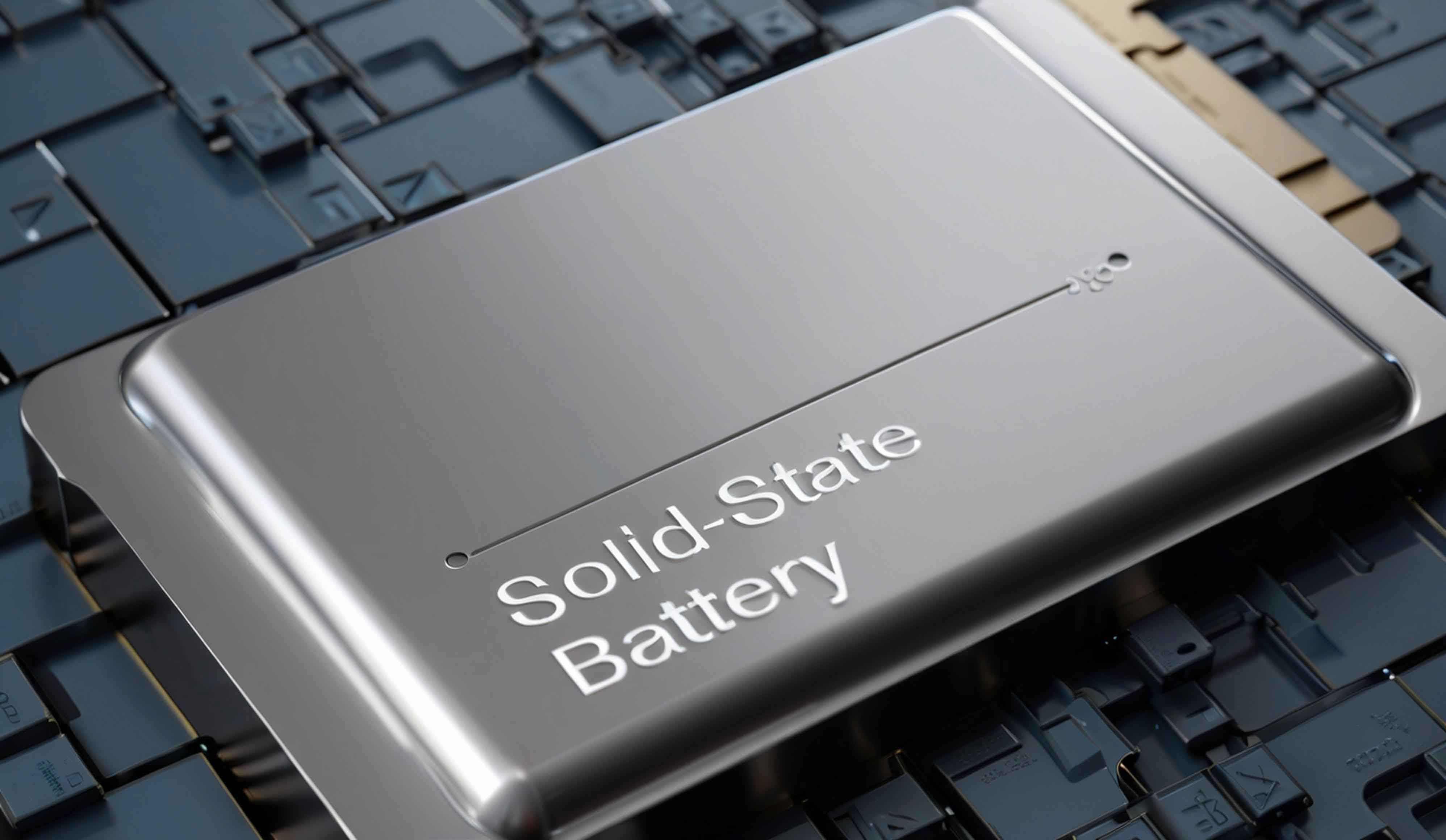
The evolution of the solid-state battery hinges critically on the development of robust solid electrolytes and compatible electrode architectures. A prime example is the creation of composite solid electrolyte films, where a flexible poly(vinylidene fluoride-co-hexafluoropropylene) (PVDF-HFP) matrix is synergistically combined with a rigid ceramic electrolyte such as Li1.3Al0.3Ti1.7(PO4)3 (LATP). The preparation involves dissolving the PVDF-HFP copolymer in an organic solvent, followed by the incorporation of LATP powder, a cross-linking agent, a photoinitiator, and lithium salt (e.g., LiClO4) to form a homogeneous precursor solution. Subsequent UV and thermal curing solidifies this blend into a mechanically robust, free-standing film. The resulting “rigid-flexible” composite structure mitigates the intrinsic brittleness of ceramic electrolytes while preserving high ionic conductivity. The ionic transport in such a composite can be modeled by a percolation theory-modified effective medium approximation:
$$
\sigma_{\text{eff}} = \sigma_{\text{ceramic}} \cdot \phi_{\text{ceramic}}^{m} + \sigma_{\text{polymer}} \cdot (1 – \phi_{\text{ceramic}})^{n}
$$
where $\sigma_{\text{eff}}$ is the effective ionic conductivity, $\sigma_{\text{ceramic}}$ and $\sigma_{\text{polymer}}$ are the conductivities of the ceramic and polymer phases, respectively, $\phi_{\text{ceramic}}$ is the volume fraction of the ceramic filler, and $m$, $n$ are empirical exponents related to the percolation threshold and tortuosity. This architecture is crucial for enhancing the physical integrity and electrochemical performance of the solid-state battery.
| Component | Role | Key Property | Impact on Solid-State Battery |
|---|---|---|---|
| PVDF-HFP | Flexible Polymer Matrix | High dielectric constant, mechanical flexibility | Enhances electrode/electrolyte contact, suppresses dendrite growth |
| LATP Ceramic | Rigid Ionic Conductor | High bulk ionic conductivity (~10-3 S/cm), stability vs. Li | Provides primary Li+ transport pathways |
| LiClO4 (or LiTFSI) | Lithium Salt | Source of Li+ ions | Enables ionic conductivity in the polymer phase |
| Cross-linker | Network Former | Creates 3D polymer network | Improves mechanical strength, dimensional stability |
Parallel to composite engineering, fundamental advancements in fluoropolymer synthesis are unlocking new material paradigms. Novel precipitation polymerization methods are enabling precise control over polyvinylidene fluoride (PVDF) chain architecture and crystalline phase. Traditional PVDF exists in multiple polymorphs (α, β, γ, δ), with the β-phase being highly desirable for its piezoelectric properties and potential role in ion transport. The new synthetic routes yield PVDF-based (co)polymers with a dominant β-phase and a unique “raspberry-like” particle morphology. The melting point ($T_m$) and phase composition are critical performance indicators. The relationship between processing conditions and the resulting β-phase content ($F(\beta)$) can be described empirically:
$$
F(\beta) = k \cdot \left( \frac{T_{\text{polym}}}{\eta} \right)^{-a} \cdot [\text{Additive}]^{b}
$$
where $T_{\text{polym}}$ is the polymerization temperature, $\eta$ is the medium viscosity, $[\text{Additive}]$ is the concentration of a phase-directing agent, and $k$, $a$, $b$ are constants. Polymers with a $T_m$ between 165–175 °C and a high β-phase ratio exhibit exceptional performance as binders in electrodes for lithium-ion and solid-state battery systems, improving adhesion and electronic/ionic wiring within the composite electrode.
Another pivotal innovation is the development of low-temperature polymerization techniques for VDF. Employing inorganic initiators in combination with specific sulfinate, sulfonate, or sulfite reducing agents at reduced temperatures favors the formation of fluoropolymers rich in the β-phase directly from the polymerization slurry. This low-energy pathway not only conserves resources but also provides a handle for kinetic control over the polymer microstructure, which is vital for tailoring properties for the solid-state battery component manufacturing.
| Method | Key Condition/Agent | Target Phase | Primary Advantage | Relevance to Solid-State Battery |
|---|---|---|---|---|
| Precipitation Polymerization | Specialized solvent/additive system | β-phase PVDF | Controls morphology & crystallinity | Superior binder for electrodes |
| Low-Temp Polymerization | Sulfinate/Sulfite Reductants | β-phase rich polymer | Energy-efficient, kinetic control | Source material for electrolyte matrices |
| Emulsion Polymerization | Hydrocarbon Surfactant (pH ≥4.0) | PTFE or other copolymers | Stable dispersions, controlled particle size | Precursor for porous membranes/coatings |
The performance of a solid-state battery is also heavily dependent on interfacial stability and adhesion. This has spurred the design of sophisticated fluoropolymer binder coatings for electrodes and separators. These coatings are engineered as multi-phase systems where distinct fluoropolymer phases, each containing a minimum mass fraction (e.g., >10%) of a common fluoromonomer to ensure compatibility, are blended. This creates a macroscopically homogeneous coating with exceptional dry and wet adhesion to electrode active materials and ceramic solid electrolytes, while minimizing leachable impurities that could degrade battery life. The adhesion strength ($\sigma_{\text{adh}}$) can be related to the surface energies of the components by a modified Owens-Wendt model:
$$
\sigma_{\text{adh}} \propto \sqrt{\gamma_{\text{coat}}^{d} \cdot \gamma_{\text{sub}}^{d}} + \sqrt{\gamma_{\text{coat}}^{p} \cdot \gamma_{\text{sub}}^{p}}
$$
where $\gamma^{d}$ and $\gamma^{p}$ represent the dispersive and polar components of the surface energy for the coating and the substrate (e.g., LiNi0.8Mn0.1Co0.1O2 cathode or LLZO solid electrolyte).
For applications beyond binders, such as in fuel cells which share material challenges with the solid-state battery, innovations in ion exchange membranes are critical. Novel dispersions of fluorinated ion-exchange resins incorporate heterocyclic moieties into the polymer backbone. The substantial steric hindrance introduced by these rings suppresses polymer crystallization, leading to enhanced gas permeability. For a catalyst coated membrane (CCM), this directly reduces mass transport overpotential. The extension of the operational temperature window from 30–85 °C to 30–150 °C is a game-changer for fuel cell efficiency and thermal management. The relationship between crystallinity ($\chi_c$), fractional free volume ($FFV$), and gas permeability ($P$) is often expressed as:
$$
P = A \cdot \exp\left(-B \cdot \frac{\chi_c}{FFV}\right)
$$
where $A$ and $B$ are constants specific to the gas-polymer pair. Reducing $\chi_c$ increases $FFV$, thereby exponentially improving $P$.
At the molecular frontier, synthetic methods for functional fluoropolymers are achieving remarkable precision. A notable breakthrough is the synthesis of low-molecular-weight telechelic fluoropolymers with terminal vinyl groups. This process starts with a liquid fluoroe lastomer bearing terminal carboxyl groups, produced via oxidative degradation of solid fluororubber. A silver-catalyzed decarboxylative allylation (or vinylation) reaction system then efficiently converts -COOH termini into highly reactive vinyl groups (-CH=CH2) under mild conditions (25–60 °C). The conversion efficiency can exceed 75%. These terminally functional fluorinated oligomers serve as versatile precursors for constructing more complex polymer architectures via thiol-ene or other click chemistries, finding uses as performance additives, surface modifiers, and advanced feedstocks for additive manufacturing (3D printing) in aerospace and energy sectors, including custom components for solid-state battery packaging or testing fixtures.
| Polymer Type | Key Functional Group | Synthetic Route | Primary Application Domain |
|---|---|---|---|
| High-β-phase PVDF | –(CH2-CF2)n— (β-conformation) | Precipitation Polymerization | Solid-state battery electrode binder |
| Terminal Vinyl Fluorooligomer | -CH=CH2 (chain end) | Ag-catalyzed Decarboxylative Vinylation | Reactive precursor for composites, 3D printing |
| Gas-Permeable Ionomer | -SO3H / Heterocycle | Emulsion Copolymerization | High-temp fuel cell catalyst layer |
On the extreme end of the performance spectrum, advancements in polytetrafluoroethylene (PTFE) technology continue to push boundaries. Novel polymer compositions comprising >99 wt% PTFE have been developed, exhibiting extraordinary melting temperatures exceeding 327 °C at 0.1 MPa pressure. This elevated melting point, which can be linked to极高的结晶度和分子量, can be conceptualized using the Flory-Vrij equation for the melting point of a homopolymer:
$$
\frac{1}{T_m} – \frac{1}{T_m^0} = \frac{R}{\Delta H_u} \cdot \frac{V_u}{V_1} \left( \phi_1 – \chi_1 \phi_1^2 \right)
$$
where $T_m^0$ is the equilibrium melting point of a perfect crystal, $\Delta H_u$ is the enthalpy of fusion per repeating unit, $V_u/V_1$ is the ratio of molar volumes, $\phi_1$ is the diluent volume fraction, and $\chi_1$ is the Flory interaction parameter. For ultra-pure, high-molecular-weight PTFE, the absence of diluents or co-monomers ($\phi_1 \rightarrow 0$) allows $T_m$ to approach $T_m^0$ very closely. Such materials enable fabrication via demanding processes like cold deep drawing and stamping, expanding PTFE’s utility into high-precision mechanical, automotive, and aerospace components.
Finally, the role of fluoropolymer films as critical processing aids cannot be overlooked. Specifically, monolayer films of ethylene-tetrafluoroethylene (ETFE) or expanded PTFE (ePTFE) have found indispensable use as release films or isolation membranes in composite manufacturing processes (e.g., autoclave curing of carbon fiber reinforced polymers). Their exceptional non-stick properties, chemical resistance, and thermal stability prevent resin adhesion to tooling, ensuring pristine surface finish on composite parts. This application, while indirect, supports the production of lightweight structural components used in electric vehicles and aerospace platforms that increasingly integrate solid-state battery systems.
In conclusion, the ongoing innovation in fluoropolymer science is providing a rich and versatile toolkit for addressing the most pressing challenges in advanced electrochemical systems. From enabling the fundamental architecture of the solid-state battery through composite electrolytes and advanced binders, to facilitating high-temperature operation in fuel cells, and supporting the manufacturing of next-generation lightweight structures, these materials are at the forefront of technological progress. The ability to precisely control polymerization kinetics, crystalline phase, terminal functionality, and composite morphology through the methods discussed herein will continue to be a critical driver for achieving higher energy densities, improved safety, and longer lifespan in energy storage and conversion devices, solidifying the pivotal role of the solid-state battery in our sustainable energy future.