
In recent years, the development of advanced energy storage systems has become crucial for powering portable electronics, electric vehicles, and grid-scale applications. Among these, li-ion batteries stand out due to their high energy density, long cycle life, and environmental friendliness. However, traditional li-ion battery electrodes often suffer from limitations such as poor mechanical flexibility, complex manufacturing processes, and reliance on additives like conductive agents and binders. To address these issues, researchers have explored innovative electrode designs, including three-dimensional (3D) integrated flexible electrodes. These electrodes combine active materials with conductive, self-supporting substrates, eliminating the need for additional components and simplifying production. In this study, we investigate the feasibility of using carbon cloth—a woven fabric of carbon fibers—as a 3D integrated flexible cathode for li-ion batteries. By examining its graphitization degree, electrochemical performance, and mechanical properties, we aim to demonstrate its potential to revolutionize li-ion battery technology.
Carbon-based materials are particularly attractive for flexible electrodes due to their excellent electrical conductivity, chemical stability, and lightweight nature. Carbon cloth, in particular, offers a unique 3D porous structure that can host active materials while providing efficient pathways for electron and ion transport. This makes it a promising candidate for next-generation li-ion batteries. Our work focuses on evaluating different types of carbon cloths subjected to high-temperature graphitization treatment, assessing their suitability as both active materials and current collectors in li-ion batteries. We employ various characterization techniques, including X-ray diffraction (XRD) and Raman spectroscopy, to quantify graphitization degrees. Additionally, we fabricate half-cells using lithium metal as the counter electrode to test electrochemical performance, and we load the carbon cloths with lithium iron phosphate (LiFePO₄) via electrophoretic deposition to create integrated cathodes. Through this comprehensive analysis, we seek to establish a correlation between the mechanical, electrical, and electrochemical properties of carbon cloth-based electrodes, paving the way for simplified and efficient li-ion battery production.
The graphitization degree of carbon materials plays a critical role in determining their electrical conductivity and electrochemical behavior. In carbon cloth, higher graphitization typically leads to better crystalline order, enhancing electron mobility. We begin by analyzing three types of carbon cloth samples, labeled as CC3, CC, and H0, after heat treatment at 2800°C under argon atmosphere. XRD patterns are collected to determine the interlayer spacing of the (002) crystal plane, which is used to calculate graphitization degrees. The Bragg equation is fundamental to this analysis:
$$2d\sin\theta = \lambda$$
where \(d\) is the interplanar spacing, \(\theta\) is the diffraction angle, and \(\lambda\) is the wavelength of X-ray radiation. For carbon materials, the graphitization degree \(g\) can be estimated using the Franklin model with modifications by Mering and Marie:
$$g = \frac{0.3440 – d_{(002)}}{0.3440 – 0.3354} \times 100\%$$
Here, \(0.3354\, \text{nm}\) represents the ideal graphite (002) spacing, and \(0.3440\, \text{nm}\) corresponds to fully non-graphitized carbon. The calculated values for CC3, CC, and H0 are summarized in Table 1.
| Sample | d(002) (nm) | Graphitization Degree \(g\) (%) |
|---|---|---|
| CC3 | 0.3372 | 60.47 |
| CC | 0.3365 | 76.02 |
| H0 | 0.3358 | 91.60 |
These results indicate that H0 has the highest graphitization degree, approaching that of perfect graphite, while CC3 is the least graphitized. This variation likely stems from differences in raw materials and manufacturing processes. To complement XRD data, we perform Raman spectroscopy, which reveals D and G bands around 1360 cm⁻¹ and 1580 cm⁻¹, respectively. The D band relates to disordered carbon atoms, and the G band reflects ordered sp²-hybridized carbon. After heat treatment, all samples show reduced D band intensity, confirming effective graphitization. However, the relative intensities vary, with H0 displaying the most pronounced G band, consistent with its high \(g\) value. These structural insights are crucial for understanding subsequent electrochemical performance in li-ion batteries.
To evaluate the intrinsic electrochemical properties of carbon cloths, we assemble half-cells using the graphitized carbon cloths as working electrodes and lithium metal as the counter electrode. The electrolyte consists of a 1 M LiPF₆ solution in a mixture of ethylene carbonate, dimethyl carbonate, and ethyl methyl carbonate. Galvanostatic charge-discharge tests are conducted between 0.005 V and 3.0 V at a current rate of 0.1 C. The initial discharge specific capacities for CC3, CC, and H0 are 83.6 mAh·g⁻¹, 94.5 mAh·g⁻¹, and 115.2 mAh·g⁻¹, respectively. All curves exhibit a voltage plateau between 0.1 V and 0.5 V, indicative of lithium intercalation into the carbon structure. The initial discharge behavior can be modeled using a dual-phase mechanism: lithium ions first insert into disordered carbon regions, forming a solid solution that raises the electrode potential, followed by insertion into graphitic domains, lowering the potential. This phenomenon is more pronounced in samples with lower graphitization degrees, such as CC3, where the potential rise is steeper. The capacity contribution from carbon cloths themselves is significant, highlighting their potential as active materials in li-ion batteries.
Cyclic voltammetry (CV) tests further elucidate the electrochemical kinetics. The CV curves show oxidation and reduction peaks corresponding to lithium intercalation and deintercalation. The potential differences between peaks (\(\Delta V\)) are 0.413 V for CC3, 0.348 V for CC, and 0.289 V for H0. Smaller \(\Delta V\) values indicate lower polarization and better reversibility, which aligns with H0’s high graphitization degree and superior conductivity. The relationship between polarization and internal resistance can be expressed as:
$$\Delta V = I \cdot R_{\text{internal}}$$
where \(I\) is the current and \(R_{\text{internal}}\) is the total internal resistance. For li-ion batteries, minimizing polarization is essential for high power output. Cycle stability tests over 50 cycles at 0.1 C reveal that the specific capacities stabilize around 55.0 mAh·g⁻¹ for CC3, 80.0 mAh·g⁻¹ for CC, and 88.0 mAh·g⁻¹ for H0. Although H0 shows the highest capacity, CC demonstrates more stable cycling with less fluctuation, suggesting a balance between conductivity and mechanical integrity. These findings underscore the importance of optimizing graphitization for durable li-ion battery electrodes.
| Sample | Initial Discharge Capacity (mAh·g⁻¹) | Capacity after 50 Cycles (mAh·g⁻¹) | Voltage Plateau (V) | Peak Potential Difference \(\Delta V\) (V) |
|---|---|---|---|---|
| CC3 | 83.6 | 55.0 | 0.1-0.5 | 0.413 |
| CC | 94.5 | 80.0 | 0.1-0.5 | 0.348 |
| H0 | 115.2 | 88.0 | 0.1-0.5 | 0.289 |
Building on these results, we proceed to fabricate integrated cathodes by depositing LiFePO₄ (LFP) onto the carbon cloths via electrophoretic deposition. This method eliminates the need for conductive additives and binders, streamlining the manufacturing process for li-ion batteries. The LFP loading is controlled to achieve a mass ratio of approximately 1.2:1 (LFP to carbon cloth) across all samples. Scanning electron microscopy confirms that LFP particles adhere well to the carbon fibers, with finer particles forming intimate contacts that enhance conductivity. The integrated cathodes are then tested in half-cells against lithium metal, with charge-discharge cycles between 2.8 V and 4.1 V at 0.1 C. The initial discharge specific capacities for CC3+LFP, CC+LFP, and H0+LFP are 73.2 mAh·g⁻¹, 109.5 mAh·g⁻¹, and 130.2 mAh·g⁻¹, respectively. Notably, CC+LFP exhibits the most stable performance over 50 cycles, maintaining a capacity around 90.0 mAh·g⁻¹, while H0+LFP shows higher initial capacity but greater degradation.
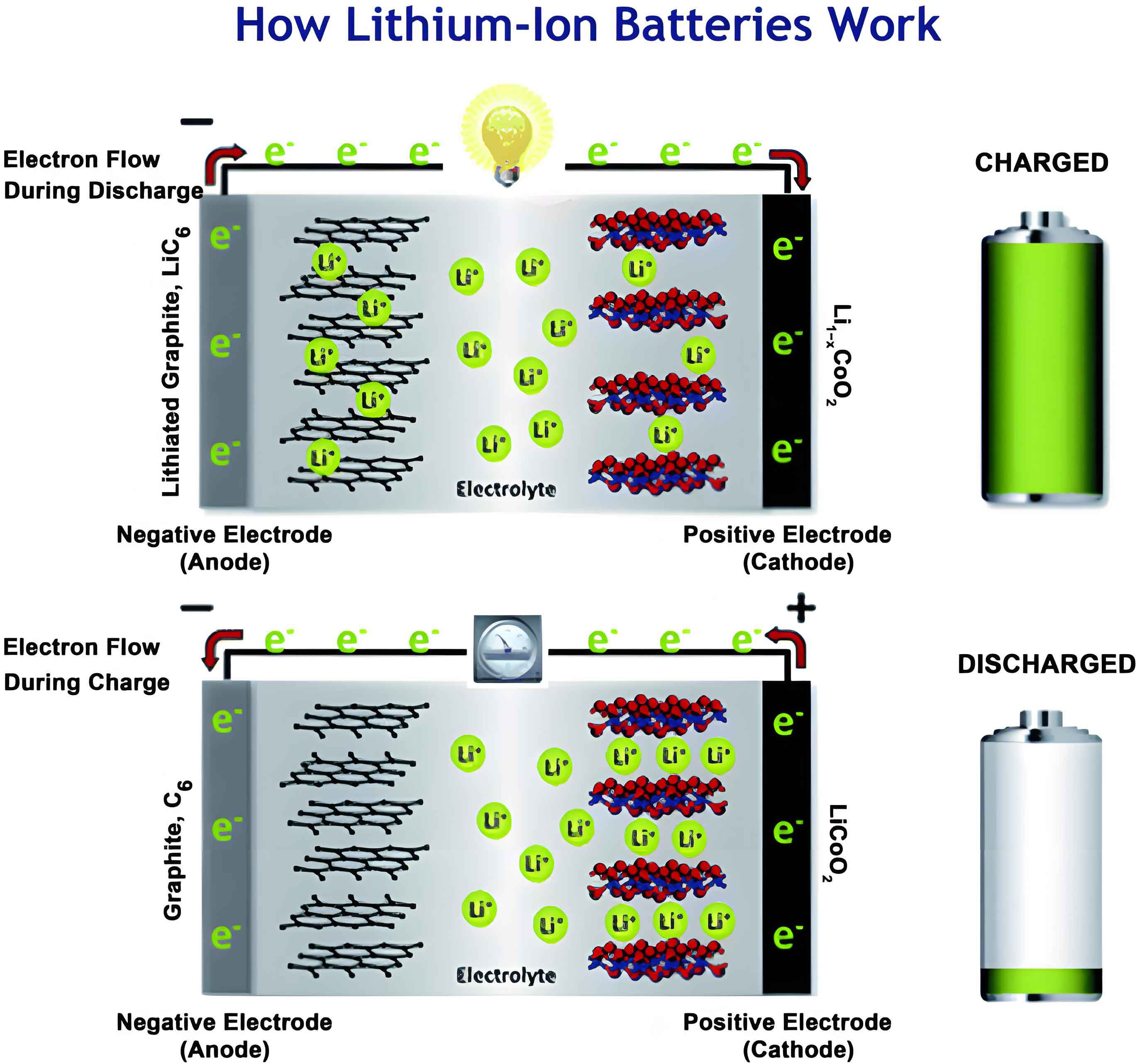
Electrochemical impedance spectroscopy (EIS) provides insights into the interfacial resistance of these integrated cathodes. The Nyquist plots consist of a high-frequency semicircle representing electrolyte resistance (\(R_s\)), a mid-frequency semicircle for charge transfer resistance (\(R_{ct}\)), and a low-frequency Warburg tail for ion diffusion. The equivalent circuit model includes a constant phase element (CPE) to account for double-layer capacitance. The fitted parameters reveal that CC+LFP has the lowest \(R_{ct}\) value, indicating efficient charge transfer at the electrode-electrolyte interface. This correlates with its excellent cycling stability and highlights the role of carbon cloth’s mechanical properties in maintaining good electrical contact with LFP particles. For li-ion batteries, reducing \(R_{ct}\) is key to enhancing rate capability and overall efficiency.
To understand the mechanical influence on electrochemical performance, we conduct Vickers hardness tests on the carbon cloths. The hardness values inversely correlate with graphitization degree: H0 is the softest, CC3 the hardest, and CC intermediate. When LFP particles are deposited, they exert mechanical pressure on the carbon fibers during battery assembly. We propose a model to describe the interaction. For hard fibers like those in CC3, only elastic deformation occurs, leading to point contacts with LFP particles and higher interfacial resistance. In contrast, fibers in CC undergo plastic deformation, forming area contacts that lower resistance. Excessively soft fibers like those in H0 may fracture under pressure, causing resistance instability. This mechanical behavior can be quantified using Hertzian contact theory:
$$P = \frac{4}{3} E^* \sqrt{R} \delta^{3/2}$$
where \(P\) is the load, \(E^*\) is the effective modulus, \(R\) is the radius of curvature, and \(\delta\) is the deformation depth. For optimal performance in li-ion batteries, carbon fibers should have moderate hardness to deform plastically without breaking, ensuring durable electrical pathways. This interplay between mechanical and electrical properties is crucial for designing robust integrated electrodes for li-ion batteries.
| Sample | Vickers Hardness (HV) | Indentation Diagonal Length (mm) | Proposed Deformation Mode under LFP Load | Impact on Conductivity |
|---|---|---|---|---|
| CC3 | Highest | 0.23 | Elastic deformation | Point contact, higher resistance |
| CC | Moderate | 0.45 | Plastic deformation | Area contact, lower resistance |
| H0 | Lowest | 0.72 | Fracture | Unstable resistance |
The capacity retention of integrated cathodes is further analyzed using the following empirical formula for cycle life:
$$C_n = C_0 \cdot e^{-kn}$$
where \(C_n\) is the capacity at cycle \(n\), \(C_0\) is the initial capacity, and \(k\) is the degradation rate constant. For CC+LFP, \(k\) is the smallest, indicating superior longevity. This aligns with its balanced graphitization degree and mechanical properties. Moreover, the volumetric energy density of li-ion batteries with integrated cathodes can be estimated as:
$$E_v = \frac{C_m \cdot V_{\text{avg}} \cdot \rho}{3600}$$
where \(C_m\) is the specific capacity (in mAh·g⁻¹), \(V_{\text{avg}}\) is the average discharge voltage (in V), \(\rho\) is the electrode density (in g·cm⁻³), and \(E_v\) is in Wh·L⁻¹. By eliminating binders and conductive agents, carbon cloth-based electrodes potentially offer higher \(\rho\) and thus improved \(E_v\), making them attractive for compact li-ion battery designs.
In discussion, we emphasize that the graphitization degree of carbon cloth directly affects its electronic conductivity, which in turn influences the electrochemical performance of li-ion batteries. Higher graphitization reduces electron scattering, as described by the Bloch theorem in solid-state physics:
$$\psi_k(r) = u_k(r) e^{i k \cdot r}$$
where \(\psi_k(r)\) is the electron wavefunction, \(u_k(r)\) is a periodic function, and \(k\) is the wave vector. In well-graphitized carbon, the periodic potential from ordered atoms facilitates electron transport, lowering resistivity. However, excessive softness can compromise mechanical stability. Therefore, for li-ion battery applications, an intermediate graphitization degree around 76% (as in CC) appears optimal, combining good conductivity with sufficient hardness to withstand cycling stresses. This insight guides the selection of carbon materials for future flexible li-ion batteries.
We also explore the implications for manufacturing. Traditional li-ion battery electrode production involves multiple steps: mixing active materials with conductive carbon and binders, slurry coating onto current collectors, drying, and calendering. Using carbon cloth as an integrated cathode simplifies this to a single electrophoretic deposition step, reducing cost and energy consumption. This approach aligns with the growing demand for sustainable and efficient li-ion battery production. Furthermore, the 3D porous structure of carbon cloth allows for higher active material loading without increasing electrode thickness, potentially boosting areal capacity—a critical metric for advanced li-ion batteries. The areal capacity \(C_a\) can be expressed as:
$$C_a = C_m \cdot m_{\text{loading}}$$
where \(m_{\text{loading}}\) is the mass loading per unit area. By optimizing carbon cloth morphology (e.g., introducing surface roughness or pores), \(m_{\text{loading}}\) can be increased while maintaining good electrolyte penetration, essential for high-power li-ion batteries.
To summarize our findings, we compile a comprehensive table comparing the key properties of the three carbon cloths for li-ion battery cathodes.
| Property | CC3 | CC | H0 | Ideal Range for Li-Ion Batteries |
|---|---|---|---|---|
| Graphitization Degree (%) | 60.47 | 76.02 | 91.60 | 70-80 |
| Initial Capacity (mAh·g⁻¹) as Electrode | 83.6 | 94.5 | 115.2 | >100 |
| Cycle Stability (Capacity Retention after 50 cycles) | 65.8% | 84.7% | 76.4% | >80% |
| Hardness (Relative) | High | Moderate | Low | Moderate |
| LFP-Loaded Initial Capacity (mAh·g⁻¹) | 73.2 | 109.5 | 130.2 | >120 |
| LFP-Loaded Cycle Stability | Poor | Excellent | Good | Stable |
| Charge Transfer Resistance \(R_{ct}\) | High | Low | Medium | Low |
From this, CC emerges as the most suitable carbon cloth for 3D integrated flexible cathodes in li-ion batteries, offering a balanced combination of graphitization, mechanical resilience, and electrochemical performance. Future work should focus on modifying carbon fiber surfaces to enhance active material adhesion and exploring other active materials like lithium nickel manganese cobalt oxide (NMC) for higher voltage li-ion batteries. Additionally, scaling up electrophoretic deposition for industrial li-ion battery production warrants investigation.
In conclusion, our study demonstrates the feasibility of carbon cloth as a 3D integrated flexible cathode for li-ion batteries. By carefully controlling graphitization degree, we can tailor the electrical and mechanical properties to meet the demands of high-performance li-ion batteries. The integration of active materials directly onto carbon cloth simplifies manufacturing, reduces reliance on additives, and potentially improves energy density. As the world shifts towards flexible and wearable electronics, such innovative electrode designs will play a pivotal role in advancing li-ion battery technology. We envision that carbon cloth-based electrodes could soon become a standard in next-generation li-ion batteries, driving progress in energy storage and sustainability.
To further quantify the benefits, consider the overall energy efficiency \(\eta\) of a li-ion battery with an integrated cathode:
$$\eta = \frac{E_{\text{discharge}}}{E_{\text{charge}}} \times 100\%$$
where \(E\) represents energy. With reduced internal resistance from optimized carbon cloth, \(\eta\) can approach 95% or higher, making li-ion batteries more economical. Moreover, the environmental impact of li-ion battery production can be minimized by eliminating toxic binders like polyvinylidene fluoride (PVDF). Life cycle assessments of carbon cloth-based li-ion batteries may reveal significant reductions in carbon footprint, aligning with global green energy initiatives.
In summary, carbon cloth holds great promise for revolutionizing li-ion battery electrodes. Through continued research and development, we can unlock its full potential, paving the way for more efficient, durable, and flexible energy storage solutions. The journey toward better li-ion batteries is ongoing, and carbon cloth is poised to be a key material in this exciting evolution.