
In nuclear power plants, the DC system plays a critical role in supplying power to essential loads during loss of AC power, ensuring safety and operational continuity. Traditionally, lead-acid batteries have been the standard choice for these systems due to their reliability and mature technology. However, lead-acid batteries come with significant drawbacks, including large size, heavy weight, high maintenance requirements, and substantial operational workload. With advancements in industrial technology, lithium iron phosphate (LiFePO4) batteries have emerged as a promising alternative, offering higher energy density, longer lifespan, and reduced maintenance. This article explores the feasibility of replacing lead-acid batteries with LiFePO4 batteries in nuclear power plant DC systems, comparing their technical characteristics, maintenance needs, and safety risks, and proposing a preliminary design concept.
The working principle of a LiFePO4 battery involves the movement of lithium ions between the cathode and anode through an electrolyte. The cathode material is LiFePO4, connected to an aluminum foil, while the anode is carbon (graphite), connected to a copper foil. The battery is sealed with a metal, aluminum-plastic, or plastic casing, and a polymer separator prevents direct contact between electrodes while allowing lithium ion passage. During charging, lithium ions migrate from the cathode to the anode, and during discharging, they move back, facilitating energy storage and release. The electrochemical reactions can be represented as:
$$ \text{Cathode: LiFePO}_4 \leftrightarrow \text{FePO}_4 + \text{Li}^+ + e^- $$
$$ \text{Anode: C} + \text{Li}^+ + e^- \leftrightarrow \text{LiC}_6 $$
These reactions enable efficient energy transfer, with a nominal voltage of 3.2V per cell. A LiFePO4 battery pack consists of multiple cells connected in series and parallel to achieve desired voltage and capacity, managed by a Battery Management System (BMS) that monitors parameters like voltage, current, temperature, and state of charge to prevent overcharging, over-discharging, and short circuits.
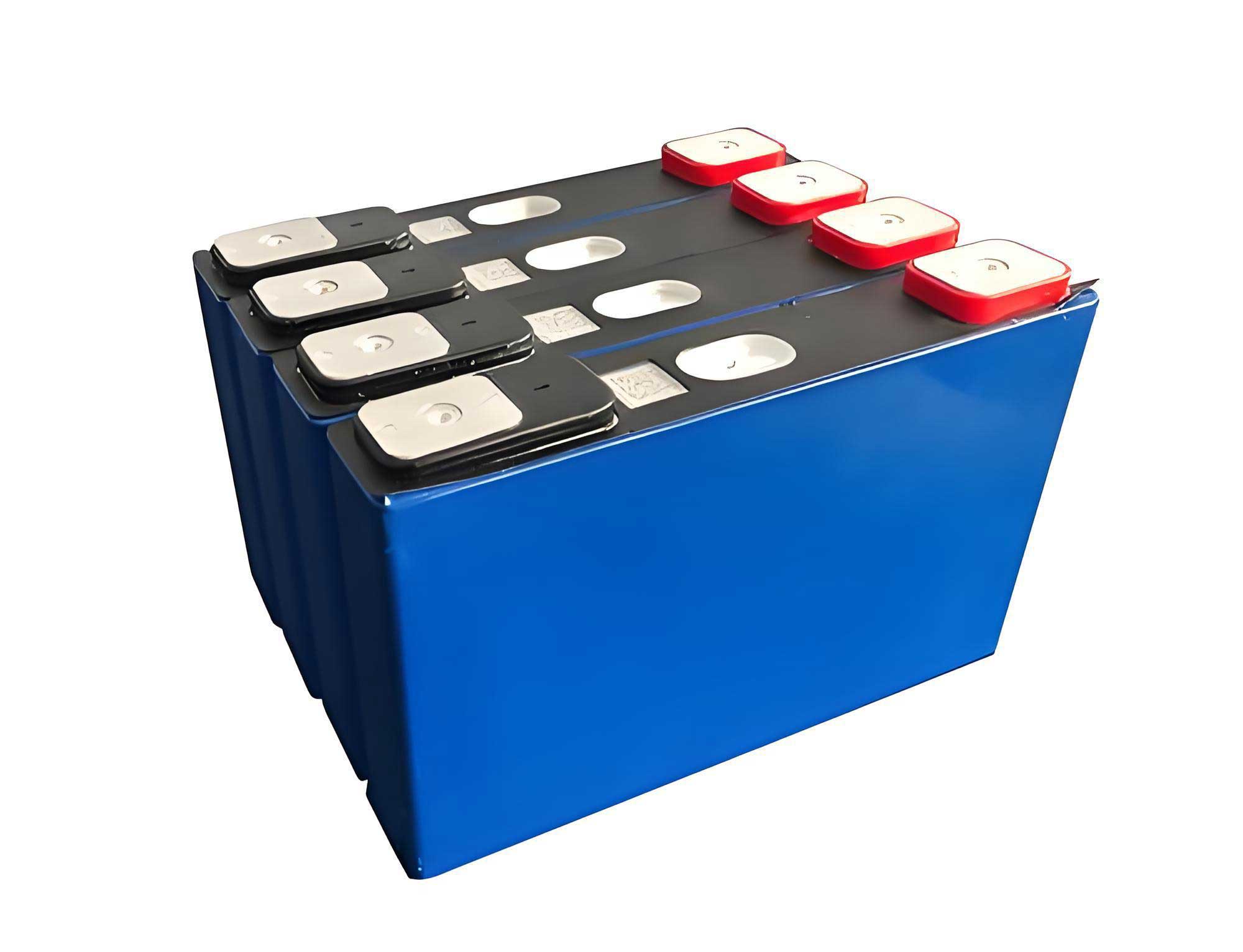
The performance characteristics of LiFePO4 batteries are superior in many aspects compared to lead-acid batteries. For instance, the charge-discharge curve of a LiFePO4 battery shows a stable voltage plateau, with minimal voltage drop until near the end of discharge, indicating high efficiency. The discharge capacity can be expressed as:
$$ C = I \times t $$
where \( C \) is the capacity in ampere-hours (Ah), \( I \) is the current in amperes (A), and \( t \) is the time in hours (h). LiFePO4 batteries typically offer a discharge rate from 0.2C to 20C, meaning they can deliver high currents quickly, which is crucial for emergency power scenarios. The energy density of a LiFePO4 battery is approximately 100-160 Wh/kg, significantly higher than the 30-50 Wh/kg of lead-acid batteries. This translates to smaller size and lighter weight for the same capacity, reducing space and structural requirements in nuclear plants.
To quantify the differences, the following table compares key performance metrics between LiFePO4 batteries and lead-acid batteries:
| Parameter | LiFePO4 Battery | Lead-Acid Battery |
|---|---|---|
| Energy Density (Wh/kg) | 100-160 | 30-50 |
| Weight Specific Energy (Wh/kg) | High | Low |
| Volume Specific Energy (Wh/L) | 200-300 | 60-100 |
| Cycle Life (cycles) | 2000-5000 | 300-500 |
| Charging Current | Up to 1C | 0.1C-0.3C |
| Discharging Current | Up to 20C | 0.05C-0.2C |
| Operating Temperature Range | -20°C to 60°C | 0°C to 40°C |
| Maintenance | Minimal | Regular |
| Risk of Thermal Runaway | Low (with BMS) | Very Low |
The table highlights the advantages of LiFePO4 batteries, such as longer cycle life, wider temperature tolerance, and higher power capability. These features make the LiFePO4 battery an attractive option for nuclear applications, where reliability and durability are paramount. Additionally, the LiFePO4 chemistry is inherently safer than other lithium-ion variants due to its stable phosphate structure, reducing risks of thermal runaway.
In terms of maintenance, lead-acid batteries require extensive manual checks, including monthly, quarterly, and annual inspections per standards like NB/T 20028.4-2010. Tasks involve measuring voltage, current, electrolyte levels, temperature, and density, along with capacity tests during outages. This demands significant personnel effort, especially in plants with multiple battery sets. In contrast, LiFePO4 batteries are virtually maintenance-free, with the BMS providing real-time monitoring and automated alerts. The BMS can estimate battery health using algorithms based on electrochemical models, such as:
$$ \text{State of Health (SOH)} = \frac{C_{\text{current}}}{C_{\text{initial}}} \times 100\% $$
where \( C_{\text{current}} \) is the current capacity and \( C_{\text{initial}} \) is the initial capacity. This minimizes human intervention and enhances operational efficiency.
However, safety concerns, particularly fire risk, must be addressed. Lead-acid batteries have a low fire risk due to their aqueous electrolyte and low energy density, though they may leak acid. LiFePO4 batteries use flammable organic electrolytes, and while their thermal stability is better than other lithium batteries, incidents can occur from internal defects (e.g., lithium dendrite growth) or external factors (e.g., short circuits). The risk can be mitigated through robust BMS design, thermal management systems, and proper enclosure. For nuclear plants, safety assessments must consider these factors, especially for safety-grade systems in the nuclear island.
The feasibility of applying LiFePO4 batteries in nuclear power plant DC systems depends on the specific area. In conventional island and balance of plant (BOP) systems, where batteries are often housed in semi-open buildings, LiFePO4 batteries can be adopted with room modifications for fire containment. For the nuclear island, safety-grade DC systems require batteries that meet nuclear qualifications, including seismic and aging tests. Currently, LiFePO4 batteries lack such qualifications, so their use in safety-grade systems is not yet feasible. Nonetheless, for non-safety applications, LiFePO4 batteries offer clear benefits.
A preliminary design for a DC system with LiFePO4 batteries includes the battery pack, BMS, charger, and distribution equipment. The system configuration can be represented as:
$$ V_{\text{system}} = N_s \times V_{\text{cell}} $$
$$ C_{\text{system}} = N_p \times C_{\text{cell}} $$
where \( N_s \) is the number of cells in series, \( V_{\text{cell}} \) is the cell voltage (3.2V), \( N_p \) is the number of parallel strings, and \( C_{\text{cell}} \) is the cell capacity. The BMS integrates voltage, current, and temperature sensors, with control logic to balance cells and protect against faults. For example, the charging protocol may follow a constant current-constant voltage (CC-CV) profile, mathematically described as:
$$ I_{\text{charge}} = \begin{cases}
I_{\text{constant}} & \text{for } V < V_{\text{max}} \\
0 & \text{for } V \geq V_{\text{max}}
\end{cases} $$
This ensures safe and efficient operation. The BMS also communicates with plant monitoring systems, enabling remote oversight and reducing onsite checks.
To further illustrate the advantages, consider the operational cost savings. The total cost of ownership (TCO) for batteries includes initial investment, maintenance, and replacement. For lead-acid batteries, frequent replacements due to shorter lifespan increase TCO. In contrast, LiFePO4 batteries, despite higher upfront cost, offer lower TCO over time. A simplified TCO model can be:
$$ \text{TCO} = C_{\text{initial}} + \sum_{i=1}^{n} (C_{\text{maintenance},i} + C_{\text{replacement},i}) $$
where \( n \) is the number of years. With LiFePO4 batteries, \( C_{\text{maintenance}} \) and \( C_{\text{replacement}} \) are reduced, making them economically viable in the long run.
In conclusion, LiFePO4 batteries present a compelling alternative to lead-acid batteries in nuclear power plant DC systems, offering superior performance, reduced maintenance, and longer service life. While challenges remain in safety-grade applications due to qualification requirements, their use in conventional and BOP systems is highly feasible with proper design modifications. The integration of a BMS enhances reliability and safety, aligning with nuclear industry standards. Future work should focus on qualifying LiFePO4 batteries for nuclear environments and developing advanced fire suppression strategies. As technology evolves, the LiFePO4 battery is poised to transform DC power systems in nuclear plants, contributing to more efficient and sustainable operations.
Expanding on the technical details, the electrochemical properties of LiFePO4 batteries can be analyzed using the Nernst equation for cell potential:
$$ E = E^0 – \frac{RT}{nF} \ln Q $$
where \( E \) is the cell potential, \( E^0 \) is the standard potential, \( R \) is the gas constant, \( T \) is temperature, \( n \) is the number of electrons transferred, \( F \) is Faraday’s constant, and \( Q \) is the reaction quotient. For LiFePO4, this relates to the lithium ion concentration gradients during operation. Additionally, the diffusion of lithium ions in the electrode materials can be modeled with Fick’s laws, affecting rate capability and efficiency.
The BMS algorithms often include Kalman filters or neural networks for state estimation, such as:
$$ \hat{x}_{k|k-1} = F_k \hat{x}_{k-1|k-1} + B_k u_k $$
$$ P_{k|k-1} = F_k P_{k-1|k-1} F_k^T + Q_k $$
where \( \hat{x} \) is the state estimate (e.g., state of charge), \( F \) is the state transition matrix, \( P \) is the error covariance, and \( Q \) is the process noise. These techniques improve accuracy in predicting battery behavior.
Regarding nuclear safety, the design basis accidents (DBAs) must consider battery performance under extreme conditions. For LiFePO4 batteries, tests should include radiation exposure, high-temperature scenarios, and seismic events. The probability of failure can be assessed using reliability engineering methods, like:
$$ \lambda(t) = \frac{f(t)}{R(t)} $$
where \( \lambda(t) \) is the failure rate, \( f(t) \) is the probability density function, and \( R(t) \) is the reliability function. Comparative studies between LiFePO4 and lead-acid batteries under nuclear conditions are essential for adoption.
In terms of environmental impact, LiFePO4 batteries are more eco-friendly than lead-acid batteries, as they contain no toxic lead and have higher recyclability. The life cycle assessment (LCA) can quantify this, considering factors from raw material extraction to disposal. For nuclear plants, which prioritize sustainability, this adds to the appeal of LiFePO4 batteries.
To summarize the feasibility analysis, the following table outlines key considerations for implementing LiFePO4 batteries in different areas of a nuclear power plant:
| Plant Area | Feasibility of LiFePO4 Battery | Key Requirements | Risks and Mitigations |
|---|---|---|---|
| Nuclear Island (Safety-Grade) | Low (Pending Qualification) | Nuclear qualification (seismic, aging), fire suppression | Thermal runaway; use of BMS and containment |
| Conventional Island | High | Room ventilation, fire detection systems | Short circuits; regular BMS checks |
| BOP | High | Similar to conventional island | Over-discharge; automated monitoring |
The ongoing development of LiFePO4 battery technology, including improvements in energy density and safety features, will further enhance its suitability for nuclear applications. Research into solid-state electrolytes, for instance, could eliminate flammability concerns, making LiFePO4 batteries even more attractive.
In my perspective, as an engineer analyzing this transition, the benefits of LiFePO4 batteries are substantial. They align with global trends towards digitalization and automation in power systems, reducing human error and operational costs. For nuclear plants, where safety is paramount, the robust monitoring capabilities of LiFePO4 battery systems provide an added layer of protection. I recommend pilot projects in non-safety systems to gather operational data and refine designs before broader implementation.
Ultimately, the adoption of LiFePO4 batteries in nuclear power plant DC systems represents a step forward in modernizing infrastructure. By leveraging advanced battery chemistry and smart management systems, plants can achieve higher reliability, efficiency, and sustainability. Continuous innovation and collaboration between battery manufacturers and nuclear experts will be key to realizing this potential.