
As a researcher focused on renewable energy technologies, I have always been intrigued by the potential of solar systems to address global energy challenges. The increasing concentration of atmospheric CO2 due to fossil fuel usage and deforestation has accelerated the need for sustainable alternatives. Solar energy, being abundant and clean, stands out as a key component of our future energy mix. However, the efficiency of photovoltaic (PV) modules in solar systems is significantly hampered by rising operating temperatures. When solar cells convert sunlight into electricity, a portion of the energy is dissipated as heat, leading to temperature increases that reduce power output and longevity. For crystalline silicon solar cells, which dominate the market, every 1°C rise above 25°C can decrease power output by 0.4% to 0.5%, with some studies indicating drops of up to 6.5%. This thermal degradation not only lowers practical efficiency from theoretical highs of 31% to mere 10-15% but also causes irreversible aging. Therefore, developing effective thermal management strategies for solar systems is paramount to enhancing their performance and adoption.
Traditional cooling methods for solar systems, such as natural or forced ventilation, hydraulic cooling, liquid immersion, and heat pipes, often involve complex setups or energy-intensive components. In contrast, passive thermal control using phase change materials (PCMs) offers a lightweight, compact, and efficient alternative. PCMs absorb and release large amounts of latent heat during phase transitions within a narrow temperature range, making them ideal for thermal energy storage in solar systems. By integrating PCM layers behind PV panels, we can buffer temperature spikes and maintain optimal operating conditions. This integrated approach, known as the PV/PCM system, has garnered attention for its simplicity and effectiveness. My experimental work aims to deepen understanding of PV/PCM dynamics, particularly focusing on real-world factors like charging states and PCM quantity optimization, which are critical for practical solar system deployments.
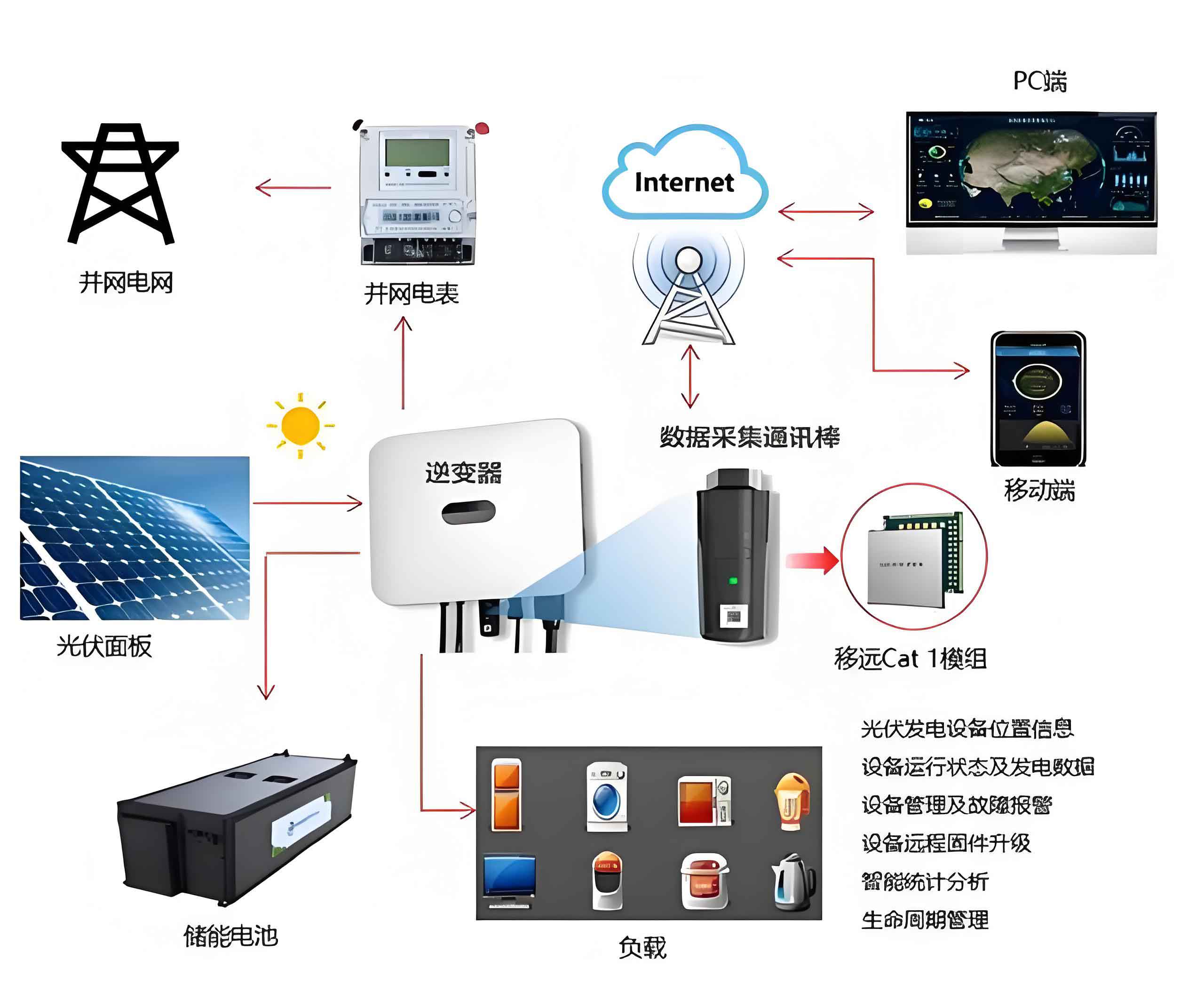
In designing my experiments, I considered two primary aspects: the influence of the solar system’s operational state on PV temperature and the determination of adequate PCM volume for effective thermal regulation. For the first part, I deployed two identical monocrystalline silicon PV panels, each with dimensions of 400 mm × 400 mm × 5 mm and a rated power of 25 W, on a rooftop setting. One panel was connected to a 12 V/24 Ah lead-acid battery for charging, simulating a typical solar system in use, while the other was left open-circuited (non-charging). Both panels were insulated from rooftop radiation with 20 mm thick foam boards to isolate environmental effects. Temperature data were logged over daytime hours under varying solar irradiance. The goal was to quantify temperature differences attributable to the electrical load in a solar system, as the current flow during charging generates additional Joule heating. For the second part, I constructed three PV/PCM system models using glass enclosures with internal dimensions of 420 mm × 220 mm × 40 mm. Each housed a 400 mm × 200 mm × 5 mm PV panel, positioned at heights of 10 mm, 20 mm, and 40 mm above the base to create PCM layer thicknesses of 10 mm, 20 mm, and 40 mm, respectively. These thicknesses correspond to volume fractions of approximately 5%, 10%, and 20% relative to a hypothetical 200 mm thick concrete wall, with mass fractions around 1.8%, 3.6%, and 7.2%. The PCM used was a paraffin wax with a phase change temperature of 25°C, chosen for its suitability in moderate climates. The enclosures were insulated laterally with foam to minimize edge losses, and temperature sensors were placed on the PV surface and at various depths within the PCM to monitor melting behavior. All models were tested outdoors under similar conditions, with the PV panels connected to batteries to reflect actual solar system operation.
The results from the charging-state experiment revealed a significant thermal impact. Under an ambient temperature of 24.1°C and solar irradiance of 36 klx, the charging PV panel reached 31.5°C, while the non-charging panel stabilized at 26.6°C—a difference of nearly 5°C. This disparity underscores that in a functional solar system, electrical loading contributes non-negligible heat, exacerbating temperature rise. As irradiance intensified, the gap widened further due to increased current flow. The temperature profiles over time showed peaks aligning with solar noon and afternoon irradiance maxima, highlighting the direct correlation between solar input and thermal stress. To formalize this, consider the energy balance in a solar system: the total heat generated ($Q_{total}$) comprises both optical absorption ($Q_{optical}$) and electrical losses ($Q_{electrical}$). The latter can be approximated as $$Q_{electrical} = I^2 R t$$ where $I$ is the current, $R$ is the internal resistance, and $t$ is time. Thus, for a charging solar system, the temperature rise $\Delta T$ relative to ambient can be modeled as $$\Delta T = \frac{Q_{optical} + Q_{electrical}}{h A}$$ where $h$ is the heat transfer coefficient and $A$ is the surface area. This explains why operational states must be accounted for in thermal analyses of solar systems.
| Time Interval | Solar Irradiance (klx) | Ambient Temperature (°C) | Charging PV Temperature (°C) | Non-Charging PV Temperature (°C) | Temperature Difference (°C) |
|---|---|---|---|---|---|
| 11:02 – 11:31 | 30 – 35 | 23.5 | 28.2 | 24.1 | 4.1 |
| 12:00 – 12:28 | 36 – 38 | 24.1 | 31.5 | 26.6 | 4.9 |
| 13:26 – 13:55 | 34 – 36 | 25.0 | 33.8 | 28.9 | 4.9 |
| 14:24 – 15:00 | 32 – 33 | 25.5 | 32.1 | 27.3 | 4.8 |
For the PV/PCM system study, the data demonstrated that PCM layer thickness critically affects thermal regulation performance in a solar system. With a 10 mm PCM layer, the material at 10 mm depth reached the phase change temperature of 25°C by 12:30 and fully melted shortly after, leading to a rapid PV temperature climb to 40.9°C. The 20 mm layer delayed complete melting until around 13:00, but the PV still peaked at 39.8°C. In contrast, the 40 mm layer maintained gradual temperature rises: at 20 mm depth, PCM exceeded 25°C by 13:00; at 30 mm depth, by 13:30; and at 40 mm depth, not until 14:30. Consequently, the PV temperature peaked at only 37.6°C before declining to 26.7°C by 15:21, with the PCM at 40 mm depth at 25.9°C. This indicates that a 40 mm thick PCM layer (20% volume fraction) is sufficient to buffer heat effectively in a solar system under test conditions, ultimately cooling the PV below 26°C. The thermal energy stored in the PCM can be expressed as $$Q_{PCM} = m \cdot L + m \cdot c_p \cdot \Delta T$$ where $m$ is the mass, $L$ is the latent heat of fusion, $c_p$ is the specific heat capacity, and $\Delta T$ is the temperature change. For thicker layers, the increased mass enhances latent heat storage capacity, delaying temperature saturation.
| PCM Layer Thickness (mm) | Volume Fraction (%) | PV Peak Temperature (°C) | Time Above 30°C (minutes) | Time Above 35°C (minutes) | Time Above 40°C (minutes) | Final PV Temperature (°C) |
|---|---|---|---|---|---|---|
| 10 | 5 | 40.9 | 200 | 100 | 20 | 34.2 |
| 20 | 10 | 39.8 | 180 | 70 | 10 | 31.5 |
| 40 | 20 | 37.6 | 150 | 30 | 0 | 26.7 |
To further analyze the thermal behavior, I derived a simplified one-dimensional heat transfer model for the PV/PCM solar system. Assuming steady-state conditions and neglecting lateral losses, the heat conduction equation through the PCM layer can be written as $$\frac{\partial T}{\partial t} = \alpha \frac{\partial^2 T}{\partial x^2}$$ where $\alpha$ is the thermal diffusivity of the PCM. During phase change, the moving boundary problem introduces a latent heat term, solvable via the Stefan condition: $$k \frac{\partial T}{\partial x}\bigg|_{solid} – k \frac{\partial T}{\partial x}\bigg|_{liquid} = \rho L \frac{ds}{dt}$$ here, $k$ is thermal conductivity, $\rho$ is density, $L$ is latent heat, and $s(t)$ is the position of the phase front. Numerical solutions of these equations align with observed trends: thicker PCM layers extend the melting duration, thereby flattening the PV temperature profile. However, the low thermal conductivity of paraffin wax (typically around 0.2 W/m·K) limits heat diffusion, causing temperature gradients within the PCM. This explains why peak PV temperatures did not drop dramatically with thickness but overall temperature duration reduced significantly. Enhancements such as adding thermal conductivity enhancers (e.g., aluminum fins, graphite) could improve performance, but my focus was on baseline quantification for solar system applications.
The integration of PCM into solar systems also involves economic and design considerations. For instance, the optimal PCM quantity must balance cost against thermal benefits. Using the data, I calculated the effective cooling capacity per unit mass of PCM. For the 40 mm layer, the total heat absorbed can be estimated from the temperature reduction relative to a non-PCM case. Assuming a solar irradiance of 800 W/m² over 6 hours, the incident energy on a 0.16 m² panel is about 2.88 kWh. With a PV efficiency of 15%, electrical output is 0.432 kWh, leaving roughly 2.448 kWh as heat. The PCM, with a latent heat of 200 kJ/kg and mass of approximately 1.28 kg for 40 mm thickness, can store up to 0.256 kWh as latent heat, plus sensible heat. This accounts for about 10% of the waste heat, sufficient to moderate temperature spikes. For larger solar systems, scaling up PCM volume proportionally may be necessary, but passive designs must avoid excessive weight or space constraints.
Beyond laboratory settings, real-world solar systems face variable climatic conditions. My experiments were conducted in a subtropical maritime monsoon climate, similar to regions like Shenzhen, where ambient temperatures range from 20°C to 35°C annually. The chosen PCM with a 25°C phase point proved adequate, but in hotter climates, higher phase-change temperatures (e.g., 30-35°C) might be preferable to match cooling demands. Additionally, the cyclic stability of PCM over repeated melting-freezing cycles is crucial for long-term solar system durability. Although not covered in this study, prior research indicates that paraffin-based PCMs can sustain thousands of cycles with minimal degradation, making them viable for decade-long solar system operations. Future work could explore composite PCMs with enhanced thermal properties or hybrid systems combining PCM with active cooling for extreme environments.
In conclusion, my experimental investigation underscores the importance of holistic thermal management in solar systems. The charging state of a solar system introduces additional thermal loads that elevate PV temperatures by up to 5°C, a factor often overlooked in simplified analyses. Incorporating PCM layers behind PV panels can mitigate this, with a thickness of 40 mm (20% volume fraction relative to a standard wall) providing substantial peak-shaving and cooling effects, reducing time above critical temperatures by 25-100%. The underlying heat transfer mechanisms align with theoretical models, though PCM’s low conductivity poses challenges for peak temperature suppression. These findings advocate for integrated PV/PCM designs in solar systems to enhance efficiency, longevity, and return on investment. As solar energy penetration grows, such passive strategies will be pivotal in maximizing the potential of solar systems globally, contributing to a sustainable energy future.
To extend this discussion, consider the broader implications for solar system design. The PV/PCM approach not only cools panels but also enables thermal energy storage for secondary uses, such as space heating or hot water supply, thereby improving overall system energy yield. The dual function of electricity and thermal management makes solar systems more versatile and cost-effective. Moreover, as building-integrated photovoltaics (BIPV) become prevalent, PCMs can be seamlessly incorporated into façades or roofs, enhancing building energy efficiency. Computational simulations using tools like COMSOL or ANSYS could further optimize PCM configurations for specific solar system layouts, accounting for factors like orientation, tilt, and local weather patterns. Ultimately, the synergy between photovoltaics and thermal storage epitomizes the innovation needed to overcome solar energy’s limitations, paving the way for smarter, more resilient solar systems.
In summary, this study validates the efficacy of phase change materials in solar system thermal regulation, emphasizing practical considerations like operational states and material quantity. By leveraging latent heat storage, we can stabilize PV temperatures, boost efficiency, and extend lifespan—key advancements for the solar industry. As research progresses, I anticipate more sophisticated PCM formulations and integration techniques will emerge, further solidifying the role of thermal management in the evolution of solar systems worldwide.