
The global transition towards sustainable energy has placed photovoltaic (PV) technology at the forefront. As we progress through a critical decade for carbon peaking and neutrality, the solar industry faces unprecedented growth and equally significant challenges. The inherent advantages of solar power—abundance, cleanliness, and decreasing cost—are undeniable. However, its integration at scale reveals critical dependencies on environmental conditions and operational complexities. The core challenge lies in transforming the vast, distributed physical infrastructure of a solar system into a resilient, efficient, and intelligent asset. This necessitates a fundamental shift from reactive, labor-intensive maintenance to proactive, data-driven智慧运维 (Smart Operations and Maintenance). The future of solar energy depends not just on the panels we install, but on the intelligence with which we manage them.
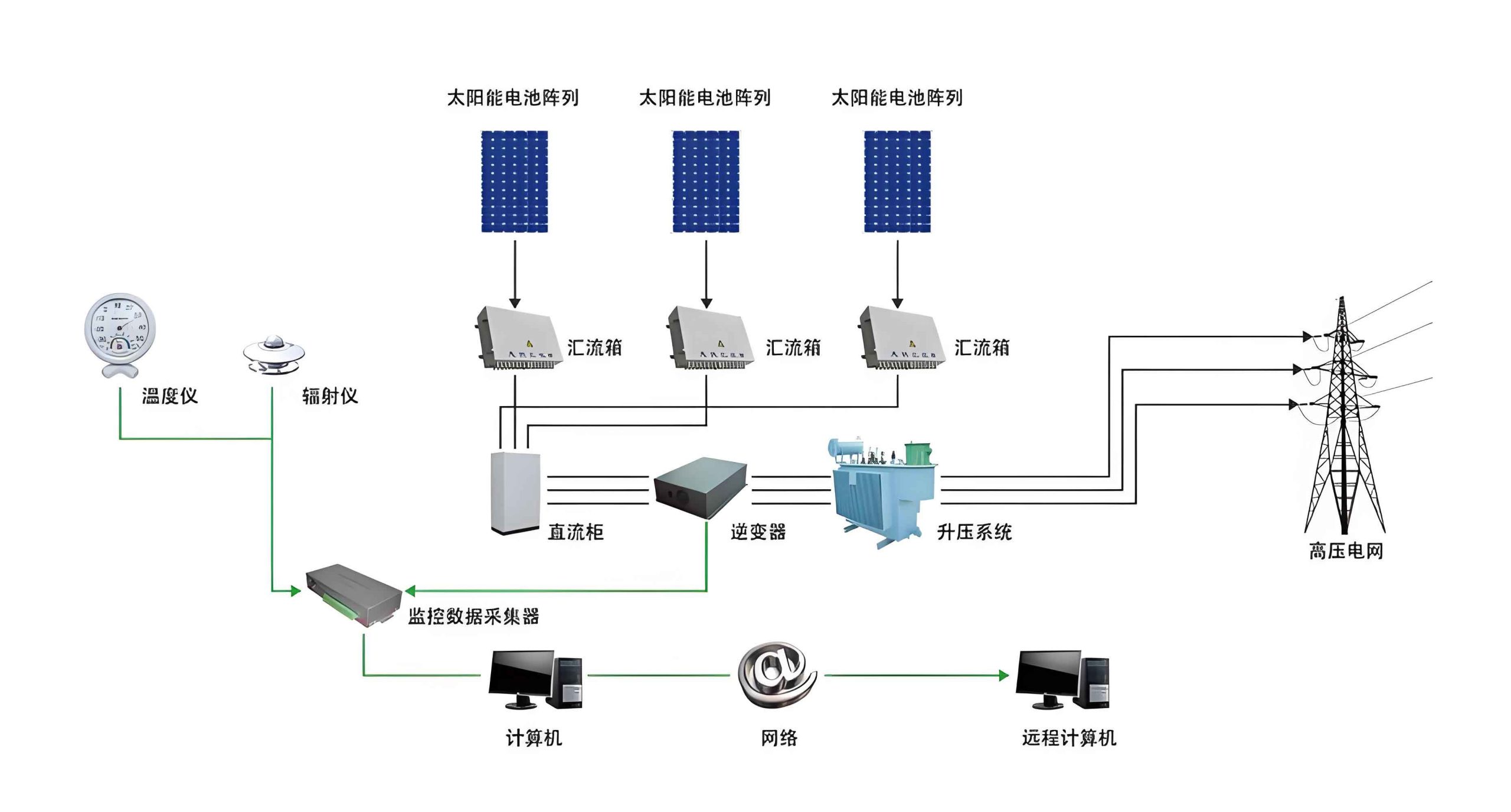
The operational landscape for utility-scale PV plants is inherently demanding. These facilities are often situated in geographically challenging areas—high-altitude plateaus with intense UV radiation and temperature extremes, or coastal regions battling salt spray corrosion and high humidity. These environmental stressors accelerate equipment degradation and pose persistent threats to the solar system‘s integrity. Furthermore, the architectural scale is immense: thousands, even millions, of PV modules, connected by kilometers of cabling, consolidated through combiner boxes, inverters, and transformers. This sprawling topology, typically under centralized control, creates a vulnerability matrix where a single fault in a component can cascade, impacting the yield of an entire array block.
Traditional O&M paradigms are ill-suited for this scale. They rely heavily on manual, periodic inspections, which are:
- Costly: Requiring large teams for routine checks across vast areas.
- Inefficient: Prone to human error and incapable of continuous monitoring.
- Reactive: Addressing failures only after they occur, leading to extended downtime and energy loss.
- Logistically Complex: Managing spare parts for a diverse, multi-vendor equipment portfolio is challenging, and delayed component replacement directly translates to lost revenue.
The equation for profitability is clear: minimizing Levelized Cost of Energy (LCOE) requires maximizing energy output (Availability & Performance) while minimizing operational expenditures (OpEx). The traditional model increases OpEx without optimally safeguarding output. Therefore, the imperative for smart O&M is not merely technological upgrade but a strategic necessity for economic sustainability.
The foundation of any intelligent solar system is a unified, cloud-based Smart Management Platform. This platform acts as the central nervous system, aggregating, processing, and acting upon data from every connected component. Its architecture enables a dynamic, holistic view of the plant’s health and performance.
The data flow within this platform can be summarized as:
$$
\text{Raw Data (Sensors, IoT)} \rightarrow \text{Ingestion & Normalization} \rightarrow \text{Analytics Engine} \rightarrow \text{Actionable Insights} \rightarrow \text{Automated or Manual Intervention}
$$
Key functional modules of this platform include:
| Module | Primary Function | Key Data Sources |
|---|---|---|
| Asset Management | Digital twin of all physical assets, tracking lifecycle, warranty, and maintenance history. | SCADA, ERP systems, manual logs. |
| Performance Monitoring | Real-time and historical analysis of energy yield, inverter efficiency, and string-level performance. | Meters, inverters, string combiners. |
| Fault Detection & Diagnosis (FDD) | Automated alerts for underperformance, failures (string faults, inverter trips, communication loss). | Current/Voltage sensors, thermal imagers, inverter alerts. |
| Predictive Analytics | Uses machine learning to forecast failures (e.g., inverter capacitor wear, potential-induced degradation). | Historical performance data, environmental data, component telemetry. |
| Work Order Management | Automates task generation, assignment, and tracking for maintenance crews. | Triggers from FDD, Predictive Analytics, or scheduled tasks. |
By synthesizing information, the platform shifts the O&M model from schedule-based to condition-based and ultimately to predictive maintenance, optimizing both human and material resources.
Physically inspecting every module in a multi-megawatt plant is a Herculean task. Drone technology, integrated with autonomous docking stations (机巢), revolutionizes this process. Equipped with high-resolution RGB, thermal infrared, and Light Detection and Ranging (LiDAR) sensors, drones perform automated, precise inspections.
The technical workflow involves:
- Mission Planning: The geo-coordinates of the entire PV array are imported into the drone’s control system. Flight paths, altitude, and camera angles are optimized using algorithms that account for terrain and obstacle avoidance.
- Data Acquisition: Drones capture:
- Thermal Imagery: To identify “hot spots” indicating faulty cells, poor solder connections, or diode failures. The temperature differential ($\Delta T$) between a faulty and normal module can be significant:
$$
P_{\text{loss}} \propto \int_{A} \sigma \epsilon (T_{\text{hot}}^4 – T_{\text{amb}}^4) \, dA
$$
where $\sigma$ is the Stefan-Boltzmann constant, $\epsilon$ is emissivity, and $T$ is temperature. - Visual Imagery: To detect physical damage, soiling, vegetation encroachment, and corrosion.
- LiDAR Data: To create accurate 3D models of the site for terrain analysis and structure assessment.
- Thermal Imagery: To identify “hot spots” indicating faulty cells, poor solder connections, or diode failures. The temperature differential ($\Delta T$) between a faulty and normal module can be significant:
- 机巢 Network & “Frog-Leap” Strategy: To overcome limited drone battery life, a network of weather-proof docking stations is deployed across the large site. The innovative “frog-leap” strategy allows a single drone (or a fleet) to autonomously travel between these stations, recharging and swapping batteries, thereby enabling the inspection of virtually unlimited areas without human intervention. This breaks the traditional “one-nest-one-drone” limitation.
- Specialized Monitoring: Beyond module health, drones are pivotal for perimeter security, vegetation management, and crucially, early fire detection. Using multi-spectral sensors, they can identify smoldering fires before they erupt, triggering immediate alarms to the central platform and local fire services.
This aerial perspective provides a comprehensive, up-to-date health map of the entire solar system, prioritizing maintenance tasks with unprecedented efficiency.
Modern PV plants often consist of multiple sub-arrays or even separate smaller plants (a “portfolio” or “cluster”) feeding into a common grid connection. Smart Plant Cluster Control optimizes the collective output of this portfolio rather than treating each unit in isolation, especially under grid constraints like power curtailment.
Key strategies include:
- Optimal Curtailment Distribution: During grid-mandated power reduction, instead of uniformly curtailing all inverters, the controller allocates curtailment based on real-time performance and efficiency of each sub-array or inverter. The goal is to minimize total energy loss:
$$
\min \sum_{i=1}^{n} (P_{\text{avail}, i} – P_{\text{set}, i}) \cdot \Delta t \quad \text{subject to} \quad \sum_{i=1}^{n} P_{\text{set}, i} \leq P_{\text{grid limit}}
$$
where $P_{\text{avail}, i}$ is the available power from sub-array $i$, and $P_{\text{set}, i}$ is its setpoint after curtailment. - Predictive & Adaptive Control: Using sky imagers and numerical weather prediction (NWP) data, the controller forecasts short-term irradiance changes (cloud passages). It can pre-emptively adjust inverter setpoints to smooth power ramps, reducing stress on the solar system and grid.
- Shadow Overlap Management: In sites with complex topography, shadows from terrain or infrastructure move across arrays. A smart controller can slightly adjust the operating points of affected strings to mitigate the mismatch losses caused by partial shading, a non-trivial problem in series-connected solar system designs.
This holistic control ensures the entire plant operates at its globally optimal point, not just the sum of locally optimal points, enhancing overall energy yield and grid friendliness.
The intelligence of a solar system is realized through a suite of integrated monitoring and control subsystems. Each plays a specialized role in safeguarding and optimizing operations.
| System | Core Purpose | Key Technologies & Metrics |
|---|---|---|
| Supervisory Control and Data Acquisition (SCADA) | The primary automation layer for controlling inverters, trackers, and breakers; collecting operational data. | PLCs, RTUs, IEC 60870-5-104 / DNP3 protocols, Human-Machine Interface (HMI). |
| Meteorological & Irradiance Monitoring | Provide essential input for performance analysis and power forecasting. | Pyranometers (GHI, DNI), reference cells, ambient temperature, wind speed/direction sensors. |
| Solar Power Forecasting | Predict power output from hours to days ahead for grid scheduling and market participation. | NWP models, statistical learning (ARIMA, regression), machine learning (neural networks). Forecast error (RMSE, MAE) is critical: $$ \text{RMSE} = \sqrt{ \frac{1}{N} \sum_{t=1}^{N} (P_{\text{forecast},t} – P_{\text{actual},t})^2 } $$ |
| Online Vibration Monitoring | Condition monitoring for rotating equipment in tracking systems or ancillary services. | Accelerometers, FFT analysis for early detection of bearing wear or mechanical imbalance. |
| Intelligent Video Surveillance | Security, safety monitoring, and automated anomaly detection (e.g., unauthorized intrusion, animal activity). | Pan-Tilt-Zoom (PTZ) cameras, video analytics with computer vision algorithms. |
| Advanced Fire Protection | Early detection and suppression of fires, which are a critical risk in electrical installations. | Thermal cameras, smoke detectors, aerosol/clean agent suppression systems, drone-based thermal surveys. |
The convergence of data from these subsystems into the central Smart Management Platform creates a powerful situational awareness and response capability.
The final pillar of智慧运维 is the digital transformation of administrative and workflow processes. This “流程再造” (Process Re-engineering) involves systematically deconstructing every management task—from issuing a work order for a faulty inverter to managing contractor permits—and rebuilding them as standardized, digital workflows.
This is achieved by developing or implementing a dedicated流程再造 Platform that:
- Digitizes Task Forms: Converts paper-based checklists and permits into mobile-friendly digital forms with mandatory fields and photo/video capture.
- Automates Approvals: Implements configurable, rule-based approval chains that route requests electronically, eliminating bottlenecks.
- Integrates with Asset Data: Links each work order directly to the specific asset in the digital twin, providing technicians with full history and manuals on-site.
- Tracks KPIs: Monitors process efficiency metrics like Mean Time to Acknowledge (MTTA) and Mean Time to Repair (MTTR), driving continuous improvement.
For example, a drone-identified hot spot automatically generates a work order in the platform. The platform assigns it to the nearest qualified technician, provides the GPS location and thermal image, and lists the required spare part—which is automatically reserved from inventory. The technician completes the job on a tablet, documenting the fix. The platform then closes the loop by scheduling a follow-up drone inspection to verify repair efficacy. This seamless integration of physical operations with digital workflow drastically improves efficiency, accountability, and data continuity.
The evolution towards the fully intelligent solar system is a continuous journey. The framework outlined—spanning the central data platform, autonomous inspection, cluster-level optimization, integrated subsystem monitoring, and digital workflows—represents a mature vision of智慧运维. The benefits are quantifiable: significant reductions in O&M costs (often 20-30%), increases in energy availability (1-3% or more), enhanced safety, and extended asset lifespan.
The future will see deeper integration of Artificial Intelligence and Machine Learning, moving from descriptive and diagnostic analytics to truly prescriptive and cognitive operations. Algorithms will not only predict a failure but also prescribe the optimal time, method, and crew for intervention, considering weather, energy prices, and spare part logistics. Furthermore, the intelligent solar system will evolve from a passive grid follower to an active grid citizen, providing ancillary services like voltage support and frequency regulation.
In conclusion, building and operating a solar power plant is no longer just an engineering and construction challenge; it is a complex data science and digital management endeavor. By embracing this comprehensive smart O&M framework, operators can ensure their solar system assets are not only productive and profitable but also resilient and sustainable cornerstones of the future clean energy grid.