
In recent years, organic-inorganic hybrid perovskite solar cells have emerged as a promising third-generation photovoltaic technology due to their exceptional optoelectronic properties, such as high absorption coefficients, tunable bandgaps, and high carrier mobilities, combined with low manufacturing costs. Among these, wide-bandgap perovskite solar cells (with Eg ≥ 1.65 eV) are particularly attractive for tandem solar cell applications, where they can be paired with narrow-bandgap absorbers like silicon or CIGS to enhance overall solar energy conversion efficiency. However, wide-bandgap perovskite solar cells often suffer from lower efficiency and poorer stability compared to their conventional counterparts, primarily due to issues like halide segregation and higher defect densities. To address these challenges, additive engineering has been widely adopted to improve perovskite film quality and device performance. In this study, we focus on the role of methylammonium chloride (MACl) as an additive in optimizing the properties of inverted wide-bandgap perovskite solar cells.
We systematically investigated the impact of MACl concentration on the morphological, structural, and optoelectronic properties of perovskite films and the corresponding solar cell devices. Our findings demonstrate that an optimal amount of MACl can significantly enhance crystal growth, reduce surface roughness, and improve carrier lifetime, leading to superior performance in perovskite solar cells. The following sections detail our experimental approach, characterization results, and the implications for device optimization.
Experimental Methods
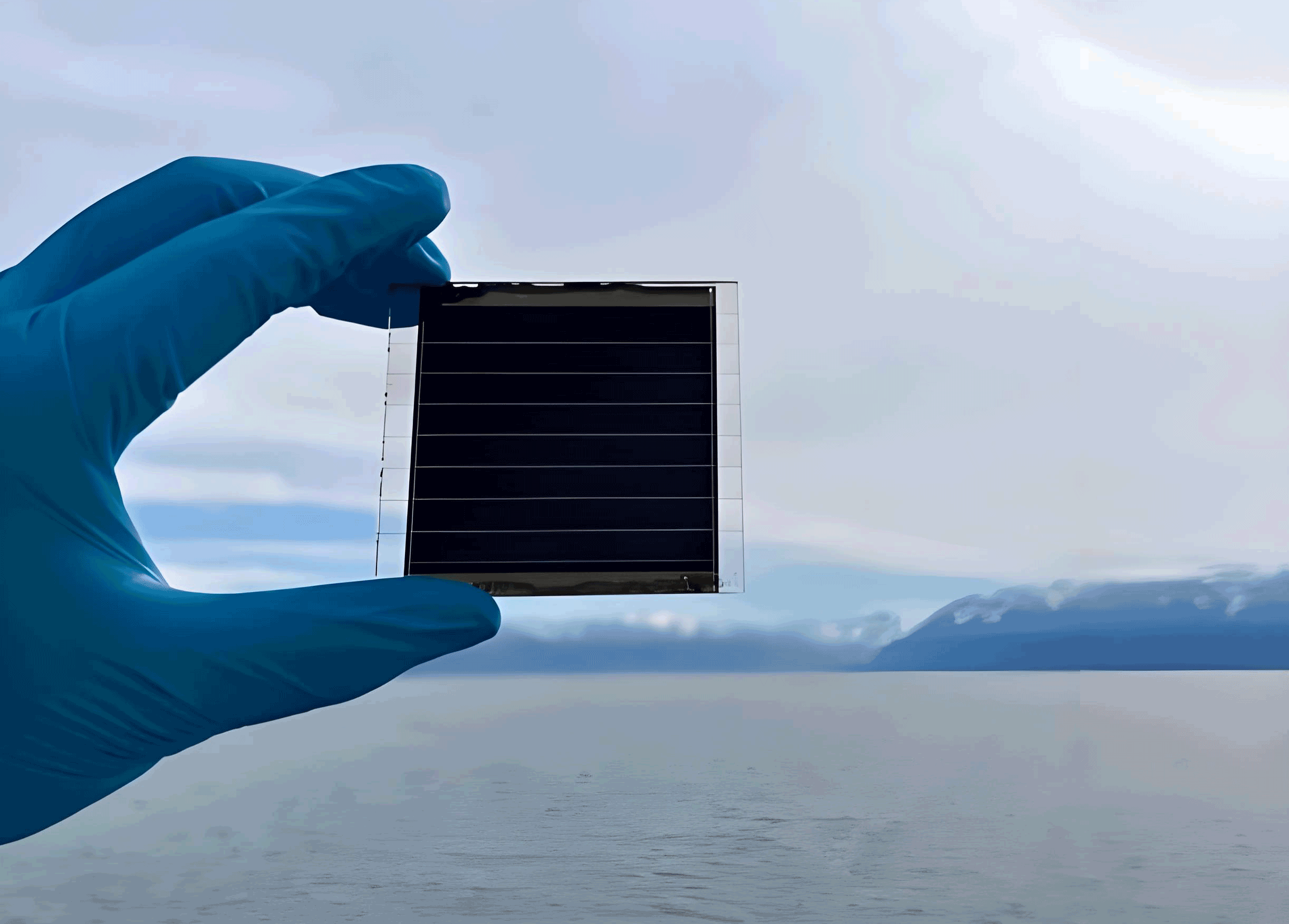
We fabricated p-i-n type single-junction perovskite solar cells using a wide-bandgap perovskite composition with a formula of Cs0.05FA0.8MA0.15PbI2.25Br0.75, which has a bandgap of approximately 1.68 eV. The perovskite precursor solution was prepared by dissolving stoichiometric amounts of raw materials in a mixed solvent of DMF and DMSO (4:1 volume ratio) to achieve a concentration of 1.5 mol/L. To study the effect of MACl additive, we introduced varying amounts of MACl relative to the perovskite molar concentration: 0%, 5%, 10%, 20%, and 30%, labeled as MA-0, MA-5, MA-10, MA-20, and MA-30, respectively. The perovskite layers were deposited via a one-step spin-coating method onto ITO glass substrates pre-coated with NiOx and a self-assembled layer of Me-4PACz. During spin-coating, chlorobenzene was applied as an anti-solvent 13 seconds before the end of the process, followed by annealing at 100°C for 20 minutes. Subsequently, PC61BM and BCP layers were spin-coated, and a 100 nm thick Ag electrode was evaporated to complete the device structure.
We employed various characterization techniques to analyze the perovskite films. Scanning electron microscopy (SEM) and atomic force microscopy (AFM) were used to examine surface morphology and roughness. X-ray diffraction (XRD) was performed to assess crystallinity and phase purity. Time-resolved photoluminescence (TRPL) spectroscopy was utilized to study carrier dynamics, and current-density-voltage (J-V) measurements under simulated solar illumination were conducted to evaluate device performance.
Results and Discussion
Morphological and Structural Analysis
The surface and cross-sectional SEM images revealed that the addition of MACl had a profound effect on the grain size of the perovskite films. Without MACl (MA-0), the average grain size was approximately 196 nm. As the MACl concentration increased, the grain size grew linearly, reaching 282 nm for MA-10 and 376 nm for MA-30. However, the film thickness remained relatively constant across all samples, around 550 nm. Notably, for MA-10, more grains were observed to extend through the entire film thickness, indicating promoted vertical growth. This is crucial for efficient charge transport in perovskite solar cells, as larger, vertically aligned grains can reduce grain boundary defects and enhance carrier collection.
AFM measurements provided insights into the surface roughness of the perovskite films. The root-mean-square roughness (Rq) values are summarized in Table 1. The MA-10 sample exhibited the lowest Rq of 14.1 nm, suggesting a smoother surface compared to other samples. In contrast, insufficient or excessive MACl led to increased roughness, with Rq values of 14.7 nm for MA-0, 14.7 nm for MA-5, 14.4 nm for MA-20, and 18.1 nm for MA-30. A smoother surface is beneficial for improving interfacial contact with charge transport layers, thereby reducing non-radiative recombination losses in perovskite solar cells.
| Sample | MACl Concentration (%) | Average Grain Size (nm) | Rq (nm) |
|---|---|---|---|
| MA-0 | 0 | 196 ± 34 | 14.7 |
| MA-5 | 5 | 247 ± 46 | 14.7 |
| MA-10 | 10 | 282 ± 33 | 14.1 |
| MA-20 | 20 | 338 ± 28 | 14.4 |
| MA-30 | 30 | 376 ± 37 | 18.1 |
XRD patterns (Figure 1) showed distinct peaks corresponding to the perovskite crystal planes, such as (001) at 14.2°, (011) at 20.1°, (111) at 24.7°, (002) at 28.5°, and (012) at 31.9°. The absence of peak shifts indicated that MACl did not alter the perovskite crystal structure up to 30% concentration. However, the MA-0 sample displayed a weak PbI2 peak at 12.8°, which diminished with MACl addition, confirming that MACl promotes the conversion of PbI2 to the perovskite phase. The diffraction peak intensities were highest for MA-10, suggesting optimal crystallinity. In contrast, MA-30 showed reduced peak intensities and the emergence of a non-perovskite δ-phase, highlighting that excessive MACl adversely affects phase stability and crystallization in perovskite solar cells.
The crystallinity can be quantitatively described using the Scherrer equation for crystal size estimation:
$$D = \frac{K \lambda}{\beta \cos \theta}$$
where \(D\) is the crystallite size, \(K\) is the Scherrer constant (approximately 0.9), \(\lambda\) is the X-ray wavelength (0.15406 nm for Cu Kα), \(\beta\) is the full width at half maximum (FWHM) of the diffraction peak, and \(\theta\) is the Bragg angle. For the (001) peak, the FWHM decreased with optimal MACl addition, indicating larger crystallites and improved crystal quality in the perovskite solar cell films.
Optoelectronic Properties and Carrier Dynamics
TRPL spectroscopy was employed to investigate the carrier lifetime and recombination dynamics in the perovskite films. The fluorescence decay curves were fitted using a bi-exponential function:
$$I(t) = A_1 \exp\left(-\frac{t}{\tau_1}\right) + A_2 \exp\left(-\frac{t}{\tau_2}\right)$$
where \(\tau_1\) and \(\tau_2\) represent the fast and slow decay lifetimes, respectively, associated with defect-assisted and radiative recombination processes. The average carrier lifetime \(\tau_{\text{ave}}\) was calculated as:
$$\tau_{\text{ave}} = \frac{A_1 \tau_1^2 + A_2 \tau_2^2}{A_1 \tau_1 + A_2 \tau_2}$$
The fitting results are summarized in Table 2. The MA-10 sample exhibited the longest average carrier lifetime of 1532.7 ns, significantly higher than that of MA-0 (710.8 ns). This indicates that optimal MACl addition effectively passivates defects, reducing non-radiative recombination centers. In contrast, higher MACl concentrations (MA-20 and MA-30) led to a drastic decrease in \(\tau_{\text{ave}}\), consistent with the degradation in crystallinity observed in XRD. The enhanced carrier lifetime is critical for improving the open-circuit voltage and overall efficiency of perovskite solar cells.
| Sample | \(\tau_1\) (ns) | \(\tau_2\) (ns) | \(\tau_{\text{ave}}\) (ns) |
|---|---|---|---|
| MA-0 | 82.3 | 731.6 | 710.8 |
| MA-5 | 85.2 | 1253.6 | 1220.7 |
| MA-10 | 68.6 | 1555.7 | 1532.7 |
| MA-20 | 125.2 | 284.9 | 214.3 |
| MA-30 | 165.4 | 416.6 | 331.5 |
Device Performance
The J-V characteristics of the perovskite solar cells were measured under standard AM 1.5G illumination. The key parameters, including open-circuit voltage (Voc), short-circuit current density (Jsc), fill factor (FF), and power conversion efficiency (PCE), are listed in Table 3. The PCE can be expressed as:
$$\text{PCE} = \frac{V_{\text{oc}} \times J_{\text{sc}} \times \text{FF}}{P_{\text{in}}}$$
where \(P_{\text{in}}\) is the incident light power density (100 mW/cm²). The MA-10 device achieved the highest PCE of 18.45%, with a Voc of 1.23 V, Jsc of 18.71 mA/cm², and FF of 80.06%. This represents a significant improvement over the MA-0 device (PCE = 15.37%). The enhancement is attributed to the superior film quality, reduced recombination, and better interfacial properties facilitated by optimal MACl addition. Conversely, devices with higher MACl concentrations (MA-20 and MA-30) showed degraded performance, with PCE dropping to 12.57% and 9.37%, respectively, due to poor crystallinity and increased defects.
| Sample | Voc (V) | Jsc (mA/cm²) | FF (%) | PCE (%) |
|---|---|---|---|---|
| MA-0 | 1.19 | 17.81 | 72.05 | 15.37 |
| MA-5 | 1.20 | 18.23 | 74.61 | 16.31 |
| MA-10 | 1.23 | 18.71 | 80.06 | 18.45 |
| MA-20 | 1.18 | 17.77 | 59.68 | 12.57 |
| MA-30 | 1.13 | 16.40 | 50.36 | 9.37 |
The improvement in Voc and FF for MA-10 can be linked to the reduced non-radiative recombination, as evidenced by the TRPL results. The higher Jsc is likely due to improved light absorption and charge collection efficiency in the optimized perovskite solar cell. To further analyze the device performance, we consider the diode equation for a solar cell:
$$J = J_{\text{ph}} – J_0 \left[\exp\left(\frac{q(V + J R_s)}{n k T}\right) – 1\right] – \frac{V + J R_s}{R_{\text{sh}}}$$
where \(J_{\text{ph}}\) is the photocurrent density, \(J_0\) is the reverse saturation current density, \(n\) is the ideality factor, \(R_s\) is the series resistance, and \(R_{\text{sh}}\) is the shunt resistance. The enhanced FF and Voc in MA-10 suggest lower \(R_s\) and higher \(R_{\text{sh}}\), which are consistent with better film morphology and defect passivation.
Conclusion
In this study, we demonstrated that methylammonium chloride (MACl) is an effective additive for enhancing the performance of wide-bandgap perovskite solar cells. By systematically varying the MACl concentration, we found that an optimal amount (10% relative to perovskite molar concentration) significantly improves grain size, surface smoothness, crystallinity, and carrier lifetime. These improvements translate to higher efficiency and better stability in perovskite solar cells. The champion device achieved a power conversion efficiency of 18.45%, underscoring the potential of MACl additive engineering for advancing perovskite-based photovoltaics. Future work will focus on scaling up the fabrication process and integrating these optimized wide-bandgap perovskite solar cells into tandem configurations for even higher performance. The insights gained from this study contribute to the broader goal of developing efficient and stable perovskite solar cells for practical applications.
Overall, our findings highlight the importance of precise additive control in perovskite solar cell fabrication. The use of MACl not only promotes high-quality film formation but also provides a pathway toward overcoming the limitations of wide-bandgap perovskite solar cells, such as halide segregation and defect-related losses. As research in perovskite solar cells continues to evolve, additive engineering strategies like this will play a crucial role in achieving commercial viability and widespread adoption of this promising technology.