
Introduction
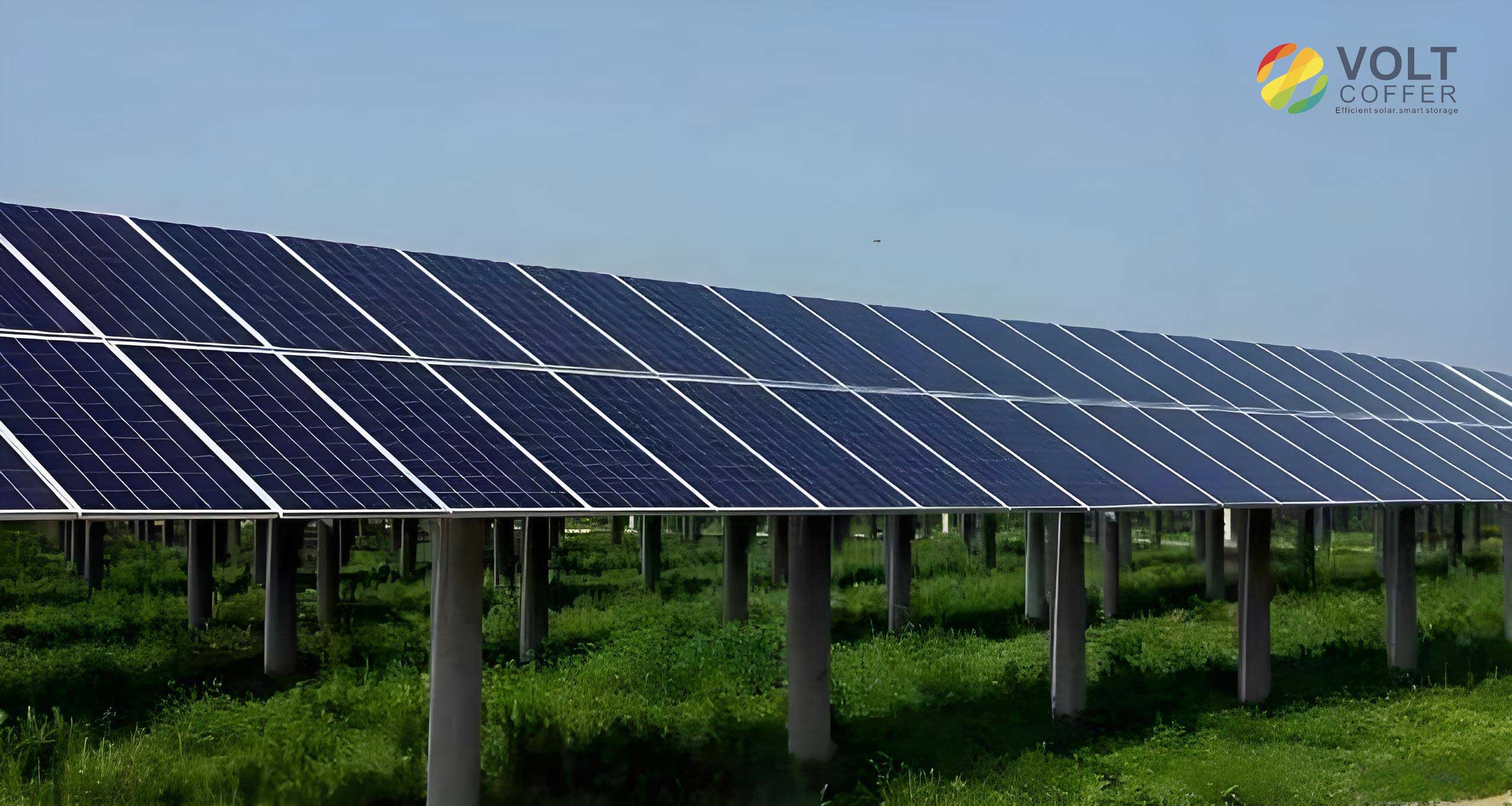
Energy scarcity and climate warming are two critical challenges of the twenty-first century. The over-reliance on fossil fuels has led to a steady increase in global CO₂ emissions, while the demand for clean and sustainable energy continues to rise. Solar energy, being the most accessible renewable resource, plays an indispensable role in the transition toward a low-carbon energy system. Photovoltaic (PV) power generation, or simply solar panels, has been widely deployed to convert sunlight directly into electricity. However, the performance of solar panels is strongly affected by their operating temperature. Crystalline silicon solar cells typically convert less than 20% of incoming solar radiation into electricity; the remainder is dissipated as heat, causing the panel temperature to rise. For every 1 °C increase in cell temperature, the electrical efficiency drops by approximately 0.5%. Moreover, high temperatures accelerate material degradation and may trigger hot-spot failures, reducing the operational lifetime of solar panels.
To mitigate this adverse thermal effect, numerous cooling strategies have been proposed, including active methods such as forced air convection, water spraying, and microchannel heat sinks, and passive methods such as natural convection, radiative cooling, phase-change material (PCM) cooling, and heat-pipe cooling. Active methods provide large cooling power but require external energy input, which increases the carbon footprint and operational complexity. Passive methods are energy-free and structurally simple but often suffer from limited cooling capacity. Therefore, there is an urgent need to develop novel cooling technologies that are simultaneously efficient, sustainable, and passive.
Evaporative cooling, which exploits the large latent heat of water vaporization, offers a promising passive alternative. When water evaporates, it absorbs a substantial amount of heat from the surrounding medium. By attaching a water-saturated porous material to the backside of solar panels, the heat generated by the panel can drive water evaporation, thereby lowering the panel temperature. This process is carbon-neutral and does not require any active pumping if the water is supplied by atmospheric moisture absorption. Atmospheric water harvesting, using hygroscopic materials such as hydrogels, can capture water vapor from ambient air during the night, regenerate the cooling capacity, and release water vapor during the day to cool the solar panels.
In this study, I developed a lithium-rich and highly absorbent hydrogel (LHAH) that combines high hygroscopicity, high thermal conductivity, and excellent mechanical flexibility. The LHAH was synthesized by in situ polymerization of acrylamide with embedded carbon nanoparticles (CNs) to enhance thermal conduction, followed by immersion in lithium chloride solution to impart strong water sorption. I systematically characterized the material structure, hydrophilicity, thermal conductivity, and moisture adsorption kinetics. Then, I constructed an evaporative cooling system for solar panels and evaluated its temperature reduction and power generation enhancement under various solar intensities. Finally, I proposed a passive humidification strategy and designed a self-adaptive cooling (SAC) system that creates a high-humidity micro-environment to sustain the adsorption–evaporation cycle even in arid conditions. This work demonstrates a feasible pathway toward efficient and water-self-sufficient cooling of solar panels, which is critical for expanding photovoltaic deployment in water-scarce regions.
Materials and Methods
Preparation of LHAH
The LHAH was prepared via in situ polymerization. First, 2 g of acrylamide (PAM) monomer was dissolved in 10 mL of an aqueous dispersion containing carbon nanoparticles (CNs). The mixture was ultrasonicated for 5 min to ensure uniform dispersion. Then, 10 mg of potassium persulfate (KPS) was added as an initiator, and 0.6 mg of N,N′-methylenebisacrylamide (MBAA) was added as a crosslinker. After stirring, 25 μL of tetramethylethylenediamine (TEMED) was introduced to accelerate the polymerization. The solution was poured into a Petri dish and left to gel for 12 h at room temperature, yielding a PAM-CNs hydrogel. The hydrogel was freeze-dried for 8 h to create a porous structure. Subsequently, the porous PAM-CNs matrix was immersed in 30 mL of LiCl solution at various concentrations (0.1 to 0.6 g mL⁻¹) for 24 h to load lithium salt into the network. After immersion, the hydrogel was rinsed with deionized water to remove surface salt and finally dried in an oven at 80 °C for 12 h to obtain the dry LHAH.
Characterization Techniques
Several analytical tools were employed to characterize the prepared material. The surface morphology and elemental distribution were examined by scanning electron microscopy (SEM) equipped with energy-dispersive X-ray spectroscopy (EDS). X-ray photoelectron spectroscopy (XPS) was used to identify the chemical states of the elements. X-ray diffraction (XRD) patterns were recorded to confirm the crystalline phases. Fourier-transform infrared (FTIR) spectroscopy was performed to detect functional groups. The hydrophilicity was evaluated by contact angle measurements using a 7.5 μL water droplet. The thermal conductivity was measured using a laser flash apparatus.
Moisture Adsorption Tests
The adsorption performance was evaluated in a constant-temperature and constant-humidity chamber. Dry LHAH samples were placed inside the chamber at 25 °C with relative humidity (RH) levels of 30%, 60%, and 90%. The mass change was recorded at regular intervals using a high-precision balance. The mass change rate \(w_i\) was calculated as:
$$ w_i = \frac{m_i – m_0}{m_0} $$
where \(m_i\) is the mass at time \(i\), and \(m_0\) is the initial dry mass. The total water uptake \(w\) was:
$$ w = m_1 – m_0 $$
with \(m_1\) being the final mass after adsorption.
Evaporative Cooling System for Solar Panels
The cooling system consisted of a commercial polycrystalline silicon solar panel (80 mm × 80 mm), the LHAH cooling layer, and a channel support structure. The LHAH was attached directly to the backside of the solar panel. During operation, heat generated by the solar panel is conducted to the LHAH, causing the absorbed water to evaporate. The vapor escapes through the porous structure, carrying away latent heat and reducing the panel temperature. The cooling power \(P\) was calculated from the mass loss of the hydrogel:
$$ P = \frac{\Delta H_{vap} (m_2 – m_0)}{t \cdot A} $$
where \(\Delta H_{vap} = 2257 \text{ J g}^{-1}\) is the latent heat of vaporization, \(m_2\) is the mass after 2 h of evaporation, \(t\) is the duration (7200 s), and \(A\) is the surface area of the hydrogel (0.0064 m²).
Self-Adaptive Cooling (SAC) System
To overcome the limitation of low ambient humidity, I devised a passive humidification strategy. As illustrated in the system structure, the SAC system has three main parts: an evaporation-cooling module (LHAH attached to the backside of the solar panel), a condensation module (a chamber made of acrylic), and a water collection module. A layer of liquid water is placed in the bottom of the collection module. During operation, the water vapor evaporated from the LHAH diffuses downward, condenses on the cooler surfaces, and is collected. Meanwhile, the residual heat of the panel and the heat released by condensation warm the bottom water layer, promoting its evaporation and thereby increasing the humidity inside the enclosed system. This high-humidity environment enhances the adsorption capability of the LHAH, enabling a self-sustaining adsorption–evaporation cycle even when the outdoor air is dry.
The SAC experiments were carried out under a solar simulator at 1.0 sun (1000 W m⁻²). The experimental group consisted of the SAC system with an 8 mm thick LHAH and a 200 mL water layer. Two control groups were used: Control 1 had the 8 mm LHAH but no water layer, and Control 2 had neither LHAH nor water layer. The panel temperature was monitored using T-type thermocouples connected to a data acquisition unit. The output voltage and current–voltage (I–V) curves were measured using an electrochemical workstation. Surface temperature distributions were captured with an infrared thermal camera. All tests were performed at an ambient temperature of 26 ± 0.5 °C and ambient RH of 15 ± 5%.
Results and Discussion
Material Characterization
The SEM analysis showed that the LHAH possessed a highly porous structure with an average pore size of about 20 μm. The pore walls were rough due to the embedded CNs. The EDS mapping confirmed the uniform distribution of carbon, nitrogen, oxygen, and chlorine elements, indicating successful incorporation of LiCl. The XRD pattern displayed characteristic peaks at 2θ ≈ 20°, 32°, and 47°, which correspond to the polyacrylamide backbone, LiCl crystals, and carbon nanoparticles, respectively. The XPS spectrum showed peaks for Li 1s, Cl 2p, O 1s, C 1s, and N 1s, with atomic concentrations of Li and Cl being 23.72% and 15.22%, respectively, proving high salt loading.
The contact angle measurement revealed that a 7.5 μL water droplet completely disappeared in 0.16 s after contacting the LHAH surface, demonstrating exceptional hydrophilicity. The thermal conductivity of PAM was measured as 0.007 W m⁻¹ K⁻¹, whereas the LHAH exhibited a thermal conductivity of 0.402 W m⁻¹ K⁻¹, an increase of nearly 60 times. This dramatic enhancement was attributed to the presence of carbon nanoparticles, which formed a conductive network along the polymer skeleton.
The loading of LiCl in the LHAH was quantified as a function of the immersion concentration. As shown in the table below, the LiCl loading rate increased with concentration up to 0.4 g mL⁻¹, reaching a maximum of 6.23 g g⁻¹, and then decreased for higher concentrations.
| LiCl concentration (g mL⁻¹) | Loading rate (g g⁻¹) |
|---|---|
| 0.1 | 1.40 |
| 0.2 | 3.29 |
| 0.3 | 4.34 |
| 0.4 | 6.23 |
| 0.5 | 5.39 |
| 0.6 | 4.03 |
Moisture Adsorption Performance
The dynamic adsorption curves of the LHAH at different RH levels are presented in the following table, showing the mass change rate after 10 h.
| RH (%) | Mass change rate after 10 h (g g⁻¹) | Total water uptake (g) |
|---|---|---|
| 30 | 0.57 | 8.7 |
| 60 | 0.84 | 14.5 |
| 90 | 1.75 | 27.2 |
At RH=90%, the LHAH adsorbed 1.75 g of water per gram of dry hydrogel within 10 h, corresponding to a significant water harvesting capacity. Even at a low RH of 30%, the material still gained 0.57 g g⁻¹, demonstrating its suitability for arid environments. Furthermore, when the saturated LHAH was exposed to an open low-humidity environment (RH≈10–15%) for seven days, it lost only 6 g of water and its diameter reduced by 5 mm, while the surface remained moist. This behavior indicates a balance between evaporation and adsorption, confirming the stability of water retention in the hydrogel.
Cooling Performance of Solar Panels with LHAH
I investigated the temperature reduction of solar panels coated with LHAH under different illumination intensities (0.8, 1.0, and 1.2 sun). The surface temperature distributions captured by the infrared camera are summarized in the table below.
| Solar intensity (sun) | Control panel T_avg (°C) | LHAH-cooled panel T_avg (°C) | Temperature reduction ΔT (°C) |
|---|---|---|---|
| 0.8 | 63.0 | 48.9 | 14.1 |
| 1.0 | 70.2 | 51.8 | 18.4 |
| 1.2 | 78.2 | 53.7 | 24.5 |
The backside temperature evolution is shown in the following table for the 2-h test. The LHAH-cooled panel achieved a maximum temperature reduction of 26 °C at 1.0 sun. The cooling effect increased with solar intensity because higher panel temperature accelerates the evaporation rate of water from the hydrogel, thereby removing more heat.
| Solar intensity (sun) | Control backside temp. after 2 h (°C) | LHAH-cooled backside temp. after 2 h (°C) | ΔT (°C) |
|---|---|---|---|
| 0.8 | 68 | 47 | 19 |
| 1.0 | 74 | 48 | 26 |
| 1.2 | 82 | 52 | 30 |
The cooling power of the LHAH was calculated from the mass loss during the 2-h experiment. The results are:
| Solar intensity (sun) | Water evaporated in 2 h (g) | Cooling power (W m⁻²) |
|---|---|---|
| 0.8 | 6.7 | 328 |
| 1.0 | 10.8 | 529 |
| 1.2 | 13.4 | 656 |
These cooling powers are much higher than typical passive radiative cooling values and are comparable to active water-cooling methods, but without any external energy consumption. As a consequence, the solar panels equipped with the LHAH exhibit a remarkable improvement in electrical performance.
Electrical Performance Enhancement
The I–V curves of the solar panels with and without LHAH cooling were recorded every 15 min. The open-circuit voltage (\(V_{oc}\)) and maximum power (\(P_{max}\)) are summarized in the following tables for different light intensities. The average \(V_{oc}\) over the 2-h period was calculated for each case.
| Solar intensity (sun) | Average \(V_{oc}\) of control (V) | Average \(V_{oc}\) of LHAH-cooled (V) | Improvement (%) |
|---|---|---|---|
| 0.8 | 6.55 | 6.85 | 4.6 |
| 1.0 | 6.32 | 6.71 | 6.2 |
| 1.2 | 6.18 | 6.67 | 7.9 |
Similarly, the average maximum power \(P_{max}\) is presented below.
| Solar intensity (sun) | Average \(P_{max}\) of control (mW) | Average \(P_{max}\) of LHAH-cooled (mW) | Improvement (%) |
|---|---|---|---|
| 0.8 | 652 | 716 | 9.8 |
| 1.0 | 603 | 700 | 16.1 |
| 1.2 | 750 | 826 | 10.1 |
These results confirm that the evaporative cooling layer not only lowers the temperature but also delays the thermal degradation of the solar panel output. The enhancement is more pronounced at higher light intensities where the cooling effect is stronger. It is also worth noting that the \(V_{oc}\) decrease over time is significantly slower for the cooled panel, indicating reduced carrier recombination and improved p–n junction characteristics.
Effect of LHAH Thickness on Adsorption and Water Collection
To optimize the system for long-duration operation, I prepared LHAH samples with different thicknesses (4, 6, 8, 10, and 12 mm). The LiCl loading was measured after immersion in 0.4 g mL⁻¹ solution for 48 h. The results are listed in the table.
| Thickness (mm) | Dry mass (g) | Mass after LiCl loading (g) | Loading rate (g g⁻¹) |
|---|---|---|---|
| 4 | 2.3 | 15 | 5.52 |
| 6 | 3.3 | 20 | 5.06 |
| 8 | 4.8 | 33 | 5.88 |
| 10 | 6.6 | 32 | 3.85 |
| 12 | 7.5 | 31 | 3.13 |
The adsorption capacity at RH=60% and 90% for different thicknesses is summarized in the table below. Interestingly, thinner hydrogels have higher mass-specific absorption rates, but thicker hydrogels store more total water when considering the absolute mass.
| Thickness (mm) | Mass change rate at RH=60% after 10 h (g g⁻¹) | Mass change rate at RH=90% after 10 h (g g⁻¹) |
|---|---|---|
| 4 | 1.06 | 1.74 |
| 6 | 0.85 | 1.21 |
| 8 | 0.59 | 0.85 |
| 10 | 0.56 | 0.81 |
| 12 | 0.43 | 0.62 |
In the water collection experiment using a solar panel as the heat source under 1.0 sun for 2 h, the collected water volume for each thickness is shown below.
| Thickness (mm) | Water collected (g) |
|---|---|
| 4 | 2.4 |
| 6 | 3.2 |
| 8 | 3.8 |
| 10 | 3.5 |
| 12 | 3.1 |
The 8 mm LHAH produced the highest water yield (3.8 g) in 2 h. This occurs because the thicker hydrogel contains more water initially, while still maintaining a reasonable adsorption rate. Cyclic tests on the 8 mm sample over six runs showed consistent mass loss, indicating excellent stability. The electrical conductivity of the collected water was measured as 5.96 mS, confirming its purity.
Humidity Regulation in the SAC System
I further tested the SAC system under different covering conditions (full cover, no cover, and half cover) and with different volumes of water in the bottom reservoir (0, 100, 200, and 400 mL). The humidity measured inside the system after 30 minutes is presented in the following table.
| Cover condition | Water volume (mL) | Maximum RH (%) | Stable RH after 30 min (%) |
|---|---|---|---|
| Full cover | 0 | 50 | 45 |
| Full cover | 100 | 76 | 68 |
| Full cover | 200 | 83 | 70 |
| Full cover | 400 | 78 | 72 |
| No cover | 0 | 55 | 50 |
| No cover | 100 | 73 | 65 |
| No cover | 200 | 83 | 70 |
| No cover | 400 | 75 | 68 |
| Half cover | 0 | 52 | 48 |
| Half cover | 100 | 74 | 66 |
| Half cover | 200 | 83 | 70 |
| Half cover | 400 | 76 | 69 |
The results indicate that the presence of a water layer drastically increases the internal humidity, reaching 83% within a short period. The evaporation of the bottom water is driven by the residual heat of the solar panel and the heat released during condensation, creating a self-humidifying environment. This mechanism allows the LHAH to continuously re-adsorb water vapor even when the external ambient air is extremely dry.
Self-Adaptive Cooling Performance under 1.0 Sun
Using the optimized 8 mm LHAH and a 200 mL water reservoir, the SAC system was subjected to a 6-h continuous operation test at 1.0 sun. The surface temperature of the solar panels was monitored, and the average values after 6 h are summarized below.
| System | Average surface temperature (°C) | Backside temperature after 6 h (°C) | Temperature reduction vs. Control 2 (°C) |
|---|---|---|---|
| Control 2 (no cooling) | 71.7 | 78 | — |
| Control 1 (LHAH only) | 64.5 | 66 | 5.8 |
| Experimental (SAC) | 59.6 | 63 | 10.0 |
Notably, the SAC system maintained the panel temperature almost constant at around 63 °C during the entire 6 h test, while Control 1 exhibited a temperature rise after 4 h due to depletion of water content in the hydrogel. In contrast, the SAC system continuously replenished the water content through adsorption from the high-humidity internal environment, thereby extending the cooling effect.
The electrical output voltage was recorded throughout the test. The final output voltage after 6 h is presented below.
| System | Output voltage after 30 min (V) | Output voltage at 6 h (V) | Average \(V_{oc}\) over 6 h (V) |
|---|---|---|---|
| Control 2 | 5.12 | 5.04 | 5.08 |
| Control 1 | 5.39 | 5.24 | 5.25 |
| Experimental | 5.43 | 5.33 | 5.30 |
The experimental SAC system achieved an output voltage improvement of 0.29 V compared to Control 2, corresponding to a 4.4% increase in average open-circuit voltage. This improvement is slightly higher than that obtained with the LHAH alone (3.4%), demonstrating the benefit of the passive humidification strategy.
To summarize the key outcomes, the following table compares the overall performance metrics of the studied systems.
| Parameter | LHAH cooling (1.0 sun, 2 h) | SAC system (1.0 sun, 6 h) |
|---|---|---|
| Maximum temperature reduction (°C) | 26 | 15 (backside) |
| Cooling power (W m⁻²) | 529 | — |
| Average \(V_{oc}\) improvement (%) | 6.2 | 4.4 |
| Average \(P_{max}\) improvement (%) | 17 | — |
| Water collected in 2 h (g) | — | 3.8 |
Conclusion and Outlook
In this work, I successfully synthesized a lithium-rich, highly absorbent hydrogel (LHAH) with outstanding hygroscopicity, thermal conductivity, and hydrophilicity. The material was characterized comprehensively, and its moisture adsorption behavior was evaluated at various relative humidity levels. The LHAH showed excellent water uptake, reaching a mass change rate of 1.75 g g⁻¹ at 90% RH in 10 hours, and even 0.57 g g⁻¹ at 30% RH. By attaching the LHAH to the backside of solar panels, I demonstrated an evaporative cooling system capable of reducing the panel temperature by up to 26 °C at 1.0 sun, with a cooling power of 529 W m⁻². The electrical performance of the cooled solar panels was significantly improved, with average open-circuit voltage increasing by 6.2% and maximum power output by 17% at 1.0 sun.
To address the challenge of low ambient humidity in arid regions, I proposed and developed a self-adaptive cooling (SAC) system that utilizes the residual heat of the panels to evaporate water from an internal reservoir, thereby creating a high-humidity environment. This environment promotes continuous water adsorption by the LHAH, enabling extended cooling for at least 6 hours. The SAC system maintained the panel temperature 10 °C lower than the uncooled control and increased the average open-circuit voltage by 4.4%.
The findings of this study confirm that evaporative cooling, when combined with atmospheric water harvesting and passive humidification, provides a sustainable and effective solution for enhancing the performance of solar panels. This technology is particularly valuable for photovoltaic plants in sun-rich but water-stressed regions, as it simultaneously improves electricity generation and produces clean water. Future research should focus on scaling up the system, optimizing the geometry for real-world installations, and conducting long-term outdoor testing to evaluate durability and economic viability. Ultimately, the integration of evaporative cooling with solar panels offers a promising path toward more efficient, resilient, and environmentally friendly renewable energy systems.