
This paper evaluates the electromagnetic compatibility (EMC) of solar-powered emergency vehicles through field measurements and theoretical analysis. With the increasing adoption of solar inverters in mobile power systems, understanding their electromagnetic interference (EMI) profile becomes critical for mission-critical applications.
1. Solar Power System Architecture
The photovoltaic (PV) system in mobile emergency vehicles typically consists of:
$$P_{out} = \eta \cdot G \cdot A \cdot \cos(\theta)$$
Where:
η = PV conversion efficiency (%)
G = Solar irradiance (W/m²)
A = Panel area (m²)
θ = Incidence angle
| Component | Specification |
|---|---|
| Battery Capacity | 1200Ah @ 110V DC |
| Solar Inverter Rating | 10-30kW, 220V AC |
| Operating Frequency | 50Hz ± 0.5% |
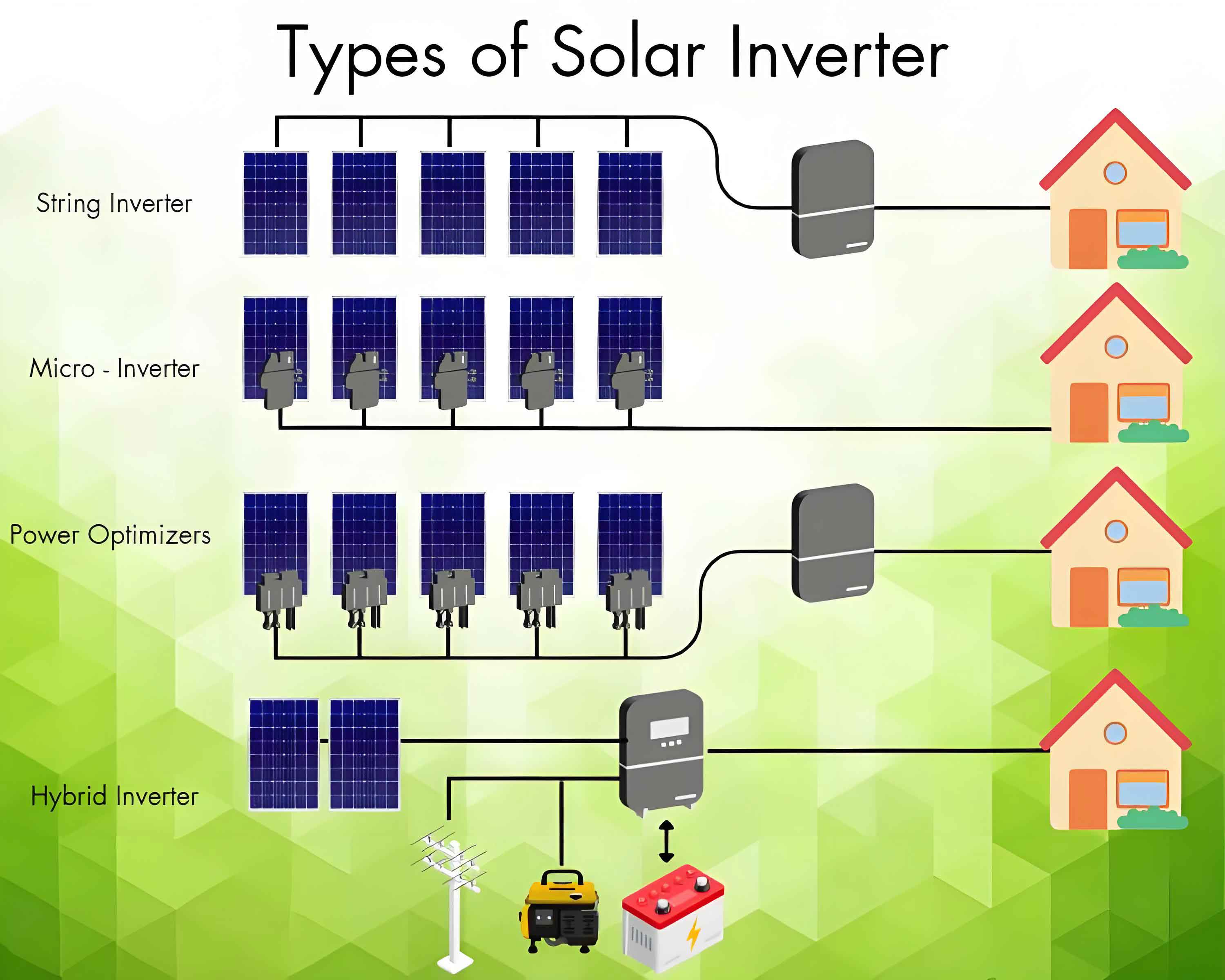
2. EMI Generation Mechanisms
Modern solar inverters using PWM switching (2-20kHz) create harmonic distortions:
$$THD = \frac{\sqrt{\sum_{h=2}^{\infty} V_h^2}}{V_1} \times 100\%$$
Key EMI contributors include:
- Diode recovery currents
- IGBT switching transients
- Parasitic capacitance in PV arrays
3. Measurement Methodology
Field tests compared spectral emissions (9kHz-3GHz) between operational and standby modes using:
| Receiver | PR100 Monitoring Receiver |
| Antenna | Biconical/Log-periodic array |
| Distance | 3m (CISPR 25 standard) |
4. Results and Analysis
Frequency-domain comparison revealed:
| Frequency Band | ΔE (dBμV/m) |
|---|---|
| 9kHz-30MHz | < 2.3 |
| 30MHz-1GHz | < 4.1 |
| 1-3GHz | < 3.8 |
The solar inverter’s switching noise showed maximum emissions at:
$$f_{peak} = \frac{1}{2\pi\sqrt{L_{par}C_{par}}}$$
Where parasitic inductance (Lpar) and capacitance (Cpar) form resonant circuits in cabling.
5. Mitigation Strategies
For military-grade EMC requirements:
- Implement three-stage filtering:
$$Z_{filter} = \frac{1}{j\omega C} + j\omega L + R$$ - Optimize solar inverter switching frequency (fsw) selection:
$$f_{sw\_opt} = \frac{1}{\tau_{min} \cdot \ln(\frac{V_{dc}}{V_{ripple}})}$$
6. Conclusion
The tested solar-powered vehicle demonstrated excellent EMC performance with maximum observed emission levels 6dB below CISPR 32 Class B limits. Proper solar inverter design and system grounding effectively contain EMI within acceptable thresholds for sensitive electronic environments.