
In recent years, the rapid advancement of energy storage technologies has positioned lithium-ion batteries as a cornerstone for applications ranging from electric vehicles to grid-scale storage. Among various cathode materials, the LiFePO4 battery has gained significant traction due to its inherent safety, long cycle life, and environmental benignity. However, the operational reliability of LiFePO4 batteries under sustained charging regimes, particularly float charging at elevated temperatures, remains a critical concern for long-term deployment in backup power systems and stationary storage. Float charging, a method where a battery is maintained at a constant voltage with a small current to compensate for self-discharge, is widely employed in uninterruptible power supplies (UPS), telecommunications, and renewable energy integration. Yet, prolonged exposure to high temperatures during float charging can accelerate degradation mechanisms, leading to premature failure and reduced service life. This study delves into the electrochemical performance of soft-pack LiFePO4 batteries subjected to high-temperature float charging at varying voltages, aiming to elucidate the underlying aging processes and provide insights for optimizing float charge strategies in real-world applications.
The LiFePO4 battery, with its olivine structure, offers excellent thermal stability compared to other lithium-ion chemistries like nickel-manganese-cobalt (NMC) or lithium cobalt oxide (LCO). This makes the LiFePO4 battery particularly suitable for environments where safety is paramount. However, like all lithium-ion batteries, the LiFePO4 battery is susceptible to degradation from factors such as temperature, voltage stress, and cycling conditions. Float charging, while essential for maintaining state-of-charge (SOC), can induce side reactions if not properly controlled. At high temperatures, these reactions are exacerbated, leading to capacity fade, increased internal resistance, and thermal runaway risks. Understanding the interplay between temperature, voltage, and aging in LiFePO4 batteries is therefore crucial for enhancing their durability in float charge applications.
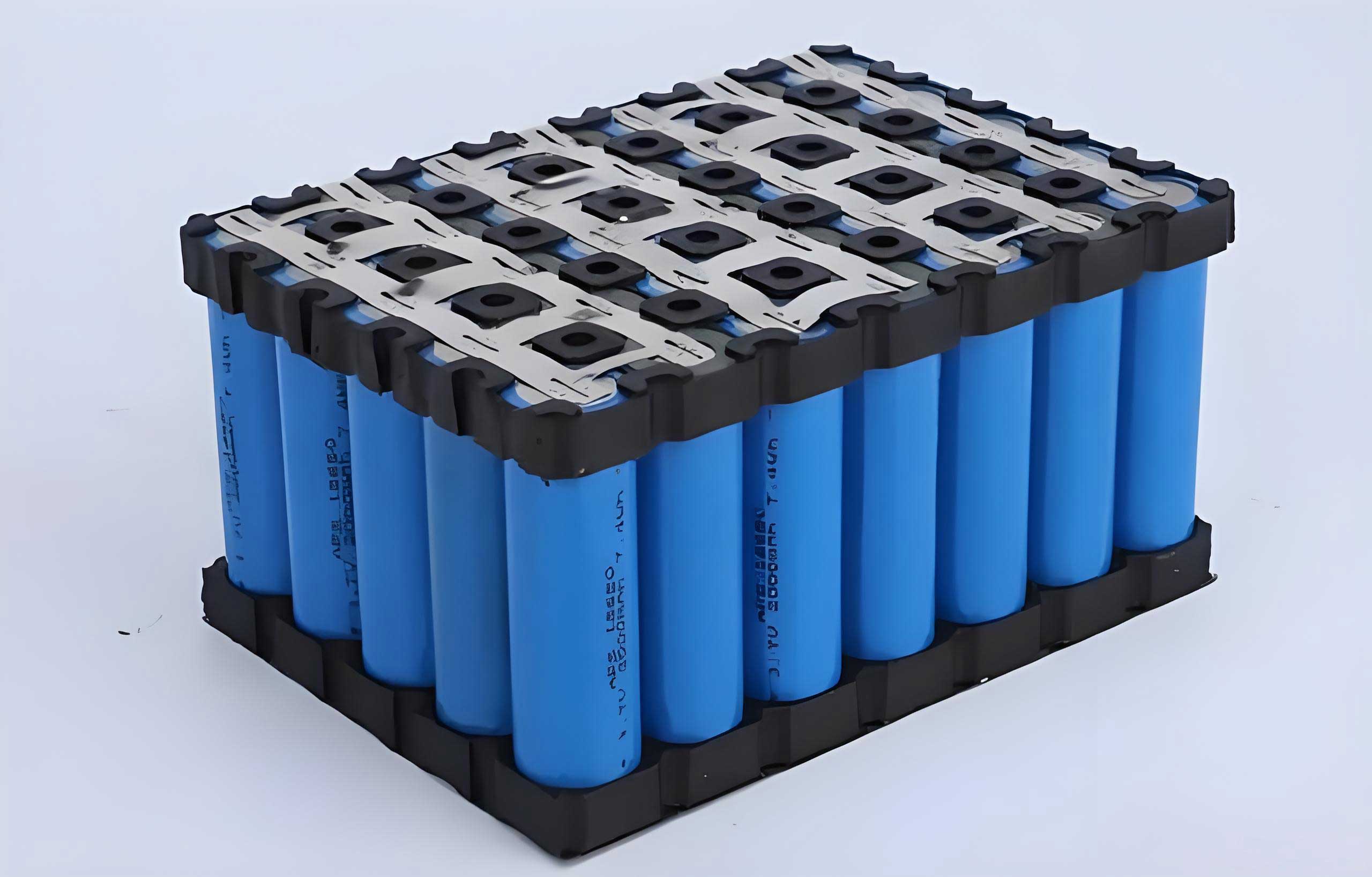
In this investigation, we focus on commercial soft-pack LiFePO4 batteries with a nominal capacity of 21 Ah. These LiFePO4 batteries were subjected to float charging at 50°C under three distinct voltages: 3.40 V, 3.65 V, and 3.85 V. The selection of these voltages is strategic: 3.40 V represents the open-circuit voltage after full charge relaxation, 3.65 V is the manufacturer-specified maximum charging voltage, and 3.85 V is an overvoltage condition to stress-test the LiFePO4 battery. Over a period of 60 days, we monitored key performance metrics, including capacity retention, rate capability, internal resistance, pulse power characteristics, and temperature distribution during discharge. The findings reveal severe degradation in all cases, with the extent of aging intensifying at higher float voltages. This underscores the vulnerability of LiFePO4 batteries to thermal and voltage stresses during float charging, necessitating careful management in operational settings.
To provide a theoretical foundation, the degradation mechanisms in LiFePO4 batteries can be modeled using electrochemical principles. The capacity fade over time under float charging can be described by an empirical decay function:
$$C(t) = C_0 \cdot e^{-k t}$$
where \(C(t)\) is the capacity at time \(t\), \(C_0\) is the initial capacity, and \(k\) is the degradation rate constant that depends on temperature and voltage. For a LiFePO4 battery, \(k\) can be expressed using an Arrhenius-type relationship combined with a voltage acceleration factor:
$$k = A \cdot e^{-\frac{E_a}{R T}} \cdot V^{\alpha}$$
Here, \(A\) is a pre-exponential factor, \(E_a\) is the activation energy for degradation, \(R\) is the gas constant, \(T\) is the absolute temperature, \(V\) is the float voltage, and \(\alpha\) is a voltage exponent. This model highlights how both temperature and voltage synergistically accelerate aging in LiFePO4 batteries.
The internal resistance of a LiFePO4 battery, comprising ohmic resistance (\(R_b\)), charge transfer resistance (\(R_{ct}\)), and solid-electrolyte interphase (SEI) resistance (\(R_{sei}\)), is a critical indicator of health. Under float charging, side reactions such as electrolyte decomposition and SEI growth increase these resistances. The total internal resistance \(R_{total}\) can be approximated as:
$$R_{total} = R_b + R_{ct} + R_{sei}$$
In our experiments, we measured \(R_b\) and \(R_{ct}\) using electrochemical impedance spectroscopy (EIS). The increase in these resistances post-float charging correlates with the loss of active lithium ions and material degradation in the LiFePO4 battery.
The experimental setup involved placing the LiFePO4 batteries in a temperature-controlled chamber at 50°C. A battery testing system was used to apply the float voltages continuously, with periodic interruptions for performance evaluations. Prior to float charging, all LiFePO4 batteries were conditioned through standard charge-discharge cycles at 25°C to ensure consistency. The detailed test protocol is summarized in Table 1.
| Parameter | Value |
|---|---|
| Battery Type | Soft-pack LiFePO4 Battery |
| Nominal Capacity | 21 Ah |
| Float Temperatures | 50°C |
| Float Voltages | 3.40 V, 3.65 V, 3.85 V |
| Float Duration | 60 days |
| Performance Tests | Capacity, EIS, HPPC, Rate Discharge, Thermal Imaging |
The capacity retention results after 60 days of float charging are striking. As shown in Table 2, all LiFePO4 batteries experienced significant capacity loss, with the lowest retention observed at the highest voltage. This trend underscores the compounded effect of high temperature and elevated voltage on the LiFePO4 battery.
| Float Voltage (V) | Initial Capacity (Ah) | Final Capacity (Ah) | Capacity Retention (%) |
|---|---|---|---|
| 3.40 | 21.00 | 16.53 | 78.71 |
| 3.65 | 21.00 | 15.65 | 74.51 |
| 3.85 | 21.00 | 14.97 | 71.28 |
To further analyze the degradation, we employed incremental capacity (IC) analysis. The IC curves for the LiFePO4 battery before and after float charging reveal shifts and reductions in peak heights, indicative of active material and lithium inventory loss. For instance, the charging IC peaks corresponding to phase transitions in the LiFePO4 cathode diminished in intensity, especially at 3.85 V float voltage. This aligns with the model where higher voltages drive parasitic reactions, depleting cyclable lithium and degrading the electrode structure.
The internal resistance measurements via EIS showed a substantial rise post-float charging. Table 3 quantifies the increases in \(R_b\) and \(R_{ct}\) for the LiFePO4 battery under different float voltages. The data clearly demonstrates that both resistances escalate with voltage, with \(R_{ct}\) showing a more pronounced increase, suggesting accelerated interfacial degradation in the LiFePO4 battery.
| Float Voltage (V) | \(R_b\) Increase (%) | \(R_{ct}\) Increase (%) |
|---|---|---|
| 3.40 | 184.2 | 246.6 |
| 3.65 | 270.2 | 394.4 |
| 3.85 | 300.0 | 568.7 |
Hybrid pulse power characterization (HPPC) tests were conducted to assess the pulse power capability of the LiFePO4 battery. The discharge pulse power \(P_{discharge}\) is calculated as:
$$P_{discharge} = V_{min} \cdot \frac{OCV_d – V_{min}}{R_d}$$
where \(V_{min}\) is the voltage at the end of a 10-second discharge pulse, \(OCV_d\) is the open-circuit voltage before the pulse, and \(R_d\) is the discharge resistance. Post-float charging, the LiFePO4 battery exhibited a marked reduction in \(P_{discharge}\), particularly at higher depths-of-discharge (DOD). For example, at 10% DOD, the \(P_{discharge}\) for the LiFePO4 battery floated at 3.85 V dropped from 202.6 W to 142.4 W, a 30% decrease. This decline underscores the impaired kinetics and increased polarization in the degraded LiFePO4 battery.
Temperature distribution during discharge is another critical aspect. Using infrared thermography, we mapped the surface temperature of the LiFePO4 battery after float charging. The highest temperature consistently occurred at the positive tab, reaching up to 55.00°C during a 1C discharge. This localized heating can be attributed to higher current density and contact resistance at the tab, exacerbated by the aging of the LiFePO4 battery. The temperature rise \(\Delta T\) during discharge can be modeled using an energy balance equation:
$$\Delta T = \frac{I^2 R_{total} t}{m C_p}$$
where \(I\) is the discharge current, \(t\) is the time, \(m\) is the battery mass, and \(C_p\) is the specific heat capacity. For a degraded LiFePO4 battery with elevated \(R_{total}\), \(\Delta T\) increases, raising thermal management concerns.
Rate capability tests further highlighted the performance decline. The LiFePO4 battery floated at 3.85 V showed reduced capacities at higher discharge rates: 15.42 Ah at 0.5C, 14.58 Ah at 0.75C, and 13.84 Ah at 1C. This rate-dependent capacity loss can be expressed using Peukert’s law adapted for lithium-ion batteries:
$$C = C_0 \cdot k^{-n}$$
where \(C\) is the capacity at discharge rate \(k\), \(C_0\) is the capacity at a reference rate, and \(n\) is the Peukert exponent. After float charging, the LiFePO4 battery exhibited a higher \(n\), indicating greater polarization and diffusion limitations.
The degradation mechanisms in the LiFePO4 battery under high-temperature float charging are multifaceted. At the cathode, LiFePO4 may undergo iron dissolution and phase instability at elevated voltages and temperatures. The dissolved iron can migrate to the anode, catalyzing SEI growth and consuming lithium. Simultaneously, the electrolyte undergoes oxidative decomposition at the cathode and reductive decomposition at the anode, leading to gas generation (e.g., CO2 and alkanes) and SEI thickening. These processes are accelerated in the LiFePO4 battery at higher float voltages, as evidenced by the severe capacity fade and resistance increase.
To mitigate these issues, several strategies can be explored for LiFePO4 batteries in float charge applications. First, voltage regulation is paramount; maintaining float voltage at or below 3.65 V, preferably closer to 3.40 V, can slow degradation. Second, temperature control through active cooling systems is essential to keep the LiFePO4 battery below 40°C. Third, electrolyte additives that stabilize the SEI and suppress gas formation can enhance the float charge tolerance of LiFePO4 batteries. Fourth, periodic equalization and conditioning cycles can redistribute lithium and mitigate inhomogeneities in the LiFePO4 battery pack.
From a modeling perspective, the aging of LiFePO4 batteries under float charging can be integrated into battery management systems (BMS) for predictive health monitoring. Using data-driven approaches like machine learning, parameters such as capacity and resistance can be estimated in real-time, allowing for adaptive float charge strategies. For instance, the BMS could dynamically adjust the float voltage based on temperature and historical usage, optimizing the life of the LiFePO4 battery.
In conclusion, this study demonstrates that high-temperature float charging severely degrades the electrochemical performance of LiFePO4 batteries, with higher voltages exacerbating the aging. The LiFePO4 battery experiences significant capacity loss, increased internal resistance, reduced pulse power, and elevated operating temperatures. These findings emphasize the need for careful design of float charge protocols and thermal management systems in applications relying on LiFePO4 batteries for long-term energy storage. Future work should focus on developing advanced materials and algorithms to enhance the float charge resilience of LiFePO4 batteries, ensuring their reliability in critical infrastructure.
The implications of this research extend beyond laboratory settings. For grid-scale storage using LiFePO4 batteries, float charging is often employed during standby periods. Understanding the degradation patterns can inform maintenance schedules and replacement policies, reducing operational costs. Similarly, in telecommunications backup systems, where LiFePO4 batteries are increasingly replacing lead-acid, optimizing float charge parameters can extend service life and improve reliability. Overall, the LiFePO4 battery, with its safety advantages, remains a promising candidate for these applications, provided that float charge conditions are meticulously controlled.
In summary, the LiFePO4 battery’s performance under high-temperature float charging is a complex interplay of electrochemical and thermal factors. Through comprehensive testing and analysis, we have quantified the degradation and proposed mitigation strategies. As the demand for energy storage grows, continued research on the LiFePO4 battery will be vital to unlocking its full potential in float charge scenarios, contributing to a more sustainable and resilient energy future.