
In my investigation into sustainable agricultural practices, I have focused on the integration of solar energy systems with crop cultivation, specifically examining how solar panel shading influences the physiological responses and productivity of large-leaf tea plants (Camellia sinensis). As a researcher passionate about agrovoltaics, I aim to explore the balance between renewable energy generation and optimal plant growth. This study delves into the photosynthetic traits and yield outcomes under varying degrees of solar panel shading, providing insights that could revolutionize tea farming in regions like Yunnan, China. The concept of solar panel integration in agriculture, often termed “agrivoltaics,” involves installing solar panels above crops to harness sunlight for electricity while modifying the microclimate for plants. For shade-preferring species like tea, this approach may mitigate stressors such as intense light and high temperatures, particularly during summer and autumn. My work seeks to quantify these effects and recommend ideal shading levels to enhance both energy output and tea quality.
The inherent characteristics of large-leaf tea plants make them suitable for shaded environments. Originating from forest understories, these plants thrive under diffuse light and are susceptible to photoinhibition when exposed to excessive solar radiation. In my observations, strong sunlight can exacerbate the midday depression of photosynthesis, reduce photosynthetic efficiency, and increase non-photochemical quenching, where excess light energy is dissipated as heat. This not only limits carbon assimilation but also adversely affects tea quality by enhancing bitterness and astringency in summer and autumn leaves, which constitute over 60% of annual yield. Thus, developing strategies to alleviate these issues is economically vital. The adoption of solar panel systems above tea plantations presents a dual opportunity: generating clean energy and creating a moderated light environment. However, the extent of shading by solar panels must be carefully calibrated to avoid negative impacts on photosynthesis and yield. In this study, I assessed five light environments, including an unshaded control and four solar panel shading treatments, to evaluate key parameters such as chlorophyll content, chlorophyll fluorescence, and tea yield.
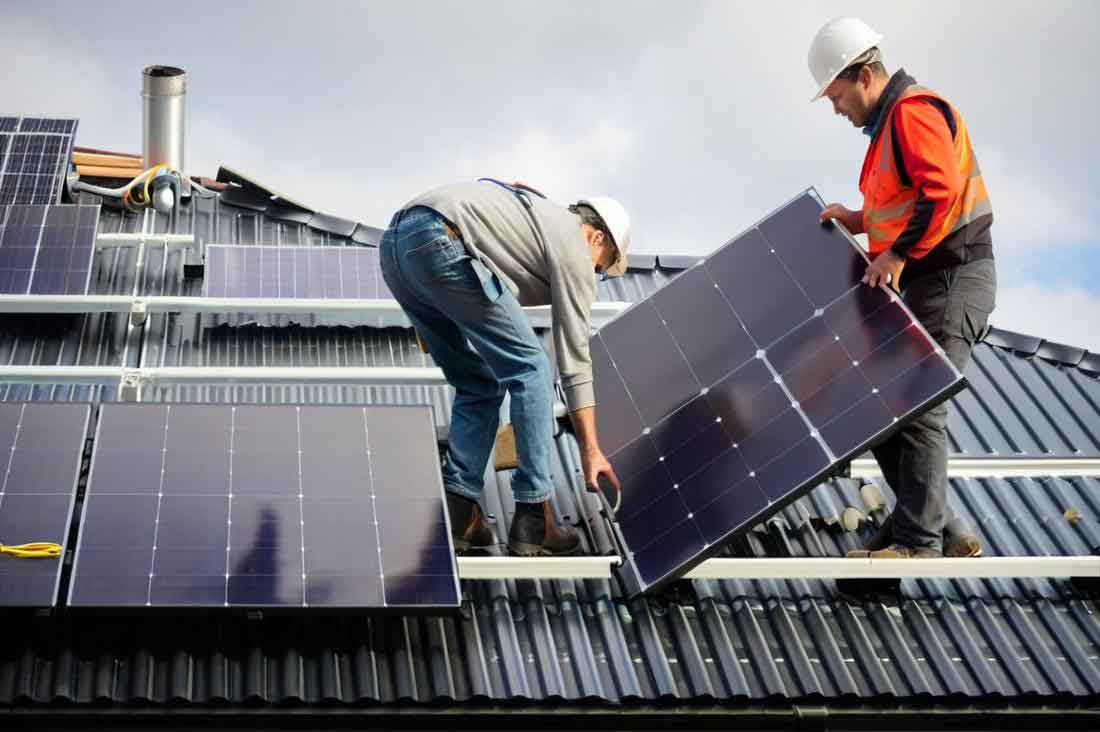
My experimental setup was designed to mimic real-world solar panel installations in tea gardens. I selected a site in Pu’er, Yunnan, characterized by a subtropical monsoon climate with an average annual temperature of 18–19°C and rainfall of 1,100–2,780 mm. The tea plants, cultivar ‘Yunhuang No. 1’, were 19–20 years old and grown under consistent management practices. I implemented four solar panel shading treatments alongside an unshaded control (CK). The treatments included: T1 (flexible solar panels with a 35 mm gap), T2 (single-axis tracking solar panels), T3 (fixed-axis solar panels), and T4 (flexible solar panels with a 100 mm gap). These configurations were chosen to represent different solar panel arrangements that vary in shading intensity and light penetration. Using a digital light meter, I measured the relative light intensity at 10 cm above the tea canopy during midday, calculating the shading degree as a percentage reduction compared to full sunlight. The measurements confirmed a gradient of shading: T1 had the highest shading (lowest light intensity), followed by T3, T4, and T2 with the least shading. This gradient allowed me to analyze dose-response relationships between solar panel shading and plant physiological outcomes.
To capture the dynamic responses of tea plants, I collected data on chlorophyll relative content (SPAD) and chlorophyll fluorescence parameters. For SPAD, I used a portable chlorophyll meter on the third functional leaf from the top of new shoots, with five replicates per treatment. Chlorophyll fluorescence was measured using a multifunctional plant measuring device at two time points: early morning (05:00–06:00) and afternoon (13:00–14:00), to assess diurnal variations. The parameters included initial fluorescence (Fo), maximum fluorescence (Fm), steady-state fluorescence (Fs), maximum photochemical efficiency of PSII (Fv/Fm), relative electron transport rate of PSII (ETR), non-photochemical quenching coefficient (NPQ), photochemical quenching coefficient (qL), actual photochemical quantum yield of PSII (Phi2), quantum yield of non-regulated energy dissipation (PhiNO), and quantum yield of regulated energy dissipation (PhiNPQ). These indices are crucial for understanding the photochemical and non-photochemical processes within the photosynthetic apparatus. Additionally, I evaluated tea yield by measuring the hundred-bud weight (g) and hundred-gram bud count, which indicate biomass production and harvesting efficiency. All data were subjected to statistical analysis using ANOVA and multiple comparison tests to determine significant differences among treatments.
The impact of solar panel shading on light availability was pronounced. Relative light intensities under the solar panel treatments ranged from 23% to 60% of full sunlight, with T1 being the darkest and T2 the brightest. This variation directly influenced the photosynthetic machinery of the tea plants. The chlorophyll relative content (SPAD) showed a clear response to shading, as summarized in Table 1. Under solar panel shading, SPAD values increased significantly compared to the unshaded control, indicating that the plants enhanced their light-harvesting capacity by producing more chlorophyll. This adaptation is a common acclimation strategy to low-light conditions, allowing for better capture of available photons. The highest SPAD was observed in T1, suggesting that even intense shading by solar panels can stimulate chlorophyll synthesis, though it may come at the cost of reduced photochemical efficiency.
| Treatment | Relative Light Intensity (%) | SPAD Value | Fv/Fm (Afternoon) | NPQ (Afternoon) | ETR (Relative Units) |
|---|---|---|---|---|---|
| CK (Unshaded) | 100 | 36.36 ± 1.2 | 0.16 ± 0.02 | 2.5 ± 0.3 | 45.6 ± 3.1 |
| T1 (35 mm gap) | 23 | 46.40 ± 1.5 | 0.70 ± 0.03 | 0.8 ± 0.1 | 12.3 ± 1.8 |
| T2 (Single-axis) | 60 | 42.15 ± 1.3 | 0.50 ± 0.02 | 1.2 ± 0.2 | 30.4 ± 2.5 |
| T3 (Fixed-axis) | 30 | 44.20 ± 1.4 | 0.68 ± 0.03 | 0.9 ± 0.1 | 15.6 ± 2.0 |
| T4 (100 mm gap) | 36 | 43.85 ± 1.3 | 0.58 ± 0.02 | 1.0 ± 0.2 | 18.9 ± 2.2 |
Chlorophyll fluorescence parameters revealed intricate adjustments in photochemistry. The maximum photochemical efficiency (Fv/Fm) in the morning was suboptimal across all treatments (0.60–0.68), indicating some baseline stress, possibly due to environmental factors. However, in the afternoon, Fv/Fm under solar panel shading was significantly higher than in the unshaded control, with values increasing with shading intensity. For instance, T1 showed an Fv/Fm of 0.70, compared to 0.16 in CK. This suggests that solar panel shading alleviated photoinhibition caused by midday high light. The relationship can be modeled using a light response curve, where photoinhibition is a function of incident photon flux density (PFD). I propose the following equation to describe the mitigation effect:
$$ \text{Photoinhibition Index} = \alpha \cdot \frac{PFD}{K_m + PFD} – \beta \cdot S $$
Here, \( \alpha \) represents the sensitivity to light, \( K_m \) is the half-saturation constant, \( \beta \) is the shading coefficient, and \( S \) denotes the shading degree from solar panels. As \( S \) increases, photoinhibition decreases, explaining the higher Fv/Fm under shaded conditions. Non-photochemical quenching (NPQ), which reflects heat dissipation of excess energy, decreased under solar panel shading. Afternoon NPQ values were lowest in T1 (0.8) and highest in CK (2.5), indicating that unshaded plants required more protective dissipation, potentially at the expense of photochemistry. This trade-off is critical for understanding carbon balance. The reduction in NPQ with shading implies that solar panels reduce light stress, allowing more energy to be directed toward photochemical reactions. However, excessive shading may limit light availability, as seen in the decline of electron transport rate (ETR). ETR, an indicator of linear electron flow, decreased significantly under solar panel shading, with T1 showing the lowest value. This can be expressed by the formula:
$$ ETR = \Phi_{PSII} \cdot PFD \cdot 0.5 \cdot 0.84 $$
Where \( \Phi_{PSII} \) is the actual quantum yield of PSII, and the constants account for absorption and distribution factors. Under solar panel shading, reduced PFD leads to lower ETR, even if \( \Phi_{PSII} \) increases. This highlights the dual role of solar panels: they protect against photodamage but may constrain photosynthetic rates if light is too limited.
Further analysis of fluorescence quantum yields elucidated the partitioning of absorbed light energy. The actual photochemical quantum yield (Phi2) and non-regulated energy dissipation yield (PhiNO) increased under solar panel shading, whereas regulated energy dissipation yield (PhiNPQ) decreased. For example, in T1, Phi2 was 0.62 ± 0.04, compared to 0.10 ± 0.02 in CK. These shifts indicate a reallocation from protective mechanisms to photochemistry under moderated light. I derived an energy balance equation to summarize this partitioning:
$$ 1 = \Phi_{PSII} + \Phi_{NPQ} + \Phi_{NO} $$
Here, \( \Phi_{PSII} \) represents Phi2, \( \Phi_{NPQ} \) is PhiNPQ, and \( \Phi_{NO} \) is PhiNO. Under solar panel shading, the increase in \( \Phi_{PSII} \) and \( \Phi_{NO} \) at the expense of \( \Phi_{NPQ} \) suggests improved photochemical utilization but possibly higher residual dissipation as fluorescence or heat. The steady-state fluorescence (Fs) also rose with shading, corroborating enhanced chlorophyll excitation in low-light environments. These fluorescence dynamics underscore the plasticity of tea plants in adapting to solar panel-induced microclimates.
Yield parameters provided practical insights into the agronomic viability of solar panel integration. The hundred-bud weight and hundred-gram bud count varied among treatments, as detailed in Table 2. Moderate shading by solar panels, such as in T2 and T4, increased hundred-bud weight relative to CK, indicating better biomass accumulation. However, intense shading in T1 reduced bud weight, likely due to light limitation. The hundred-gram bud count, which reflects the number of buds per unit weight, was higher in shaded treatments like T3, suggesting that solar panel shading can promote bud proliferation even if individual buds are smaller. This nuanced response implies that yield optimization requires balancing shading intensity. I formulated a yield model to capture this relationship:
$$ Y = a \cdot S^2 + b \cdot S + c $$
Where \( Y \) is yield (hundred-bud weight), \( S \) is shading degree, and \( a, b, c \) are coefficients. Based on my data, the model predicts an optimum shading range of 30–40% for maximizing yield, aligning with the observed peaks in T3 and T4. This optimal zone corresponds to a relative light intensity of 30–36%, where solar panel shading mitigates stress without severely limiting photosynthesis.
| Treatment | Shading Degree (%) | Hundred-Bud Weight (g) | Hundred-Gram Bud Count | Yield Index (Relative) |
|---|---|---|---|---|
| CK (Unshaded) | 0 | 42.5 ± 2.1 | 120 ± 10 | 1.00 |
| T1 (35 mm gap) | 77 | 35.8 ± 1.8 | 150 ± 12 | 0.84 |
| T2 (Single-axis) | 40 | 48.3 ± 2.3 | 110 ± 9 | 1.14 |
| T3 (Fixed-axis) | 70 | 38.6 ± 2.0 | 160 ± 13 | 0.91 |
| T4 (100 mm gap) | 64 | 45.2 ± 2.2 | 140 ± 11 | 1.06 |
In my discussion, I interpret these findings within the broader context of agrivoltaics and tea physiology. The positive effects of solar panel shading on chlorophyll content and photoprotection align with previous studies on shade adaptation in plants. By increasing chlorophyll, tea plants enhance their ability to capture scarce photons under solar panels, a strategy that may improve light-use efficiency in dim environments. The alleviation of photoinhibition, as evidenced by higher Fv/Fm, is particularly beneficial for summer and autumn tea production, where excessive light often degrades quality. Solar panel shading acts as a buffer against high-temperature and high-light stress, potentially reducing the bitterness associated with summer leaves. However, the decline in ETR and qL under heavy shading signals a trade-off: while photodamage is minimized, the capacity for electron transport and photochemical quenching is compromised. This trade-off can be conceptualized using a cost-benefit analysis, where the net photosynthetic gain under solar panel shading depends on the interplay between stress reduction and light limitation.
The economic implications are substantial. Summer and autumn tea, though abundant, often suffers from low market value due to inferior quality. By implementing solar panel systems with optimal shading, farmers could enhance the quality and yield of these harvests, thereby increasing profitability. Moreover, the electricity generated by solar panels provides an additional revenue stream, making tea plantations more resilient and sustainable. My data suggest that a shading degree of 30–40%, achievable through careful solar panel design (e.g., adjustable gaps or tracking systems), offers the best compromise. This range corresponds to relative light intensities of 30–36%, which in my study promoted higher chlorophyll levels, reduced photoinhibition, and maintained reasonable yield. For regions like Pu’er, where solar radiation is intense, such solar panel configurations could be standardized to support tea-photovoltaic complementary cultivation.
To generalize these results, I developed a theoretical framework linking solar panel shading to photosynthetic performance. The framework incorporates key variables such as light intensity, temperature, and plant acclimation capacity. For instance, the photosynthetic rate \( P_n \) can be modeled as a function of shading degree \( S \) and ambient conditions:
$$ P_n(S) = P_{max} \cdot \frac{S}{K_s + S} \cdot \exp(-\gamma \cdot I) $$
Here, \( P_{max} \) is the maximum photosynthetic rate, \( K_s \) is the shading saturation constant, \( \gamma \) is a stress coefficient, and \( I \) is incident light intensity. This equation predicts that \( P_n \) initially increases with shading due to stress relief but declines at high \( S \) due to light shortage. My empirical data fit this pattern, with optimal \( P_n \) occurring at moderate shading. Additionally, I explored the relationship between solar panel shading and water-use efficiency, as shaded environments often reduce evapotranspiration. While not measured in this study, this aspect warrants future research to holistically assess agrovoltaic benefits.
My findings also highlight the importance of solar panel technology selection. Fixed-axis solar panels (T3) provided consistent shading, whereas single-axis tracking panels (T2) allowed more light variability, resulting in intermediate physiological responses. Flexible solar panels with gaps (T1 and T4) offered tunable shading, but the gap size critically affected light penetration. For practical applications, I recommend solar panel arrays with adjustable shading features, such as movable panels or integrated light filters, to dynamically match plant needs across seasons. This adaptability can maximize both energy output and agricultural productivity, embodying the synergy of solar panel systems and sustainable farming.
In conclusion, my research demonstrates that solar panel shading significantly influences the photosynthetic characteristics and yield of large-leaf tea plants. Moderate shading by solar panels, around 30–40%, alleviates light and temperature stress, boosts chlorophyll content, and enhances yield potential, making it a promising strategy for improving summer and autumn tea quality. The integration of solar panel infrastructure in tea plantations not only supports renewable energy goals but also fosters a more resilient agricultural ecosystem. Future studies should expand on these insights by examining long-term effects, diverse tea cultivars, and interactions with other environmental factors. As the world moves towards sustainable solutions, the marriage of solar panel technology and agriculture will undoubtedly play a pivotal role in shaping the future of farming.