
In recent years, the global shift towards sustainable energy has accelerated the adoption of electric vehicles (EVs), with lithium-ion batteries playing a pivotal role. Among various cathode materials, lithium iron phosphate (LiFePO4) has gained significant attention due to its inherent safety, long cycle life, and cost-effectiveness. However, a persistent issue with LiFePO4 batteries is their rapid capacity fade during the initial cycles, which contrasts with the relatively stable performance in mid-to-late cycles. As a researcher focused on battery technology, I have investigated this phenomenon to uncover the underlying mechanisms and propose effective mitigation strategies. This article delves into the reasons for the early-cycle attenuation in LiFePO4 batteries, supported by experimental data and characterization techniques, and offers practical improvements to enhance their longevity.
The cycle performance of LiFePO4 batteries often exhibits a distinct pattern: a steep decline in capacity within the first few hundred cycles, followed by a gradual stabilization. For instance, in high-temperature testing at 60°C, LiFePO4 batteries may show a capacity retention of only 95% after 200 cycles, compared to 97% for ternary nickel-cobalt-manganese (NCM) batteries under similar conditions. This discrepancy prompts a deeper inquiry into the fundamental differences between these battery systems. My analysis begins with a comparative study of LiFePO4 and NCM batteries, focusing on initial coulombic efficiency (ICE) as a key factor. The ICE of LiFePO4, graphite, and NCM materials typically ranges around 95%, 92%, and 88%, respectively. This variance implies that in NCM batteries, the anode retains excess lithium ions after the first charge-discharge cycle, which can compensate for active lithium loss during early cycles. In contrast, LiFePO4 batteries lack this buffer, leading to faster attenuation.
To validate this hypothesis, I conducted inductively coupled plasma optical emission spectroscopy (ICP-OES) and X-ray diffraction (XRD) analyses on cycled electrodes. The results, summarized in Table 1, show that the lithium content in the anode of NCM batteries is consistently higher than in LiFePO4 batteries across various cycle stages. For example, after 100 cycles, the lithium mass fraction in NCM anodes was measured at approximately 6.2 × 10⁻³, whereas in LiFePO4 anodes, it was around 5.6 × 10⁻³. XRD further revealed a shift in the graphite (002) peak from 26.42° to 26.49° in LiFePO4 systems, indicating reduced lattice spacing and confirming lower lithium intercalation. These findings align with the formula for Bragg’s law: $$2d\sin\theta = n\lambda$$, where \(d\) is the interplanar spacing, \(\theta\) is the diffraction angle, \(n\) is an integer, and \(\lambda\) is the wavelength. The decrease in \(d\) correlates with lithium depletion, underscoring the role of active lithium loss in early-cycle fade.
| Cycle Number | Battery Type | Anode Lithium Mass Fraction (×10⁻³) | Graphite (002) Peak (°) |
|---|---|---|---|
| 0 | LiFePO4 | 4.8 | 26.42 |
| 50 | LiFePO4 | 5.4 | 26.50 |
| 100 | LiFePO4 | 5.6 | 26.49 |
| 0 | NCM | 5.0 | 26.42 |
| 50 | NCM | 6.0 | 26.44 |
| 100 | NCM | 6.2 | 26.44 |
The primary cause of active lithium loss in LiFePO4 batteries is attributed to the continuous repair of the solid electrolyte interphase (SEI) layer on the graphite anode. During cycling, mechanical stress from electrode expansion damages the SEI, necessitating reformation that consumes lithium ions. To quantify this, I employed a multi-faceted characterization approach using ICP, energy-dispersive spectroscopy (EDS), and differential scanning calorimetry (DSC). The SEI layer’s stability was assessed by measuring lithium content and thermal behavior. As shown in Table 2, the lithium mass in the SEI increased from 13.87 × 10⁻⁶ to 15.50 × 10⁻⁶ after 100 cycles, while DSC analysis indicated a rise in exothermic heat from 41.27 J/g to 45.00 J/g, reflecting greater SEI growth and associated lithium consumption.
| Characterization Method | Cycle 0 | Cycle 50 | Cycle 100 |
|---|---|---|---|
| ICP: Anode Li Mass Fraction (×10⁻³) | 4.8 | 5.4 | 5.6 |
| EDS: SEI Li Mass Fraction (×10⁻⁶) | 13.87 | 14.50 | 15.50 |
| DSC: Exothermic Heat (J/g) | 41.27 | 43.00 | 45.00 |
The relationship between electrode expansion and capacity fade is critical. In LiFePO4 batteries, the anode experiences significant swelling during initial cycles due to lithium intercalation, which exacerbates SEI damage. I measured the pressure increase in cells during cycling, noting a 33.6% rise in the first 50 cycles compared to only 1.4% in the next 50 cycles. This correlates with capacity fade rates of 3.3% and 1.2%, respectively, as per the formula for capacity loss: $$\Delta C = C_0 – C_n$$, where \(\Delta C\) is the capacity loss, \(C_0\) is the initial capacity, and \(C_n\) is the capacity after \(n\) cycles. The early rapid fade is thus directly linked to mechanical degradation, highlighting the need to mitigate electrode expansion.
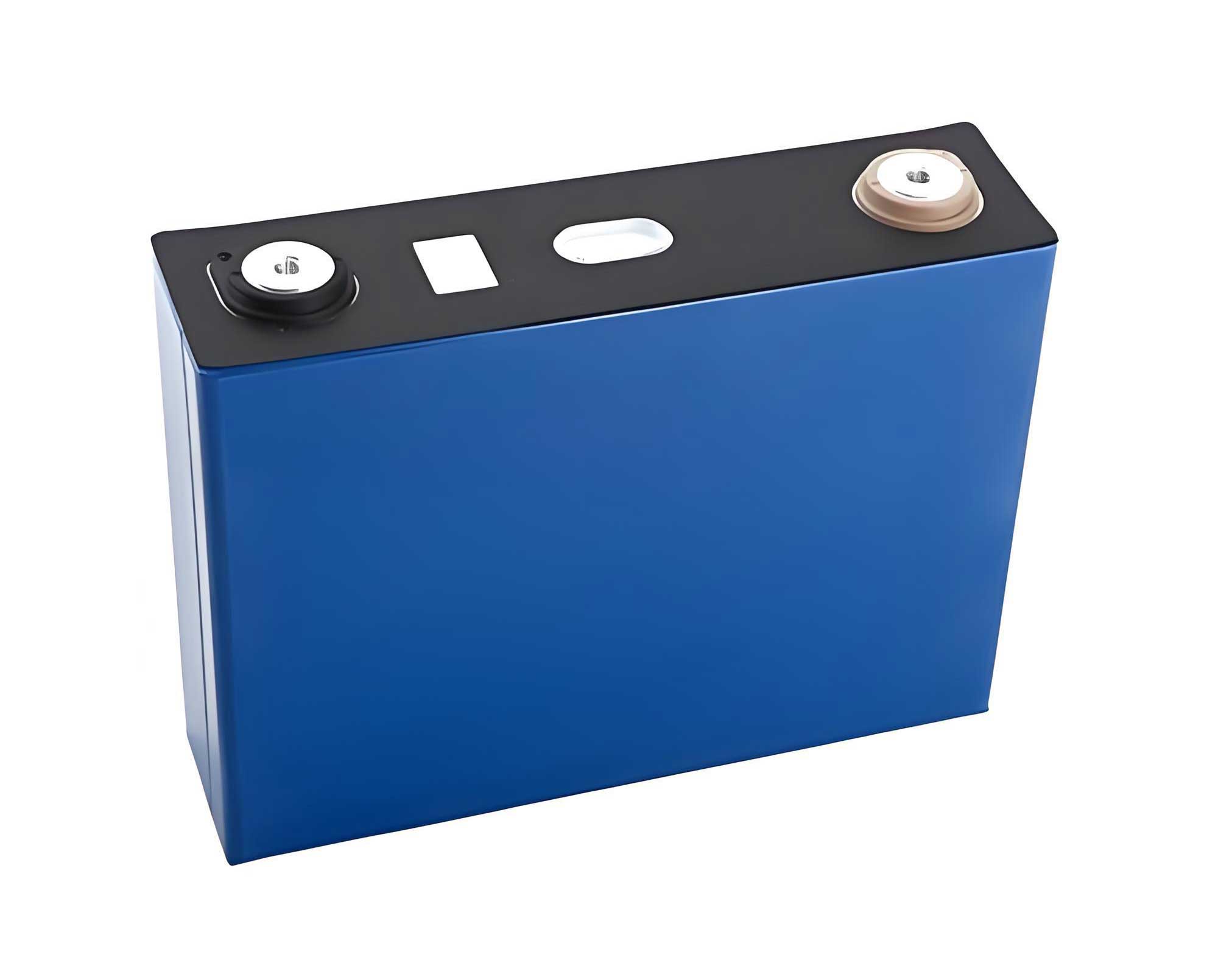
To improve the early-cycle performance of LiFePO4 batteries, I propose several strategies focused on reducing SEI consumption and minimizing electrode swelling. First, optimizing the cathode material’s specific surface area can decrease parasitic reactions. As illustrated in Table 3, lowering the specific surface area from 15 m²/g to 10 m²/g reduced the capacity fade rate by 0.5% over 100 cycles. This is because a smaller surface area limits electrolyte decomposition, conserving active lithium. The effect can be modeled using the Arrhenius equation for reaction rates: $$k = A e^{-E_a/RT}$$, where \(k\) is the rate constant, \(A\) is the pre-exponential factor, \(E_a\) is the activation energy, \(R\) is the gas constant, and \(T\) is the temperature. By reducing \(A\) through material design, side reactions are suppressed.
| Improvement Strategy | Parameter Change | Capacity Fade Reduction (%) after 100 Cycles |
|---|---|---|
| Lower Cathode Specific Surface Area | 15 m²/g → 10 m²/g | 0.5 |
| Reduce Anode OI Value | 9.33 → 5.55 | 0.9 |
| Adjust Anode Coating Load | Increase by 30% | -1.0 (increase in fade) |
| Decrease Binder Swelling | 20% reduction | 0.5 |
Second, modifying the anode’s orientation index (OI) value is crucial. The OI value reflects graphite’s expansion tendency during lithiation, with higher values indicating greater swelling. I tested anodes with OI values of 9.33 and 5.55, finding that the lower OI reduced capacity fade by 0.9% and decreased SEI lithium content from 6.1785 × 10⁻³ to 5.5938 × 10⁻³. This aligns with the stress-strain relationship: $$\sigma = E \epsilon$$, where \(\sigma\) is stress, \(E\) is Young’s modulus, and \(\epsilon\) is strain. By reducing \(\epsilon\) through material anisotropy control, mechanical damage is minimized.
Third, adjusting the anode coating load and binder properties can further enhance stability. Excessive coating increases electrode thickness, leading to higher swelling and SEI repair costs. In my experiments, a 30% increase in coating load raised the fade rate by 1.0%, as shown in Table 3. Conversely, reducing binder swelling by 20% through polymer modification improved capacity retention by 0.5%. These factors influence the overall cell pressure, which can be expressed as: $$P = \frac{F}{A}$$, where \(P\) is pressure, \(F\) is force from expansion, and \(A\) is the electrode area. Minimizing \(F\) via material engineering alleviates SEI disruption.
To integrate these improvements, I fabricated optimized LiFePO4 batteries with a balanced design: cathode specific surface area of 10 m²/g, anode OI value of 5.55, controlled coating load, and low-swelling binder. After 500 cycles at 60°C, the capacity retention reached 94.5%, compared to 92.0% for standard cells. This demonstrates the synergy of multiple approaches in extending battery life. The enhanced performance is quantified by the capacity retention formula: $$R = \frac{C_n}{C_0} \times 100\%$$, where \(R\) is retention percentage. For optimized cells, \(R\) increased by 2.5 percentage points, underscoring the efficacy of the proposed measures.
In conclusion, my investigation into LiFePO4 batteries reveals that early-cycle attenuation stems primarily from active lithium consumption due to SEI repair, driven by electrode expansion. Through comparative analysis with NCM batteries and comprehensive SEI characterization, I have identified key factors such as initial coulombic efficiency differences and mechanical stress. The proposed improvements—including cathode surface area reduction, anode OI optimization, coating load adjustment, and binder modification—collectively mitigate these issues, paving the way for more durable LiFePO4 battery systems. Future work should explore advanced electrolyte additives and nanostructured materials to further suppress SEI growth, ultimately enhancing the sustainability of electric transportation.