
In the pursuit of advanced energy storage solutions, the lithium-ion battery stands as a cornerstone technology, driving innovations in electric vehicles, portable electronics, and grid storage. A critical challenge in lithium-ion battery development is balancing high energy density with high-rate performance. Thick electrodes are often employed to increase active material loading, but this can impede ion transport, leading to polarization and reduced power capabilities. Among various structural design strategies, double-layer slot die coating has emerged as a prominent method to tailor electrode architecture. This technique involves coating two distinct slurry layers with different compositions onto a current collector, enabling graded distributions of binders, conductive agents, and active materials. By optimizing these distributions, double-layer coating can enhance electronic and ionic conductivity, improve adhesion, and boost overall battery performance. In this article, I explore the research status of double-layer coating for both cathodes and anodes in lithium-ion batteries, summarize key findings through tables and formulas, and discuss future directions. The integration of this technology promises to advance lithium-ion battery systems toward higher efficiency and durability.
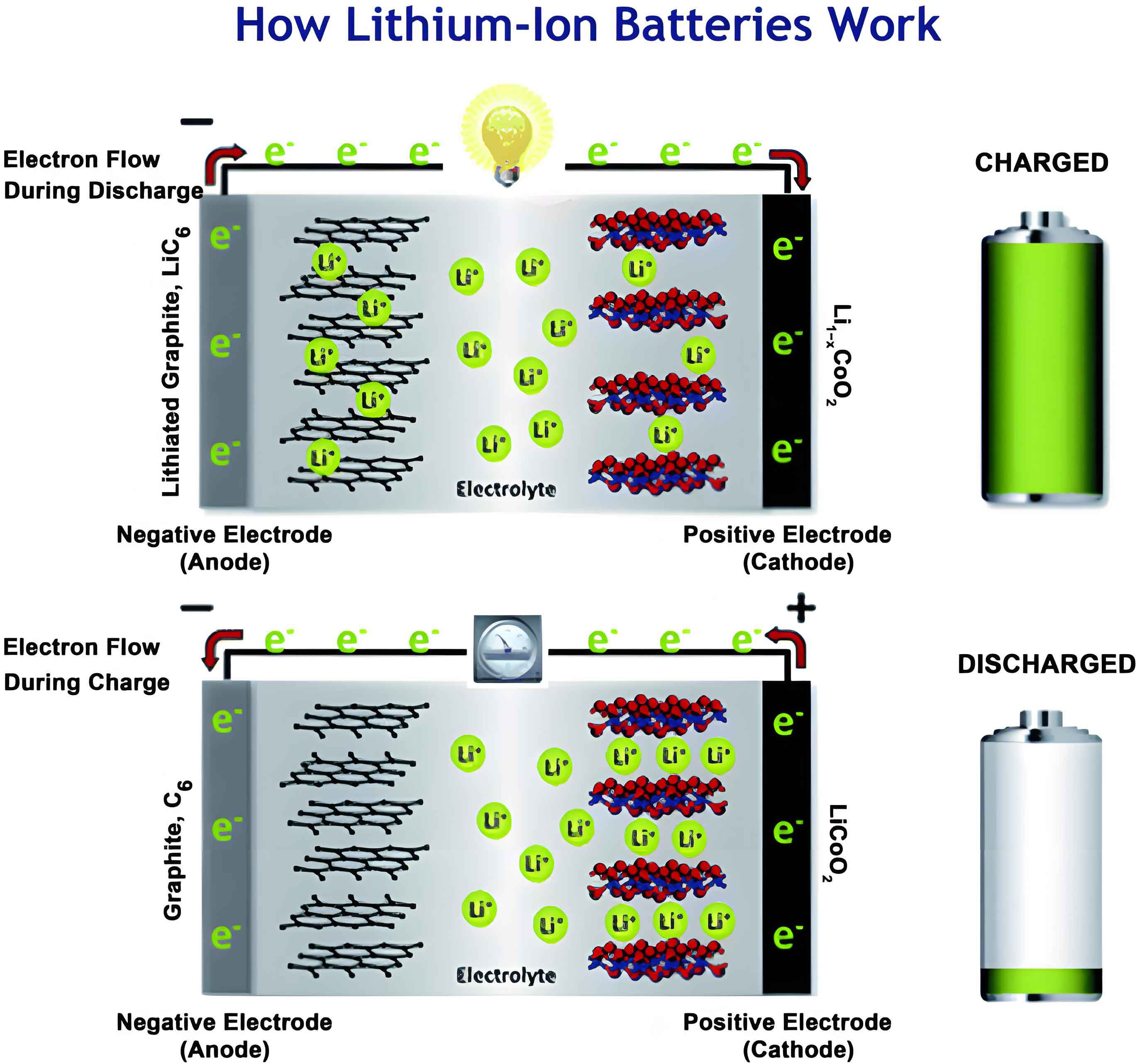
Double-layer coating fundamentally alters the microstructure of lithium-ion battery electrodes. By depositing two layers sequentially, it allows for independent control over composition in each layer. Typically, the bottom layer interfaces with the current collector, emphasizing electronic connectivity and adhesion, while the top layer interacts with the electrolyte, focusing on ionic transport. This graded design mitigates issues like binder migration during drying, which often occurs in single-layer coatings at high temperatures. For instance, in lithium-ion battery cathodes, rapid solvent evaporation can cause binders and conductive agents to concentrate near the surface, degrading conductivity. Double-layer coating circumvents this by predefining distributions. The performance gains are quantified through parameters like electronic conductivity, charge-transfer impedance, and peel strength, often modeled using empirical formulas. For example, the effective electronic conductivity $\sigma_e$ of an electrode layer can be related to the volume fraction of conductive agent $\phi_c$ via a percolation model: $$\sigma_e = \sigma_0 (\phi_c – \phi_{c,\text{crit}})^\alpha$$ where $\sigma_0$ is a constant, $\phi_{c,\text{crit}}$ is the critical percolation threshold, and $\alpha$ is an exponent typically around 2.0 for carbon-based materials. Similarly, ionic conductivity $\sigma_i$ depends on porosity $\epsilon$: $$\sigma_i = \sigma_{i0} \epsilon^\beta$$ with $\sigma_{i0}$ as the bulk electrolyte conductivity and $\beta \approx 1.5$. Double-layer coating optimizes both $\phi_c$ and $\epsilon$ across layers, enhancing overall kinetics in lithium-ion batteries.
Research on double-layer coated cathodes for lithium-ion batteries has focused on varying binder, conductive agent, and active material distributions. A key study examined binder migration in NCM424 (LiNi0.4Mn0.4Co0.2O2) cathodes. When single-layer electrodes were dried at 150°C, binder migration reduced electronic conductivity compared to those dried at 80°C. However, double-layer coatings with higher binder content in the bottom layer maintained high conductivity even at 150°C, enabling faster drying without performance loss. This is crucial for scaling up lithium-ion battery production. The peel strength $P$ of an electrode, critical for cycle life, can be expressed as: $$P = k \cdot w_b \cdot S^{-1}$$ where $k$ is a constant, $w_b$ is the binder weight fraction, and $S$ is the specific surface area of conductive agents. Higher $w_b$ in the bottom layer boosts adhesion, as confirmed by experiments where peel strength increased from 0.196 N to 0.441 N by adjusting conductive agent types. Table 1 summarizes how different conductive agent distributions affect performance in LiFePO4 cathodes for lithium-ion batteries.
| Bottom Layer CB% | Top Layer CB% | Ohmic Resistance R0 (Ω) | Charge-Transfer Rct (Ω) | Capacity Retention after 70 Cycles (%) |
|---|---|---|---|---|
| 1 | 9 | 5.6 | 2081.0 | 65.0 |
| 3 | 7 | 6.5 | 1707.2 | 74.0 |
| 5 | 5 | 5.8 | 1012.0 | 85.0 |
| 7 | 3 | 4.8 | 702.1 | 88.6 |
| 9 | 1 | 5.0 | 521.6 | 92.7 |
Note: CB% denotes conductive carbon black weight percentage. Data anonymized from studies on lithium-ion battery cathodes.
Another aspect involves active material particle size gradients. In NCM523 cathodes, using larger particles (d50 = 12 μm) in the bottom layer and smaller ones (d50 = 6 μm) in the top layer reduces concentration polarization. The Li+ diffusion flux $J$ can be described by Fick’s law: $$J = -D \frac{\partial C}{\partial x}$$ where $D$ is the diffusion coefficient and $C$ is Li+ concentration. The gradient in particle size creates a concentration difference that drives Li+ downward, easing transport. For LiCoO2 cathodes, combining LiFePO4 in layers improved overcharge safety, as LiFePO4‘s resistance increases upon delithiation, limiting current. The energy density $E$ of a lithium-ion battery cathode is given by: $$E = \frac{nF}{3.6} \int V \, dQ$$ where $n$ is electron transfer number, $F$ is Faraday’s constant, $V$ is voltage, and $Q$ is capacity. Double-layer coatings help maintain high $E$ even at elevated rates.
For anodes in lithium-ion batteries, double-layer coating has been applied to graphite electrodes to enhance adhesion and cycle life. Studies show that peel strength primarily depends on binder content in the bottom layer. When styrene-butadiene rubber (SBR) binder weight fraction increased from 3.7% to 7.5% in the bottom layer, peel strength doubled from 23–24 N/m to 43–47 N/m, irrespective of top-layer variations. This adhesion improvement directly impacts cycle stability, as modeled by the capacity fade rate $df/dN$ over cycles $N$: $$\frac{df}{dN} = -A \cdot P^{-1} + B$$ where $A$ and $B$ are constants related to mechanical degradation. Higher peel strength $P$ slows capacity fade. Additionally, particle size grading—using small graphite particles (d50 = 9 μm) in the bottom layer and large ones (d50 = 18 μm) in the top layer—improved rate capability and cycle life. In thick anodes for lithium-ion batteries, this design reduces lithium consumption during initial solid-electrolyte interphase (SEI) formation, boosting first-cycle efficiency $\eta$: $$\eta = \frac{Q_{\text{discharge}}}{Q_{\text{charge}}} \times 100\%$$ where $Q$ denotes capacity. Double-layer anodes have achieved $\eta$ up to 94%, compared to 90–92% for single-layer ones.
Table 2 compares key parameters for double-layer anode configurations in lithium-ion batteries, highlighting performance trade-offs.
| Bottom Layer Binder% | Top Layer Binder% | Total Coating Thickness (μm) | Peel Strength (N/m) | Cycle Life at 0.5C (Capacity Retention %) |
|---|---|---|---|---|
| 3.7 | 3.7 | 116 | 23–24 | ~60 |
| 7.5 | 3.7 | 116 | 43–47 | ~80 |
| 3.7 | 7.5 | 426 | 20–22 | ~50 |
| 7.5 | 3.7 | 426 | 40–44 | ~75 |
Data synthesized from anonymized studies on lithium-ion battery anodes.
Functional additives further optimize double-layer electrodes for lithium-ion batteries. In LiFePO4 cathodes, adding pore-formers like ammonium bicarbonate to the top layer increases porosity $\epsilon$, enhancing electrolyte wetting. The discharge capacity at high rate $C_{\text{rate}}$ follows: $$C_{\text{rate}} = C_0 \cdot \exp(-\gamma \cdot \text{rate})$$ where $C_0$ is low-rate capacity and $\gamma$ is a constant. With pore-formers, $\gamma$ decreases, allowing 5C capacity of 44.6 mAh/g in 77.3 μm thick electrodes, matching thinner single-layer ones. For anodes, incorporating liquid-retention agents like polyacrylate in the bottom layer prolongs cycle life by replenishing electrolyte, as shown by capacity retention rising from 92–93% to 96–97% after 500 cycles. Pre-lithiation layers, such as sulfurized polyacrylonitrile, can also be applied via double coating to compensate for active lithium loss, a common issue in lithium-ion batteries.
Despite advantages, double-layer coating faces challenges in lithium-ion battery manufacturing. The process window is narrower than single-layer coating, prone to defects like interlayer mixing, air bubbles, and edge contamination. This demands precise control of slurry properties and coating parameters. The viscosity $\eta$ and surface tension $\gamma$ of slurries are critical, often described by the capillary number $Ca$: $$Ca = \frac{\eta v}{\gamma}$$ where $v$ is coating speed. Stable coating requires $Ca$ within a range, typically 0.01–0.1 for non-Newtonian slurries used in lithium-ion batteries. Additionally, online detection tools like X-ray or beta-ray sensors only measure total areal density or thickness, lacking layer-specific resolution. This gap hampers real-time quality control. Future research should focus on developing advanced sensors and modeling tools, such as computational fluid dynamics simulations for flow dynamics. The optimization of lithium-ion battery performance via double-layer coating also involves multi-objective trade-offs, formulable as: $$\text{Maximize } f(\mathbf{x}) = [E(\mathbf{x}), P(\mathbf{x}), C_{\text{rate}}(\mathbf{x})]$$ subject to constraints on slurry stability and cost, where $\mathbf{x}$ represents layer composition variables.
In conclusion, double-layer slot die coating is a transformative approach for structuring lithium-ion battery electrodes. By enabling graded distributions of components, it addresses key limitations in thick electrodes, such as poor ionic transport and adhesion. Research demonstrates significant improvements in rate capability, cycle life, and safety for both cathodes and anodes in lithium-ion batteries. However, process complexities and inadequate detection methods remain hurdles. As the demand for high-performance lithium-ion batteries grows, further innovation in coating technology—coupled with theoretical models and empirical data—will drive its adoption. This progress underscores the potential of double-layer coating to unlock new frontiers in energy storage, making lithium-ion batteries more efficient and reliable for diverse applications.