
In recent years, the rapid adoption of plug-in hybrid electric vehicles (PHEVs) and 48 V mild hybrid systems has significantly increased the demand for high-power lithium-ion batteries. Among these, lithium iron phosphate (LiFePO4) batteries, often referred to as lifepoe4 batteries, have gained prominence due to their excellent safety profile, long cycle life, and stability. However, under high-current pulse conditions typical of automotive applications—such as engine cranking or regenerative braking—lifepoe4 batteries experience unique degradation mechanisms that differ from those observed under continuous cycling. This study aims to elucidate these mechanisms through comprehensive electrochemical and morphological analyses. We focus on understanding how repeated high-current pulses affect capacity fade, internal resistance increase, and electrode integrity in lifepoe4 batteries. Our findings provide insights into optimizing battery design and management systems for enhanced durability in pulse-heavy applications.
The unique olivine structure of LiFePO4 contributes to its thermal and chemical stability, but under high-current pulses, the battery components undergo stress that accelerates degradation. Previous studies have indicated that pulse discharging can lead to enhanced solid electrolyte interphase (SEI) growth on the graphite anode, increased charge transfer resistance, and active material loss. Here, we simulate real-world conditions using 30 C pulse discharges to evaluate the performance decay of commercial lifepoe4 batteries. By combining electrical tests, electrochemical impedance spectroscopy (EIS), and post-mortem analyses, we quantify the contributions of various factors to overall degradation. This work underscores the importance of tailored materials and operational strategies for lifepoe4 batteries in power-intensive environments.
Our experimental approach involves subjecting 20 Ah prismatic lifepoe4 batteries to a rigorous pulse cycling regimen. Each cycle consists of 20 pulses at 30 C (600 A) for 1 second, followed by a 20-minute rest to allow temperature stabilization, and then a 1 C constant current-constant voltage (CC-CV) charge to 3.6 V. This protocol mimics the frequent high-power demands in hybrid vehicles. We monitor capacity retention, direct current internal resistance (DCIR), and impedance evolution until end-of-life criteria are met—specifically, when the discharge voltage under pulse conditions drops below 2.0 V. After testing, we dissect the batteries to examine electrode morphology and composition using scanning electron microscopy (SEM) and X-ray photoelectron spectroscopy (XPS).
The degradation of lifepoe4 batteries under pulse conditions is multifaceted, involving both kinetic and thermodynamic limitations. To frame our analysis, we consider the general capacity fade model:
$$ C_{\text{total}} = C_{\text{initial}} – \Delta C_{\text{AM}} – \Delta C_{\text{Li}} $$
where \( C_{\text{total}} \) is the remaining capacity, \( \Delta C_{\text{AM}} \) is the loss due to active material (AM) degradation, and \( \Delta C_{\text{Li}} \) is the loss from active lithium consumption in side reactions. Similarly, internal resistance increase can be modeled as:
$$ R_{\text{total}} = R_{\Omega} + R_{\text{SEI}} + R_{\text{ct}} $$
with \( R_{\Omega} \) representing ohmic resistance, \( R_{\text{SEI}} \) the SEI film resistance, and \( R_{\text{ct}} \) the charge transfer resistance. Our data shows that for lifepoe4 batteries, pulse cycling exacerbates contributions from \( \Delta C_{\text{AM}} \) and \( R_{\text{ct}} \), leading to rapid performance decline.
Following 3,000 pulse cycles, the lifepoe4 battery reached end-of-life with a significant reduction in capacity and power capability. Table 1 summarizes the discharge capacities at various rates before and after cycling. The data highlights not only a overall capacity loss but also a severe deterioration in rate performance, indicating increased polarization.
| Rate | Initial Capacity (Ah) | Post-Cycling Capacity (Ah) | Capacity Fade (%) |
|---|---|---|---|
| 0.1 C | 21.603 | 13.565 | 37.21 |
| 0.2 C | 21.566 | 11.422 | 47.04 |
| 0.5 C | 21.411 | 8.681 | 59.46 |
| 1 C | 21.324 | 6.290 | 70.50 |
| 2 C | 21.227 | 3.691 | 82.61 |
The DCIR, measured at 80% state-of-charge (SOC) using a 1 C pulse discharge, increased dramatically from 1.033 mΩ to 18.33 mΩ, a 17.7-fold rise. This underscores the kinetic limitations imposed by pulse cycling. To delve deeper, we performed EIS on full cells and individual electrodes. The Nyquist plots (Figure 2 equivalent) reveal a substantial growth in both semicircles, corresponding to SEI and charge transfer processes. Fitting the EIS data to an equivalent circuit model yields the parameters in Table 2, confirming that interfacial resistances dominate the degradation.
| Condition | Ohmic Resistance (Ω) | SEI Resistance (Ω) | Charge Transfer Resistance (Ω) |
|---|---|---|---|
| Initial | 3.40 × 10⁻⁴ | 6.50 × 10⁻⁶ | 15.300 |
| After Cycling | 1.77 × 10⁻³ | 1.20 × 10⁻³ | 355.60 (est.) |
To quantify capacity fade sources, we analyzed differential voltage (dV/dQ) curves, which provide insights into electrode stoichiometry shifts. Two characteristic peaks associated with graphite phase transitions were identified. The shift and contraction of these peaks indicate active material loss and lithium inventory loss. Using the dV/dQ analysis, we estimate that approximately 32% of the total capacity fade stems from graphite active material loss, while about 5% arises from active lithium consumption. This aligns with the overall 37.2% capacity loss observed at 0.1 C. The lifepoe4 cathode showed minimal active material loss based on half-cell tests, confirming the anode as the primary degradation site.
Further evidence comes from half-cell tests on harvested electrodes. Graphite anodes from cycled lifepoe4 batteries exhibited severe capacity loss, especially in central regions where active material detachment from the current collector was evident. In contrast, LiFePO4 cathodes maintained their capacity and voltage profiles. This localized degradation underscores the mechanical stress induced by high-current pulses, which exacerbates electrode delamination and contact loss.
The impedance rise in lifepoe4 batteries is predominantly due to anode degradation. EIS on separated electrodes (Table 3) reveals that the graphite anode’s charge transfer resistance increased by over 2,200% in worst-case areas, while the SEI resistance grew by 85.6%. The cathode impedance remained relatively stable. These findings highlight that pulse cycling accelerates side reactions at the anode, forming a thicker, more resistive SEI layer and impairing charge transfer kinetics.
| Electrode | Condition | SEI Resistance (Ω) | Charge Transfer Resistance (Ω) |
|---|---|---|---|
| Graphite Anode | Initial | 33.44 | 62.18 |
| After Cycling (Good Area) | 58.01 | 355.60 | |
| Graphite Anode | After Cycling (Bad Area) | 62.08 | 1,458.00 |
| LiFePO4 Cathode | Initial | N/A | 27.13 |
| After Cycling | N/A | 27.05 (stable) |
Morphological examinations support these conclusions. SEM images of the LiFePO4 cathode show electrolyte decomposition products coating the surface after cycling, which can hinder lithium-ion diffusion. XPS analysis confirms the presence of species like Li2CO3, ROCO2Li, and LiF, indicating decomposition of both solvent and LiPF6 salt. The graphite anode, however, retains its structural integrity but suffers from SEI buildup and particle isolation.
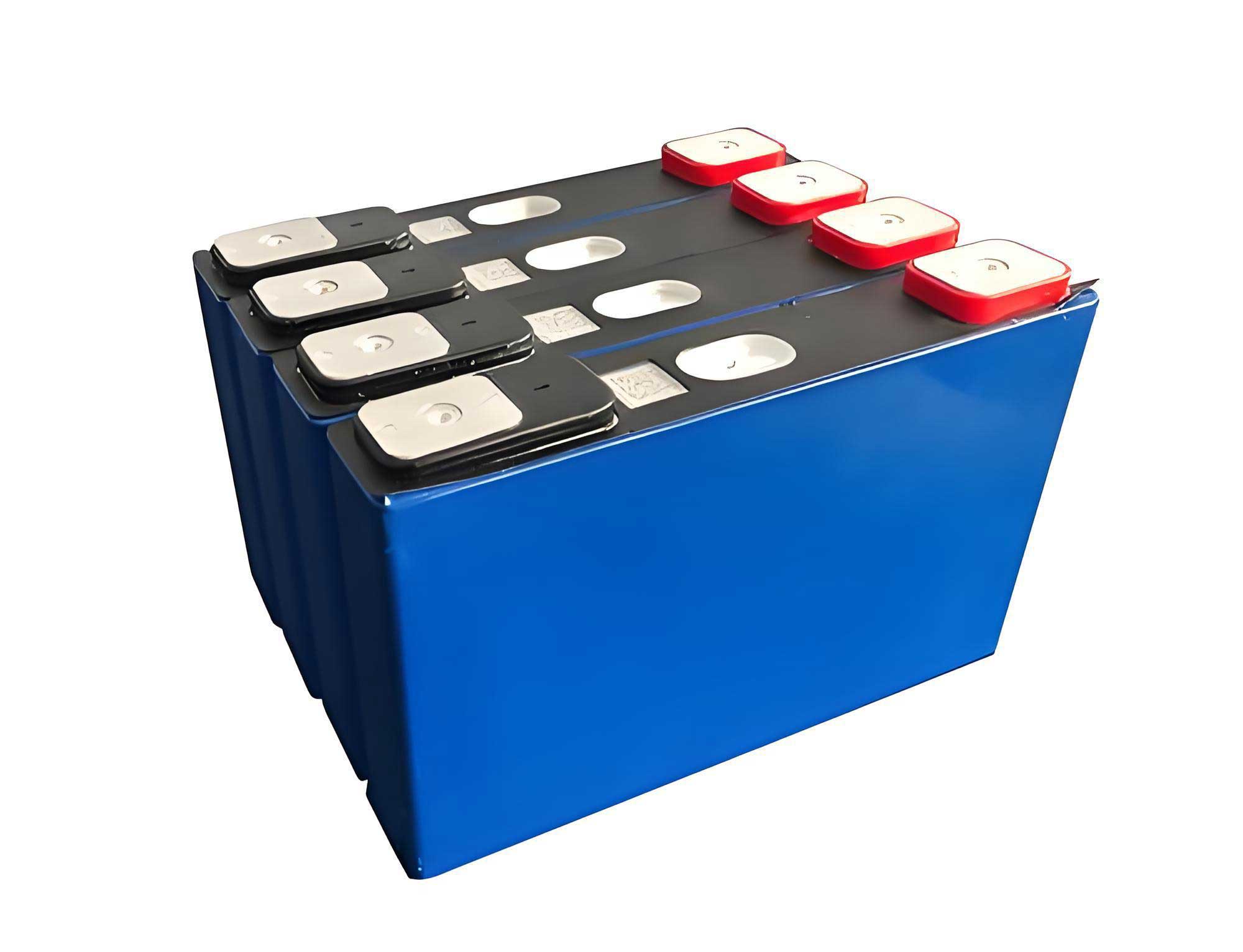
The separator in cycled lifepoe4 batteries also shows pore blockage from decomposition products, further increasing ohmic resistance. This multifaceted degradation—active material loss, lithium inventory loss, and impedance rise—collectively undermines the performance of lifepoe4 batteries in pulse applications. To model the capacity fade over cycles, we can express it as a function of pulse number \( n \):
$$ C(n) = C_0 – k_{\text{AM}} \cdot n – k_{\text{Li}} \cdot \sqrt{n} $$
where \( C_0 \) is initial capacity, \( k_{\text{AM}} \) is the rate constant for active material loss, and \( k_{\text{Li}} \) for lithium loss. Similarly, resistance growth can be approximated by:
$$ R(n) = R_0 + \alpha \cdot n + \beta \cdot n^{1/2} $$
with \( R_0 \) as initial resistance, \( \alpha \) accounting for linear SEI growth, and \( \beta \) for charge transfer degradation. Our data fits these models well, emphasizing the synergistic effects of pulse stress.
In discussing the implications, we note that optimizing lifepoe4 batteries for high-current pulse duty requires addressing anode stability. Strategies such as using robust binders, enhancing graphite-electrolyte compatibility, or incorporating conductive additives could mitigate degradation. Moreover, thermal management during pulses is crucial to reduce localized heating and side reactions. Future work should explore advanced electrolytes and electrode architectures tailored for pulse operations in lifepoe4 batteries.
To conclude, our study demonstrates that lifepoe4 batteries under high-current pulse conditions suffer primarily from graphite anode degradation, leading to significant capacity fade and internal resistance increase. The capacity loss is attributed largely to active material loss (32%) and minor active lithium loss (5%), while resistance rise stems from charge transfer impedance escalation and SEI growth. These insights are vital for developing durable lifepoe4 battery systems in hybrid and electric vehicles. Continued research into material engineering and operational protocols will enhance the resilience of lifepoe4 batteries, ensuring their reliability in demanding automotive applications. The lifepoe4 battery remains a promising technology, but understanding its degradation under pulse conditions is key to unlocking its full potential.
Throughout this investigation, we have emphasized the critical role of anode health in lifepoe4 battery performance. The repeated high-current pulses induce mechanical and electrochemical stresses that disproportionately affect the graphite electrode. By integrating quantitative analyses with empirical data, we provide a comprehensive degradation framework for lifepoe4 batteries. This work contributes to the broader effort to improve energy storage solutions for sustainable transportation, where lifepoe4 batteries play a pivotal role. As the automotive industry evolves, advancing the durability of lifepoe4 batteries will support the widespread adoption of electrified vehicles, reducing carbon emissions and enhancing energy efficiency.