
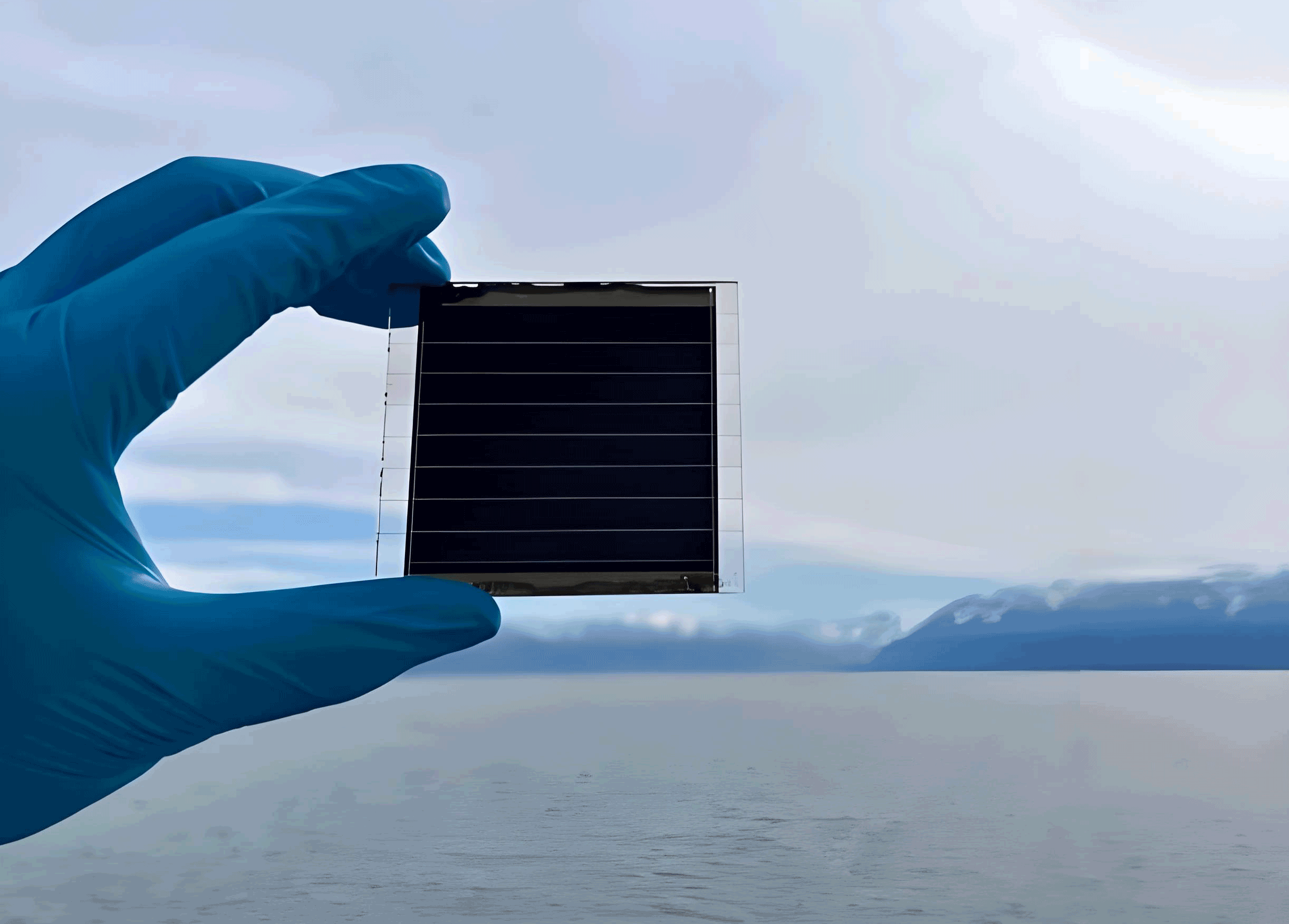
In recent years, I have been deeply fascinated by the rapid advancements in perovskite solar cells, particularly their semitransparent variants. These devices, known as semitransparent perovskite solar cells, combine high power conversion efficiency with adjustable transparency, making them ideal for applications like building-integrated photovoltaics and wearable electronics. However, a significant challenge I have observed is the optical energy loss due to factors such as bandgap absorption limitations, interface reflections, and refractive index mismatches. To address this, I believe it is crucial to delve into the photophysical properties and photon management strategies that can enhance light utilization in these perovskite solar cells. In this article, I will systematically explore the mechanisms and调控 approaches for optimizing the optical performance of semitransparent perovskite solar cells, focusing on absorption, reflection, and transparency调控. I will incorporate theoretical analyses, practical strategies, and future perspectives to provide a comprehensive overview.
The fundamental operation of semitransparent perovskite solar cells relies on the interaction of photons with the perovskite material. When light strikes the device, photons can be absorbed, reflected, or transmitted, depending on the material’s properties and structure. The absorption coefficient α plays a key role in determining how much light is absorbed as it passes through a medium. This relationship is described by the equation: $$I(x) = I_0 e^{-\alpha x}$$ where I(x) is the light intensity at depth x, and I_0 is the initial intensity. For perovskite solar cells, the absorption coefficient is typically around 10^5 cm^{-1}, allowing thin films to capture a substantial portion of visible light. However, in semitransparent perovskite solar cells, achieving a balance between absorption and transparency is essential. The bandgap energy E_g of the perovskite material dictates which photons are absorbed; photons with energy E ≥ E_g are absorbed, generating electron-hole pairs, while those with E < E_g are transmitted, contributing to transparency. This interplay is critical for optimizing the performance of perovskite solar cells in various applications.
Reflection is another major source of optical loss in semitransparent perovskite solar cells. At interfaces between different materials, such as air and the substrate, Fresnel reflection occurs due to differences in refractive indices. The reflection coefficient R can be expressed as: $$R = \frac{(n_2 – n_1)^2}{(n_2 + n_1)^2}$$ where n_1 and n_2 are the refractive indices of the two media. For instance, at the glass-air interface, reflection can account for up to 30% of optical loss, significantly reducing the light available for conversion in perovskite solar cells. To mitigate this, anti-reflection layers and other light management techniques are employed. Additionally, the transmittance T of the device is crucial for semitransparent applications and is given by: $$T = \frac{I(d)}{I_0} = (1 – R)^2 e^{-\alpha d}$$ where d is the thickness of the perovskite layer. The average visible transmittance (AVT) is a key metric for evaluating the transparency of perovskite solar cells and is calculated over the visible spectrum (380–780 nm) considering the human eye sensitivity and solar irradiance. By understanding these fundamental relationships, I can better design strategies to enhance the overall light use efficiency (LUE = PCE × AVT) in semitransparent perovskite solar cells.
In the context of absorption调控, I have found that intrinsic bandgap tuning is a powerful method to optimize the performance of perovskite solar cells. By incorporating ions such as formamidinium (FA+) or tin (Sn) into the perovskite structure, the bandgap can be narrowed, extending the absorption range into the near-infrared region. For example, FAPbI_3 has a bandgap of about 1.47 eV, compared to 1.55 eV for MAPbI_3, allowing it to absorb light up to 843 nm. Similarly, Sn-based perovskites like MASnI_3 exhibit bandgaps as low as 1.23 eV, enabling absorption beyond 1000 nm. This bandgap engineering not only enhances the short-circuit current density (J_SC) but also improves the overall efficiency of perovskite solar cells. However, stability issues often arise with these modifications, necessitating further research into compositional adjustments. The table below summarizes the effects of different ion substitutions on the bandgap and absorption characteristics of perovskite solar cells.
| Perovskite Composition | Bandgap (eV) | Absorption Edge (nm) | Impact on PCE |
|---|---|---|---|
| MAPbI_3 | 1.55 | 800 | Baseline |
| FAPbI_3 | 1.47 | 843 | Increased J_SC |
| MASnI_3 | 1.23 | 1000 | Broadened spectrum |
| CsSnI_3 | 1.30 | 950 | Improved stability |
Another approach I have explored is spectral conversion调控, which involves using upconversion (UC) and downconversion (DC) materials to harness photons outside the visible range. UC materials absorb low-energy photons (e.g., infrared) and emit higher-energy photons that can be absorbed by the perovskite solar cells, while DC materials convert high-energy ultraviolet photons into visible light. For instance, europium-based complexes can absorb UV light (250–410 nm) and emit at 610 nm, effectively reducing optical losses and enhancing the photocurrent in perovskite solar cells. In one study, incorporating dual luminescent solar concentrators with UC and DC materials led to a semitransparent perovskite solar cell with a PCE of 7.53% and an AVT of 82%. The energy diagrams for these processes can be represented as: For UC, the triplet-triplet annihilation mechanism involves: $$\text{Photon}_{low} \rightarrow \text{Excited State} \rightarrow \text{Photon}_{high}$$ and for DC, the downshifting process follows: $$\text{Photon}_{high} \rightarrow \text{Relaxation} \rightarrow \text{Photon}_{low}$$ These strategies significantly broaden the spectral response of perovskite solar cells, making them more efficient under various lighting conditions.
Localized light field调控 through surface plasmon resonance is another technique I have investigated to enhance absorption in semitransparent perovskite solar cells. By embedding metal nanoparticles like silver (Ag) or copper (Cu) into the perovskite layer or adjacent layers, the local electromagnetic field is intensified, leading to improved light trapping and charge generation. The plasmonic effect can be described by the enhancement factor, which depends on the nanoparticle size, shape, and distribution. For example, Ag nanoparticles exhibit strong field enhancement in the 700–800 nm range, which aligns well with the absorption spectrum of many perovskite solar cells. Numerical simulations have shown that such integration can increase the absorption efficiency by up to 20% in semitransparent configurations. The electric field intensity around a spherical nanoparticle can be modeled as: $$E_{local} = E_0 \left(1 + \frac{2(\epsilon_m – \epsilon_d)}{\epsilon_m + 2\epsilon_d}\right)$$ where E_0 is the incident field, and ε_m and ε_d are the permittivities of the metal and dielectric, respectively. This approach not only boosts the performance of perovskite solar cells but also allows for finer control over transparency and color rendition.
When it comes to reflection调控, I have focused on anti-reflection (AR) layers and structured coatings to minimize Fresnel losses. Single-layer AR coatings, such as MgF_2 or LiF, are commonly used due to their low refractive indices, which help match the impedance between air and the substrate. The optimal refractive index for a single-layer AR coating is given by: $$n_1 = \sqrt{n_0 n_2}$$ where n_0 is the refractive index of air (~1) and n_2 is that of the substrate. For instance, MgF_2 with n ≈ 1.38 is ideal for glass substrates (n ≈ 1.5), reducing reflection to less than 2% in the visible spectrum. In semitransparent perovskite solar cells, applying such coatings has been shown to increase AVT while maintaining high PCE. However, multilayer AR coatings offer broader bandwidth and better angular tolerance. For example, a three-layer coating comprising materials with graded refractive indices can achieve an average reflectance below 1% across 450–750 nm. The following table compares different AR strategies for perovskite solar cells.
| AR Coating Type | Materials Used | Reflectance Reduction | Impact on AVT |
|---|---|---|---|
| Single-layer | MgF_2, LiF | Up to 4% | Moderate increase |
| Multilayer | Polymer-TiO_2 hybrids | Below 1% | Significant improvement |
| Moth-eye structure | PDMS patterns | Less than 2% | High, with wide angle |
Microstructured anti-reflection coatings, inspired by moth-eye patterns, provide an alternative approach that I find particularly promising for semitransparent perovskite solar cells. These structures feature subwavelength gratings that create a gradual transition in refractive index, effectively suppressing reflection over a wide range of wavelengths and incident angles. The height and period of these structures can be optimized using the following relation for minimum reflection: $$R \propto \left(\frac{\lambda}{d}\right)^2$$ where λ is the wavelength and d is the feature size. In practice, soft lithography with materials like polydimethylsiloxane (PDMS) has been used to fabricate such coatings on perovskite solar cells, resulting in a J_SC increase from 23.83 mA/cm² to 25.11 mA/cm² and a PCE boost from 19.66% to 20.93%. This method not only enhances light harvesting in perovskite solar cells but also improves mechanical durability, which is vital for real-world applications.
Transparency调控 in semitransparent perovskite solar cells primarily involves optimizing the transparent electrodes and the perovskite layer itself. For electrodes, materials like transparent conductive oxides (TCOs), metal nanowires, and conductive polymers are essential. TCOs, such as indium-doped tin oxide (ITO) and hydrogen-doped indium oxide (IO:H), offer high transparency (AVT >85%) and low sheet resistance, but they often require buffer layers to prevent damage during deposition on perovskite films. For example, using a two-step sputtering process for zinc-doped indium tin oxide (IZTO) can achieve an AVT of 24.7% while maintaining good electrical properties. Metal nanowires, particularly silver nanowires (AgNWs), provide flexibility and high conductivity, with sheet resistances below 15 Ω/sq and transmittances around 90%. However, their roughness and adhesion issues need addressing through interfacial layers like polyethyleneimine (PEI). The table below highlights the properties of various transparent electrodes for perovskite solar cells.
| Electrode Material | Sheet Resistance (Ω/sq) | Transmittance (%) | Advantages | Challenges |
|---|---|---|---|---|
| ITO | 10–20 | 85–90 | High stability | Brittle, expensive |
| AgNWs | 10–15 | 90–95 | Flexible, low cost | Roughness, corrosion |
| PEDOT:PSS | 50–100 | 80–85 | Solution-processable | Lower conductivity |
| Graphene | 30–100 | 90–97 | Excellent transparency | Complex fabrication |
Adjusting the perovskite layer is another critical aspect of transparency调控 that I have studied extensively. By reducing the thickness of the perovskite film, AVT can be significantly increased, but this often comes at the cost of lower PCE due to incomplete light absorption and increased defect density. For instance, decreasing the thickness from 290 nm to 105 nm can raise AVT from 7% to 19%, but PCE may drop from 13.6% to 5.5%. The relationship between thickness d, absorption coefficient α, and transmittance T is given by: $$T = (1 – R)^2 e^{-\alpha d}$$ To maintain performance, compositional tuning through halide exchange or additive engineering is employed. For example, replacing bromide with chloride in MAPbBr_3 to form MAPbCl_3 increases the bandgap from about 2.3 eV to 3.1 eV, shifting the absorption edge to 407 nm and boosting AVT from 44% to 76%. Additives like formamidinium bromide (FABr) can further passivate defects and enhance stability without compromising transparency. This balance is crucial for developing high-efficiency semitransparent perovskite solar cells suitable for practical applications.
In conclusion, the regulation of optical physical properties in semitransparent perovskite solar cells is a multifaceted endeavor that requires a deep understanding of photon behavior and material interactions. Through absorption调控 strategies like bandgap engineering, spectral conversion, and plasmonic enhancements, I have seen significant improvements in light harvesting for perovskite solar cells. Reflection调控 via AR coatings and microstructures has effectively minimized optical losses, while transparency调控 through electrode optimization and perovskite layer adjustments has enabled a better trade-off between efficiency and transparency. The integration of these approaches can lead to semitransparent perovskite solar cells with high LUE values, pushing the boundaries of what is possible in renewable energy technologies. Looking ahead, I anticipate that advancements in novel materials, large-scale fabrication techniques, and environmental considerations will further propel the development of perovskite solar cells. For instance, exploring lead-free perovskites and robust encapsulation methods will address stability and toxicity concerns, making perovskite solar cells more viable for commercial adoption. As research continues, I am optimistic that semitransparent perovskite solar cells will play a pivotal role in the future of sustainable energy, offering both functional and aesthetic benefits across various domains.
To quantify the progress in this field, I have compiled a summary of key parameters for semitransparent perovskite solar cells based on recent studies. The following table provides an overview of how different调控 strategies impact PCE and AVT, highlighting the importance of integrated photon management in advancing perovskite solar cell technology.
| 调控 Strategy | Typical PCE (%) | Typical AVT (%) | LUE (PCE × AVT) | Remarks |
|---|---|---|---|---|
| Bandgap Tuning | 10–20 | 20–40 | 2–8 | Broadens absorption spectrum |
| Spectral Conversion | 7–10 | 80–85 | 5.6–8.5 | Utilizes UV and IR light |
| Plasmonic Enhancement | 15–20 | 25–35 | 3.75–7 | Increases local field intensity |
| AR Coatings | 12–18 | 30–50 | 3.6–9 | Reduces reflection losses |
| Transparent Electrodes | 10–16 | 40–60 | 4–9.6 | Enhances conductivity and transparency |
| Perovskite Thickness Control | 5–14 | 20–80 | 1–11.2 | Direct trade-off between PCE and AVT |
In summary, the ongoing research and development in semitransparent perovskite solar cells demonstrate the immense potential of these devices. By continuously refining the photophysical properties and implementing innovative调控 strategies, I am confident that we can overcome current limitations and achieve higher performance and broader applicability for perovskite solar cells. The journey toward efficient and sustainable energy solutions is well underway, and perovskite solar cells are at the forefront of this exciting evolution.