
The pursuit of efficient, large-scale energy storage systems is a cornerstone of the modern transition to sustainable power grids. Among the various technologies, the liquid metal energy storage cell has emerged as a particularly promising candidate due to its unique architecture and compelling economics. This design utilizes low-density, electropositive liquid metals (e.g., Li, Na) as the negative electrode (anode) and higher-density, electronegative liquid metals or alloys (e.g., Bi, Sb, Pb-Sb) as the positive electrode (cathode), separated by a molten salt electrolyte. Driven by gravity, these three immiscible liquids self-segregate into distinct layers, simplifying cell construction. This configuration offers remarkable advantages: high power and energy density, exceptional longevity with minimal capacity fade over thousands of cycles, and potentially very low cost per kilowatt-hour. However, the operational environment of these cells, typically between 300 °C and 700 °C, presents a profound materials challenge. The containment materials—serving as current collectors, cell housings, and seals—are continuously exposed to highly reactive liquid metals. The corrosion of these structural components is a critical issue that directly impacts the performance, safety, and ultimate viability of the liquid metal energy storage cell.
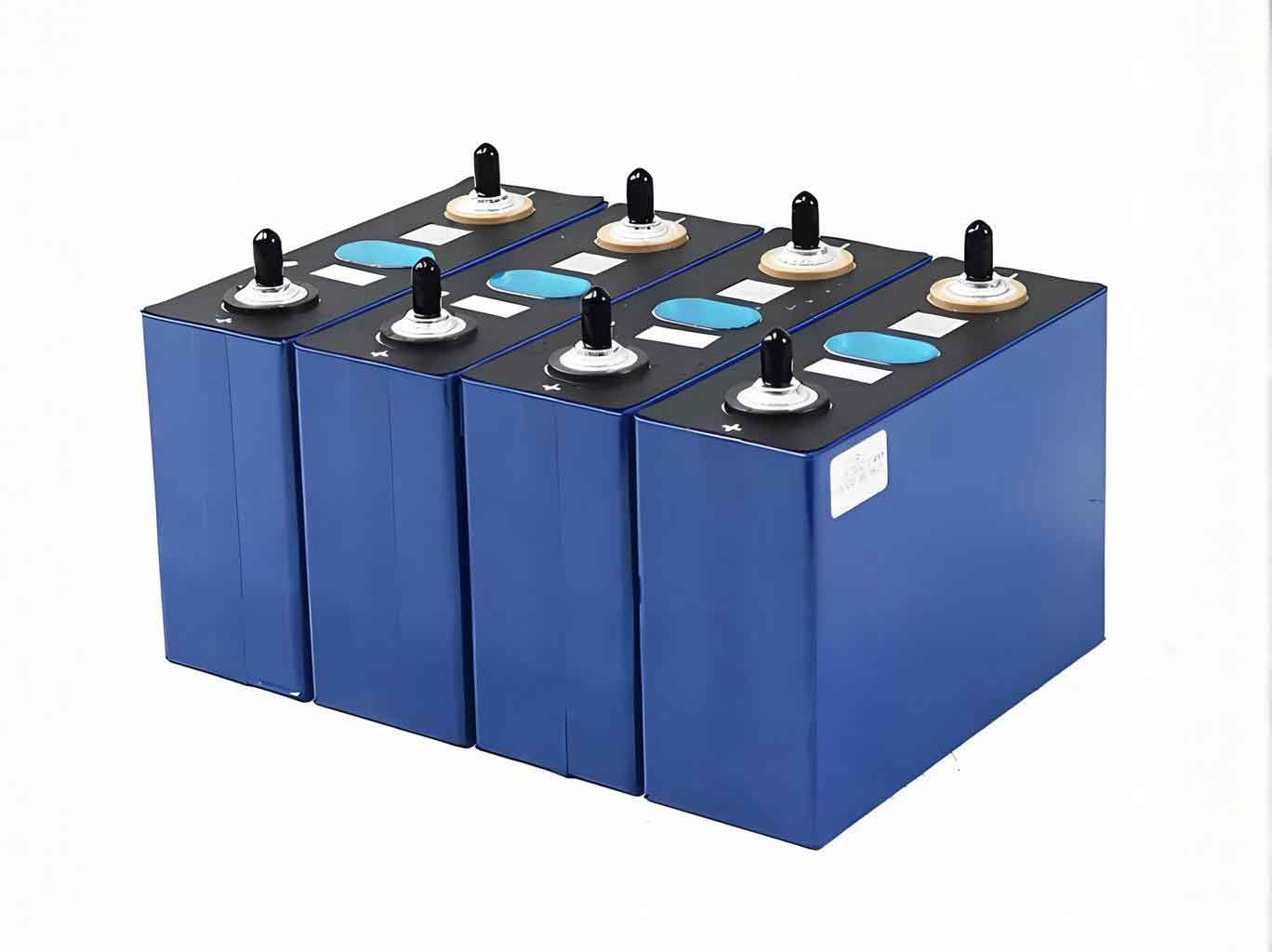
While research on corrosion in liquid metal energy storage cells is growing, foundational knowledge can be drawn from decades of study in other fields, notably nuclear engineering, where liquid metals like lead-bismuth eutectic (LBE) are used as coolants. Corrosion in liquid metal systems is fundamentally different from aqueous electrochemical corrosion. It is primarily governed by physicochemical interactions, with key mechanisms being dissolution, mass transfer, chemical reaction, and intergranular attack. The severity of these processes is highly dependent on the specific liquid metal, the composition of the structural material, temperature gradients, and the presence of interstitial impurities like oxygen, nitrogen, or carbon.
This article provides a comprehensive review of the corrosion phenomena induced by the most commonly employed liquid electrodes in current energy storage cell research: lithium (Li) as the anode material, and bismuth (Bi) and antimony (Sb) as cathode materials. We will delve into the underlying corrosion mechanisms, analyze the factors influencing degradation rates, and discuss strategies for corrosion mitigation, all within the context of designing durable and reliable liquid metal energy storage cells.
Fundamental Corrosion Mechanisms in Liquid Metal Systems
The degradation of solid metals upon contact with a liquid metal involves several interconnected processes. Unlike in an aqueous electrolyte, a protective passive film is rarely formed; instead, material is continuously lost or altered.
1. Physical Dissolution and Mass Transfer
This is often the dominant corrosion mode. Atoms from the solid container material dissolve directly into the adjacent liquid metal. For pure metals, this is a straightforward dissolution process. For alloys, selective dissolution occurs, where elements with higher solubility and diffusivity in the liquid metal are preferentially leached out. The dissolution rate can be described by a simplified equation considering the concentration gradient at the interface:
$$ J_i = -D_i \frac{dC_i}{dx} \approx k (C_{i,sat} – C_{i,bulk}) $$
where \( J_i \) is the flux of element \( i \) from the solid, \( D_i \) is its diffusivity in the liquid metal, \( C_{i,sat} \) is its saturation concentration at the interface temperature, and \( C_{i,bulk} \) is its concentration in the bulk liquid. \( C_{i,sat} \) is strongly temperature-dependent, typically following an Arrhenius relationship:
$$ C_{i,sat} = C_0 \exp\left(-\frac{Q_s}{RT}\right) $$
Here, \( Q_s \) is the apparent heat of solution. This temperature dependence drives mass transfer corrosion or “temperature-gradient mass transfer.” In an energy storage cell with temperature variations (e.g., at welds, or due to localized heating during current flow), material dissolves in hotter regions, is transported by convection or diffusion, and plates out in cooler regions. This can lead to non-uniform wall thinning and clogging in cooler parts of the system.
2. Chemical Reaction and Compound Formation
Liquid metals can react chemically with constituent elements of the container material or with impurities present in the system. The driving force is the negative Gibbs free energy change (\( \Delta G < 0 \)) for the reaction. Common reactions include:
- Formation of Intermetallic Compounds: Direct reaction between the liquid metal (LM) and a solid metal (M) to form a brittle intermetallic layer (e.g., \( x\text{LM} + y\text{M} \rightarrow \text{LM}_x\text{M}_y \)).
- Reaction with Impurities: Impurities like O, N, or C in the liquid metal can participate in complex reactions. For instance, dissolved nitrogen in liquid lithium can react with steel components: \( \text{Li} + \text{N} + \text{Cr}_{23}\text{C}_6 \rightarrow \text{Li}_x\text{Cr}_y(\text{C},\text{N})_z \).
- Oxidation: In systems where oxygen activity is significant (e.g., in Bi or Pb-Bi), the formation of metal oxides (Fe3O4, Cr2O3) on the steel surface can occur. These oxides may be protective or non-adherent, leading to accelerated corrosion.
3. Intergranular Attack and Liquid Metal Embrittlement (LME)
Liquid metals can penetrate along grain boundaries of the solid material, a process known as intergranular corrosion. This is facilitated by the higher energy and often different chemical composition of the grain boundaries. The penetrating liquid metal can then react with elements at the boundaries, forming intermetallic compounds that weaken the cohesive strength. This leads to Liquid Metal Embrittlement (LME), a severe form of environmental cracking where a normally ductile metal loses its toughness and fails in a brittle manner when stressed in contact with a specific liquid metal. This is a critical failure mode to prevent in the structural design of an energy storage cell.
| Liquid Metal | Primary Corrosion Mechanism(s) | Typical Affected Elements in Steel | Key Influencing Factors |
|---|---|---|---|
| Lithium (Li) | Selective dissolution, Chemical reaction with N/C | Cr, Fe, Mn (dissolution); Formation of Li-Cr-N compounds | Temperature, N impurity content, Steel Cr/Ni content |
| Bismuth (Bi) | Selective dissolution, Oxidation (if O present) | Ni, Co, Mn (dissolution); Fe (oxide formation) | Temperature, Oxygen potential, Steel composition |
| Antimony (Sb) | Intermetallic compound formation, Selective dissolution | Fe, Ni, Cr (to form Sb-Fe, Sb-Ni phases) | Temperature, Alloying partners (e.g., Pb), Steel composition |
Corrosion by Liquid Lithium in Energy Storage Cells
Lithium is a nearly ideal anode material for high-energy-density liquid metal energy storage cells due to its low electronegativity (-3.04 V vs. SHE) and low density. However, its corrosiveness towards structural materials at operational temperatures (400-700°C) is a major challenge.
Phenomena and Mechanisms
Corrosion in liquid Li is characterized by an initial period of rapid weight loss, primarily due to the selective dissolution of highly soluble elements like Chromium (Cr), Iron (Fe), and Manganese (Mn) from stainless steels. The dissolution rate follows the temperature-dependent solubility. After this initial stage, as the liquid near the interface becomes saturated, the corrosion rate often decreases significantly. A porous, nickel-rich layer may remain on the steel surface because Ni has a relatively lower solubility in Li. Concurrently, chemical reactions play a crucial role, especially if nitrogen is present as an impurity. Li readily reacts with N to form Li3N, which then interacts with steel components:
$$ \text{Li}_3\text{N} + \text{Cr} \ (\text{from steel}) \rightarrow \text{Li}_9\text{CrN}_5 $$
$$ \text{Li}_3\text{N} + \text{Fe} \ (\text{from steel}) \rightarrow \text{Li}_3\text{FeN}_2 $$
These nitride compounds can form protruding nodules on the surface, further degrading the material’s integrity.
Critical Factors Influencing Corrosion
The design of a lithium-based energy storage cell must account for these factors:
1. Nitrogen Impurity: Even trace amounts of N dramatically accelerate corrosion. The corrosion rate in Li with 0.5 wt.% N can be orders of magnitude higher than in high-purity Li. Effective purification and sealing are paramount.
2. Temperature: Corrosion severity increases exponentially with temperature due to increased solubility and diffusion coefficients. For example, the diffusivity of Cr in Li at 600°C can be an order of magnitude greater than at 500°C. The Arrhenius equation governs this relationship:
$$ k_{corr} = A \exp\left(-\frac{E_a}{RT}\right) $$
where \( k_{corr} \) is the corrosion rate constant and \( E_a \) is the activation energy for the dominant corrosion process.
3. Structural Material Composition: The choice of alloy is critical. Austenitic stainless steels (e.g., 304, 316) suffer from selective dissolution of Cr and Fe. Ferritic/martensitic steels with high Cr content for oxidation resistance may lose this Cr to the Li. Nickel-based alloys can be more resistant but are costly. The following table compares the behavior of common materials.
| Material | Typical Composition | Main Corrosion Phenomena in Li | Relative Resistance |
|---|---|---|---|
| 304/316 Stainless Steel | Fe-18Cr-10Ni (304) | Selective dissolution of Cr, Fe, Mn; Porous Ni-rich surface layer; Nitride formation. | Low to Moderate |
| Ferritic/Martensitic Steel (e.g., T91) | Fe-9Cr-1Mo | Preferential dissolution of Cr; Decarburization; Potential graphitization. | Moderate |
| Nickel-based Alloys (e.g., Inconel) | High Ni, Cr, Fe, Mo | Generally lower dissolution rates; May form surface compounds with impurities. | High (but costly) |
| Refractory Metals (Mo, Nb) | Mo, Nb | Generally very low solubility in Li; Can be susceptible to interstitial pickup (C,N,O). | Very High |
Corrosion by Liquid Bismuth and Antimony in Energy Storage Cells
On the cathode side, bismuth and antimony are favored for their suitable melting points, high density, and favorable electrochemical potential. Their corrosion behavior, however, poses distinct challenges for the positive current collector and housing.
Liquid Bismuth (Bi) Corrosion
Bismuth is notably corrosive, with physical dissolution being the primary mechanism. Elements like Nickel (Ni) and Cobalt (Co) have high solubility in Bi, leading to their preferential leaching from alloys. This dissolution can induce a phase transformation in stainless steels; for instance, the dissolution of Ni and Mn from an austenitic steel can destabilize the austenite phase, causing it to transform into a ferritic structure enriched in Cr and Fe, which itself may then dissolve further.
The Oxygen Factor: The presence of oxygen critically alters the corrosion mechanism in Bi.
- High Oxygen Activity: At oxygen concentrations > ~10-6 wt.%, oxygen reacts with Fe to form non-adherent Fe3O4 scales that spall off, leading to continual rapid corrosion.
- Controlled Low Oxygen Activity: At lower concentrations (10-8 to 10-6 wt.%), a protective, adherent oxide scale rich in Cr2O3 or (Fe,Cr)3O4 can form on steels with sufficient Cr content (>12 wt.%), significantly reducing the corrosion rate. This forms the basis for one corrosion control strategy.
Temperature and Material Dependence: As with Li, corrosion rates in Bi increase sharply with temperature. The compatibility of materials varies: low-carbon steels are severely attacked, especially in oxygenated Bi, while high-Cr steels show better performance under controlled oxygen conditions.
Liquid Antimony (Sb) and Sb-based Alloys Corrosion
Antimony has a higher melting point and tends to strongly form intermetallic compounds with many container materials. In the context of an energy storage cell, Sb is often used in alloys like Pb-Sb or Sn-Sb to lower the melting point and adjust potential.
The primary corrosion mechanism is the formation of brittle intermetallic layers at the interface. For example, with iron-based materials:
$$ x\text{Fe} + y\text{Sb} \rightarrow \text{Fe}_x\text{Sb}_y \quad (\text{e.g., FeSb}_2) $$
Similar reactions occur with Nickel and Chromium. Research on Li||Sn-Sb cells has shown the formation of Sn-Fe and Sb-Fe alloy phases on 304 stainless steel current collectors after cycling. The corrosion resistance of structural materials depends heavily on their composition. Studies indicate that ferritic stainless steels with high Cr content (e.g., 430 series) exhibit better resistance to Pb-Sb alloys than austenitic steels (e.g., 301 series) with higher Ni content, as Ni is more susceptible to reaction and dissolution in this medium.
| Liquid Cathode | Dominant Attack Mode | Favorable Material Traits | Primary Mitigation Strategy |
|---|---|---|---|
| Pure Bismuth (Bi) | Selective Dissolution (Ni, Co) | Low-Ni, High-Cr Steels; Refractory Metals | Oxygen Control to form protective Cr2O3 scale |
| Lead-Bismuth Eutectic (LBE) | Dissolution + Oxidation (Fe3O4) | Alumina-Forming Alloys; Surface Modified Steels | Active Oxygen Control; Protective Coatings (Al2O3) |
| Antimony (Sb) & Alloys (Pb-Sb, Sn-Sb) | Intermetallic Formation (Sb-Fe, Sb-Ni) | Chromium-rich steels; Ceramic-compatible layers | Use of Diffusion Barriers; Alloying to reduce Sb activity |
Corrosion Mitigation Strategies for Liquid Metal Energy Storage Cells
Developing robust corrosion protection is essential for the commercialization of liquid metal energy storage cells. Strategies can be categorized as follows:
1. Intelligent Material Selection and Design
The first line of defense is choosing container and current collector materials with inherent compatibility. This requires a detailed understanding of solubility limits and reaction thermodynamics. For lithium cells, refractory metals (Mo, Nb) or nickel-based superalloys may be necessary for long-term service, despite higher cost. For bismuth-based cathodes, ferritic steels with >12% Cr under controlled oxygen potential are promising. For antimony-containing cathodes, materials that form slow-growing, stable intermetallics or that lack reactive elements (like Ni) should be prioritized. Computational thermodynamics (e.g., using CALPHAD) can screen material compatibility.
2. Protective Coatings and Surface Engineering
Applying a barrier layer between the aggressive liquid metal and the structural substrate is a highly effective approach. Ideal coatings must be dense, adherent, thermochemically stable, and have low solubility in the liquid metal.
- Ceramic Coatings: Oxides like Al2O3, Y2O3, and Er2O3 have been investigated for Li and Pb-Bi systems. However, they can react over time (e.g., \( \text{Al}_2\text{O}_3 + \text{Li} \rightarrow \text{LiAlO}_2 \)) and are sensitive to thermal cycling and mechanical damage.
- Metallic & Compound Coatings: Layers of Ta, W, or nitrides/carbides (TiN, CrN) deposited via PVD or CVD can act as effective diffusion barriers.
- Surface Modification: Techniques like pack cementation (e.g., aluminizing or chromizing) or pre-oxidation can create a protective surface layer integral to the substrate, improving adhesion and resistance to spallation.
3. Control of Liquid Metal Chemistry
Managing the chemical activity of corrosive species within the liquid metal itself is a powerful method.
- Oxygen Control: In bismuth-based systems, maintaining a precise, low oxygen potential is critical to promote the formation of a stable, protective chromium oxide scale on steel surfaces instead of non-protective iron oxides.
- Gettering Impurities: For lithium systems, removing nitrogen is paramount. Additionally, adding strong nitride/carbide formers like Zirconium (Zr) or Titanium (Ti) to the lithium can “getter” dissolved N and C, forming harmless precipitates (ZrN, TiC) and preventing them from attacking the steel container. The reaction can be represented as:
$$ \text{Zr} + \text{N} \ (\text{dissolved in Li}) \rightarrow \text{ZrN} \ (\text{s}) $$
This technique has been successfully used in nuclear applications.
4. System Design and Operational Management
Corrosion can be minimized at the system level. Designing the energy storage cell to minimize temperature gradients reduces the driving force for temperature-gradient mass transfer. Selecting operating temperatures at the lower end of the functional range, while meeting power and kinetics requirements, can exponentially reduce dissolution rates according to the Arrhenius law. Furthermore, implementing robust sealing technologies (like metal-ceramic brazed joints or double-seal designs) is essential to prevent air ingress, which introduces oxygen and nitrogen, and to contain the liquid metals.
Future Perspectives and Research Directions
While significant progress has been made, the corrosion challenges in liquid metal energy storage cells demand continued and focused research. Key future directions include:
1. Fundamental Electro-Corrosion Studies: Most existing data comes from isothermal immersion tests. Research is needed to understand corrosion under the actual operating conditions of an energy storage cell, including the effects of applied current/voltage (charge/discharge cycles) on dissolution kinetics, interfacial stability, and the possibility of electrochemical corrosion mechanisms becoming relevant.
2. Advanced Coating Development: The search for the ideal coating continues. Focus should be on multilayer or functionally graded coatings that combine a diffusion barrier with a top layer chemically inert to the specific liquid metal. Development of deposition techniques that ensure perfect adhesion and pinhole-free coverage on complex geometries is crucial.
3. High-Throughput Compatibility Screening: Leveraging machine learning and combinatorial materials science to rapidly test and predict the compatibility of novel alloy compositions and coating materials with Li, Bi, and Sb electrodes could accelerate discovery.
4. Real-Time Monitoring and Diagnostics: Integrating sensors for online monitoring of liquid metal purity (O, N content) and wall thickness could enable predictive maintenance and health management of large-scale energy storage cell systems.
In conclusion, corrosion at the interface between molten electrodes and solid containment materials represents a central technical hurdle for liquid metal energy storage cells. The degradation mechanisms—primarily dissolution, mass transfer, and intermetallic formation—are deeply influenced by material choices, temperature, and impurity control. Successfully deploying this transformative energy storage technology hinges on a multi-faceted strategy: selecting or engineering compatible materials, implementing robust protective coatings, and precisely managing the chemical environment within the cell. Addressing these corrosion challenges through sustained research will unlock the full potential of liquid metal energy storage cells, paving the way for their integration into durable, safe, and cost-effective grid-scale energy storage systems.