
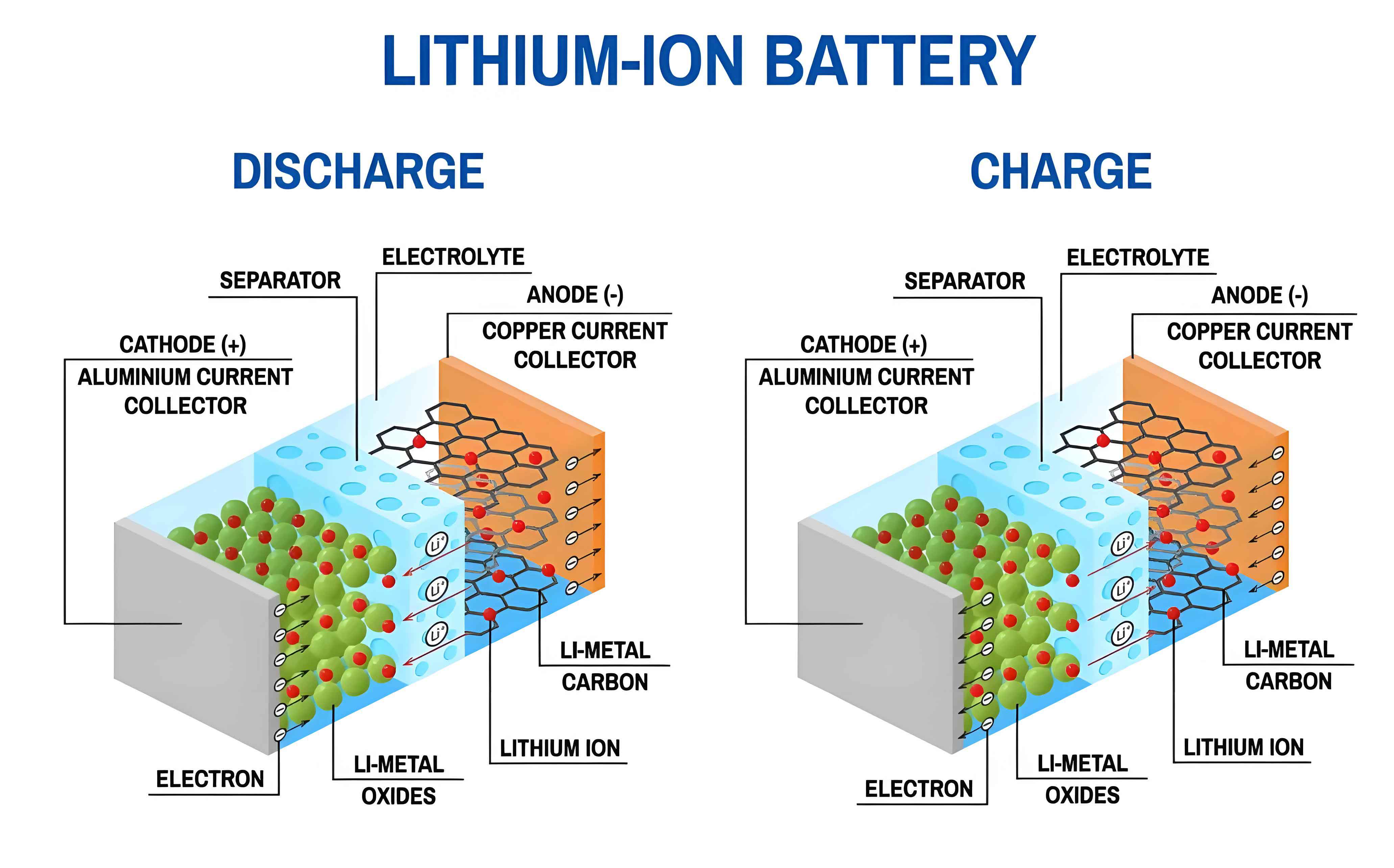
The quest for affordable, high-performance energy storage is a central challenge in our global transition to electrified transportation. At the heart of this transition lies the lithium ion battery. However, the mass production of these complex electrochemical devices remains costly, with significant bottlenecks residing in the core assembly processes. For years, the standard method for building the layered electrode-separator stack, or “jellyroll,” inside a lithium ion battery has relied on sequential pick-and-place operations. This paper details a groundbreaking manufacturing innovation developed by our research team: a continuous Z-folding process that leverages advanced motion control technology to dramatically increase production speed, flexibility, and precision for lithium ion battery assembly.
The traditional pick-and-place process for assembling lithium ion battery cells is inherently slow and serial. Industrial robots or dedicated gantries must pick up individual anode and cathode sheets, align them, and place them onto a moving separator web or a staging area. For a typical mid-sized lithium ion battery cell, this can involve handling over 50 electrode pairs. Each operation cycle includes acceleration, precise positioning, deceleration, and release, followed by a return motion to collect the next electrode. This fundamentally limits throughput. Furthermore, achieving the required micron-level placement accuracy at high speeds is extremely challenging with traditional robotics, as dynamic forces can compromise precision, leading to misalignment. This misalignment, known as stacking tolerance error, directly impacts cell performance:
- Reduced Capacity: Misaligned electrodes reduce the active overlapping area, decreasing the total energy the lithium ion battery can store.
- Increased Degradation: Uneven current distribution at the edges can accelerate aging and shorten the lithium ion battery cycle life.
- Safety Risks: Severe misalignment can lead to direct contact between anode and cathode, causing an internal short circuit—a critical failure mode for any lithium ion battery.
The relationship between placement speed \( v_p \), acceleration \( a \), and the achievable positioning error \( \epsilon \) in a traditional system can be modeled as being influenced by system dynamics:
$$ \epsilon(v_p, a) \propto \frac{F_{dynamic}}{k_{stiffness}} $$
where \( F_{dynamic} \) represents the inertial forces during motion, which increase with higher acceleration, and \( k_{stiffness} \) is the mechanical stiffness of the robot arm. This creates a direct trade-off: higher speed demands higher acceleration, which increases dynamic forces and thus potential positioning error, creating a hard ceiling for lithium ion battery production rates.
| Parameter | Traditional Pick-and-Place | Continuous Z-Folding (This Work) |
|---|---|---|
| Process Nature | Discrete, sequential operations. | Continuous, parallelized material flow. |
| Primary Bottleneck | Robot move-and-settle time per electrode. | Mechanical limits of separator material. |
| Typical Cycle Time per Layer | > 1.0 second | 0.7 seconds (demonstrated), 0.35 s (projected) |
| Theoretical Throughput Gain | Baseline (1x) | > 150% (2.5x) |
| Key Motion System | Industrial Robots / Cartesian Gantries | Magnetic Levitation Transport System (XTS) |
| Control Paradigm | Point-to-point (PTP) trajectory planning. | Real-time, synchronized, interpolated multi-axis control. |
The Continuous Z-Folding Principle
To break the speed-accuracy trade-off, we re-engineered the core stacking process from the ground up. Instead of handling discrete electrodes, our system utilizes a continuous, synchronous flow of both electrodes and separator material. The core innovation is the Z-folding mechanism, enabled by a highly dynamic and precise magnetic transport system.
The process begins with electrode supply. Individual anode and cathode sheets are picked from magazines using a vacuum-assisted roller system. This roller accelerates each electrode to match the continuous speed of two parallel, spooled separator webs. Critical to this stage is precise metrology: the position of each electrode is measured immediately after pick-up. This measurement is used for real-time trajectory correction, ensuring perfect alignment with the target location on the separator web before attachment.
Once synchronized, the electrode is placed and fixed onto the separator web. The system handles two webs simultaneously, one for anodes and one for cathodes. These two webs, now carrying alternating electrodes, are then guided into the central folding station. Here, they are deflected over guide rollers and presented to a set of specialized grippers. These grippers are mounted on independent movers of a magnetic transport system. The grippers alternately engage the leading edge of the separator web and execute a precise, overlapping Z-fold pattern onto a stacking table. Because the material is fed continuously and the folding movers operate in a coordinated, non-stop motion, the slow, stop-start cycle of pick-and-place is completely eliminated.
The kinematic sequence for a single fold can be described by the coordinated motion of two grippers (Gripper A and B) on independent movers. Let \( \vec{P}_{web}(t) \) define the incoming separator web’s position vector over time. The gripper must synchronize with it, requiring:
$$ \vec{v}_{gripper}(t_0) = \vec{v}_{web}(t_0) $$
$$ \vec{P}_{gripper}(t_0) = \vec{P}_{web}(t_0) + \vec{\Delta}_{engagement} $$
Upon engagement, the gripper follows a folding trajectory \( \vec{T}_{fold}(\theta) \) while maintaining controlled tension on the web. The folding path is a complex curve optimizing for minimal inertia on the material and avoidance of wrinkles. The next gripper in sequence begins its synchronization maneuver during the previous fold, creating a pipelined operation. The throughput \( Q \) (layers/second) is therefore determined by the folding trajectory time \( t_f \) and the degree of overlap \( k \) between gripper cycles:
$$ Q = \frac{1}{t_f – k \cdot t_f} = \frac{1}{t_f(1-k)} $$
For perfectly interleaved operations where \( k \) approaches 0.5, the theoretical throughput can nearly double relative to a single-gripper cycle time.
The Engine of Innovation: The Magnetic Levitation Transport System (XTS)
The enabling technology for this continuous Z-folding process is a magnetically driven linear transport system (XTS). This system replaces fixed rails and belts with independently controlled movers that travel on a single, unified track. Each mover contains permanent magnets and is propelled by a magnetic traveling field generated by the sequential activation of stator coils embedded in the track. This design provides unparalleled flexibility and control.
For our lithium ion battery stacking application, we deployed two interlocking XTS systems with a total of ten movers. The key advantages of the XTS for this demanding task are:
- Independent Mover Control: Each gripper-carrying mover can be controlled independently in terms of position, velocity, and acceleration. This allows us to create complex, coordinated motion profiles where movers cooperate for the fold, then rapidly reposition for the next cycle without interfering with others.
- High Dynamics and Precision: The movers achieve very high accelerations and speeds (standard up to 4 m/s) with sub-micron positioning repeatability. This is essential for synchronizing with the fast-moving web and executing precise folds at our target cycle time of 0.7 seconds per layer.
- Flexible Layout: The track can be configured in curves, making the system’s footprint adaptable to existing lithium ion battery production line layouts.
- Vibration-Free Operation: The non-contact magnetic drive and rigid V-guide rail system result in extremely smooth motion, crucial for handling delicate electrode materials without causing micro-tears or misalignment.
The force \( \vec{F}_m \) on a mover is generated by the interaction between the mover’s permanent magnet flux \( \vec{B}_m \) and the controlled current \( I_s \) in the stator windings, following the Lorentz force principle:
$$ \vec{F}_m = \int ( \vec{I}_s \times \vec{B}_m ) \, dl $$
The controller regulates \( I_s \) in each stator segment to create a precise moving magnetic field that propels, brakes, and holds the mover. The system’s capability is summarized below:
| Parameter | Value | Significance for Lithium Ion Battery Stacking |
|---|---|---|
| Maximum Mover Speed | 4 m/s | Enables future cycle times << 0.35 s/layer; current process is not speed-limited by XTS. |
| Positioning Repeatability | < ±5 µm | Ensures consistent electrode overlay accuracy, maximizing lithium ion battery capacity and uniformity. |
| Number of Movers (Total) | 10 | Allows parallel processing and pipelining of folding, material transfer, and repositioning tasks. |
| Control Update Rate | Synchronized with PC controller (≤ 1 ms) | Enables real-time path calculation and correction for dynamic synchronization. |
| Guiding System | Precision V-Guide | Provides high rigidity and vibration-free motion, critical for handling delicate electrodes. |
The Central Nervous System: PC-Based Control and TwinCAT
The mechanical innovation of the XTS would be ineffective without an equally advanced control system. Our platform is built on a PC-based automation controller running the TwinCAT real-time system. This environment seamlessly integrates PLC, motion control, measurement, and robotics into a single software platform, which was critical for implementing our continuous process.
The control challenge is multifaceted. It requires calculating the real-time kinematic relationship between multiple independently moving objects (movers, webs, grippers) and executing time-critical interpolated movements. The process flow in the controller can be described as follows:
- Web & Electrode Tracking: High-speed sensors measure the exact position of the separator web and incoming electrodes. This data is fed into the controller with minimal latency.
- Trajectory Generation: For each fold cycle, the controller calculates the precise, time-synchronized paths for at least two movers. One mover must engage and fold the web, while the other prepares to engage the next segment. These paths are not simple point-to-point moves but complex, synchronized interpolated trajectories.
- Axis Transformation and Coupling: All moving elements—the XTS movers, the web feed servos, the electrode pick-up rollers—are virtually coupled in the control software. A master virtual axis often defines the overall process rhythm. The actual axis commands are derived from this master through transformation matrices, allowing for dynamic corrections (e.g., based on vision feedback) via superimposed motion.
- Robotic Integration: The removal of the completed stack from the folding table is handled by a six-axis robot. Its motion is fully integrated and synchronized with the XTS cycle within the same TwinCAT environment, ensuring smooth handoff without stopping the continuous folding process.
The ability to switch an XTS mover’s control mode on-the-fly from a standalone point-to-point profile to a tightly synchronized interpolated axis within a multi-axis transformation was paramount. This is managed by the TwinCAT NC I (Motion Control) environment, which provides the necessary mathematical frameworks for complex kinematic chains.
The Key to Precision: eXtreme Fast Control (XFC) Technology
Achieving sub-cycle synchronization and precise placement at high speeds demands that input signals be processed with extreme speed and deterministic timing. Traditional PLC scan cycles (e.g., 1-10 ms) introduce unacceptable latency and jitter for such tasks. Our solution employs eXtreme Fast Control (XFC) technology.
XFC is a holistic approach to maximizing control loop performance. Its core principles applied in our lithium ion battery stacker include:
- Hardware Timestamping: Critical sensor signals, such as those from the web position encoders and electrode detection sensors, are not simply read during the next PLC scan. Instead, specialized I/O modules record the exact nanosecond-accurate time at which a signal event (e.g., an encoder marker) occurs. This timestamp is sent to the controller alongside the data.
- Deterministic Ethernet Communication: All components communicate via a high-speed, deterministic Ethernet fieldbus (EtherCAT), which has submicrosecond synchronization jitter.
- Ultra-Fast Task Cycles: Motion control and critical logic tasks can run in the controller at cycles as low as 50 µs, far faster than standard PLC cycles.
This architecture allows us to reconstruct the precise position of a fast-moving object (like the separator web) at any point in time, independent of the PLC scan. The position \( x(t) \) is calculated using the timestamped encoder data:
$$ x(t) = x_{timestamp} + \int_{t_{timestamp}}^{t} v(\tau) \, d\tau $$
where \( v(\tau) \) is the known or measured web velocity profile. This method effectively decouples measurement latency from control latency. The limiting factor for placement accuracy becomes the physical sensor’s sample rate and resolution (62.5 kHz in our current setup), not the control system’s processing speed. This is a revolutionary advantage for high-speed lithium ion battery manufacturing.
Performance Results and Future Outlook
The implemented continuous Z-folding system has demonstrated a staggering increase in stacking productivity. Compared to a state-of-the-art traditional pick-and-place process for large-format lithium ion battery electrodes, our prototype achieves a >150% increase in throughput. In practical terms, this means producing 250 cells in the time it previously took to produce 100. The current cycle time per electrode layer has been reduced from over 1.0 second to 0.7 seconds.
Critically, this performance leap has been achieved without sacrificing quality. The placement accuracy and consistency provided by the XTS and XFC-controlled process meet or exceed the stringent requirements for modern, high-energy-density lithium ion battery cells. The system is not operating at its mechanical limits; the current constraint is the mechanical properties of the separator film itself, such as its tensile strength and tendency to wrinkle under very high dynamic folding stresses.
The path forward involves pushing these boundaries further and enhancing system intelligence. Our ongoing research focuses on:
- Active, NCT-Enabled Grippers: The next evolution involves replacing the current mechanically guided grippers with actively controlled ones. Utilizing Non-Cable Technology (NCT) for wireless power and data transmission to the movers, these smart grippers will be able to dynamically adjust their grip force, orientation, and even execute minor corrective motions during the fold. This will compensate for incoming material variability (e.g., slight web wander or tension fluctuations) in real-time, pushing the speed-accuracy envelope further and increasing flexibility for different lithium ion battery formats.
- Integrated Machine Vision for Closed-Loop Quality: We plan to integrate high-speed inline vision systems to perform 100% inspection of each layer. This system will measure critical quality metrics like electrode alignment and separator integrity. The data will be fed back to the control system not just for logging, but for active process adjustment, creating a truly adaptive and zero-defect-oriented manufacturing cell for lithium ion battery production.
- Advanced Process Modeling: We are developing more sophisticated digital twin models that simulate the electromechanical-thermal dynamics of the entire folding process. These models will be used to predict and optimize parameters for new cell designs, reducing commissioning time for new lithium ion battery products.
In conclusion, the shift from discrete pick-and-place to a continuous, smart Z-folding process represents a fundamental advancement in lithium ion battery manufacturing technology. By leveraging the unparalleled flexibility and dynamics of magnetic transport systems, the determinism and integration capability of PC-based control, and the precision of eXtreme Fast Control technologies, we have demonstrated a pathway to drastically reduce production cost per kilowatt-hour—a key metric for the widespread adoption of electric vehicles and stationary storage. This innovation is not merely an incremental improvement but a necessary step towards scalable, efficient, and intelligent factories for the next generation of energy storage.