
As a researcher dedicated to the integration of renewable energy and storage technologies, I have focused my efforts on addressing the critical challenge of energy balancing within Li-ion battery energy storage systems (BESS) coupled with photovoltaic (PV) power generation. The intermittent nature of solar energy makes robust and efficient battery energy storage systems indispensable for grid stability and reliable power supply. However, the inherent inconsistencies among individual battery cells—stemming from manufacturing tolerances, temperature gradients, and aging—directly compromise the usable capacity, cycle life, and safety of the entire battery energy storage systems. Over the years, I have observed that the performance of battery energy storage systems is heavily dependent on the efficacy of the balancing strategies employed. This article presents a personal, in-depth review of the state-of-the-art energy balancing techniques for Li-ion battery energy storage systems used in photovoltaic applications. I will dissect various active and passive balancing architectures, compare their operational characteristics, and evaluate their suitability in terms of speed, accuracy, cost, and practical scalability. Through this review, I aim to provide a clear roadmap for selecting and designing future balancing controllers that enhance the reliability and economic viability of battery energy storage systems.
Introduction
The global shift towards sustainable energy has accelerated the deployment of photovoltaic (PV) power generation systems. However, the inherent intermittency of solar irradiance necessitates the integration of energy storage solutions to ensure a continuous and stable power supply. Among various storage technologies, Li-ion battery energy storage systems have emerged as the dominant choice due to their high energy density, long cycle life, and decreasing cost. As of recent statistics, Li-ion batteries account for over 95% of the installed capacity in electrochemical energy storage stations. The typical architecture of a PV-integrated battery energy storage system includes the PV array, inverter, battery pack, battery management system (BMS), power conversion system (PCS), and energy management system (EMS). The BMS plays a pivotal role in monitoring and controlling the battery state, with its most critical function being the implementation of an effective balancing strategy.
The core problem addressed by balancing strategies is the voltage and state-of-charge (SOC) divergence among series-connected cells within battery energy storage systems. Even when cells are carefully matched during manufacturing, differences in internal resistance, self-discharge rate, and temperature distribution cause some cells to be overcharged while others remain undercharged during operation. This inconsistency not only reduces the usable capacity of the entire pack but also accelerates capacity fade and poses safety risks. Therefore, developing an efficient balancing scheme is paramount for maximizing the lifetime and performance of battery energy storage systems. In my research journey, I have examined numerous balancing approaches, ranging from simple passive methods to sophisticated active equalizers, and have become convinced that the choice of strategy must be tailored to the specific application requirements of the PV-based battery energy storage systems.
Fundamentals of Balancing Strategies
Balancing strategies in battery energy storage systems can be classified based on the balancing variable (voltage, SOC, or capacity), the balancing target (minimizing time, maximizing capacity, or reducing losses), and the control algorithm employed. The balancing variables are the metrics that trigger the equalization process. While voltage is easy to measure, SOC provides a more accurate representation of the usable energy in each cell. Advanced strategies often use multi-variable monitoring, including temperature and internal resistance, to refine the balancing decisions.
The balancing topology is another critical aspect. Passive balancing typically uses a resistor in parallel with each cell to dissipate excess energy as heat. Although simple and low-cost, it wastes energy and is ineffective for large-capacity battery energy storage systems. Active balancing, on the other hand, transfers energy from stronger cells to weaker ones using inductive, capacitive, or transformer-based converters. This approach achieves higher efficiency and faster equalization but at the expense of increased complexity and cost. The control algorithm determines when and how much to equalize. Traditional methods include calculating the average and using PID controllers. Modern approaches employ model predictive control (MPC), optimal control, and intelligent algorithms such as fuzzy logic, particle swarm optimization (PSO), genetic algorithms (GA), and game theory (e.g., Nash equilibrium).
To systematically compare various active balancing circuit topologies, I have compiled a comprehensive table summarizing their key characteristics. This comparison is vital for designers of battery energy storage systems to select the most appropriate hardware based on balancing speed, voltage/current stress, component count, and application domain.
| Balancer Type | Control Strategy | Balancing Speed | Voltage/Current Stress | Power Domain | Balance Architecture |
|---|---|---|---|---|---|
| Fixed shunt resistor | Very simple | Moderate | Normal | Low | Cell bypass |
| Switched shunt resistor | Simple | Good | Acceptable | Low | Cell bypass |
| Single inductor | Complex | Excellent | Acceptable | Medium/High | Cell-to-pack |
| Multi-inductor | Simple | Excellent | Acceptable | Medium/High | Cell-to-cell |
| Single-winding transformer | Complex | Good | Acceptable | Medium/High | Pack-to-cell / Cell-to-pack |
| Multi-winding transformer | Medium | Good | High stress on primary switches/diodes | Medium/High | String-to-cell / Cell-to-string |
| Multi-transformer | Medium | Moderate | Acceptable | Medium/High | Pack-to-cell / Cell-to-pack |
| Cuk converter | Simple | Moderate | Acceptable | Medium/High | Cell-to-cell |
| Flyback converter | Medium | Good | Acceptable | Medium/High | String-to-cell |
| Ramp converter | Simple | Moderate | Acceptable | Medium/High | Cell-to-cell |
| Buck-Boost converter | Complex | Good | Acceptable | Medium/High | Cell-to-cell |
| Switched matrix with DC-DC | Complex | Good | Acceptable | Medium/High | Cell-to-cell |
| Switched matrix with capacitors | Complex | Good | Acceptable | Medium/High | Cell-to-cell |
| Switched matrix with transformers | Complex | Good | Acceptable | Medium/High | Cell-to-cell |
| Switched capacitor (SC) | Simple | Moderate | Acceptable | Medium/High | Cell-to-cell |
| Single SC | Complex | Good | Acceptable | Medium/High | Cell-to-cell |
| Double-layer SC | Simple | Good | Acceptable | Medium/High | Cell-to-cell |
| Modular SC | Simple | Good | High voltage stress on capacitors connecting modules | Medium/High | String-to-cell |
| Chain-structured SC | Simple | Good | High voltage stress on additional switches/capacitors | Medium/High | Cell-to-cell |
| Switched coupling capacitor | Simple | Excellent | Acceptable | Medium/High | Cell-to-cell |
| Series-parallel SC | Simple | Good | Acceptable | Medium/High | Cell-to-cell |
| Optimized SC | Simple | Good | Acceptable | Medium/High | Cell-to-cell |
| Quasi-resonant converter | Simple | Moderate | Acceptable | Medium/High | Cell-to-cell |
| Chain-structured resonant | Simple | Good | High stress on extra resonant circuits | Medium/High | Cell-to-cell |
| Modular resonant | Simple | Good | High voltage stress on capacitors connecting modules | Medium/High | String-to-cell |
| Inductor equalizer with chain SC | Simple | Good | High stress on additional switches/capacitors | Medium/High | String-to-cell |
From Table 1, it is evident that no single topology is universally optimal. The choice depends on the trade-off among complexity, cost, speed, and stress levels. For large-scale battery energy storage systems in PV applications, topologies that support bidirectional energy flow (e.g., Buck-Boost, Cuk, multi-winding transformers) are often preferred due to their ability to handle dynamic charging and discharging cycles efficiently.
Detailed Comparison of Representative Balancing Strategies
In the literature, several specific balancing strategies have been proposed and validated for Li-ion battery energy storage systems in PV contexts. I will now discuss five representative strategies that I have studied in depth, comparing their balancing speed, accuracy, complexity, and cost-effectiveness. For each strategy, I highlight the key metrics that make them suitable (or not) for different operating scenarios of battery energy storage systems.
Strategy 1: Fast Balancing for Energy Storage Station Using DC/DC Converters
One approach I investigated uses a modular DC/DC converter (Buck-Boost plus Cuk) to implement an active balancing scheme for large-scale battery energy storage systems. The strategy assigns weights to voltage (0.5), SOC (0.3), and internal resistance (0.2) to compute a balancing factor C. Cells with high C values are discharged to those with low C values until the difference drops below 5%. In experiments with 36 aged and new LFP cells, the voltage deviation was reduced from 300 mV to 14 mV, but the equalization process required 4 hours per cycle. The balancing time is a critical drawback for dynamic PV battery energy storage systems, although the modular design facilitates standardization and maintenance.
Strategy 2: Hierarchical Active Equalization with Inductors and Flyback Transformers
Another innovative design I examined employs a two-layer architecture. Within a module, adjacent cells exchange energy via inductors in a buck-boost configuration. Between modules, a flyback transformer (FBT) transfers energy to or from an external power source. Diodes prevent reverse charging, and duty cycles regulate the charge rate. In tests with six Li-ion cells, intra-module balancing was achieved within 3 seconds (SOC reaching ~100%), and inter-module convergence took 70 seconds. This strategy demonstrates excellent speed and precision, making it highly suitable for battery energy storage systems requiring rapid response to fluctuating PV output.
Strategy 3: Model Predictive Control (MPC) Balancing
I have also evaluated a model predictive control (MPC) approach applied to a bidirectional DC/DC converter. The MPC algorithm predicts the future behavior of cell currents based on a system model and then optimizes the duty cycle in real time over a finite horizon. This method achieves millisecond-level response times and extremely high precision (SOC error below 0.005‰). Under AC power fluctuation conditions, the balance converged within 40 seconds. The primary drawback is the high computational cost and the need for advanced control hardware, which increases the initial investment for battery energy storage systems. Nevertheless, for high-end PV storage systems where power quality and fast dynamics are paramount, MPC is an attractive choice.
Strategy 4: Energy Control with Variable Regulation Factor
A strategy that particularly appeals to me for its simplicity and effectiveness uses a variable regulation factor. The key idea is to introduce a relative capacity factor (maximum capacity divided by nominal capacity) and a dynamic adjustment factor that changes during the equalization process (an early control factor and a later acceleration factor). An exponential function is used so that energy storage units share power in proportion to their capacity ratio. In a simulation with three units of capacities 180 Ah, 150 Ah, and 120 Ah, and initial SOCs of 75%, 65%, and 60%, the SOCs converged in 1.7 seconds, with output powers proportional to capacities (e.g., -7.596 kW, -6.310 kW, -5.045 kW). This strategy not only speeds up equalization but also reduces communication overhead and enhances system reliability in distributed battery energy storage systems.
Strategy 5: Game Theory (Nash Equilibrium) Balancing
Drawing from the field of game theory, one study I reviewed formulates the balancing problem as a non-cooperative game where each cell is a player. An improved particle swarm optimization (PSO) algorithm optimizes the fitness function to determine the optimal gating times for the equalizer switches. The goal is to reach a Nash equilibrium where no cell can improve its payoff (related to SOC deviation) unilaterally. In experiments with an initial SOC standard deviation of 9.1%, the algorithm reduced the deviation to 1.6% (idle state) and 2.4% (discharging state) within 80 seconds—approximately 90% faster than conventional solutions. This approach is particularly suited for distributed PV-based battery energy storage systems where fast convergence and high energy conversion efficiency are required, such as in behind-the-meter residential solar-plus-storage systems.
Quantitative Comparison of Performance and Benefit
To objectively evaluate these five strategies, I established a two-dimensional scoring system: performance score (combining balancing speed, accuracy, and energy efficiency) and benefit score (covering deployment cost, maintenance complexity, and adaptability). The scoring criteria are as follows:
- Speed: Score 10 for millisecond-level response (e.g., MPC), 7 for seconds-level (e.g., hierarchical active, variable regulation), 5 for hours-level (e.g., DC/DC station).
- Accuracy: Score 10 for SOC error < 0.005‰ (MPC), 7 for ~1% error (hierarchical, game theory), 5 for ~5% error (fast station).
- Complexity: Score 10 for simple circuit (fast station), 7 for moderate (hierarchical), 5 for high complexity (MPC, game theory).
The benefit score considers cost: higher scores for strategies with lower initial investment, lower operational cost, and easier maintenance. Based on my analysis, the aggregated scores are presented in Table 2.
| Strategy | Performance Score (out of 10) | Benefit Score (out of 10) |
|---|---|---|
| Fast balancing (DC/DC station) | 6 | 7 |
| Hierarchical active (inductor + FBT) | 8 | 8 |
| Model Predictive Control (MPC) | 10 | 9 |
| Variable regulation factor | 9 | 8 |
| Nash equilibrium (game theory) | 8 | 7 |
The data in Table 2 reveal that while MPC achieves the highest performance, its benefit score is slightly lower due to high computational hardware demands. The hierarchical active and variable regulation strategies offer a good balance between performance and practicality. The fast balancing station, though modular and cheap, suffers from long equalization time, resulting in low performance.
To further illustrate the trade-offs, the following radar chart concept can be considered (represented textually): the axes are balancing speed, accuracy, and degree of complexity. In my opinion, the optimal strategy for a given battery energy storage systems project depends on the specific operational constraints. For example, a large utility-scale PV farm with stable irradiance might prioritize low cost and long-term reliability, making the hierarchical active strategy attractive. Conversely, a microgrid with highly variable loads and generation would benefit from the fast response of MPC.
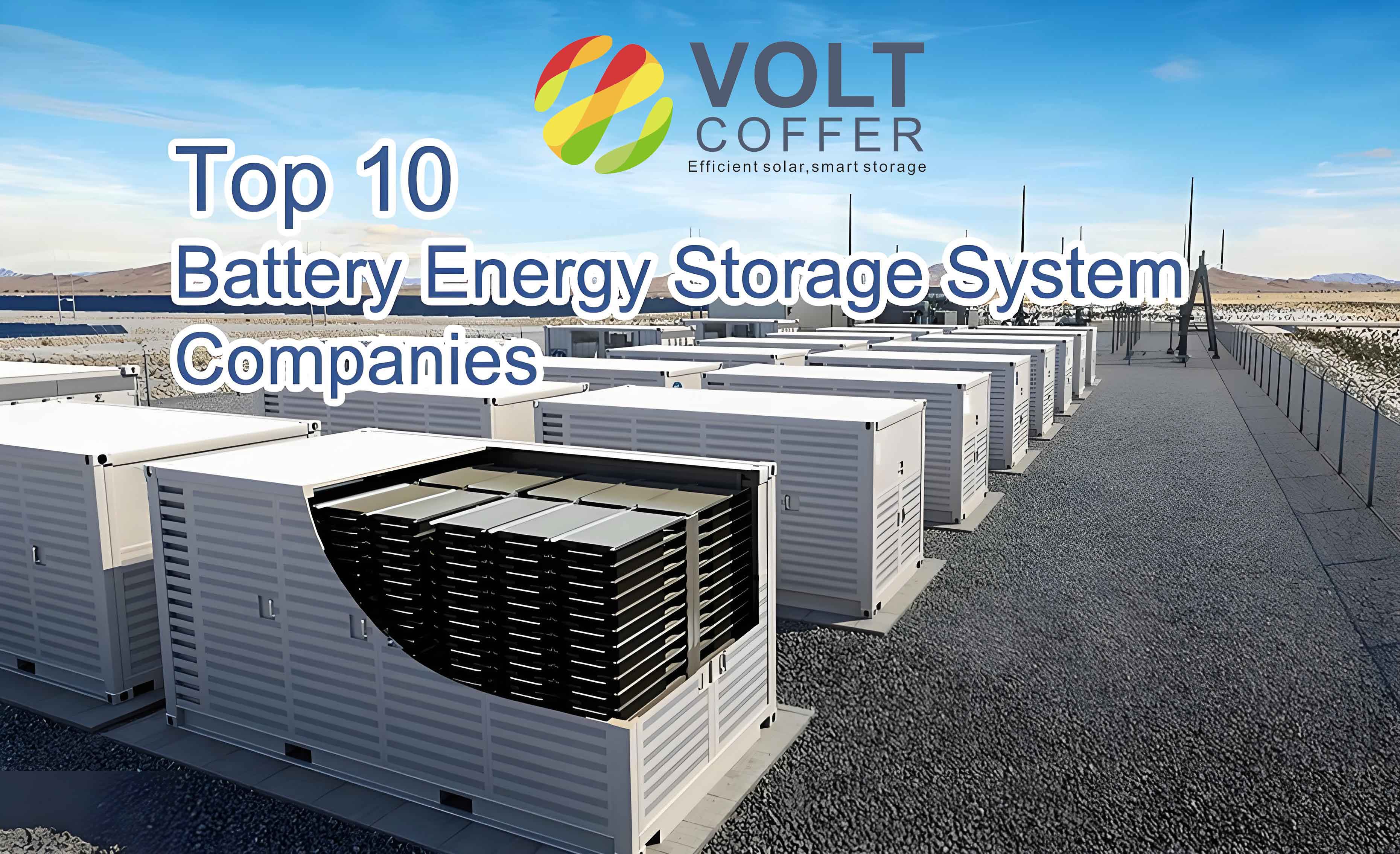
Figure illustrating a typical PV-integrated battery energy storage system configuration (example).
Mathematical Formulations for Key Balancing Metrics
To provide a more rigorous foundation, I present the mathematical definitions of some key parameters used in the reviewed strategies.
Balancing Factor C (from DC/DC station strategy):
$$
C = 0.5 \cdot V_{\text{norm}} + 0.3 \cdot SOC_{\text{norm}} + 0.2 \cdot R_{\text{norm}}
$$
where \( V_{\text{norm}}, SOC_{\text{norm}}, R_{\text{norm}} \) are normalized values of voltage, SOC, and internal resistance, respectively. The goal is to bring the C values of all cells within a tolerance band (e.g., 5% of the mean).
Model Predictive Control (MPC) objective function (simplified):
$$
\min_{\mathbf{u}} J = \sum_{k=0}^{N_p-1} \left( \| \mathbf{SOC}(k+1) – \mathbf{SOC}_{\text{ref}} \|_Q^2 + \| \mathbf{u}(k) \|_R^2 \right)
$$
subject to
$$
\mathbf{x}(k+1) = \mathbf{A}\mathbf{x}(k) + \mathbf{B}\mathbf{u}(k) \\
\mathbf{SOC}(k+1) = \mathbf{C}\mathbf{x}(k+1)
$$
where \( \mathbf{x} \) is the state vector (cell voltages, SOCs), \( \mathbf{u} \) is the vector of duty cycles, \( N_p \) is the prediction horizon, and \( Q, R \) are weighting matrices.
Variable regulation factor strategy: power sharing rule:
$$
P_i = P_{\text{total}} \cdot \frac{\alpha_i \cdot e^{\beta \cdot (SOC_{\text{avg}} – SOC_i)}}{\sum_{j=1}^n \alpha_j \cdot e^{\beta \cdot (SOC_{\text{avg}} – SOC_j)}}
$$
where \( \alpha_i \) is the relative capacity factor of unit i, \( \beta \) is a dynamic adjustment factor, \( SOC_{\text{avg}} \) is the average SOC of all units, and \( P_{\text{total}} \) is the total power demand from the battery energy storage systems.
Nash equilibrium formulation:
Each cell i chooses its switching time \( t_i \) to minimize its cost function:
$$
J_i(t_i, t_{-i}) = w_1 (SOC_i – \overline{SOC})^2 + w_2 t_i^2
$$
where \( \overline{SOC} \) is the pack average, and \( w_1, w_2 \) are weights. The Nash equilibrium is achieved when for every i,
$$
t_i^* = \arg\min_{t_i} J_i(t_i, t_{-i}^*).
$$
Future Trends in Energy Balancing for Battery Energy Storage Systems
Based on my comprehensive review, I have identified three key trends that will shape the next generation of balancing technologies for PV-connected battery energy storage systems.
Application of Intelligent Algorithms
As battery energy storage systems become more complex and distributed, traditional rule-based balancing controllers will be replaced by intelligent algorithms that can adapt to changing conditions. For instance, firefly algorithms have been proposed to optimize balancing parameters, while K-means clustering can classify cell states for targeted equalization. The integration of machine learning models—such as recurrent neural networks (RNNs) for SOC prediction or reinforcement learning for on-line optimization—will enable self-learning balancing controllers that improve over time. These intelligent approaches will be essential for maximizing the usable capacity and prolonging the life of large-scale battery energy storage systems.
Support for Multi-Variable Monitoring
Currently, most balancing strategies rely on voltage or SOC as the primary metric. However, temperature and internal resistance have a profound impact on cell aging and safety. I foresee future BMS designs that incorporate real-time thermal and impedance measurements into the balancing decision. For example, the balancing current could be reduced for a cell that is overheating, or a cell with high internal resistance (indicating end-of-life) could be bypassed entirely. This multi-variable approach will provide a holistic view of cell health and enable predictive maintenance, thereby enhancing the overall reliability of battery energy storage systems.
Realization of Fully Automated Operation
Most existing active balancing strategies require some degree of human intervention or pre-programmed thresholds. The ultimate goal is a fully autonomous balancing system that operates 24/7 without manual oversight. This involves self-diagnosis, fault-tolerant control, and automatic gain scheduling. For example, a dynamic double-threshold strategy can automatically adjust the charge/discharge rate based on real-time SOC deviation, minimizing unnecessary cycles. The combination of intelligent algorithms and robust hardware will pave the way for battery energy storage systems that can “heal” themselves by redistributing energy proactively. Achieving such automation will significantly reduce operational costs and improve the resilience of PV-storage microgrids.
Conclusion
In this personal review, I have explored the landscape of energy balancing strategies for Li-ion battery energy storage systems coupled with photovoltaic power generation. By comparing various active topologies and five representative control strategies, I have demonstrated that the choice of balancing method involves a multi-dimensional trade-off among speed, accuracy, complexity, and cost. For battery energy storage systems in dynamic PV environments, strategies like model predictive control and hierarchical active balancing offer compelling performance, albeit with higher initial investment. Simpler approaches like the variable regulation factor provide a cost-effective solution for systems with less stringent response requirements. Looking forward, the integration of intelligent algorithms, multi-variable monitoring, and full automation will drive the evolution of balancing technology, enabling battery energy storage systems to operate more efficiently, safely, and autonomously. I am confident that these advances will accelerate the adoption of PV-battery energy storage systems as a cornerstone of the global renewable energy infrastructure.