
The performance and longevity of lithium-ion batteries are critical factors determining their viability in applications ranging from electric vehicles to grid-scale energy storage. While significant research focuses on cyclic aging from repeated charge and discharge, calendar aging—the degradation occurring during static storage or idle periods—can be equally, if not more, detrimental. In many applications, such as electric vehicles, a lithium-ion battery may spend over 90% of its lifetime in a storage state. Consequently, understanding and mitigating calendar aging is paramount for extending overall battery life.
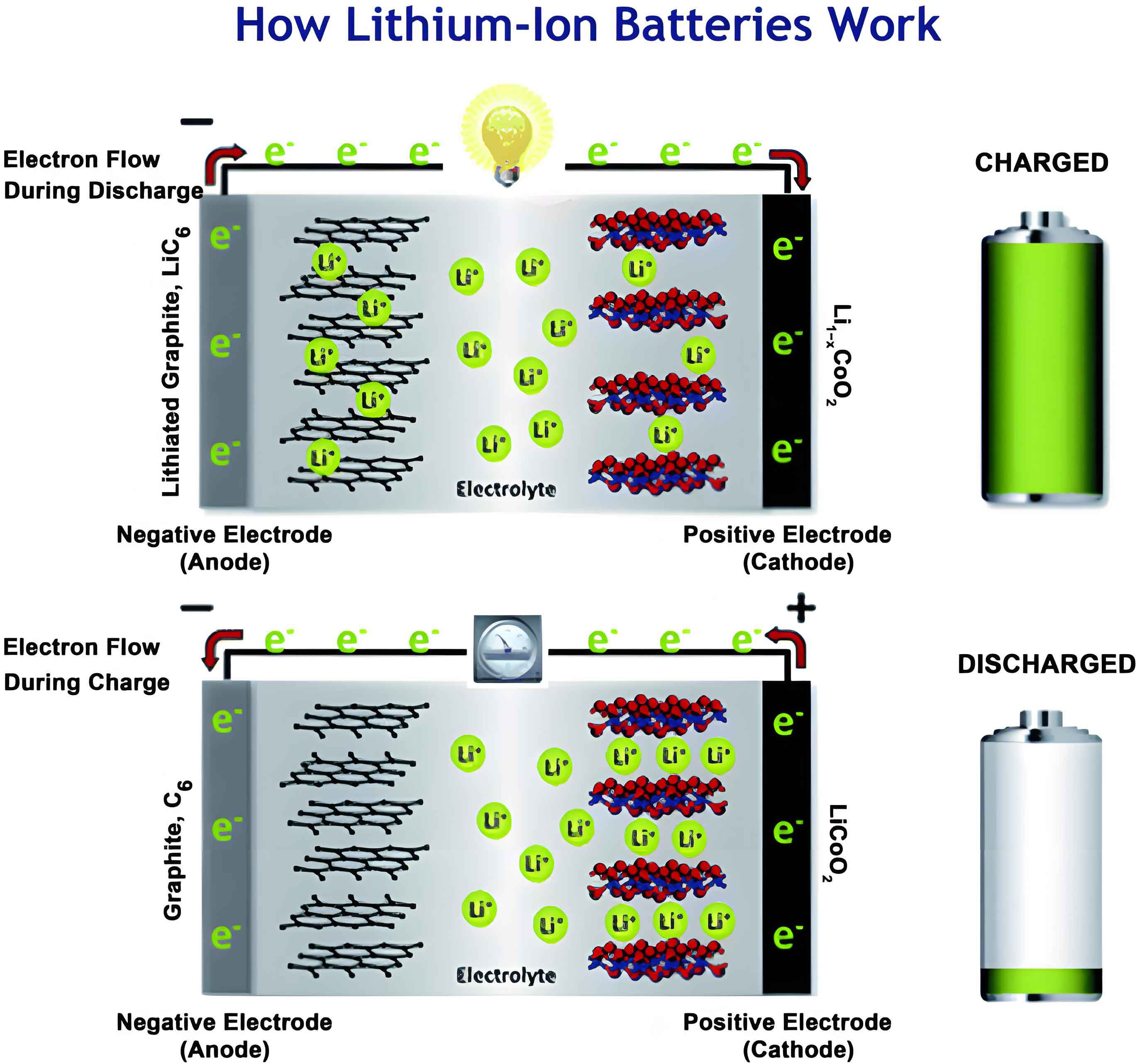
The dominant mechanism in calendar aging of lithium-ion battery graphite anodes is the continuous growth of the Solid Electrolyte Interphase (SEI). The SEI is a passivating layer that forms during initial cycles, primarily from the reductive decomposition of electrolyte components. While a stable SEI is essential for preventing further electrolyte decomposition, its continued, slow growth during storage leads to irreversible lithium and electrolyte consumption, increased impedance, and a reduction in electrode porosity. These effects collectively cause capacity fade and power loss. Therefore, a detailed, mechanistic understanding of SEI growth kinetics under various storage conditions is crucial.
This work aims to provide a comprehensive analysis of calendar aging by integrating experimental characterization with a physics-based modeling approach. An electrochemical-thermal coupled model, incorporating SEI growth side reactions, is developed and validated. Through Electrochemical Impedance Spectroscopy (EIS) and Transmission Electron Microscopy (TEM), the evolution of SEI impedance and thickness is quantified. This experimental data is used to calibrate key model parameters, enabling accurate simulation and prediction of lithium-ion battery performance degradation over time. The study particularly focuses on the influence of the State of Charge (SOC) during storage on the SEI growth rate and its subsequent impact on cell performance.
1. Experimental Methodology
Commercial pouch-type lithium-ion battery cells with a nominal capacity of 0.75 Ah were used. The cathode active material was Li[Ni0.8Co0.1Mn0.1]O2 (NCM811), the anode was graphite, and the electrolyte was 1.0 mol/L LiPF6 in a mixture of ethylene carbonate (EC) and ethyl methyl carbonate (EMC) (1:1 by volume). The voltage window was 3.0 V to 4.2 V. Cells were initially screened for consistent performance.
To accelerate calendar aging, cells were stored in a constant temperature chamber at 55°C. Different storage SOC levels were investigated: 10%, 25%, 50%, 75%, 90%, and 100%. The experimental protocol consisted of three main parts:
- Reference Performance Tests (RPT): These were conducted periodically (approximately every 30 days) at 25°C to track capacity fade. The test protocol was a constant-current constant-voltage charge (CCCV) followed by a constant-current discharge (CC). The charge current was C/5 (0.2C) until 4.2 V, followed by a constant voltage hold until the current dropped to C/20. Discharge was at C/5 to 3.0 V. Initial rate capability tests at C/5, C/3, 0.5C, and 1C were also performed on fresh cells to calibrate the baseline model.
- Electrochemical Impedance Spectroscopy (EIS): After each storage interval and before RPT, cells were discharged to 50% SOC and allowed to rest for 2 hours to reach a stable state. EIS was then performed using a potentiostat with a current perturbation amplitude of 50 mA over a frequency range of 0.01 Hz to 10,000 Hz.
- Post-Mortem Material Characterization: Selected cells were disassembled in an argon-filled glovebox after being fully discharged. Anode samples were carefully rinsed with dimethyl carbonate (DMC) to remove residual electrolyte. Scanning Electron Microscopy (SEM) was used to observe morphological changes on the electrode surface. Transmission Electron Microscopy (TEM) was employed to measure the SEI layer thickness directly on graphite particle cross-sections.
2. Model Development
The modeling framework is based on the well-established pseudo-two-dimensional (P2D) model, which couples lithium transport and electrochemical kinetics with thermal effects. A key extension is the incorporation of a SEI growth side reaction model.
2.1 Electrochemical-Thermal Coupled Framework
The core P2D model describes conservation of species and charge in the solid and liquid phases, coupled via the Butler-Volmer kinetic equation. The governing equations are summarized below.
Solid Phase Diffusion (in spherical particles):
$$ \frac{\partial c_s}{\partial t} = \frac{D_s}{r^2} \frac{\partial}{\partial r} \left( r^2 \frac{\partial c_s}{\partial r} \right) $$
with boundary conditions:
$$ \left. \frac{\partial c_s}{\partial r} \right|_{r=0} = 0; \quad -D_s \left. \frac{\partial c_s}{\partial r} \right|_{r=R_p} = \frac{j}{a_s F} $$
where \( c_s \) is the solid-phase Li concentration, \( D_s \) is the solid diffusion coefficient, \( r \) is the radial coordinate, \( R_p \) is the particle radius, \( j \) is the pore wall flux, \( a_s \) is the specific surface area, and \( F \) is Faraday’s constant.
Liquid Phase Diffusion and Migration:
$$ \epsilon \frac{\partial c_e}{\partial t} = \frac{\partial}{\partial x} \left( D_e^{\text{eff}} \frac{\partial c_e}{\partial x} \right) + \frac{a_s j (1 – t_+^0)}{F} $$
where \( c_e \) is the electrolyte concentration, \( \epsilon \) is the porosity, \( D_e^{\text{eff}} = D_e \epsilon^{\text{brugg}} \) is the effective electrolyte diffusivity (with Bruggeman correction), and \( t_+^0 \) is the Li+ transference number.
Charge Conservation:
In the solid matrix (Ohm’s law):
$$ \frac{\partial}{\partial x} \left( \sigma^{\text{eff}} \frac{\partial \phi_s}{\partial x} \right) = a_s F j $$
In the electrolyte:
$$ \frac{\partial}{\partial x} \left( \kappa^{\text{eff}} \frac{\partial \phi_e}{\partial x} \right) + \frac{\partial}{\partial x} \left( \kappa_D^{\text{eff}} \frac{\partial \ln c_e}{\partial x} \right) = -a_s F j $$
where \( \phi_s \) and \( \phi_e \) are solid and electrolyte potentials, \( \sigma^{\text{eff}} \) and \( \kappa^{\text{eff}} \) are effective conductivities, and \( \kappa_D^{\text{eff}} \) is the effective diffusional conductivity.
Butler-Volmer Kinetics (Main Reaction):
$$ j_{\text{main}} = a_s i_0 \left[ \exp\left(\frac{\alpha_a F}{RT}\eta\right) – \exp\left(-\frac{\alpha_c F}{RT}\eta\right) \right] $$
$$ i_0 = F k_0 (c_e)^{\alpha_a} (c_s^{\text{surf}})^{\alpha_a} (c_s^{\text{max}} – c_s^{\text{surf}})^{\alpha_c} $$
$$ \eta = \phi_s – \phi_e – U_{\text{eq}} – j_{\text{tot}} R_{\text{SEI}} $$
Here, \( i_0 \) is the exchange current density, \( k_0 \) is the reaction rate constant, \( \eta \) is the surface overpotential, \( U_{\text{eq}} \) is the equilibrium potential, and \( R_{\text{SEI}} \) is the resistance of the SEI layer.
Thermal Model:
The heat generation within the lithium-ion battery is calculated from reversible (entropic) and irreversible (ohmic and polarization) sources:
$$ \rho C_p \frac{\partial T}{\partial t} = \lambda \nabla^2 T + q_{\text{gen}} $$
$$ q_{\text{gen}} = a_s j_{\text{tot}} \eta + a_s j_{\text{tot}} T \frac{\partial U_{\text{eq}}}{\partial T} + \sigma^{\text{eff}} \left( \frac{\partial \phi_s}{\partial x} \right)^2 + \kappa^{\text{eff}} \left( \frac{\partial \phi_e}{\partial x} \right)^2 + \kappa_D^{\text{eff}} \frac{\partial \phi_e}{\partial x} \frac{\partial \ln c_e}{\partial x} $$
Temperature feedback is implemented using an Arrhenius relationship for key parameters (\(D_s\), \(k_0\), etc.):
$$ \psi(T) = \psi_{\text{ref}} \exp\left[ \frac{E_{a,\psi}}{R} \left( \frac{1}{T_{\text{ref}}} – \frac{1}{T} \right) \right] $$
where \( \psi \) represents the temperature-dependent parameter and \( E_{a,\psi} \) is its activation energy.
2.2 SEI Growth and Aging Model
The SEI is modeled as a growing film on the anode particle surface. Its growth is assumed to be limited by a side reaction involving the reduction of solvent molecules (e.g., EC), governed by Tafel kinetics and subject to diffusion limitations through the existing SEI layer.
SEI Side Reaction Current Density:
$$ j_{\text{SEI}} = -a_s F k_{\text{SEI}} c_{\text{EC}}^{\text{surf}} \exp\left( -\frac{\alpha_c^{\text{SEI}} F}{RT} \left( \phi_s – \phi_e – \frac{j_{\text{tot}}}{a_s} R_{\text{film}} – U_{\text{SEI}} \right) \right) $$
where \( k_{\text{SEI}} \) is the SEI reaction rate constant, \( c_{\text{EC}}^{\text{surf}} \) is the EC concentration at the graphite/SEI interface, \( U_{\text{SEI}} \) is the equilibrium potential for SEI formation (~0.4 V vs. Li/Li+), and \( R_{\text{film}} \) is the instantaneous SEI film resistance.
Solvent (EC) Diffusion through SEI:
$$ -D_{\text{EC}} \frac{c_{\text{EC}}^0 – c_{\text{EC}}^{\text{surf}}}{\delta_{\text{film}}} = -\frac{j_{\text{SEI}}}{a_s F} $$
Here, \( D_{\text{EC}} \) is the diffusion coefficient of EC in the SEI, \( c_{\text{EC}}^0 \) is the bulk EC concentration, and \( \delta_{\text{film}} \) is the SEI thickness.
SEI Thickness and Resistance Evolution:
The growth of the SEI layer reduces the electrode porosity and increases impedance.
$$ \frac{d \delta_{\text{film}}}{dt} = \frac{M_{\text{SEI}}}{\rho_{\text{SEI}} a_s F} j_{\text{SEI}} $$
$$ R_{\text{film}} = \frac{\delta_{\text{film}}}{\kappa_{\text{SEI}} A_c} $$
where \( M_{\text{SEI}} \) and \( \rho_{\text{SEI}} \) are the molar mass and density of the SEI products, \( \kappa_{\text{SEI}} \) is the ionic conductivity of the SEI layer, and \( A_c \) is the electrode plate area.
Porosity Change:
The volume occupied by the growing SEI reduces the pore volume available for electrolyte:
$$ \epsilon(t) = \epsilon_0 – \frac{a_s \delta_{\text{film}}(t)}{A_c} \quad \text{(simplified representation)} $$
A more rigorous treatment considers the volume fraction of deposited SEI directly.
Total Current and Double Layer:
The total interfacial current density is the sum of the main intercalation reaction, the SEI side reaction, and the double-layer charging current:
$$ j_{\text{tot}} = j_{\text{main}} + j_{\text{SEI}} + C_{\text{dl}} \frac{\partial (\phi_s – \phi_e – j_{\text{tot}}R_{\text{film}})}{\partial t} $$
This formulation allows the model to simulate EIS features.
2.3 Model Parameters and Calibration
The baseline model parameters for the fresh lithium-ion battery were obtained from literature, manufacturer data, and calibration using initial RPT and EIS data. Key parameters are listed in the table below.
| Parameter | Positive Electrode (NCM811) | Separator | Negative Electrode (Graphite) | Unit |
|---|---|---|---|---|
| Thickness, \(L\) | 40 | 25 | 48.5 | μm |
| Active Material Volume Fraction, \(\epsilon_s\) | 0.62 | – | 0.58 | – |
| Porosity (initial), \(\epsilon\) | 0.37 | 0.33 | 0.32 | – |
| Particle Radius, \(R_p\) | 13 | – | 10 | μm |
| Max. Solid-Phase Concentration, \(c_{s,\text{max}}\) | 47,220 | – | 32,331 | mol m⁻³ |
| Solid Diffusivity (ref.), \(D_s\) | 2×10⁻¹⁴ | – | 5×10⁻¹⁴ | m² s⁻¹ |
| Reaction Rate Constant (ref.), \(k_0\) | 8×10⁻¹¹ | – | 3×10⁻¹¹ | m s⁻¹ |
| Solid Conductivity, \(\sigma_s\) | 0.17 | – | 100 | S m⁻¹ |
| Bruggeman Exponent, \(p\) | 1.5 | – | ||
| SEI Growth Parameters | ||||
| SEI Reaction Rate Constant, \(k_{\text{SEI}}\) | 8×10⁻¹⁷ | m s⁻¹ | ||
| SEI Ionic Conductivity, \(\kappa_{\text{SEI}}\) | Calibrated (see Sec. 3.2) | S m⁻¹ | ||
| SEI Molar Mass, \(M_{\text{SEI}}\) | 0.162 | kg mol⁻¹ | ||
| SEI Density, \(\rho_{\text{SEI}}\) | 1,690 | kg m⁻³ | ||
| EC Diffusion in SEI, \(D_{\text{EC}}\) | 2×10⁻¹⁸ | m² s⁻¹ | ||
3. Results and Discussion
3.1 Baseline Model Validation
The electrochemical-thermal coupled model for the fresh lithium-ion battery was validated against experimental data at 25°C. The simulated voltage profiles and surface temperature rise during discharge at various C-rates (C/5, C/3, 0.5C, 1C) showed excellent agreement with measurements. The average relative error for both electrical and thermal characteristics was below 3%, confirming the model’s accuracy in capturing the coupled electrochemical and thermal behavior of a new cell.
3.2 Calibration of SEI Growth Kinetics
3.2.1 Evolution of SEI Impedance
EIS spectra were analyzed to extract the SEI film resistance (\(R_{\text{SEI}}\)) and charge transfer resistance (\(R_{\text{ct}}\)). A typical Nyquist plot for a fresh cell showed a single depressed semicircle at medium frequencies, corresponding primarily to charge transfer. After calendar aging, a distinct semicircle emerged at higher frequencies, indicative of a growing \(R_{\text{SEI}}\). The total ohmic resistance (high-frequency intercept) also increased slightly.
The extracted \(R_{\text{SEI}}\) values, plotted against storage time, revealed a near-linear growth trend for all SOCs. Critically, the growth rate was strongly SOC-dependent. Cells stored at high SOC (90%, 100%) exhibited a much steeper increase in \(R_{\text{SEI}}\) compared to those stored at low SOC (10%, 25%). This is attributed to the lower anode potential at high SOC, which thermodynamically favors electrolyte reduction and accelerates SEI growth.
The charge transfer resistance \(R_{\text{ct}}\) showed a more complex behavior: a slight initial decrease for cells at low storage SOC, followed by a gradual increase over longer periods. The initial decrease could be related to surface activation or improved wetting. The subsequent rise aligns with the increasing difficulty of charge transfer as the SEI layer thickens and potentially changes composition.
3.2.2 Direct Measurement of SEI Thickness
TEM cross-section images provided direct evidence of SEI growth. For a cell stored at 100% SOC, the SEI thickness increased from approximately 2.75 nm (fresh) to 26.1 nm after 150 days. The growth was remarkably linear with time under these accelerated conditions. SEM images of the anode surface showed that the originally sharp edges of graphite particles became obscured and smoother after aging, consistent with SEI coverage and pore clogging.
The SOC dependence was starkly evident in TEM. After 150 days, the SEI thickness increase was only about 1.05 nm for the 10% SOC cell but was 23.35 nm for the 100% SOC cell. This quantifies the dramatic acceleration of calendar aging at high states of charge.
3.2.3 Determination of SEI Ionic Conductivity
The simultaneous measurement of \(R_{\text{SEI}}\) (from EIS) and \(\delta_{\text{film}}\) (from TEM) for cells aged under different SOC conditions allowed for the calculation of the SEI layer’s effective ionic conductivity, \(\kappa_{\text{SEI}}\), using the relation \(R_{\text{SEI}} = \delta_{\text{film}} / (\kappa_{\text{SEI}} A_c)\). The calculated values showed consistency across different SOC levels, as summarized below.
| Storage SOC (%) | Calculated \(\kappa_{\text{SEI}}\) (S m⁻¹) |
|---|---|
| 10 | 1.21 × 10⁻⁵ |
| 25 | 1.44 × 10⁻⁵ |
| 50 | 1.52 × 10⁻⁵ |
| 75 | 1.50 × 10⁻⁵ |
| 90 | 1.37 × 10⁻⁵ |
| 100 | 1.37 × 10⁻⁵ |
The average value, \( \bar{\kappa}_{\text{SEI}} \approx 1.4 \times 10^{-5} \, \text{S m}^{-1} \), was used to parameterize the aging model. This calibrated parameter is critical for accurately simulating the impedance rise due to SEI growth.
3.3 Validation of the SEI Growth Model
3.3.1 Electrochemical Performance
Using the calibrated \(\kappa_{\text{SEI}}\), the full aging model was run to simulate 150 days of calendar storage. The simulated discharge voltage curves and capacity retention for aged cells were compared against experimental RPT data. The model accurately captured key aging features: increased polarization (lower discharge voltage plateau), reduced capacity, and a higher temperature rise during discharge due to increased internal resistance. The simulated capacity fade across different storage SOCs matched the experimental trends with a maximum relative error of ~3%, demonstrating the model’s predictive capability for lithium-ion battery performance degradation.
3.3.2 EIS Spectra Simulation
The model, which includes a double-layer capacitance, successfully simulated the evolution of the EIS spectra. The simulated Nyquist plots reproduced the emergence and growth of the high-frequency semicircle (associated with \(R_{\text{SEI}}\)) and the shift in the medium-frequency semicircle (associated with \(R_{\text{ct}}\)). The agreement between simulated and experimental impedance data validated the model’s representation of the underlying electrochemical processes governing aging.
3.3.3 SEI Thickness Prediction
The model-predicted growth of SEI thickness over time showed excellent agreement with the direct TEM measurements for all tested SOC levels. This successful validation confirms that the SEI growth sub-model, with its calibrated parameters, accurately describes the kinetic and transport-limited growth of the passivation layer on the graphite anode in a lithium-ion battery during calendar aging.
3.4 Performance Prediction and Analysis
The validated model was used to project the long-term impact of calendar aging. Simulations for a cell stored at 100% SOC predict significant performance decay over one year.
Voltage Profile Degradation: Simulated charge/discharge curves show increasing polarization. The charge voltage plateau rises, and the discharge voltage plateau drops, leading to a widening gap between the mid-point voltages during charge and discharge. This gap, a direct indicator of cell polarization, increased from 0.43 V for a fresh cell to 0.79 V after one year of simulated aging.
Porosity Reduction: A critical consequence of SEI growth is the physical clogging of anode pores. The model tracks the decrease in effective anode porosity from its initial value of 0.32. After one simulated year at high SOC, the porosity fell to approximately 0.28. This reduction directly limits ion transport through the electrolyte in the pores, contributing to increased concentration polarization and power fade, independent of the SEI’s electronic resistance. The relationship can be conceptualized as:
$$ D_e^{\text{eff}}(t) = D_e \cdot [\epsilon(t)]^{\text{brugg}} $$
$$ \kappa^{\text{eff}}(t) = \kappa \cdot [\epsilon(t)]^{\text{brugg}} $$
where \(\epsilon(t)\) decreases over time due to SEI deposition.
Capacity Fade Projection: Long-term simulations clearly illustrate the strong SOC dependence of calendar life. Under the accelerated 55°C condition, a lithium-ion battery stored at 100% SOC is projected to reach 80% capacity retention in about 420 days, while a cell stored at 90% SOC would take about 610 days. In contrast, cells stored at or below 50% SOC are projected to retain more than 85% capacity after two years.
4. Conclusion
This integrated experimental and modeling study provides a detailed mechanistic understanding of calendar aging in NCM811/graphite lithium-ion battery cells. The primary conclusions are:
- SEI Growth is the Dominant Calendar Aging Mechanism: Experimental evidence from EIS and TEM confirms that continuous SEI layer growth on the graphite anode is the primary cause of capacity fade and impedance rise during storage.
- Strong SOC Dependence: The storage SOC profoundly impacts the SEI growth rate. High SOC (associated with low anode potential) accelerates electrolyte reduction, leading to a linear increase in both SEI thickness and impedance at a much faster rate compared to low SOC storage.
- Quantified SEI Properties: By correlating EIS and TEM data, the effective ionic conductivity of the growing SEI layer was calibrated to be approximately \(1.4 \times 10^{-5} \, \text{S m}^{-1}\). This parameter is essential for accurate physics-based aging modeling.
- Validated Predictive Model: The developed electrochemical-thermal coupled model, incorporating SEI growth kinetics, double-layer effects, and porosity reduction, successfully simulates the evolution of voltage profiles, capacity, impedance, and SEI thickness. It has been validated against experimental data across multiple SOC levels.
- Multifaceted Impact of SEI Growth: The aging model elucidates that SEI growth degrades lithium-ion battery performance through two main pathways: (a) increasing interfacial resistance (\(R_{\text{SEI}}\) and \(R_{\text{ct}}\)), which causes ohmic and charge-transfer polarization; and (b) reducing electrode porosity, which exacerbates concentration polarization and limits rate capability.
The insights and the validated model from this work can inform battery management strategies, such as optimal storage SOC recommendations, and guide the development of next-generation electrolytes and electrode materials aimed at stabilizing the SEI. Ultimately, a deep understanding of calendar aging processes is fundamental to enhancing the longevity and reliability of lithium-ion battery systems across all applications.