
In the context of global energy crises and environmental degradation, the international port industry has embraced the concept of developing green, low-carbon ports. Bulk materials such as coal and ore generate significant dust during handling, storage, and transportation in port yards, which has become a key focus for environmental authorities in air pollution control. Particularly in regions like the Jing-Jin-Ji area, port terminals face severe environmental governance challenges, with risks of production suspension, shutdowns, or even revocation if standards are not met. Consequently, the construction of fully enclosed, green, low-carbon port stockyards is imperative.
Traditionally, methods like dust suppression nets, windbreak forests, covering, and water spraying have been employed in port bulk stockyards across China. However, these are temporary solutions that fail to address environmental issues comprehensively. In stricter regulatory regions, full enclosure is mandated, but this poses difficulties due to the vast areas of port stockyards and high investment costs. To tackle this, we have pioneered the application of air-supported membrane structures combined with solar photovoltaic technology, designing and constructing novel green, low-carbon air-supported membrane bulk storage sheds for ports. This integrated solar system approach offers a sustainable solution to environmental problems.
This article, from my perspective as a practitioner in smart port technologies, delves into the design, benefits, and applications of these innovative structures. I will explore how the integration of solar systems into air-supported membranes revolutionizes port environmental management, emphasizing cost-effectiveness, energy efficiency, and scalability. Through detailed analyses, tables, and formulas, I aim to demonstrate the transformative potential of this technology.
The green, low-carbon port air-supported membrane bulk storage shed utilizes a high-strength, flame-retardant polyvinylidene fluoride (PVDF) membrane as its outer shell. Internally, an intelligent air supply pressurization system maintains a slight positive pressure to support the structure, creating an enclosed space without beams or columns. Key characteristics include large spans, automated operation, zero emissions, quick installation, low cost, and energy efficiency, with a lifespan exceeding 25 years. Equipped with a smart control system leveraging 5G IoT technology, it enables real-time monitoring of environmental conditions and operational status, transmitting data to control rooms and remote client terminals for automated adjustments and unmanned, digital management.
The advantages of this innovative solar system-enhanced structure are multifaceted, as summarized in Table 1. Each aspect contributes to its viability in port applications, particularly in harsh coastal environments.
| Advantage | Description | Impact |
|---|---|---|
| Green, Low-Carbon, Energy-Efficient | High light-transmittance membrane reduces lighting needs; secondary diffuse reflection lighting at night cuts electricity use. Internal positive pressure prevents dust diffusion, with filtration enabling zero emissions. | Reduces operational costs and environmental footprint. |
| Controllable Space Environment | New air exchange and air quality monitoring systems linked to smart controls maintain optimal temperature and humidity. | Ensures worker safety and material preservation. |
| Low Construction Cost, Customizable | Membrane structure requires no steel frames, minimal foundation, and allows for tailored sizes and lifespans. | Cuts costs by 30-50% compared to traditional structures. |
| Excellent Corrosion Resistance | PVDF-coated membrane and galvanized steel cables with PE protection resist port corrosion factors. | Enhances durability in saline environments. |
| Suitable for Soft Soil Foundations | Lightweight design with shallow foundations (2-3 m depth) minimizes need for extensive soil treatment. | Lowers groundwork expenses and time. |
| Superior Typhoon Resistance | Flexible structure dissipates wind loads; smart controls adjust pressure; steel cable nets enhance stability; CFD modeling validates safety. | Withstands extreme weather, ensuring operational continuity. |
| Remote Intelligent Digital Management | IoT-based systems allow real-time monitoring via mobile/computer terminals, enabling unmanned operation and self-repair. | Improves efficiency and reduces manpower needs. |
| Rapid Installation and Relocatability | Factory-customized components enable quick assembly (e.g., 30,000 m² in 90 days) and potential relocation. | Facilitates agile port infrastructure upgrades. |
| Convenient Construction, High Safety | Most work done at factory level; minimal aerial on-site installation reduces safety risks. | Accelerates project timelines. |
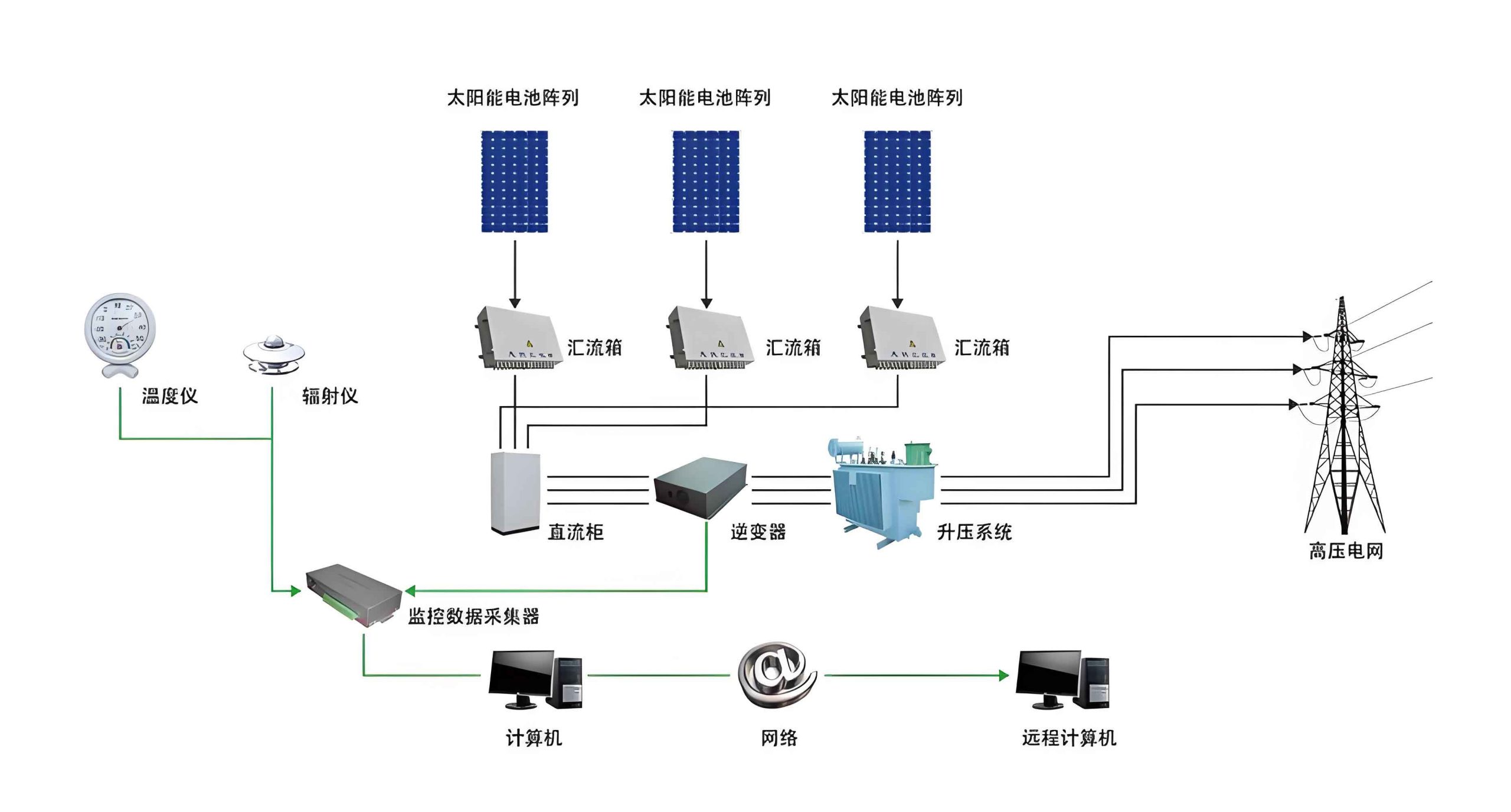
The integration of solar systems into these air-supported membranes represents a significant innovation. By combining photovoltaic (PV) technology with membrane structures, we achieve a synergistic solar system that enhances energy sustainability. The solar system components are mounted directly onto the membrane surface, as illustrated in installation diagrams, optimizing space utilization without compromising structural integrity. The implementation process involves modeling, material selection, structural analysis, and distributed installation of PV components, culminating in a fully integrated solar system.
Two primary application modes exist for this solar system: off-grid and grid-tied power generation. In off-grid mode, the solar system supplies electricity to the membrane’s operational equipment (e.g., air pressurization systems, lighting) and other port devices, enabling self-consumption and reducing reliance on fossil fuels. For grid-tied mode, excess power from the solar system is fed into the grid, generating revenue. This dual approach maximizes the solar system’s utility, contributing to both operational efficiency and economic returns. The power generation application can be modeled with the following formula for annual electricity output:
$$ E = P \times H \times \eta_s \times \eta_c $$
where \( E \) is the annual electricity generation (kWh), \( P \) is the installed capacity of the solar system (kWp), \( H \) is the annual effective sunshine hours (h), \( \eta_s \) is the system efficiency accounting for degradation, and \( \eta_c \) is the comprehensive efficiency coefficient (typically 0.8). For instance, with a 300 kWp solar system and 997.69 annual sunshine hours, the first-year generation can be calculated. Degradation factors are applied yearly, with an initial 2.5% drop and 0.7% annual increment thereafter, modeled as:
$$ \eta_s(t) = \eta_s(0) \times (1 – \delta)^t $$
where \( \eta_s(t) \) is efficiency at year \( t \), \( \eta_s(0) \) is initial efficiency (e.g., 1.0), and \( \delta \) is degradation rate. This solar system design ensures long-term performance, aligning with the 25-year lifespan.
A case study demonstrates the practical benefits. A project with a 300 kWp solar system integrated into a 2,500 m² air-supported membrane was implemented, achieving a daily generation of approximately 1,500 kWh. The economic and environmental benefits over 25 years are substantial, as shown in Table 2, derived from the formulas above. The solar system’s output supports both self-use and grid export, with 70% for internal consumption and 30% for external sale, assuming an industrial electricity rate of 1 CNY/kWh and a feed-in tariff of 0.44 CNY/kWh.
| Year | System Capacity (kWp) | System Efficiency | Annual Generation (kWh) | Economic Value (CNY) |
|---|---|---|---|---|
| 1 | 300 | 1.000 | 239,445.60 | 199,218.74 |
| 2 | 300 | 0.975 | 233,459.46 | 194,238.27 |
| 3 | 300 | 0.968 | 231,783.34 | 192,843.74 |
| 4 | 300 | 0.961 | 230,107.22 | 191,449.21 |
| 5 | 300 | 0.954 | 228,431.10 | 190,054.68 |
| 6 | 300 | 0.947 | 226,754.98 | 188,660.15 |
| 7 | 300 | 0.940 | 225,078.86 | 187,265.61 |
| 8 | 300 | 0.933 | 223,402.74 | 185,871.08 |
| 9 | 300 | 0.926 | 221,726.63 | 184,476.55 |
| 10 | 300 | 0.919 | 220,050.51 | 183,082.02 |
| 11 | 300 | 0.912 | 218,374.39 | 181,687.49 |
| 12 | 300 | 0.905 | 216,698.27 | 180,292.96 |
| 13 | 300 | 0.898 | 215,022.15 | 178,898.43 |
| 14 | 300 | 0.891 | 213,346.03 | 177,503.90 |
| 15 | 300 | 0.884 | 211,669.91 | 176,109.37 |
| 16 | 300 | 0.877 | 209,993.79 | 174,714.83 |
| 17 | 300 | 0.880 | 210,712.13 | 175,312.49 |
| 18 | 300 | 0.873 | 209,036.01 | 173,917.96 |
| 19 | 300 | 0.866 | 207,359.89 | 172,523.43 |
| 20 | 300 | 0.859 | 205,683.77 | 171,128.90 |
| 21 | 300 | 0.852 | 204,007.65 | 169,734.37 |
| 22 | 300 | 0.845 | 202,331.53 | 168,339.83 |
| 23 | 300 | 0.838 | 200,655.41 | 166,945.30 |
| 24 | 300 | 0.831 | 198,979.29 | 165,550.77 |
| 25 | 300 | 0.824 | 197,303.17 | 164,156.24 |
| Total | – | – | 5,401,413.85 | – |
The total economic value over 25 years is approximately 4.5 million CNY, with a static payback period of 7-8 years. If the solar system is fully self-consumed, the payback shortens due to higher electricity cost savings. Beyond economics, the solar system delivers significant environmental benefits. Based on standard coal consumption and emission factors, each kWh saved reduces coal use by 0.4 kg and cuts emissions. The total reductions over 25 years can be expressed as:
$$ \text{Coal Saved} = E_{\text{total}} \times 0.4 \, \text{kg/kWh} $$
$$ \text{CO}_2 \text{ Reduction} = E_{\text{total}} \times 0.997 \, \text{kg/kWh} $$
where \( E_{\text{total}} \) is the total generation from the solar system. For this project, this translates to saving 2,160.57 tons of standard coal and reducing CO₂ by 5,385.21 tons, alongside cuts in other pollutants like SO₂ and NOx. These metrics underscore the solar system’s role in promoting sustainable port operations.
From a technical standpoint, the solar system’s integration involves careful design to withstand port conditions. The membrane’s curvature and material properties are optimized for PV panel attachment, ensuring durability against wind, corrosion, and UV exposure. Computational fluid dynamics (CFD) simulations, as referenced in wind pressure and velocity heat maps, validate the structure’s resilience. For example, wind pressure distributions under different angles are analyzed to reinforce the solar system’s stability. The formula for wind pressure \( p \) is given by:
$$ p = \frac{1}{2} \rho v^2 C_p $$
where \( \rho \) is air density, \( v \) is wind speed, and \( C_p \) is pressure coefficient. This engineering rigor ensures the solar system remains operational even in typhoon-prone areas, leveraging the membrane’s flexibility and smart pressure adjustments.
Moreover, the solar system enhances the digital management capabilities of port facilities. By integrating IoT sensors, the solar system’s performance is monitored in real-time, with data analytics optimizing energy production and consumption. This aligns with smart port initiatives, where solar systems contribute to a decentralized energy grid. The use of 5G technology enables rapid data transmission, allowing for predictive maintenance and efficiency improvements. In essence, the solar system becomes a core component of the port’s energy infrastructure, reducing reliance on external power sources and mitigating grid instability.
Looking ahead, the scalability of this solar system approach is promising. Ports worldwide can adopt similar integrations, tailoring solar system capacities to local sunshine conditions and energy needs. For instance, in sun-rich regions, larger solar systems can be deployed, potentially making ports energy self-sufficient. The modular nature of both the membrane and PV components facilitates expansion, supporting phased upgrades. Additionally, advancements in PV technology, such as higher-efficiency panels or bifacial modules, could further boost the solar system’s output, making it even more attractive for green port projects.
In conclusion, the fusion of air-supported membrane structures with solar photovoltaic technology represents a groundbreaking advancement in port environmental management. This integrated solar system not only addresses dust pollution through full enclosure but also harnesses renewable energy to power operations, achieving dual carbon reduction from both supply and demand sides. The economic, environmental, and operational benefits, as detailed through tables and formulas, highlight its viability for global port applications. As we continue to innovate, the solar system will play an increasingly vital role in transitioning ports toward sustainability, resilience, and intelligence, paving the way for a cleaner, greener future in maritime logistics.