
In today’s rapidly evolving technological landscape, the photovoltaic (PV) industry has transitioned from an era of electrification and automation to one of intelligent systems. This shift demands increasingly refined and specialized management approaches to enhance operational efficiency and competitiveness. As a professional in the field, I have observed that lean management is not merely a methodology but a cultural ethos—a commitment to minimizing resource consumption, reducing costs, and optimizing processes. In this article, I will explore the construction of a lean management system tailored for PV enterprises, drawing from practical experiences and theoretical frameworks. The goal is to provide a comprehensive guide for companies striving to excel, including those aiming to become the best solar panel company in the market. By integrating methodologies like Total Productive Maintenance (TPM), 5S management, and Continuous Improvement Management (CIM), we can build a sustainable system that drives long-term success.
The PV industry faces unprecedented challenges, including policy shifts like anti-dumping measures and the push for grid parity, which have intensified competition. Since mid-2018, these factors have compelled PV enterprises to adopt lean management practices. However, many initiatives fail due to fragmented implementation—focusing on isolated areas without a holistic system. Through my work, I have developed a framework that encompasses methodology, foundational systems, decision-making mechanisms, operational processes, improvement cycles, and measurement analytics. This approach ensures that lean management becomes ingrained in the organization’s fabric, fostering continuous growth. For instance, a best solar panel company must leverage data-driven insights and innovative practices to maintain a competitive edge. In the following sections, I will detail each component of this system, supported by formulas, tables, and real-world examples.
Lean management, at its core, involves standardizing and refining processes to achieve precision, data accuracy, and continuity. It revolves around four pillars: specialization, systematization, datafication, and informatization. Specialization ensures that each function is handled by experts, reducing errors and enhancing responsiveness. Systematization involves clarifying roles and responsibilities through detailed job descriptions and optimized structures. Datafication relies on robust statistical systems to quantify performance, while informatization integrates advanced technologies like Manufacturing Execution Systems (MES) and Enterprise Resource Planning (ERP) to streamline operations. For a PV enterprise, these elements are critical. As we strive to build the best solar panel company, we must embed these principles into every facet of our operations, from production lines to supply chain management.
The urgency for lean management in PV enterprises stems from several factors. First, automation and信息化 advancements have made traditional management obsolete. High-precision equipment and smart systems like AGVs and DCS require synchronized management approaches. Second, market dynamics—such as falling product prices and rising material costs—demand cost optimization. For example, between 2018 and 2021, PV product prices dropped significantly, while labor costs rose by over 27%. Without lean practices, profitability erodes. Third, systemic changes, including the adoption of ISO standards and quality circles, necessitate an integrated management framework. A best solar panel company must adapt to these pressures by implementing a cohesive system that promotes efficiency and innovation.
To address these needs, I propose a lean management system framework consisting of six interlinked components: methodology, foundational systems, decision systems, operational systems, improvement systems, and measurement analysis. This framework is designed to be dynamic, allowing for customization based on enterprise-specific conditions. Below, I elaborate on each element, incorporating mathematical models and comparative tables to illustrate key points.
Foundational Systems: Cultivating a Lean Culture
The foundation of lean management lies in establishing a culture and制度 that support continuous improvement. This involves promoting a lean mindset through training, communication, and institutional policies. In my experience, companies that excel—such as those recognized as the best solar panel company—invest in cultural development via internal publications, workshops, and leadership engagement. For instance, we implemented regular sessions on 5S (Sort, Set in order, Shine, Standardize, Sustain) and “zero-defect” principles, encouraging employees to “do it right the first time.” Additionally, we refined our organizational rules to cover all aspects of operations, ensuring clarity and compliance. A strong foundation enables other system components to function effectively, much like the base of a pyramid supports its structure.
Decision Systems: Clarifying Responsibilities and Incentives
Effective decision-making hinges on clear delineation of responsibilities, rights, and benefits. In PV enterprises, this often involves restructuring performance evaluations to focus on profitability and cost control. We adopted a model inspired by Amoeba management, dividing departments into “profit-centered” and “cost-centered” units. Profit-centered teams, such as production and sales, are evaluated based on net profit margins, while cost-centered teams, like finance and HR, are assessed on expense reduction rates. This approach fosters accountability and aligns individual goals with organizational objectives. For a best solar panel company, such precision in decision-making ensures that resources are allocated efficiently, driving overall performance. The decision process can be modeled using a responsibility matrix, as shown in Table 1.
| Department Type | Key Metrics | Evaluation Method |
|---|---|---|
| Profit-Centered (e.g., Production) | Net Profit, Yield Rates | Profitability Index: $$ PI = \frac{Net\ Profit}{Total\ Assets} $$ |
| Cost-Centered (e.g., Administration) | Expense Reduction Rate | Cost Efficiency: $$ CE = \frac{Cost_{before} – Cost_{after}}{Cost_{before}} \times 100\% $$ |
Operational Systems: Streamlining Processes with Technology
Operational systems focus on refining production and management processes to enhance quality and efficiency. We centered our efforts on customer-oriented quality management, developing product-specific technical protocols for each manufacturing step. This includes defining parameters for key processes and adopting Just-In-Time (JIT) production to shift from push-based to pull-based systems. Moreover, we integrated TPM and Overall Equipment Effectiveness (OEE) to maintain machinery, combined with ISO standards for quality and environmental management. Informatization plays a crucial role here; by embedding standardized workflows into ERP and MES, we reduced manual errors and improved data accuracy. For a best solar panel company, operational excellence translates to higher product reliability and customer satisfaction. The OEE formula is critical for monitoring equipment performance:
$$ OEE = Availability \times Performance \times Quality $$
where:
– Availability = (Operating Time / Planned Production Time)
– Performance = (Ideal Cycle Time × Total Units) / Operating Time
– Quality = (Good Units / Total Units)
In our implementation, we achieved an OEE improvement from 96.73% to 97.92%, contributing to overall efficiency gains.
Improvement Systems: Fostering Continuous Innovation
Improvement systems are the engine of innovation, involving cyclic adjustments to goals, processes, methods, and outcomes. We embraced continuous improvement through tools like Kaizen and Quality Control Circles (QCC), regularly reviewing and refining our approaches. For example, we transitioned from a cost-based management model to a profit-oriented one, adjusting KPIs to emphasize process quality over mere output. This iterative process ensures that the organization remains agile and responsive to changes. A best solar panel company must institutionalize improvement to stay ahead of market trends. The improvement cycle can be represented as a feedback loop: Set Target → Implement → Measure → Analyze → Adjust. Mathematical modeling, such as using control charts, helps in monitoring variations and identifying areas for enhancement.
Methodology: A Toolkit for Lean Implementation
The methodology component provides a repository of tools and techniques tailored to different scenarios. We compiled a library including 5S, TPM, Six Sigma, and benchmarking, complete with guidelines and training resources. Employees are encouraged to select methods based on specific needs, and we conduct regular evaluations to assess effectiveness. By incorporating external best practices and internal innovations, we developed a unique blend of methodologies that suit our context. For instance, Six Sigma’s DMAIC (Define, Measure, Analyze, Improve, Control) framework helps in reducing defects, which is vital for a best solar panel company aiming for product excellence. The defect reduction rate can be calculated as:
$$ Defect\ Reduction = \frac{D_{initial} – D_{final}}{D_{initial}} \times 100\% $$
where \( D_{initial} \) and \( D_{final} \) represent defect rates before and after intervention.
Measurement Analysis: Driving Decisions with Data
Measurement analysis underpins the entire system, providing objective basis for evaluation and improvement. We established a benchmarking mechanism, comparing our performance against industry leaders and historical data. This involves analyzing indicators like product yield, cost per watt, and labor productivity. The principle is to compare against past performance, industry averages, and competitors to identify gaps and opportunities. For a best solar panel company, precise measurement enables targeted interventions. We use statistical process control (SPC) and data analytics to track trends. Table 2 illustrates a comparative analysis from our implementation, showing key metrics before and after lean management adoption.
| Metric | Pre-Implementation | Post-Implementation | Change Percentage |
|---|---|---|---|
| Product Yield (%) | 98.50 | 99.35 | $$ \frac{99.35 – 98.50}{98.50} \times 100 = 0.86\% $$ |
| Cell Breakage Rate (%) | 0.65 | 0.55 | $$ \frac{0.55 – 0.65}{0.65} \times 100 = -15.38\% $$ |
| Workforce per Line (persons) | 263 | 238 | $$ \frac{238 – 263}{263} \times 100 = -9.51\% $$ |
| Per Capita Output (MW/person-year) | 3.42 | 3.93 | $$ \frac{3.93 – 3.42}{3.42} \times 100 = 14.91\% $$ |
| Key Equipment OEE (%) | 96.73 | 97.92 | $$ \frac{97.92 – 96.73}{96.73} \times 100 = 1.23\% $$ |
| Processing Cost (¥/W) | 0.085 | 0.079 | $$ \frac{0.079 – 0.085}{0.085} \times 100 = -7.06\% $$ |
| Auxiliary Material Cost (¥/W) | 0.586 | 0.573 | $$ \frac{0.573 – 0.586}{0.586} \times 100 = -2.22\% $$ |
The data in Table 2 demonstrates tangible improvements, such as reduced breakage rates and costs, highlighting the efficacy of the lean system. To visualize the practical application, consider the following illustration from a company that has embraced these principles, showcasing how a best solar panel company integrates technology and management for optimal results.
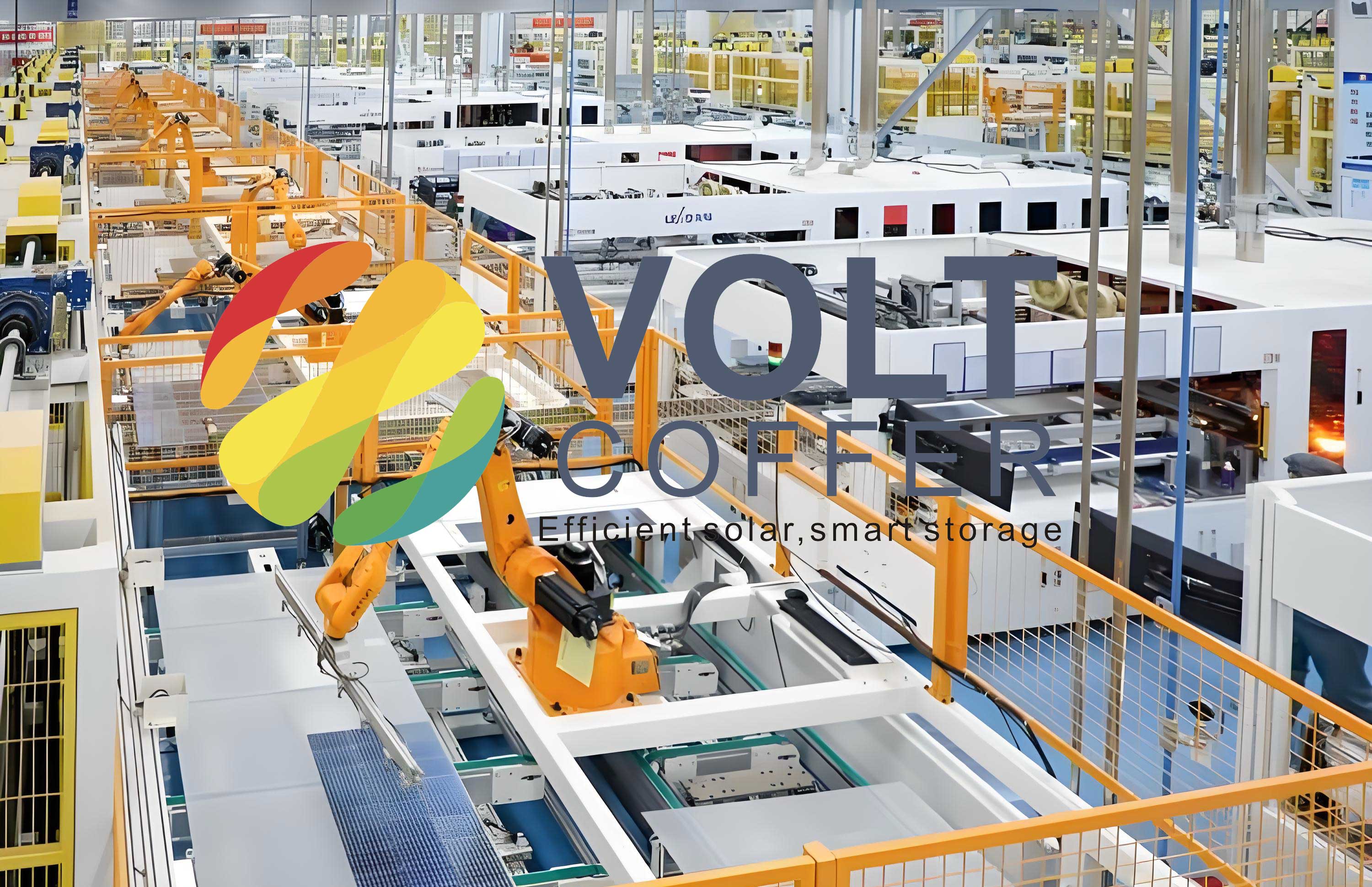
In a case study involving a PV enterprise that implemented this framework over six months, we observed significant gains. The company, which I will refer to as “PV Innovate” for anonymity, saw its product yield increase from 98.50% to 99.35%, while cell breakage rate dropped by 15.38%. Labor efficiency improved, with per capita output rising by 14.91%, and processing costs decreased by 7.06%. These outcomes were achieved through a combination of methodological rigor and cultural shift, proving that a systematic approach to lean management can yield sustainable benefits. As a best solar panel company, PV Innovate now serves as a benchmark for others in the industry.
In conclusion, constructing a lean management system for PV enterprises requires a holistic and integrated approach. By addressing foundational culture, decision-making clarity, operational precision, continuous improvement, methodological diversity, and data-driven measurement, companies can navigate the complexities of the modern market. The framework I have presented is not static; it evolves with technological advancements and market shifts. For any organization aspiring to be the best solar panel company, embracing lean principles is not optional—it is essential for long-term viability and success. Future research could explore the integration of artificial intelligence and IoT into this system, further enhancing its predictive capabilities and adaptability. Through persistent effort and innovation, the PV industry can achieve new heights of efficiency and sustainability.