
In the modern energy landscape, energy storage systems are pivotal for balancing supply-demand fluctuations, enhancing grid stability, and promoting the efficient utilization of renewable resources. Among various storage technologies, electrochemical energy storage, particularly lithium-ion battery-based systems, has gained prominence due to its rapid response and high energy conversion efficiency. The lifepo4 battery, known for its long lifespan, high safety, and strong environmental adaptability, stands out as a core component in grid-side and user-side applications. However, with the rapid expansion of electrochemical energy storage power stations, challenges such as safety risks, efficiency optimization, and system integration have emerged. Artificial intelligence (AI) offers transformative potential to address these issues, enabling smarter management and operation of lifepo4 battery energy storage power stations. In this article, I will explore the characteristics of lifepo4 battery systems, analyze the technological challenges, and delve into the advantages of AI applications, supported by tables and formulas to summarize key insights.
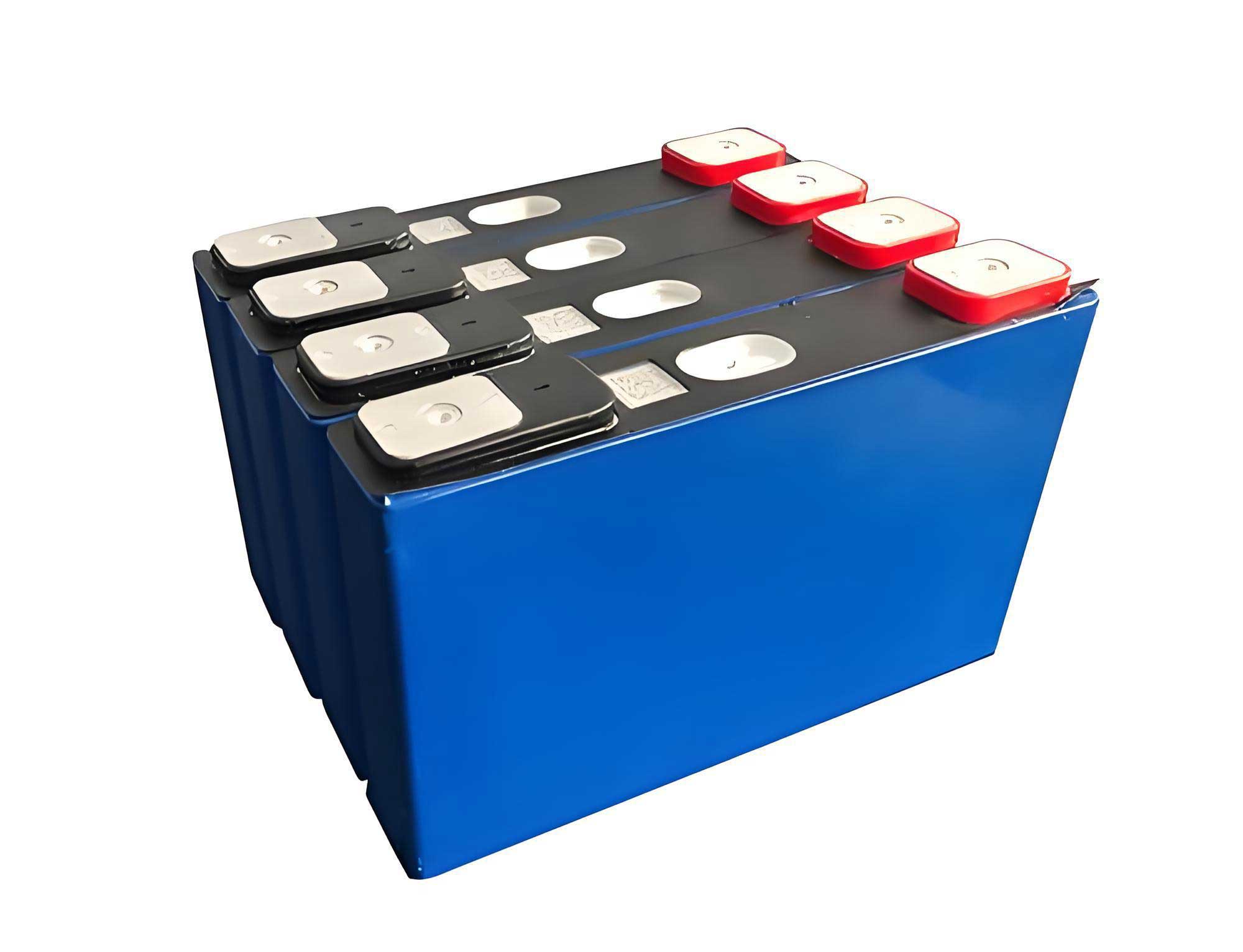
The lifepo4 battery energy storage power station operates on the principle of lithium-ion movement between electrodes. During charging, lithium ions de-intercalate from the lifepo4 cathode, traverse the electrolyte and separator, and embed into the graphite anode. Discharge reverses this process, with ions returning to the cathode and electrons flowing through an external circuit to provide current. This mechanism underpins the high theoretical specific capacity and stability of lifepo4 batteries, which are further enhanced through nanostructuring, doping, and surface coating strategies. In a storage station, lifepo4 battery packs collaborate with a battery management system (BMS), power conversion units, and a central monitoring system to store and release energy efficiently. Charging involves converting AC to DC via rectifiers for storage, while discharge uses inverters to supply AC to the grid or loads. The lifepo4 battery energy storage power station excels in applications like peak shaving, frequency regulation, emergency backup, and renewable energy integration, driven by its safety and durability. As of recent data, lithium-ion batteries, predominantly lifepo4 variants, account for over 97% of new energy storage installations, highlighting their dominance. Under global carbon-neutrality goals, the lifepo4 battery energy storage market is poised for exponential growth, necessitating advanced technological integration.
Despite its advantages, the lifepo4 battery energy storage power station faces multifaceted challenges in practical deployment. These include the multi-dimensional coupling of battery system management, dynamic adaptability to high-penetration renewable energy integration, system complexity, and long-term safety assurance. The BMS must optimize control over cell consistency, state parameter estimation, and lifespan prediction, where traditional algorithms often fall short. System integration complexities arise from coordinating the BMS, energy management system (EMS), and power converters, exacerbated by the volatility and intermittency of renewables, demanding intelligent automation for optimal operation. Safety management is paramount, as lifepo4 batteries can risk thermal runaway from overcharge, over-discharge, or overheating, with mechanisms not fully understood, posing challenges for early warning systems. Additionally, digital applications like smart sensing, resource协同 perception, and cluster optimization require higher intelligence levels. These issues underscore the necessity of AI in lifepo4 battery energy storage power stations, enabling real-time monitoring, fault预警,寿命预测, and control策略优化 to enhance智能化 and efficiency. AI’s role in thermal runaway预警 systems, through multi-parameter data fusion, unsupervised learning, and edge management, significantly boosts safety, providing theoretical and technical support. Thus, AI is crucial for performance optimization, security, and economic benefits in lifepo4 battery energy storage power stations.
AI applications offer distinct advantages in lifepo4 battery energy storage power stations, which I will detail in three key areas: state monitoring and fault diagnosis, scheduling efficiency, and safety reinforcement.
AI-assisted Battery Management System for Precise State Monitoring and Fault Diagnosis
The BMS is central to monitoring voltage, current, capacity, and other parameters in lifepo4 battery packs, ensuring safe and efficient operation within specified ranges. Typically structured in three tiers—module, cluster, and stack levels—it manages data acquisition, state assessment, and均衡策略 to maintain cell一致性. AI integration revolutionizes state monitoring by leveraging deep learning and data analytics to extract深层信息 from historical and real-time data, enabling early anomaly detection and fault prediction. For instance, Encoder-LSTM and CNN-LSTM models have been used to predict the state of health (SOH) with high accuracy. The Encoder-LSTM reduces data dimensionality via an encoder and captures dependencies with LSTM, while CNN-LSTM combines convolutional layers for feature encoding and LSTM for precise SOH estimation. These models demonstrate potential in准确估计 SOH values, enhancing system responsiveness. Moreover, AI facilitates pattern mining to identify features leading to abnormal SOH degradation, improving understanding of battery health dynamics. Below is a table comparing AI algorithms for SOH estimation in lifepo4 battery systems:
| AI Algorithm | Key Features | Accuracy (SOH Estimation) | Application in Lifepo4 Battery |
|---|---|---|---|
| Encoder-LSTM | Data reduction, temporal dependency capture | High (e.g., 95% RMSE reduction) | Real-time monitoring of lifepo4 battery clusters |
| CNN-LSTM | Feature extraction, sequence modeling | Very High (e.g., 98% precision) | Fault diagnosis in lifepo4 battery modules |
| Reinforcement Learning | Adaptive control, optimization | Moderate to High | Dynamic balancing of lifepo4 battery packs |
| Neural Networks | Non-linear pattern recognition | High | SOH prediction for lifepo4 battery arrays |
Mathematically, SOH estimation can be modeled using a degradation function. For a lifepo4 battery, the capacity fade over cycles can be expressed as:
$$ C(n) = C_0 \cdot e^{-\alpha n} $$
where \( C(n) \) is the capacity at cycle \( n \), \( C_0 \) is the initial capacity, and \( \alpha \) is a degradation coefficient learned by AI models from operational data. AI algorithms refine this by incorporating multiple parameters like voltage hysteresis and temperature, yielding improved estimates such as:
$$ \text{SOH} = \frac{C_{\text{current}}}{C_{\text{initial}}} \times 100\% $$
With AI, this is enhanced through regression models, e.g., using a neural network: $$ \text{SOH} = f_{\text{NN}}(V, I, T, \text{history}) $$ where \( f_{\text{NN}} \) is a neural network function mapping voltage \( V \), current \( I \), temperature \( T \), and historical data to SOH. This enables proactive maintenance and extends the lifespan of lifepo4 battery energy storage power stations.
AI-enhanced Scheduling and Distribution Efficiency
Lifepo4 battery energy storage power stations are integral to microgrids, mitigating the instability from distributed renewables like solar and wind. By storing excess energy during high generation and supplying power during deficits, they ensure stable output. However, uncertainties complicate有功调度, necessitating economic dispatch strategies for multi-source microgrids. AI excels in handling dynamic, stochastic, and non-linear problems, offering novel solutions. For example, a Deep Deterministic Policy Gradient (DDPG) combined with XGBoost has been proposed to optimize scheduling, avoiding computational inefficiencies of standalone DDPG. Similarly, genetic algorithms have been used for multi-objective optimization of daily operation strategies, considering factors like load dynamics and energy loss, to improve economic and peak-shaving performance. Deep reinforcement learning (DRL) approaches automate energy调度寻优 for distributed lifepo4 battery storage, adapting to real-time conditions. The scheduling problem can be formulated as an optimization: $$ \min \sum_{t=1}^{T} \left( C_{\text{grid}}(t) + C_{\text{deg}}(t) \right) $$ subject to constraints: $$ P_{\text{bat}}(t) + P_{\text{ren}}(t) = P_{\text{load}}(t) $$ $$ SOC_{\text{min}} \leq SOC(t) \leq SOC_{\text{max}} $$ where \( C_{\text{grid}} \) is grid electricity cost, \( C_{\text{deg}} \) is battery degradation cost, \( P_{\text{bat}} \) is lifepo4 battery power, \( P_{\text{ren}} \) is renewable power, \( P_{\text{load}} \) is load demand, and \( SOC \) is state of charge. AI algorithms like DRL solve this by learning policies: $$ \pi^* = \arg\max_{\pi} \mathbb{E} \left[ \sum_t R(s_t, a_t) \right] $$ where \( \pi \) is the policy, \( s_t \) is state (e.g., SOC, load), \( a_t \) is action (charge/discharge), and \( R \) is reward. This boosts the efficiency of lifepo4 battery energy storage power stations in grid services. Below is a table summarizing AI-based scheduling strategies for lifepo4 battery systems:
| Scheduling Strategy | AI Technique | Key Benefits | Suitable for Lifepo4 Battery |
|---|---|---|---|
| Economic Dispatch | Genetic Algorithm | Global optimization, fast convergence | Yes, for daily operation planning |
| Real-time Control | Deep Reinforcement Learning | Adaptive to uncertainties, autonomous | Yes, for dynamic microgrids |
| Peak Shaving | Machine Learning预测 | Load forecasting, efficient storage use | Yes, enhancing grid stability |
| Multi-objective Optimization | Hybrid AI Models | Balances cost, safety, and performance | Yes, in complex lifepo4 battery stations |
These approaches enable lifepo4 battery energy storage power stations to respond agilely to fluctuating energy patterns, optimizing resource allocation and reducing operational costs.
AI-reinforced Safety Protection System
Thermal runaway prevention is a critical research area for lifepo4 battery energy storage power stations. Thermal runaway involves chain reactions from triggers like overcharge or short circuits, leading to heat and gas buildup, performance decline, and potential fires or explosions. As station scales grow, robust thermal management systems are essential. AI enhances safety through multi-parameter monitoring, early warning, and intelligent control. For instance, Transformer neural networks have been applied to process time-series data from heating tests and simulations, achieving high accuracy and rapid response in detecting thermal runaway precursors. Similarly, BP神经网络 combined with fuzzy logic processes sensor data on temperature, CO concentration, and smoke to reduce false alarms. Multi-parameter studies identify stages of thermal runaway in lifepo4 batteries, with peaks in temperature and gas emission rates, enabling预警 strategies based on H₂ and CO concentrations that advance warning times by up to 64%. The thermal runaway process can be modeled using differential equations: $$ \frac{dT}{dt} = \frac{Q_{\text{gen}} – Q_{\text{loss}}}{C_p} $$ where \( T \) is temperature, \( Q_{\text{gen}} \) is heat generation from reactions, \( Q_{\text{loss}} \) is heat dissipation, and \( C_p \) is heat capacity. AI models learn from data to predict \( Q_{\text{gen}} \) and optimize \( Q_{\text{loss}} \) via cooling systems. Early warning systems use classification models: $$ y = \text{AI}_{\text{classifier}}(T, [\text{CO}], [\text{H}_2], \text{smoke}) $$ where \( y \) indicates risk level. Below is a table outlining key parameters for AI-based thermal runaway预警 in lifepo4 battery energy storage power stations:
| Monitoring Parameter | Normal Range | Risk Threshold | AI Response Action |
|---|---|---|---|
| Temperature (°C) | 20-40 | >60 | Activate cooling, reduce charge rate |
| CO Concentration (ppm) | <10 | >50 | Trigger alarms, isolate lifepo4 battery模块 |
| H₂ Concentration (ppm) | <5 | >20 | Initiate ventilation, emergency shutdown |
| Voltage Anomaly (V) | 2.5-3.6 per cell | Outside range | Balance cells, diagnose faults |
By integrating these AI-driven mechanisms, lifepo4 battery energy storage power stations can achieve proactive safety management, minimizing risks and ensuring reliable operation even under stressful conditions.
In conclusion, the integration of artificial intelligence into lifepo4 battery energy storage power stations represents a significant leap toward智能化 and efficiency. I have discussed how AI assists in precise state monitoring and fault diagnosis, enhances scheduling and distribution efficiency, and reinforces safety防护 systems. The lifepo4 battery, with its inherent advantages, benefits immensely from AI’s data-driven insights, enabling real-time adaptations and predictive capabilities. Future research should focus on optimizing AI algorithms, improving model interpretability, and deepening integration with existing储能 infrastructures. Additionally, developing shared computing networks and data storage solutions, along with exploring general AI methods and multi-agent reinforcement learning frameworks, will be key to advancing AI applications in lifepo4 battery energy storage power stations. As energy transitions accelerate, the synergy between AI and lifepo4 battery technology will undoubtedly play a crucial role in building resilient, sustainable power systems.