
In recent years, the integration of non-traditional energy sources such as wind, solar, and tidal power into the grid has accelerated, driven by the need to address environmental pollution and energy shortages associated with conventional thermal power generation. However, the intermittent and random nature of these renewable sources poses significant challenges to grid stability, particularly in terms of frequency regulation. As their installed capacity grows, the insufficiency of frequency modulation reserve capacity becomes increasingly apparent. To mitigate this, energy storage systems have emerged as a critical solution, with LiFePO4 battery-based systems gaining prominence due to their rapid response, high short-term power throughput, and ease of adjusting regulation direction. In our implementation at a peak-shaving power plant, we deployed a LiFePO4 battery energy storage system to enhance Automatic Generation Control (AGC) performance, improving regulation speed, accuracy, and overall economic efficiency. This article details our experience, focusing on the system’s design, integration, operation, and benefits, supported by tables and formulas to summarize key aspects.
The application of energy storage systems for AGC frequency regulation in power grids has been extensively validated. Since 2003, various grid operators, research institutions, and storage providers in the United States have conducted analyses comparing thermal power plants with and without storage systems. These studies consistently demonstrate that storage technologies outperform traditional generation units in AGC tasks. For instance, a 2008 report by the Pacific Northwest National Laboratory indicated that, per unit capacity, storage systems achieve 1.7 times the frequency regulation effectiveness of hydropower plants, 2.7 times that of gas turbines, and up to 20 times that of thermal and combined-cycle units. Further evidence came in March 2010, when data from New York’s power system showed that a 9 MW flywheel storage system, representing only 3.3% of the grid’s 275 MW total regulation capacity, accomplished 23.8% of the overall frequency regulation tasks. Additionally, PJM Interconnection, the largest U.S. power market, found that using storage for AGC could reduce traditional unit regulation capacity by over 50% while maintaining the same Control Performance Standard (CPS) frequency control outcomes, thereby freeing conventional units from burdensome AGC duties.
Policy support has been instrumental in advancing storage technologies. Since 2007, regulations such as FERC Orders 890, 755, and 784 in the U.S. have provided a robust framework for storage participation in grid services: (1) allowing storage systems to qualify for AGC markets, (2) mandating performance-based compensation for AGC services, and (3) permitting storage to offer third-party ancillary services beyond existing independent system operators. These policies have spurred commercial growth, with similar trends emerging globally. In our project, we leveraged these insights to design a LiFePO4 battery energy storage system tailored for AGC enhancement in thermal power plants.
The LiFePO4 battery operates on the principle of lithium-ion migration. During charging, lithium ions de-intercalate from the positive electrode material, travel through the electrolyte, cross the separator, and embed into the negative electrode material. Conversely, during discharging, the ions move back to the positive electrode. This reversible process, which gives rise to the term “rocking-chair battery,” enables efficient energy storage and release. Compared to traditional lead-acid batteries, LiFePO4 batteries offer superior performance metrics, as summarized in Table 1.
| Parameter | LiFePO4 Battery | Lead-Acid Battery |
|---|---|---|
| Energy Density (Wh/kg) | 90–160 | 30–50 |
| Power Density (W/kg) | 300–5000 | 50–300 |
| Cycle Life (cycles) | 2000–5000 | 300–500 |
| Operating Voltage (V per cell) | 3.2–3.3 | 2.0 |
| Self-Discharge Rate (% per month) | 3–5 | 20–30 |
| Temperature Range (°C) | -20 to 60 | -20 to 40 |
| Environmental Impact | Low, no heavy metals | High, contains lead and acid |
| Maintenance Requirements | Low, modular design | High, regular watering needed |
| Cost per kWh (USD) | 150–300 | 50–100 |
These advantages make the LiFePO4 battery an ideal choice for grid-scale energy storage, particularly in AGC applications where rapid cycling and long lifespan are crucial. The high energy density and cycle life of the LiFePO4 battery translate to reduced footprint and lower lifetime costs, while its environmental friendliness aligns with sustainability goals.
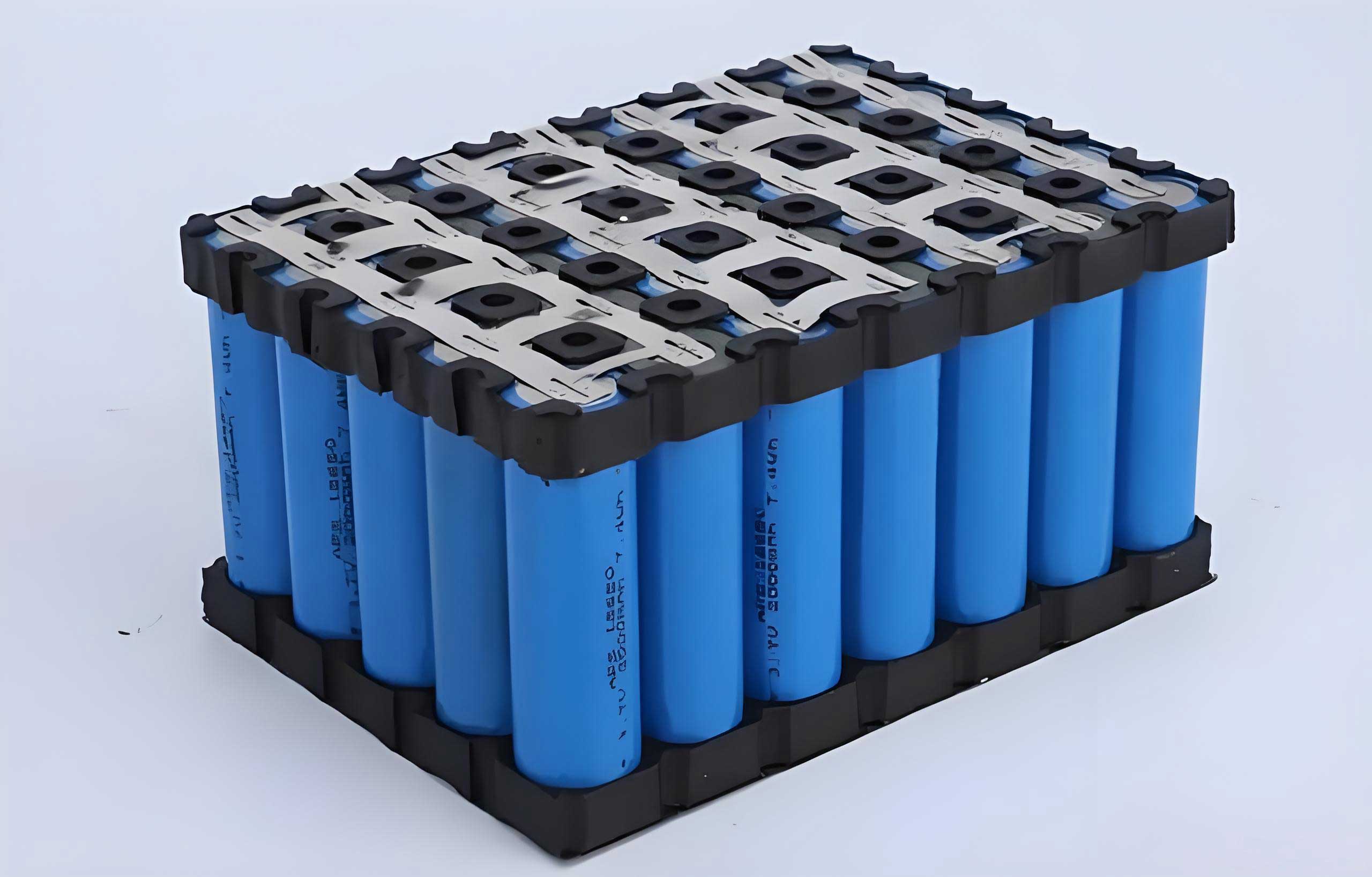
In our power plant, the LiFePO4 battery energy storage system was integrated to optimize AGC performance. The system’s response is illustrated through operational data: when tracking AGC instructions, the combined output curve of the plant and storage system showed significantly better alignment with grid commands compared to the plant’s standalone output. The storage system rapidly compensated for deviations between plant output and AGC signals, achieving direction changes and power adjustments within 1 second. This capability was particularly evident during reverse regulation cycles, where the LiFePO4 battery system effectively smoothed output transitions.
The electrical configuration involved three storage units, each rated at 3 MW power and 1.477 MWh capacity, connected to a dedicated 6.3 kV bus via circuit breakers. This bus was then linked to the plant’s 6.3 kV母线 through an incoming feeder, ensuring seamless integration. Auxiliary power for cooling and control systems was supplied from the plant’s 380 V distribution network. Each storage unit comprised a LiFePO4 battery pack and a bidirectional power conversion system (PCS). The battery units utilized cells from A123 Systems, chosen for their high cycle life—exceeding millions of cycles under proper management—and minimal environmental impact. The PCS, based on ABB’s PCS100 inverters, employed a single-stage PWM full-bridge topology to control energy flow between the grid and storage, with features like harmonic filtering, fault ride-through, and comprehensive protection.
System integration was managed through a hierarchical control architecture. A master control unit coordinated three sub-control units, each based on PLC controllers, while the plant’s DCS (XDPS400e system) provided supervisory oversight. The control logic enabled the storage system to respond to AGC commands by supplementing plant output during lag periods, thereby enhancing regulation speed and precision without interfering with the plant’s existing control loops. This independent operation ensured that the LiFePO4 battery system could be seamlessly added to existing infrastructure.
Key functions of the DCS monitoring system included: (1) tracking AGC instructions, plant output, combined output, and primary frequency regulation actions; (2) monitoring AGC status for both plant and storage; (3) displaying storage equipment states (e.g., running, stopped, maintenance); (4) indicating communication health between operator stations and storage; and (5) enabling operational commands like system start/stop and reset. Protection schemes were designed in collaboration with power design institutes, incorporating automatic fault isolation through breaker interlocks between 6.3 kV and 480 V levels. Triggers for emergency shutdown included cabinet door openings, fire alarms, and transformer overtemperature events.
To quantify performance improvements, we analyzed the AGC regulation metrics defined by grid codes. The comprehensive performance index \(K_p\) is calculated as:
$$K_p = K_1 \times K_2 \times K_3$$
where \(K_1\) is the regulation rate (measured in MW/min), \(K_2\) is the regulation accuracy (deviation from setpoint), and \(K_3\) is the response time (time to reach 90% of target). With the LiFePO4 battery storage system, \(\Delta P\) (power deviation) and \(\Delta T\) (time delay) decreased markedly, boosting \(K_p\) from below 1.0 to over 5.0. This enhancement directly translates to higher compensation under performance-based schemes. The economic impact is substantial: based on local grid regulations, AGC compensation is tied to regulation depth \(D\) and \(K_p\), following a formula such as:
$$\text{Compensation} = D \times K_p \times C_{\text{base}}$$
where \(C_{\text{base}}\) is a base rate per MWh. In our case, post-implementation data from November to December 2018 yielded approximately 1.338 million RMB in compensation, scaling to about 9.798 million RMB for the full year 2019. Projections suggest annual revenues could reach 20 million RMB, underscoring the financial viability of LiFePO4 battery storage for AGC.
Further technical details reveal the efficiency gains. The round-trip efficiency \(\eta\) of the LiFePO4 battery system can be expressed as:
$$\eta = \frac{E_{\text{discharge}}}{E_{\text{charge}}} \times 100\%$$
where \(E_{\text{discharge}}\) and \(E_{\text{charge}}\) are the energy delivered and absorbed, respectively. Typical values for LiFePO4 systems range from 95% to 98%, far exceeding lead-acid batteries (70–85%). This high efficiency reduces energy losses during frequent cycling. Additionally, the state of charge (SOC) management is critical for longevity. We implemented an algorithm to maintain SOC within 20–80% under normal operation, optimizing cycle life. The degradation model for LiFePO4 batteries can be approximated by:
$$C_{\text{loss}} = C_0 \times e^{-\alpha N}$$
where \(C_{\text{loss}}\) is capacity loss, \(C_0\) is initial capacity, \(\alpha\) is a degradation coefficient (typically 0.0001–0.0005 per cycle for LiFePO4), and \(N\) is cycle count. Over a 10-year lifespan with daily cycling, capacity fade is limited to under 20%, ensuring reliable performance.
Comparative analysis with other storage technologies highlights the advantages of LiFePO4 batteries. Table 2 summarizes key attributes for grid-scale AGC applications.
| Technology | Response Time | Cycle Life | Efficiency (%) | Cost per kWh (USD) | Suitability for AGC |
|---|---|---|---|---|---|
| LiFePO4 Battery | <1 s | 2000–5000 | 95–98 | 150–300 | Excellent |
| Lead-Acid Battery | 1–5 s | 300–500 | 70–85 | 50–100 | Poor |
| Flywheel | <100 ms | 10^5–10^7 | 85–90 | 500–1000 | Good (short duration) |
| Supercapacitor | <10 ms | 10^5–10^6 | 95–98 | 500–2000 | Good (high power) |
| Pumped Hydro | Minutes | 10^4–10^5 | 70–85 | 50–200 | Fair (slow response) |
The rapid response and high cycle life of LiFePO4 batteries make them particularly suitable for frequent AGC adjustments, whereas technologies like flywheels excel in very fast responses but have higher costs per kWh. The LiFePO4 battery system strikes a balance between performance and economics.
In terms of system dynamics, the power output \(P_{\text{storage}}\) of the storage unit during AGC tracking can be modeled as:
$$P_{\text{storage}}(t) = K_p \cdot (P_{\text{AGC}}(t) – P_{\text{plant}}(t)) + \int \epsilon(t) \, dt$$
where \(P_{\text{AGC}}(t)\) is the AGC instruction, \(P_{\text{plant}}(t)\) is the plant output, and \(\epsilon(t)\) represents error correction terms. This proportional-integral approach ensures minimal deviation. The LiFePO4 battery’s ability to handle high charge/discharge rates, often quantified by the C-rate (e.g., 2C for 30-minute discharge), allows it to meet sudden power demands. For our 3 MW units, the C-rate is approximately 2C, enabling full power delivery within 30 minutes.
Environmental and operational benefits extend beyond economics. By reducing the need for thermal plants to frequently ramp, the LiFePO4 battery storage system lowers fuel consumption and emissions. The carbon footprint reduction \(\Delta C\) can be estimated as:
$$\Delta C = \sum (P_{\text{storage}} \cdot t \cdot EF_{\text{grid}})$$
where \(EF_{\text{grid}}\) is the emission factor of displaced generation (e.g., 0.8 kg CO₂/kWh for coal). Over a year, our system avoided thousands of tons of CO₂ emissions. Moreover, the LiFePO4 battery’s non-toxic chemistry minimizes disposal issues compared to lead-acid alternatives.
Looking ahead, the role of LiFePO4 battery energy storage systems in power grids is set to expand. As renewables penetration increases, grid inertia decreases, heightening the need for fast frequency response. LiFePO4 batteries, with their declining costs and improving technologies, are poised to become a cornerstone of modern grid stability. Innovations in battery management systems (BMS) and grid-forming inverters will further enhance their functionality. Our experience confirms that integrating LiFePO4 battery storage with thermal plants not only boosts AGC performance but also provides a pathway for fossil-fuel plants to transition into flexible grid assets.
In conclusion, the application of LiFePO4 battery energy storage systems in peak-shaving power plants offers a compelling solution to grid frequency regulation challenges. Through rapid response, high efficiency, and economic viability, these systems significantly improve AGC metrics, as evidenced by performance indices and financial returns. The LiFePO4 battery technology, with its robust cycle life and environmental benefits, represents a key enabler for the energy transition. As we continue to optimize such integrations, the synergy between storage and conventional generation will be crucial for building resilient, low-carbon power systems.