
In the realm of high-speed railway infrastructure, the reliability and safety of signaling systems are paramount. As a researcher focused on advancing power supply technologies, I have conducted an in-depth study on the integration of lifepo4 battery solutions into railway signaling power systems. Traditional power backups, primarily reliant on lead-acid batteries, have shown limitations in terms of safety, maintenance, and efficiency. This article explores a novel design for an uninterruptible power supply (UPS) system utilizing lifepo4 battery technology, aiming to enhance the robustness of signaling relay stations. Through comprehensive analysis of existing systems, performance comparisons, and detailed design proposals, I present a pathway toward more secure and compact power solutions. The adoption of lifepo4 battery packs not only addresses current challenges but also aligns with global trends in energy storage and smart infrastructure. Below, I delve into the current state, comparative advantages, and a tailored application scheme for lifepo4 battery in high-speed railway contexts.
The signaling power system in high-speed railways is a critical component that ensures continuous operation of train control and communication devices. Typically, it comprises indoor or outdoor substations, dual-power supply boxes, lightning protection boxes, UPS host cabinets, battery cabinets, and power distribution panels. The system is designed with high redundancy, featuring two independent primary power sources plus an emergency backup. In my investigation, I found that signal relay stations commonly use UPS systems with capacities ranging from 20 to 50 kVA, accompanied by lead-acid battery banks. For instance, a standard setup might include 64 lead-acid batteries (12 V, 65 Ah each) arranged in two cabinets, providing a total energy storage of approximately 24.96 kWh. These batteries support backup times of at least 30 minutes for staffed stations and 120 minutes for unattended ones. However, issues such as internal resistance increase, bulging, leakage, and corrosion have been frequently reported, posing safety risks and necessitating frequent maintenance. This underscores the need for a more advanced energy storage solution like the lifepo4 battery.
To understand the potential of lifepo4 battery alternatives, I performed a detailed comparison between lead-acid and lifepo4 battery technologies. The lifepo4 battery, based on lithium iron phosphate chemistry, offers superior performance metrics across multiple dimensions. Below is a table summarizing key differences:
| Parameter | Lead-Acid Battery | Lifepo4 Battery |
|---|---|---|
| Nominal Cell Voltage | 2.0 V | 3.2 V (fewer cells needed for same voltage) |
| Temperature Range | Charge/Discharge: -10°C to 35°C | Charge: 0°C to 45°C; Discharge: -5°C to 60°C |
| Energy Density (Mass) | 35-45 Wh/kg | 130-140 Wh/kg |
| Energy Density (Volume) | 60-80 Wh/L | 270-290 Wh/L |
| Internal Resistance | Higher, lower short-circuit current | Lower, higher short-circuit current (requires protection measures) |
| Charge/Discharge Performance | Slow charging (0.1C), weak high-current discharge | Fast charging (0.5C), strong high-current discharge |
| Self-Discharge Rate | 20-30% per month, requires float charging | 2% per month, no float charging needed |
| Cycle Life | 300-500 cycles, 5-6 years | 2000+ cycles, 10+ years |
The lifepo4 battery exhibits excellent thermal stability due to its olivine structure, with a decomposition temperature around 400°C, significantly higher than other lithium-based batteries. This makes the lifepo4 battery inherently safer, reducing risks of thermal runaway. Additionally, the lifepo4 battery is environmentally friendly, as it avoids heavy metals like lead, and its high discharge efficiency allows for smaller capacity configurations compared to lead-acid batteries for similar backup times. In terms of maintenance, the lifepo4 battery integrates a Battery Management System (BMS) that enables real-time monitoring of voltage, current, temperature, and state of charge, facilitating predictive maintenance and reducing manual intervention. These advantages make the lifepo4 battery a compelling choice for modern railway signaling applications.
Building on this analysis, I propose an integrated UPS power system design centered on the lifepo4 battery. The system consolidates the UPS host and lifepo4 battery packs into a single cabinet, reducing footprint and enhancing reliability. The core components include a 30 kVA UPS host, a BMS module, four lifepo4 battery packs, and remote monitoring units. Each lifepo4 battery pack consists of 24 cells connected in series, providing a nominal voltage of 76.8 V per pack. With four packs, the total system voltage reaches 307.2 V DC, which is inverted to stable 380 V AC output. This design leverages modularity for easy expansion and replacement. Below, I detail the capacity calculations and safety features.
The UPS capacity is determined based on the load requirements of signaling equipment. From my survey, the total load capacity \( S_a \) is approximately 23.51 kVA. To ensure redundancy and optimal operation, the UPS rated capacity \( S_u \) should satisfy:
$$ S_u \geq \frac{S_a}{0.8} $$
Substituting the values:
$$ S_u \geq \frac{23.51}{0.8} = 29.38 \, \text{kVA} $$
Thus, a 30 kVA UPS is selected. For battery capacity, the traditional constant current method is adapted for lifepo4 battery. The required capacity \( C \) is given by:
$$ C = \frac{P \times T}{V \times \eta \times K} $$
Where \( P \) is the load power in watts (derived from \( S_a \) with a power factor of 0.9, so \( P = 23508 \, \text{VA} \times 0.9 = 21157.2 \, \text{W} \)), \( T \) is the backup time in hours (1 hour for this case), \( V \) is the battery bank voltage (307.2 V for four lifepo4 battery packs), \( \eta \) is the UPS inverter efficiency (0.9), and \( K \) is the discharge coefficient. For lifepo4 battery, \( K \) is approximately 1.058 based on empirical data. Plugging in the numbers:
$$ C = \frac{21157.2 \times 1}{307.2 \times 0.9 \times 1.058} = \frac{21157.2}{292.5} \approx 72.33 \, \text{Ah} $$
Considering design margins, a lifepo4 battery capacity of 105 Ah is chosen. This demonstrates that the lifepo4 battery requires only about two-thirds the capacity of lead-acid batteries for the same backup time, highlighting its efficiency.
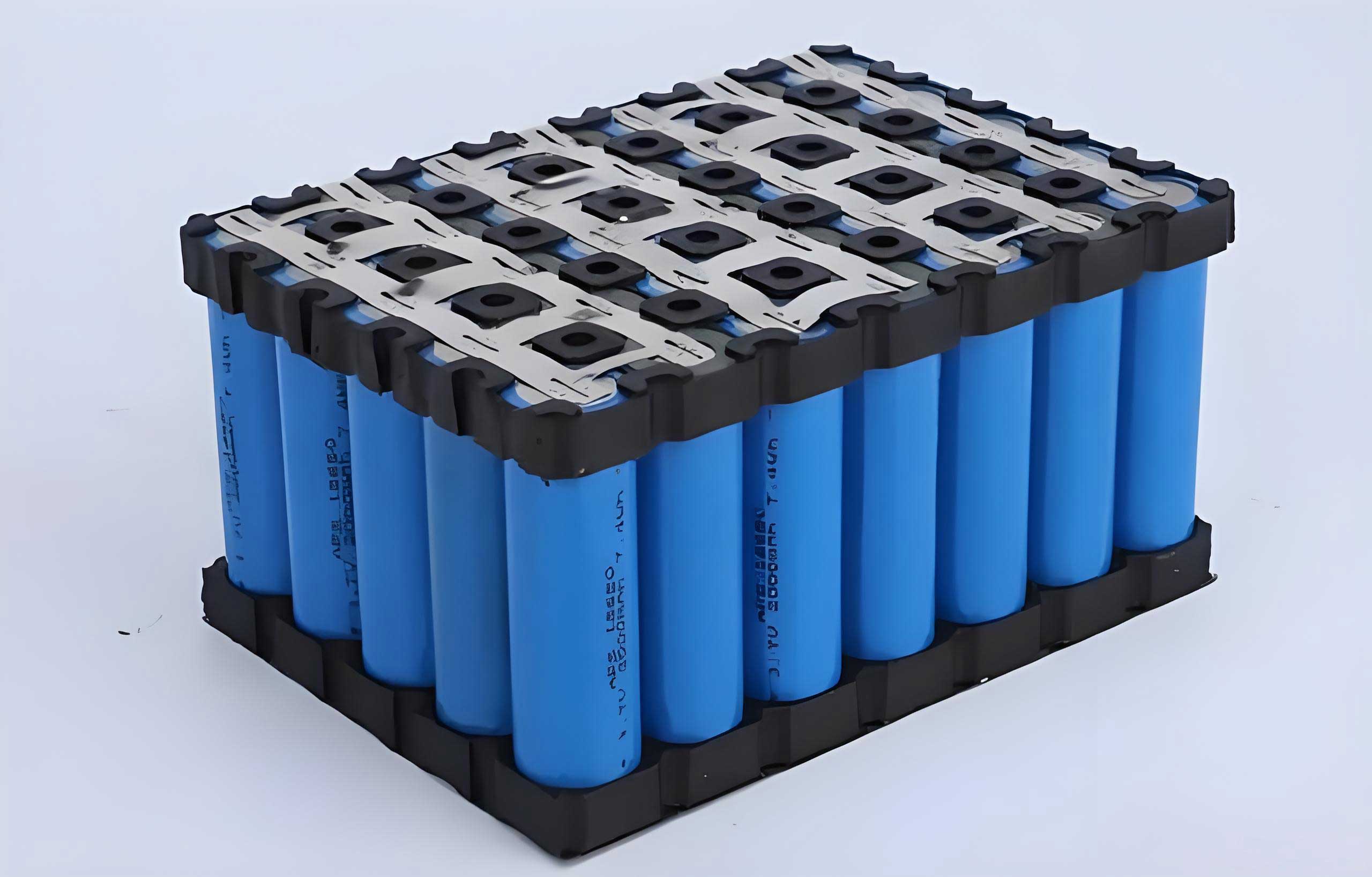
The safety design of the lifepo4 battery system is multifaceted. First, each cell is certified by maritime standards, featuring a robust hard-shell construction that resists impact and explosion. The battery modules are encapsulated in IP67-rated enclosures filled with insulating oil, which prevents oxygen ingress and suppresses fire risks. Thermal management is achieved through high-conductivity materials that dissipate heat evenly, while隔热 designs block thermal propagation between cells. The BMS employs precise sampling techniques, monitoring each cell’s voltage and temperature at both poles, and implements passive balancing to maintain state-of-charge uniformity. This comprehensive approach ensures that the lifepo4 battery system operates reliably under harsh railway conditions.
The BMS plays a crucial role in the lifepo4 battery ecosystem. It continuously measures parameters such as voltage, current, and temperature, transmitting data via Ethernet to upstream controllers. In case of anomalies like overvoltage, undervoltage, or temperature extremes, the BMS triggers alarms and protective actions. It also coordinates with the UPS for integrated charge-discharge control, preventing overcharging or deep discharge, which extends the lifespan of the lifepo4 battery. The passive balancing function discharges cells with higher charge states through resistors, equalizing the pack and maximizing overall performance. This intelligent management reduces operational costs and enhances system availability.
In terms of implementation, the integrated UPS with lifepo4 battery offers significant space savings. Traditional setups occupy four cabinet positions (two for UPS hosts and two for battery banks), whereas the new design condenses these into two cabinets. This aligns with the trend toward compact, intelligent railway rooms. Moreover, the lifepo4 battery system supports remote monitoring and diagnostics, enabling proactive maintenance and reducing on-site visits. The environmental benefits are also notable, as the lifepo4 battery lacks toxic materials and has a longer service life, contributing to sustainable railway operations.
To further illustrate the advantages, consider the lifecycle cost analysis. Although the initial investment in lifepo4 battery technology may be higher, the extended cycle life and reduced maintenance lead to lower total cost of ownership. The table below compares key economic and operational factors:
| Aspect | Lead-Acid Battery System | Lifepo4 Battery System |
|---|---|---|
| Initial Cost | Lower | Higher |
| Cycle Life | 300-500 cycles | 2000+ cycles |
| Maintenance Frequency | High (regular testing and replacement) | Low (BMS-driven, minimal intervention) |
| Energy Efficiency | ≤85% | ≥95% |
| Space Requirement | Larger footprint | Compact, integrated design |
| Environmental Impact | Contains lead and acid, hazardous | Green, recyclable materials |
The lifepo4 battery system also enhances grid stability by supporting fast response times during power outages. Its high discharge capability ensures that signaling loads receive uninterrupted power without voltage sags. Additionally, the modular nature of the lifepo4 battery packs allows for scalability; extra packs can be added to extend backup times if needed, without redesigning the entire system.
In conclusion, the adoption of lifepo4 battery technology in high-speed railway signaling power systems represents a significant advancement in safety, reliability, and efficiency. My research demonstrates that lifepo4 battery solutions outperform traditional lead-acid batteries in key metrics, from energy density to lifecycle. The proposed integrated UPS design leverages the strengths of lifepo4 battery, incorporating advanced BMS and safety features to meet the rigorous demands of railway environments. As railways evolve toward smarter and more compact infrastructure, the lifepo4 battery stands out as a future-proof energy storage option. I recommend further pilot deployments and standardization efforts to fully realize the benefits of lifepo4 battery in this critical sector. Through continuous innovation, we can ensure that railway signaling systems remain resilient and sustainable for decades to come.
The integration of lifepo4 battery technology also opens avenues for renewable energy integration, such as solar or wind power, in railway stations. By coupling lifepo4 battery storage with green energy sources, carbon footprints can be reduced, aligning with global sustainability goals. Furthermore, the data collected by BMS from lifepo4 battery systems can be analyzed using machine learning algorithms to predict failures and optimize performance, ushering in an era of predictive maintenance for railway power networks.
In summary, the lifepo4 battery is not just a replacement for lead-acid batteries but a transformative technology that enhances overall system intelligence. Its application in high-speed railways signals a shift toward more resilient and adaptive infrastructure. As I continue to explore this field, I am confident that lifepo4 battery solutions will become the standard for critical power backups worldwide.