
In the context of global efforts toward low-carbon development, the oil and gas industry faces increasing pressure to reduce carbon emissions, minimize environmental impact, and enhance operational efficiency. As a key component of energy production, drilling operations traditionally rely on diesel generators or grid power, which often suffer from issues such as high costs, voltage instability, and limited capacity. To address these challenges, the integration of a battery energy storage system has emerged as a transformative solution. This article, based on my firsthand experience in deploying such systems in the Sichuan-Chongqing region, explores the application of a battery energy storage system in oil and gas drilling. I will delve into the technical design, operational benefits, economic viability, and future potential, with a focus on how the battery energy storage system can enable peak shaving, grid expansion, power quality improvement, and cost reduction. The insights shared here aim to provide a practical foundation for wider adoption of battery energy storage systems in the drilling sector.
The drilling industry is increasingly transitioning to electrification, replacing diesel-powered equipment with electric drives—a move known as “electricity replacing diesel.” However, this shift often encounters limitations due to grid constraints, especially in remote areas where power supply lines are long and voltage drops are significant. For instance, in a typical drilling site powered by a 10 kV grid line over 16 km, the voltage can drop below acceptable levels when loads exceed 2000 kW, hampering drilling productivity. To overcome this, I implemented a battery energy storage system that not only supplements grid power but also enhances overall energy management. The battery energy storage system serves as a buffer, storing energy during off-peak hours and releasing it during peak demand, thereby optimizing electricity usage and reducing reliance on unstable grid infrastructure. This approach aligns with national carbon reduction goals and supports the industry’s push for cleaner, more sustainable operations.
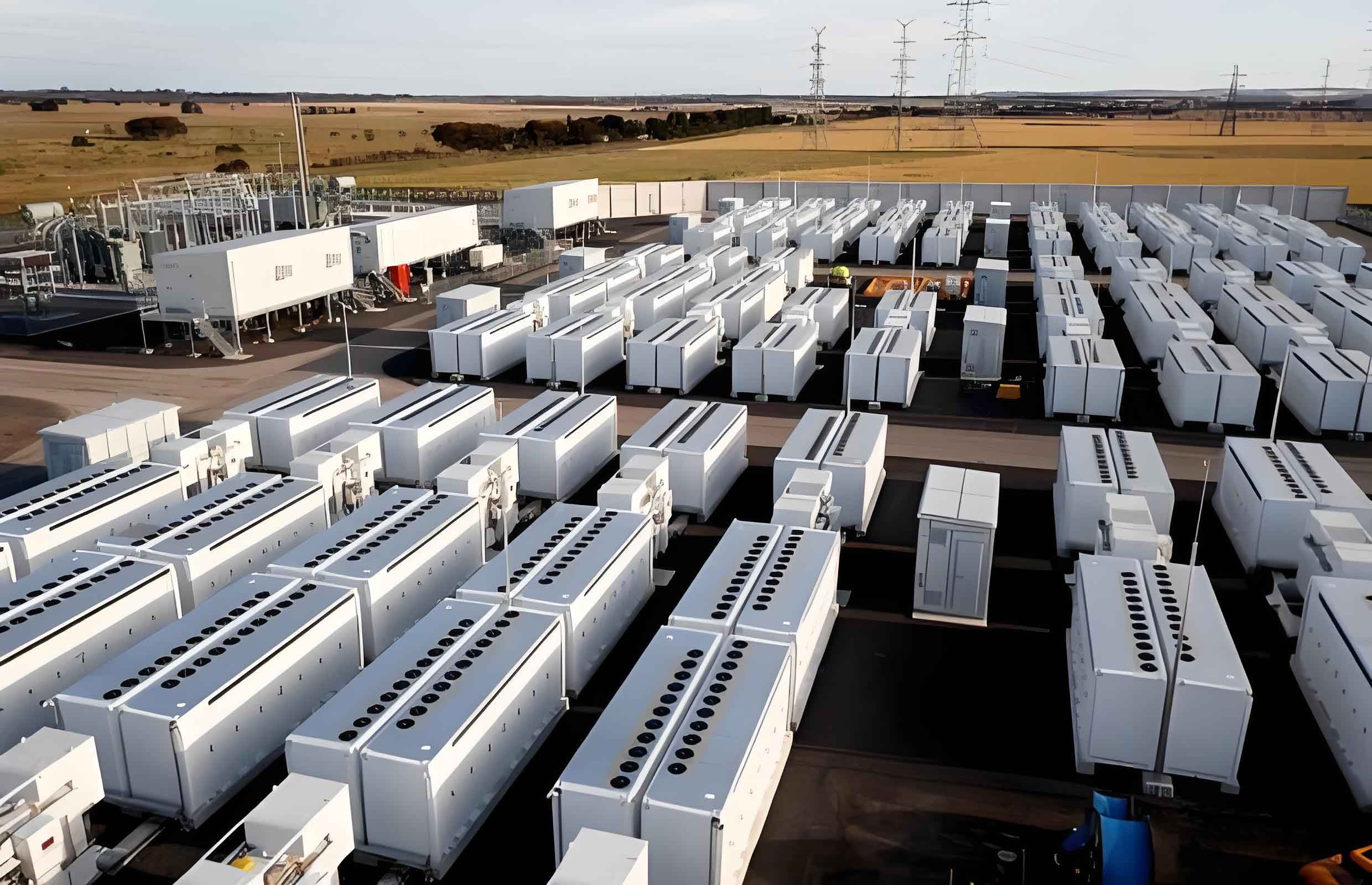
The core of this application is a 2000 kW/2752 kWh battery energy storage system, configured to output 600 V AC and integrate seamlessly with the drilling site’s power infrastructure. The system comprises two main enclosures: a battery cabin and a step-up integrated cabin. The battery cabin houses lithium iron phosphate (LiFePO4) battery packs, along with fire suppression, thermal management, and power distribution units. These batteries are designed for a 15-year lifespan and support “two charge-two discharge” cycles daily, making them ideal for the cyclic demands of drilling operations. Each battery cell has a specification of 3.2 V and 280 Ah, with a module energy capacity of 43 kWh. Eight modules are connected in series to form a cluster, and eight clusters are paralleled to achieve the total capacity of 2752 kWh. This modular design ensures scalability and reliability, key features of an effective battery energy storage system.
The step-up cabin integrates critical components for power conversion and control. It includes a 2000 kW Power Conversion System (PCS), a 2000 kVA oil-immersed transformer (0.69/0.6 kV), a 100 kVA auxiliary transformer, and an Energy Management System (EMS). The PCS enables bidirectional energy flow, allowing the battery energy storage system to charge from the grid or discharge to the load, while the EMS orchestrates overall operations based on predefined strategies. The entire system is rated IP54 for outdoor use, with noise levels below 65 dB, ensuring minimal disruption at the drilling site. Below is a table summarizing the key technical parameters of the battery energy storage system:
| Parameter | Specification |
|---|---|
| Total Energy Capacity | 2752 kWh |
| Maximum Power Output | 2000 kW |
| Output Voltage | 600 V AC |
| Output Frequency | 50 Hz |
| Battery Type | Lithium Iron Phosphate (LiFePO4) |
| System Lifetime | 15 years |
| Protection Rating | IP54 |
| Operating Noise | < 65 dB |
The control architecture of the battery energy storage system is pivotal for its performance. It consists of four main subsystems: the EMS, Battery Management System (BMS), PCS, and fire control system. The EMS acts as the brain, implementing algorithms for load forecasting, peak shaving, valley filling, and demand management. It dynamically schedules charge and discharge cycles to maximize economic benefits and grid stability. For example, the EMS can be programmed to charge during off-peak hours (e.g., 23:00–7:00) when electricity prices are low, and discharge during peak hours (e.g., 7:01–22:59) when prices are high. This strategy, often referred to as “peak shaving and valley filling,” is mathematically represented by the cost-saving formula: $$ \text{Savings} = \sum (\text{Discharge Energy} \times \text{Peak Price}) – \sum (\text{Charge Energy} \times \text{Valley Price}) $$ where the energy values are in kWh and prices in currency per kWh.
The BMS ensures the safety and longevity of the battery packs by monitoring cell voltages, temperatures, and state of charge. It employs precision sensing with voltage accuracy of ±5 mV and temperature accuracy of ±0.5°C, along with balancing mechanisms to prevent cell degradation. The PCS supports multiple operational modes, including grid-connected (PQ mode for active/reactive power control) and islanded (VF mode for standalone power supply). In islanded mode, the battery energy storage system can provide backup power during grid outages, with a switchover time of ≤100 ms, ensuring uninterrupted drilling operations. The fire control system uses pack-level detection and non-pressurized perfluorohexanone injection for rapid suppression, addressing safety concerns inherent in battery systems.
In practice, the battery energy storage system demonstrated significant benefits across several dimensions. From July 2024 to February 2025, the system accumulated a total charge energy of 251,034 kWh and a discharge energy of 224,940 kWh, resulting in a charge-discharge efficiency ratio of approximately 89.6%. This was achieved through daily cycles where the battery energy storage system charged at an average power of 250 kW during valley periods and discharged at 200 kW during peak periods. The table below details the operational data and financial gains from peak shaving:
| Metric | Value |
|---|---|
| Total Charge Energy (kWh) | 251,034 |
| Total Discharge Energy (kWh) | 224,940 |
| Charge-Discharge Efficiency Ratio | 89.6% |
| Valley Electricity Cost (at ¥0.30/kWh) | ¥47,194 |
| Peak Electricity Revenue (at ¥0.90/kWh) | ¥134,964 |
| Net Savings from Peak Shaving | ¥87,770 |
These savings stem from the time-of-use electricity pricing in Sichuan, where the peak-valley price difference reaches ¥0.60/kWh. The battery energy storage system effectively capitalizes on this arbitrage, reducing overall energy expenses. Moreover, the system contributed to grid expansion and power quality enhancement. Originally, the grid line could only support about 1000 kW due to voltage drop over 16 km. With the battery energy storage system supplementing power during high-demand periods, the site’s stable load capacity increased to 1300 kW, effectively expanding the grid by 300 kW. This was crucial for maintaining drilling momentum, especially during critical operations like mud pumping and hoisting.
The battery energy storage system also served as a reliable emergency power source. On August 4, 2024, the grid experienced two unexpected outages—lasting 10 and 50 minutes, respectively. In both instances, the battery energy storage system seamlessly switched from charge to discharge mode, supplying stable power to the drilling loads and preventing potential downhole risks. This rapid response highlights the system’s value in ensuring operational continuity. Similarly, during a power rationing event on August 23, 2024, due to high temperatures, the grid limited output to 350 kW, but the battery energy storage system provided an additional 200 kW, enabling uninterrupted production. Such capabilities underscore the reliability of a well-designed battery energy storage system in harsh drilling environments.
From an economic perspective, the battery energy storage system offers compelling returns. Beyond peak shaving savings, it can replace diesel generators for backup power, yielding further cost reductions. Diesel generation typically costs around ¥2.03/kWh, whereas the battery energy storage system delivers power at approximately ¥1.00/kWh when considering operational and maintenance expenses. For a single drilling project requiring 58,000 kWh of backup energy, switching to the battery energy storage system saves about ¥60,000 in fuel costs. Combining these benefits, the total annual savings from a 2000 kW/2752 kWh battery energy storage system can be estimated. Assuming normal drilling conditions with daily charge-discharge cycles of 2500 kWh, the monthly energy throughput is 57,000 kWh, and over 10 months annually, it reaches 570,000 kWh. With a peak-valley price difference of ¥0.60/kWh, the annual savings from arbitrage amount to ¥342,000. Adding backup power savings of ¥60,000 per project (assuming two projects yearly), the total annual savings approximate ¥462,000.
The initial investment for a battery energy storage system of this scale is around ¥4,000,000. Using the annual savings figure, the payback period can be calculated with the formula: $$ \text{Payback Period (years)} = \frac{\text{Initial Investment}}{\text{Annual Savings}} = \frac{4,000,000}{462,000} \approx 8.66 \text{ years} $$ However, considering system lifespan of 15 years and potential incentives for green technology, the net present value (NPV) becomes positive over time. The NPV calculation incorporates discount rates and future cash flows: $$ \text{NPV} = \sum_{t=1}^{15} \frac{\text{Annual Savings}}{(1 + r)^t} – \text{Initial Investment} $$ where \( r \) is the discount rate (e.g., 8%). For illustration, if \( r = 0.08 \), the NPV approximates ¥1,200,000, indicating a profitable investment. The table below summarizes the economic analysis:
| Economic Metric | Value |
|---|---|
| Initial Investment (¥) | 4,000,000 |
| Annual Savings from Peak Shaving (¥) | 342,000 |
| Annual Savings from Backup Replacement (¥) | 120,000 |
| Total Annual Savings (¥) | 462,000 |
| Simple Payback Period (years) | 8.66 |
| System Lifespan (years) | 15 |
| Estimated NPV (at 8% discount rate, ¥) | 1,200,000 |
The technical and economic advantages of the battery energy storage system are clear, but its success also hinges on integration with drilling operations. The EMS plays a key role here, using real-time data to optimize energy dispatch. For instance, it can predict load patterns based on drilling phases—such as tripping, circulation, or casing—and adjust the battery energy storage system’s output accordingly. This predictive capability can be modeled using machine learning algorithms, where load forecasting is expressed as: $$ L(t) = f(P(t), H(t), S(t)) + \epsilon $$ where \( L(t) \) is the load at time \( t \), \( P(t) \) represents drilling parameters (e.g., depth, pump rate), \( H(t) \) denotes historical energy usage, \( S(t) \) is environmental factors (e.g., temperature), and \( \epsilon \) is the error term. By incorporating such models, the battery energy storage system becomes more adaptive, further enhancing efficiency.
Looking ahead, the battery energy storage system holds immense potential for broader adoption in oil and gas drilling. As renewable energy sources like solar and wind become more integrated into drilling sites, the battery energy storage system can act as a stabilizer, mitigating intermittency and providing a hybrid power solution. For example, a microgrid combining solar PV, diesel generators, and a battery energy storage system could achieve near-zero emissions during drilling. The system’s scalability allows for customization based on site-specific needs, whether for short-term peak shaving or long-term energy independence. Moreover, advancements in battery technology—such as solid-state batteries or improved thermal management—will likely reduce costs and increase the lifespan of future battery energy storage systems, accelerating their deployment.
In conclusion, the application of a battery energy storage system in oil and gas drilling operations offers a multifaceted solution to energy challenges. From my experience in the Sichuan-Chongqing region, the system proves effective in peak shaving, grid expansion, power quality improvement, and emergency backup. Economically, it delivers substantial savings through electricity arbitrage and diesel replacement, with a reasonable payback period and positive net present value. The battery energy storage system not only supports the industry’s transition to low-carbon operations but also enhances operational reliability and cost-efficiency. As policies evolve and technology matures, I anticipate wider implementation of battery energy storage systems, ultimately contributing to a more sustainable and resilient energy future for drilling activities worldwide.