
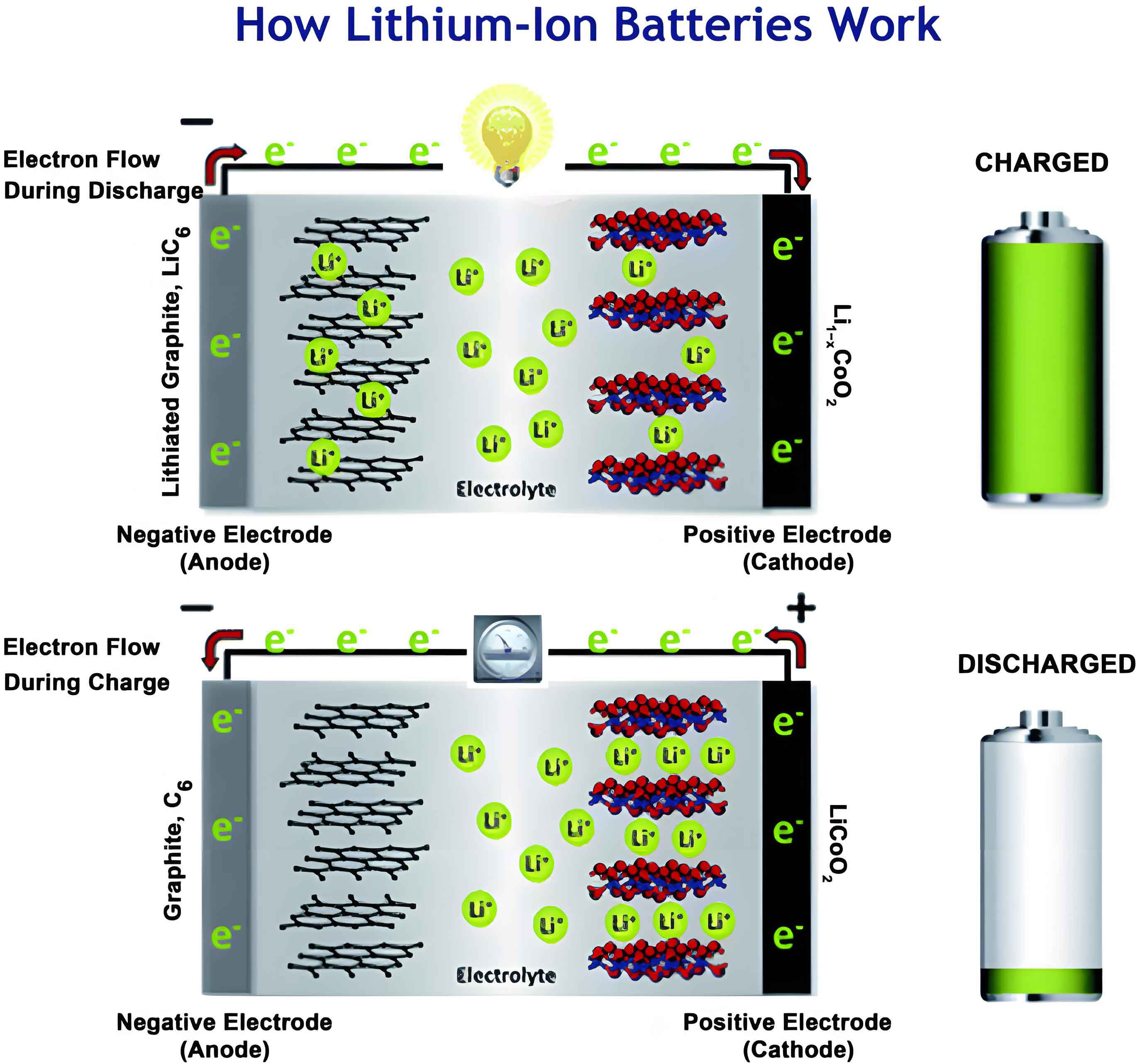
The ubiquitous demand for portable electronics, electric vehicles (EVs), and grid-scale energy storage systems has driven relentless innovation in electrochemical energy storage. Among various technologies, the lithium-ion battery reigns supreme, offering an unmatched combination of high energy density, long cycle life, and declining cost. At the heart of its operation lies the electrolyte, a critical component facilitating the shuttling of lithium ions between the cathode and anode. While liquid electrolytes have been the industry standard for decades, concerns over leakage, flammability, and dendrite-related short circuits have accelerated the pursuit of safer, more robust alternatives. Polymer Electrolyte Membranes (PEMs) have emerged as a transformative class of materials poised to address these challenges, particularly in the development of advanced solid-state and quasi-solid-state lithium-ion battery configurations.
This article delves into the fundamental principles, current applications, persistent challenges, and cutting-edge improvement strategies for PEMs, underscoring their pivotal role in shaping the future of lithium-ion battery technology.
1. Fundamental Principles and Evolution of Polymer Electrolyte Membranes
A Polymer Electrolyte Membrane (PEM) is a solid or gel-like ion-conducting material where a polymer matrix serves as the host for a dissolved lithium salt (e.g., LiTFSI, LiPF6). Its primary functions are to physically separate the electrodes to prevent electrical short circuits while providing a dedicated pathway for Li+ ion transport during charge and discharge cycles.
1.1 Ion Conduction Mechanism
Ion transport in PEMs is fundamentally linked to the local segmental motion of the polymer chains. Unlike in liquid electrolytes where ions move freely, in solid polymer electrolytes (SPEs), Li+ ions “hop” between coordinated sites created by the polar groups (like ether oxygens in PEO) on the polymer backbone. This process is described by the coupled motion of ions and polymer segments. The ionic conductivity ($\sigma$) is a critical parameter and is thermally activated, often following the Vogel-Tammann-Fulcher (VTF) equation, which relates conductivity to the free volume and chain mobility:
$$
\sigma = \frac{A}{\sqrt{T}} \exp\left[-\frac{B}{k_B(T – T_0)}\right]
$$
where $A$ is a pre-exponential factor, $B$ is an activation energy term, $k_B$ is Boltzmann’s constant, $T$ is the absolute temperature, and $T_0$ is the ideal glass transition temperature. This highlights that conductivity is severely hampered below the polymer’s glass transition temperature ($T_g$), where chain mobility is frozen.
1.2 Key Characteristics and Historical Development
The journey of PEMs began with dry Solid Polymer Electrolytes (SPEs), typified by complexes of poly(ethylene oxide) (PEO) with lithium salts. While offering excellent safety and processability, their room-temperature ionic conductivity was impractically low ($\sim 10^{-8}$ to $10^{-5}$ S cm-1), confined by high crystallinity of PEO at low temperatures.
A paradigm shift occurred with the introduction of Gel Polymer Electrolytes (GPEs). By incorporating significant amounts of liquid plasticizers (e.g., ethylene carbonate (EC), propylene carbonate (PC)) into a polymer matrix (like PVDF, PAN, or PMMA), GPEs achieve a quasi-solid state. The liquid component provides high ionic conductivity (approaching $10^{-3}$ S cm-1 at room temperature), while the polymer skeleton offers mechanical integrity and reduces leakage risk compared to purely liquid systems.
The latest frontier is the Single-Ion Conducting Polymer Electrolyte (SIPE), where the anion is covalently tethered to the polymer chain. This design forces the Li+ cation to be the sole charge carrier, eliminating detrimental concentration polarization and significantly enhancing lithium-ion transference number ($t_{Li^+}$ → 1), a key metric for high-power performance.
| Type | Composition | Ionic Conductivity (25°C, S cm-1) | tLi+ | Mechanical Strength | Key Advantage | Key Challenge |
|---|---|---|---|---|---|---|
| Solid Polymer Electrolyte (SPE) | PEO-LiX | 10-8 – 10-5 | 0.2-0.3 | High | Excellent safety, processability | Low RT conductivity |
| Gel Polymer Electrolyte (GPE) | Polymer/Liquid Electrolyte | 10-4 – 10-3 | 0.2-0.5 | Moderate | High RT conductivity | Volatility/leakage of plasticizer |
| Single-Ion Conductor (SIPE) | Anion-tethered polymer + Li+ | 10-6 – 10-4 | >0.9 | Moderate to High | Eliminates polarization, high tLi+ | Synthesis complexity, moderate σ |
2. Current Applications and Inherent Challenges
2.1 In Lithium-Metal Batteries (LMBs)
The revival of lithium metal as the ultimate anode material promises a dramatic leap in energy density for the next-generation lithium-ion battery. PEMs are considered indispensable for realizing practical LMBs. A robust PEM can act as a physical barrier to suppress the penetration of lithium dendrites, which cause short circuits and safety hazards in liquid electrolytes.
Current Status & Problems:
- Unstable Interface & Dendrite Growth: Despite their solid nature, many PEMs have limited modulus and cannot completely prevent dendrite nucleation and propagation under high current densities. Repeated stripping/plating of Li causes volume changes and interfacial degradation.
- Insufficient Ionic Conductivity & High Interfacial Resistance: The overall cell resistance ($R_{cell}$) is a sum of the bulk electrolyte resistance ($R_{bulk}$) and the interfacial resistances at the anode and cathode ($R_{int}$). For PEMs in LMBs:
$$ R_{cell} = R_{bulk}(PEM) + R_{int}(Li/PEM) + R_{int}(PEM/Cathode) $$
Both $R_{bulk}$ (due to low σ) and $R_{int}$ (due to poor contact and parasitic reactions) are often too high, leading to poor rate capability and cell polarization. - Electrochemical Stability Window: The polymer matrix must be stable against reduction by Li metal (low potential) and oxidation by high-voltage cathodes (e.g., NMC811, >4.3 V vs. Li/Li+). Many conventional polymers like PEO have an upper limit around 4.0 V, limiting cathode choice.
2.2 In All-Solid-State Lithium-Ion Batteries (ASSLBs)
ASSLBs represent the pinnacle of safe battery design, replacing all liquid components with solid ones. PEM-based ASSLBs leverage the flexibility and ease of large-scale processing of polymers.
Current Status & Problems:
- Solid-Solid Interface Contact: Maintaining intimate, low-resistance contact between rigid solid particles (cathode active material) and a softer PEM during cycling is extremely challenging. Contact loss due to volume changes of active materials leads to increased impedance and rapid capacity fade.
- Limited Cycle Life: The combined effects of interfacial degradation, dendrite growth (even in solids), and mechanical fatigue of the PEM limit the long-term cyclability of polymer-based ASSLB cells compared to theoretical expectations.
- Performance Trade-offs: There is a classic trade-off between ionic conductivity and mechanical strength. Softer, more conductive polymers may not block dendrites, while tougher polymers may have poor ionic transport. This is often quantified by the shear modulus ($G$); a modulus greater than that of lithium (~6 GPa) is theorized to suppress dendrites, but such high moduli often correlate with low conductivity.
3. Strategic Improvements and Advanced Design of PEMs
Addressing the aforementioned challenges requires a multi-faceted approach spanning molecular design, composite engineering, and innovative processing.
3.1 Exploration and Synthesis of Novel Polymer Matrices
Moving beyond PEO is crucial. Research focuses on:
- Block Copolymers: Designing polymers with distinct blocks for ion transport (e.g., PEO segments) and mechanical support (e.g., polystyrene, PS). Microphase separation creates self-assembled nanochannels for efficient ion conduction within a robust matrix.
- Cross-linked Network Polymers: In-situ UV or thermal polymerization of monomers/oligomers creates a three-dimensional network. This enhances mechanical strength, dimensional stability, and often the amorphous character for better ion transport. The cross-link density ($\nu$) controls the balance:
$$ G \propto \nu kT $$
where a higher $\nu$ increases modulus $G$ but may restrict chain mobility, affecting σ. - Single-Ion Conducting Polymers (SIPEs): Advanced synthesis attaches anions to the polymer via stable covalent bonds (e.g., sulfonimide, borate, carboxylate groups). This design directly tackles the low transference number issue, as per the following equation for the Li+ transference number:
$$ t_{Li^+} = \frac{\sigma_{Li^+}}{\sigma_{Li^+} + \sigma_{Anion^-}} $$
By making $\sigma_{Anion^-} \approx 0$, $t_{Li^+}$ approaches unity.
| Strategy Category | Specific Approach | Targeted Property Enhancement | Potential Drawback |
|---|---|---|---|
| Novel Polymer Design | Block Copolymers, Cross-linked Networks, SIPEs | Mechanical strength, Ionic conductivity (via nanochannels), High tLi+ | Complex synthesis, Cost |
| Composite Engineering | Incorporation of Ceramic Fillers (passive/active) | Enhanced σ, Improved modulus, Better interfacial stability | Agglomeration, Interfacial resistance |
| Interfacial Engineering | In-situ Polymerization, Artificial SEI layers, Surface Coating | Reduced Rint, Stabilized Li/electrode interface | Added processing steps |
| Processing Innovation | Electrospinning, 3D Printing, Solvent-Free Processing | Controlled porosity, Integrated structures, Scalability | Process parameter sensitivity |
3.2 Composite Electrolyte Engineering
The most promising path forward is creating Composite Polymer Electrolytes (CPEs) by dispersing inorganic fillers into the polymer matrix.
- Passive Fillers (e.g., Al2O3, SiO2, TiO2): These particles reduce polymer crystallinity, increasing amorphous regions for ion transport. They also improve mechanical strength and thermal stability.
- Active Fillers (e.g., LLZO, LATP, LLTO): These are fast ion-conducting ceramics. They provide additional Li+ transport pathways through the ceramic phase and across the ceramic-polymer interface. The effective conductivity of a composite can be modeled by effective medium theory. Furthermore, certain active fillers (like LLZO) are thermodynamically stable against Li metal, helping to stabilize the interface.
The percolation threshold is critical; a connected network of ceramic particles can dramatically enhance overall conductivity. The properties of a CPE depend on filler content ($\phi$), size, and surface chemistry.
3.3 Interfacial Engineering and In-situ Formation
Engineering the electrode/PEM interface is as important as improving the bulk PEM.
- In-situ Polymerization: Liquid precursor monomers are injected into a pre-assembled cell and then polymerized. This creates a perfect, conformal contact between the PEM and the porous electrodes, minimizing $R_{int}$.
- Artificial Interphases: Applying a thin, protective coating (e.g., Li3N, LiPON, Al2O3 via ALD) on the Li metal or cathode particles before PEM assembly can prevent side reactions and promote uniform Li+ flux.
3.4 Advanced Processing and Structural Design
Innovative fabrication methods can tailor PEM microstructure:
- Electrospinning: Creates non-woven mats of polymer nanofibers with high porosity and surface area, which can be soaked with electrolyte to form high-performance GPEs with excellent electrode wettability.
- 3D Scaffold Design: Creating a porous, rigid ceramic scaffold (e.g., LLZO) and infiltrating it with polymer electrolyte. The scaffold suppresses dendrites mechanically, while the polymer ensures good interfacial contact, decoupling the ion conduction and mechanical support functions.
| PEM Property | Governing Equation/Principle | Impact on Battery Performance | Desired Range/Value |
|---|---|---|---|
| Ionic Conductivity (σ) | $\sigma = n q \mu$ (n: carrier concentration, q: charge, μ: mobility) | Rate capability, Power density, Operating temperature range | > 10-4 S cm-1 @ 25°C |
| Li+ Transference Number (tLi+) | $t_{Li^+} = \frac{I_{ss}(\Delta V – I_0 R_0)}{I_0(\Delta V – I_{ss} R_{ss})}$ (from Bruce-Vincent method) | Reduces concentration polarization, Enables stable high-current cycling | → 1 (Ideal) |
| Electrochemical Stability Window (ESW) | Determined by HOMO/LUMO levels of polymer vs. electrode potentials | Compatibility with high-voltage cathodes & Li metal anode | > 4.5 V (vs. Li/Li+) |
| Shear/Young’s Modulus (G/E) | Dendrite suppression theory: GPEM > 2GLi (~6 GPa) | Safety: resistance to Li dendrite penetration | High enough to mechanically block dendrites |
| Interfacial Resistance (Rint) | $R_{int} = \frac{RT}{F} \cdot \frac{1}{j_0}$ (j0: exchange current density) | Overall cell impedance, Voltage hysteresis, Cycle life | Minimized, stable over cycles |
4. Conclusion and Future Perspectives
Polymer Electrolyte Membranes represent a cornerstone technology for advancing lithium-ion battery safety, energy density, and form factor. While significant hurdles remain—particularly in achieving simultaneously high ionic conductivity, robust mechanical strength, and ultra-stable interfaces—the development trajectory is clear. The future lies in sophisticated composite designs that synergize the best attributes of polymers and ceramics, coupled with smart interfacial engineering and innovative processing techniques. The ongoing research into block copolymers, single-ion conductors, and in-situ fabrication methods is steadily bridging the gap between laboratory promise and commercial reality. As these improvements mature, PEMs are poised to unlock the full potential of lithium-metal anodes and solid-state architectures, ultimately powering a new generation of safer, longer-lasting, and more powerful energy storage solutions for our electrified world.