
In recent years, the rapid adoption of electrochemical energy storage systems has highlighted the critical role of lithium-ion batteries in grid stabilization, renewable integration, and backup power applications. As a researcher and practitioner in this field, I have observed that the safety of lithium-ion batteries is paramount, given the potential hazards such as leakage, electric shock, thermal runaway, fire, and explosion. These risks are exacerbated in large-scale energy storage setups, where battery capacities can exceed hundreds of kilowatt-hours, leading to catastrophic failures if not properly managed. The development of robust safety standards is essential to mitigate these dangers and ensure the protection of life and property. In this article, I will analyze and compare three key national standards in China—GB 40165—2021, GB 44240—2024, and GB/T 36276—2023—that govern the safety of lithium-ion batteries for energy storage. My focus will be on their scope, terminology, testing requirements, and inconsistencies, with an emphasis on how these standards impact the design, production, and certification of lithium-ion battery systems. I will incorporate tables and formulas to summarize key aspects, and I aim to provide insights that can guide industry stakeholders toward safer practices. Throughout this discussion, the term “lithium-ion battery” will be frequently used to underscore its centrality in energy storage safety.
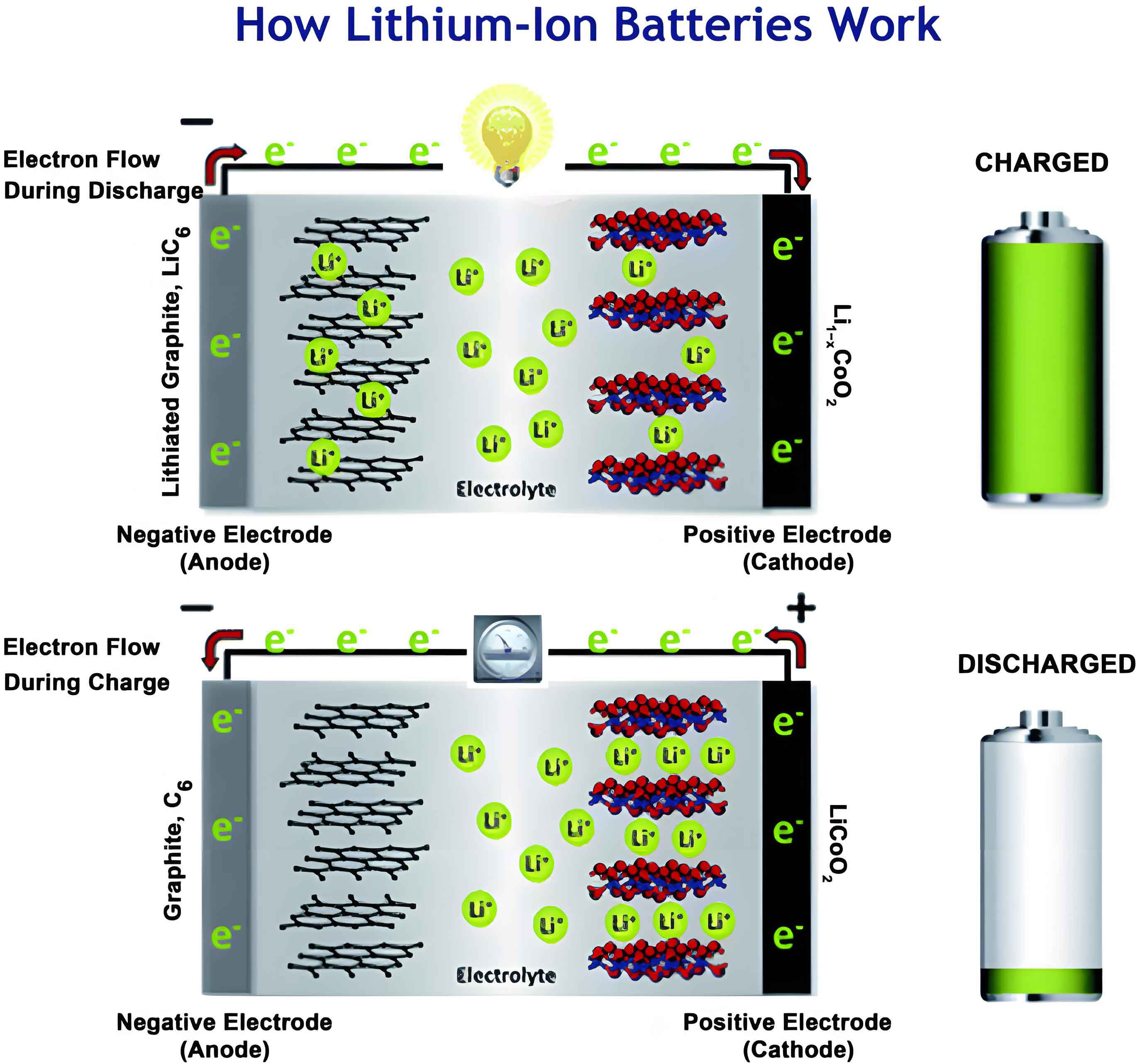
The importance of safety standards for lithium-ion batteries cannot be overstated. In energy storage applications, lithium-ion batteries are subjected to various stress conditions, including high currents, voltage fluctuations, and environmental extremes. Without stringent safety protocols, these factors can trigger internal short circuits, overheating, or chemical degradation, leading to thermal runaway—a self-sustaining reaction that can cause fires or explosions. Historically, the lithium-ion battery industry has faced challenges with safety incidents, often due to lagging regulatory frameworks. For instance, early adoption in consumer electronics saw a surge in fire accidents, prompting the need for强制性 standards that mandate safety features and testing. In the context of energy storage, where systems are deployed in fixed installations like power plants, telecom bases, or residential settings, the consequences of failure are more severe, affecting not only individual devices but entire infrastructures. Thus, the three standards under discussion represent critical efforts to enforce safety in the design, manufacturing, and operation of lithium-ion battery systems. As I delve into their specifics, I will highlight how each standard addresses these risks, and where gaps or overlaps exist that could complicate compliance for manufacturers.
First, let me provide an overview of the three standards. GB 40165—2021, titled “Safety Technical Specification for Lithium-ion Batteries and Battery Packs for Fixed Electronic Equipment,” is a强制性 standard that applies to lithium-ion batteries used in fixed electronic devices such as IT equipment, audio-visual systems, communication devices, and small-scale uninterruptible power supplies (UPS) or emergency power systems (EPS). Its scope is limited to battery packs with rated energy up to 100 kWh, making it suitable for smaller applications. In contrast, GB 44240—2024, “Safety Requirements for Lithium Batteries and Battery Packs for Electrical Energy Storage Systems,” is another强制性 standard that targets larger systems, typically with rated energy above 100 kWh, including grid-scale energy storage, large UPS, photovoltaic systems, and residential储能 systems. It was released in July 2024 and will take effect in August 2025, aiming to fill the gap in mandatory safety requirements for high-capacity lithium-ion battery installations. Meanwhile, GB/T 36276—2023, “Lithium-ion Batteries for Electric Energy Storage,” is a推荐性 standard focused on technical requirements and test methods for lithium-ion batteries in power storage applications. It covers a broader range, including all types of储能 lithium-ion batteries, and is often referenced in the电力 sector. These standards are developed by different bodies—GB 40165—2021 and GB 44240—2024 by the Ministry of Industry and Information Technology, and GB/T 36276—2023 by the China Electricity Council—leading to variations in approach and emphasis. As I proceed, I will compare their key elements in detail, using tables to illustrate differences and formulas to explain technical parameters.
To begin with, the scope of application varies significantly among the standards, which affects which lithium-ion battery systems must comply. Below is a table summarizing the scope differences:
| Standard | Scope of Application |
|---|---|
| GB 40165—2021 | Fixed electronic equipment with lithium-ion batteries and battery packs rated energy ≤ 100 kWh; includes IT devices, communication systems, small UPS, and EPS. |
| GB/T 36276—2023 | All lithium-ion batteries for electric energy storage, encompassing a wide range of applications from grid storage to backup power. |
| GB 44240—2024 | Lithium batteries and battery packs for electrical energy storage systems with rated energy > 100 kWh; covers large-scale storage, UPS,光伏 systems, and home储能. |
This divergence in scope means that manufacturers of lithium-ion battery systems must carefully assess which standard applies based on the intended use and capacity. For example, a residential储能 system with a 50 kWh battery pack might fall under GB 40165—2021, while a grid-scale system with 1 MWh would be governed by GB 44240—2024. This can create confusion in the supply chain, especially for products that straddle these boundaries. Moreover, the terminology used in these standards differs, which I will explore next. Terminology is crucial for clear communication and compliance, as inconsistent definitions can lead to misunderstandings during testing or certification. The table below compares key terms related to lithium-ion battery components:
| Component | GB/T 36276—2023 Term | GB 40165—2021 Term | GB 44240—2024 Term |
|---|---|---|---|
| Basic Unit | Battery Cell | Battery | Lithium Battery |
| Module | Battery Module | Module | Module |
| Pack | — | Battery Pack | Battery Pack |
| System | Battery Cluster | Battery Group System | Battery Group System |
As shown, GB/T 36276—2023 uses “battery cell” and “battery cluster,” while GB 40165—2021 refers to “battery” and “battery group system.” GB 44240—2024 employs “lithium battery” and “battery group system.” These discrepancies can complicate industry dialogues, especially when integrating components from different suppliers. In my experience, such variations often necessitate additional documentation to align terms during project planning. To quantify some of these concepts, let’s consider a formula for the rated energy of a lithium-ion battery system, which is central to scope determination. The energy (E) in watt-hours can be expressed as: $$ E = V_{nom} \times C_{nom} $$ where \( V_{nom} \) is the nominal voltage in volts and \( C_{nom} \) is the nominal capacity in ampere-hours. For a lithium-ion battery pack with multiple cells in series and parallel, the total energy becomes: $$ E_{total} = N_s \times N_p \times V_{cell} \times C_{cell} $$ Here, \( N_s \) is the number of cells in series, \( N_p \) is the number in parallel, \( V_{cell} \) is the cell voltage, and \( C_{cell} \) is the cell capacity. This formula helps in assessing whether a system exceeds the 100 kWh threshold mentioned in the standards, guiding compliance decisions.
Moving to safety testing requirements, the standards impose various tests on lithium-ion battery cells, modules, and systems to ensure they can withstand electrical, mechanical, thermal, and environmental stresses. I will break down these tests into categories, starting with cell-level safety. The table below compares the electrical safety tests for lithium-ion battery cells across the three standards:
| Test Type | GB/T 36276—2023 Method | GB 40165—2021 Method | GB 44240—2024 Method |
|---|---|---|---|
| Overcharge | Charge at constant current to 1.5× charging cutoff voltage or 1 hour; no fire/explosion. | Charge with max current to 1.2× upper voltage (or 5 V) for 1 hour or until temperature drops 50%; no fire/explosion. | Charge with max current to 1.5× upper voltage, then constant voltage for 1 hour or total 1.5 hours; no fire/explosion. |
| Over-discharge | Discharge to 0 V or 1 hour; no leakage/smoke/fire/explosion. | Reverse charge at 1C to negative upper voltage for 90 minutes; no fire/explosion. | Reverse charge at 1× test current to negative upper voltage for 90 minutes; no fire/explosion. |
| Short Circuit | External short with 1 mΩ for 10 minutes; no fire/explosion. | High-temperature short at (55±5)°C with ≤30 mΩ for 24 hours or temperature drop 50%; no fire/explosion. | High-temperature short at (57±4)°C with ≤5 mΩ for 6 hours or temperature drop 80%; no fire/explosion. |
From this, we see that GB 44240—2024 has more stringent conditions for short-circuit testing, such as a higher temperature and lower external resistance, reflecting a focus on worst-case scenarios for large lithium-ion battery systems. Additionally, GB 40165—2021 and GB 44240—2024 include a “forced discharge” test (similar to over-discharge), while GB/T 36276—2023 labels it as “over-discharge.” The mathematical representation of the short-circuit current can be derived from Ohm’s law: $$ I_{sc} = \frac{V_{oc}}{R_{ext}} $$ where \( I_{sc} \) is the short-circuit current, \( V_{oc} \) is the open-circuit voltage of the lithium-ion battery, and \( R_{ext} \) is the external resistance. For GB 44240—2024, with \( R_{ext} \leq 5 \, \text{mΩ} \), the current can be extremely high, posing a severe test on the battery’s internal protection mechanisms. This underscores the importance of robust design in lithium-ion battery packs to prevent thermal runaway under fault conditions.
Next, mechanical safety tests for lithium-ion battery cells are critical to simulate physical abuse during handling or accidents. The table below summarizes these tests:
| Test Type | GB/T 36276—2023 Method | GB 40165—2021 Method | GB 44240—2024 Method |
|---|---|---|---|
| Crush | Apply 50 kN force for 10 minutes; no leakage/smoke/fire/explosion. | For non-cylindrical cells, crush to 13 kN or voltage drop ≥100 mV; no fire/explosion. | For cylindrical cells, crush with 75 mm cylinder at 50 kN, speed 0.1 mm/s; no fire/explosion. |
| Drop | Drop from 1.5 m height once; no smoke/fire/explosion. | Drop based on mass (e.g., 20 kg from 1 m); no fire/explosion. | Drop based on mass (e.g., 50 kg from specified height); no fire/explosion after 1 hour. |
| Shallow Puncture | — | — | Puncture with 5 mm needle at 0.1 mm/s to 10 mm depth; no fire/explosion for 1 hour. |
Notably, GB 44240—2024 introduces a shallow puncture test to simulate internal short circuits from conductive debris, a test that was removed from automotive lithium-ion battery standards like GB 38031—2020. This highlights the evolving nature of safety requirements for lithium-ion batteries in energy storage. The force during crushing can be modeled using the formula for stress: $$ \sigma = \frac{F}{A} $$ where \( \sigma \) is the stress, \( F \) is the applied force (e.g., 50 kN), and \( A \) is the contact area. For a cylindrical lithium-ion battery, this stress distribution affects the likelihood of casing rupture. Environmental safety tests, such as temperature cycling and low pressure, are also vital. For temperature cycling, GB 40165—2021 and GB 44240—2024 specify a cycle from -40°C to 72°C, which can be represented as a function of time: $$ T(t) = T_0 + \Delta T \cdot \sin(2\pi f t) $$ where \( T_0 \) is the mean temperature, \( \Delta T \) is the amplitude, and \( f \) is the frequency. However, in practice, the standards use step changes, emphasizing the thermal stability of lithium-ion battery materials.
At the module and system level, the standards impose additional tests to ensure integrated safety. GB/T 36276—2023 provides separate requirements for battery modules and clusters, while GB 40165—2021 and GB 44240—2024 combine tests for battery packs and systems. The table below compares electrical safety tests for systems:
| Test Type | GB/T 36276—2023 (Module/Cluster) | GB 40165—2021 (System) | GB 44240—2024 (System) |
|---|---|---|---|
| Insulation Resistance | ≥1000 Ω/V; tested at high altitude. | — | ≥5 MΩ at 500 V DC for 60 seconds. |
| Overvoltage Charge | Charge to 1.5× cutoff voltage; no fire/explosion. | Charge to 10% above upper voltage; BMS must act. | Charge to 1.1× upper voltage; BMS must terminate. |
| Overcurrent Charge | — | Charge at 120% max current; BMS must limit current. | Charge at 120% max current; BMS must limit or cut off. |
GB/T 36276—2023 uniquely includes high-altitude insulation and withstand voltage tests, which are crucial for lithium-ion battery installations in elevated regions. The insulation resistance requirement can be expressed as: $$ R_{ins} \geq k \cdot V_{nom} $$ where \( k \) is a constant (1000 Ω/V for GB/T 36276—2023). For a lithium-ion battery system with \( V_{nom} = 400 \, \text{V} \), this implies \( R_{ins} \geq 0.4 \, \text{MΩ} \), whereas GB 44240—2024 demands 5 MΩ regardless of voltage, indicating a stricter baseline. Thermal safety tests, such as thermal runaway propagation, are also covered. GB/T 36276—2023 and GB 44240—2024 require that a single cell’s thermal runaway does not spread to others, which can be modeled using heat transfer equations: $$ \frac{dQ}{dt} = h A (T_{cell} – T_{env}) $$ where \( \frac{dQ}{dt} \) is the heat flow rate, \( h \) is the heat transfer coefficient, \( A \) is the surface area, and \( T_{cell} \) and \( T_{env} \) are the cell and environment temperatures. Ensuring that this heat dissipates without igniting adjacent cells is critical for lithium-ion battery pack safety.
Another key aspect is the sample requirements for testing. The standards specify the number of samples, aging conditions, and test sequences, which impact certification costs and timelines. For instance, GB/T 36276—2023 requires 33 cell samples and 11 module samples, with a testing周期 of about 200 working days for cells—a significant investment for manufacturers. In contrast, GB 44240—2024 needs 27 cells and 6 systems, with samples produced within 6 months of testing. This disparity can affect how quickly new lithium-ion battery technologies reach the market. The cycle life testing is particularly demanding; with modern lithium-ion batteries offering over 10,000 cycles, traditional tests of 1,000 cycles may not capture long-term degradation. Accelerated testing models, such as using higher currents or temperatures, can be applied, represented by the Arrhenius equation for aging: $$ k = A e^{-E_a / (RT)} $$ where \( k \) is the degradation rate, \( A \) is a pre-exponential factor, \( E_a \) is the activation energy, \( R \) is the gas constant, and \( T \) is the temperature. By increasing \( T \), the test can simulate years of use in a shorter time, though correlation with real-world performance must be validated for lithium-ion batteries.
Having compared the technical details, I now turn to the inconsistencies and overlaps among these standards. One major issue is the duplication of safety requirements between GB 44240—2024 and GB/T 36276—2023. Both cover similar tests for lithium-ion battery cells and systems, such as overcharge, short circuit, and thermal runaway. This redundancy complicates certification for manufacturers, who may need to conduct multiple tests to meet different standards, increasing time and cost. For example, a lithium-ion battery pack for grid storage might need to comply with GB/T 36276—2023 for电力 sector acceptance and GB 44240—2024 for mandatory safety certification, leading to重复 testing. Additionally, the terminology differences, as noted earlier, can cause confusion in documentation and regulatory compliance. From my perspective, this highlights the need for harmonization in the standard landscape. Ideally, safety requirements should be consolidated into a single, comprehensive standard for lithium-ion batteries in energy storage, with clear scopes and referenced test methods. This would streamline the认证 process and reduce barriers to innovation.
Moreover, the evolving nature of lithium-ion battery technology poses challenges for standards. With trends toward larger cells (e.g., 600 Ah以上) and higher energy densities, existing tests may not adequately address new failure modes. For instance, the shallow puncture test in GB 44240—2024 is a step forward, but other aspects like fast-charging safety or recycling hazards are less covered. I recommend that standard-setting bodies engage in continuous review, incorporating feedback from industry accidents and research. Public analysis of储能 incidents, as encouraged by regulators, can provide data to refine test parameters. For example, if a fire occurs due to a specific voltage spike pattern, standards could add corresponding surge tests for lithium-ion battery management systems. Mathematical modeling of fault scenarios, such as using finite element analysis for thermal propagation, can also inform updates. The formula for thermal runaway initiation might involve critical temperature thresholds: $$ T_{crit} = T_0 + \int \alpha I^2 R \, dt $$ where \( \alpha \) is a material constant, \( I \) is the current, and \( R \) is the internal resistance. By setting \( T_{crit} \) based on empirical data, standards can mandate safer designs for lithium-ion batteries.
In terms of practical recommendations, I suggest that the industry adopt a phased approach to compliance. For new lithium-ion battery products, manufacturers should first identify the applicable standards based on capacity and application. Given that GB 44240—2024 will become强制性 in 2025, it should take precedence for systems over 100 kWh. However, for电力 projects, GB/T 36276—2023 may still be required by utilities, so dual certification might be necessary until harmonization occurs. To ease this burden, testing agencies could develop unified protocols that satisfy multiple standards simultaneously. For instance, a single overcharge test with the strictest parameters (e.g., 1.5× voltage from GB 44240—2024) could cover both GB 44240—2024 and GB/T 36276—2023 for lithium-ion battery cells. Additionally, I advocate for increased research into safety technologies, such as solid-state electrolytes or advanced battery management systems, which can inherently reduce risks for lithium-ion batteries. These innovations should be reflected in future standard revisions, perhaps through performance-based requirements rather than prescriptive tests.
Looking ahead, the role of强制性 standards like GB 44240—2024 cannot be underestimated. They provide a baseline for safety, enabling regulatory oversight and consumer confidence. In my view, the introduction of GB 44240—2024 will drive the lithium-ion battery industry toward higher safety benchmarks, similar to how automotive standards improved EV battery safety. However, to maximize effectiveness, complementary measures are needed, such as mandatory product备案, random market inspections, and certification schemes that include factory audits. These can ensure that lithium-ion battery systems not only pass lab tests but also maintain safety in real-world operation. The formula for overall system safety could be conceptualized as: $$ S_{total} = \prod_{i=1}^{n} (1 – p_i) $$ where \( S_{total} \) is the probability of safe operation, and \( p_i \) are the failure probabilities of individual components (e.g., cells, BMS, cooling). Standards aim to minimize \( p_i \) through rigorous testing, but ongoing monitoring is essential for lithium-ion battery deployments.
In conclusion, the analysis of GB 40165—2021, GB 44240—2024, and GB/T 36276—2023 reveals a complex landscape for lithium-ion battery safety in energy storage. While these standards share common goals—preventing hazards like fire and explosion—they differ in scope, terminology, and test specifics, creating challenges for compliance. Through tables and formulas, I have highlighted key comparisons, such as the stricter short-circuit test in GB 44240—2024 and the unique high-altitude requirements in GB/T 36276—2023. The overlap between GB 44240—2024 and GB/T 36276—2023 is particularly notable, suggesting a need for consolidation to simplify certification for lithium-ion battery products. As the industry advances with larger capacities and longer lifespans, standards must evolve to address emerging risks. I recommend that stakeholders collaborate on harmonizing requirements, investing in safety research, and implementing robust certification processes. Ultimately, the safe deployment of lithium-ion batteries in energy storage hinges on these standards, and their continuous improvement will be vital for sustainable growth. By prioritizing safety, we can harness the full potential of lithium-ion battery technology while protecting people and property from harm.