
The quest for sustainable, low-cost, and high-performance photovoltaic technologies has driven extensive research into thin film solar panels. Among various candidates, Cu2ZnSn(S,Se)4 (CZTSSe) has emerged as a highly promising absorber material. It inherits favorable optoelectronic properties from its predecessor, Cu(In,Ga)Se2 (CIGS)—such as a high absorption coefficient (>104 cm-1), tunable bandgap (~1.0–1.5 eV), and good stability—while being composed of earth-abundant and environmentally benign elements. This combination makes CZTSSe-based thin film solar panels a strong contender for next-generation photovoltaics with potential applications in flexible electronics and building-integrated systems.
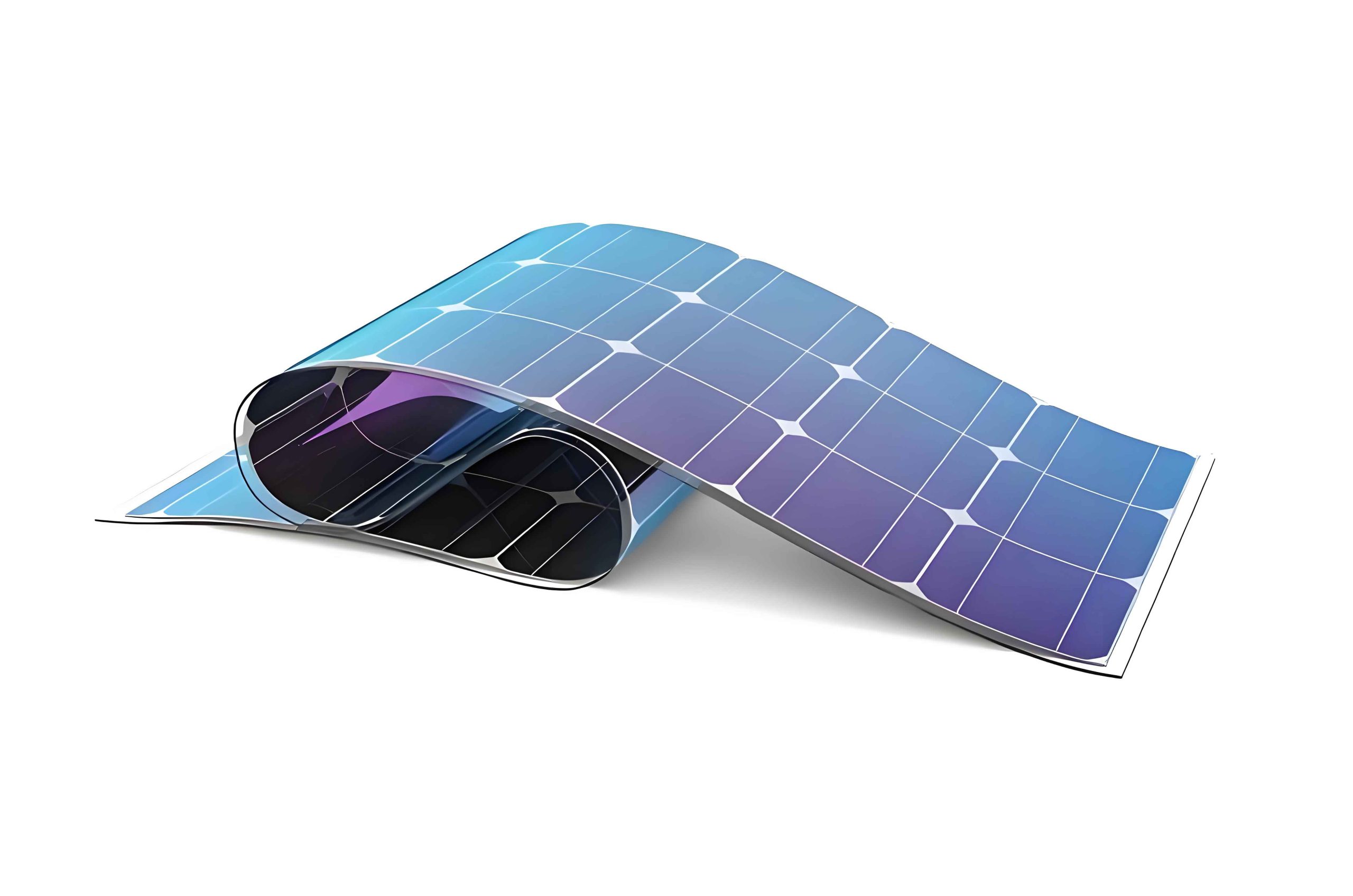
Despite these advantages, the certified power conversion efficiency (PCE) of CZTSSe thin film solar panels has plateaued at 12.6%, significantly lower than the >23% efficiency of CIGS and the theoretical Shockley-Queisser limit of ~33% for a single-junction cell. This performance gap is primarily attributed to a large open-circuit voltage (VOC) deficit, defined as the difference between the bandgap energy (Eg/q) and the achieved VOC. The VOC deficit, often quantified by the parameter χ = VOC / VOCSQ (where VOCSQ is the S-Q limit voltage), remains a central challenge. For state-of-the-art CZTSSe devices, χ is typically around 58%, indicating substantial non-radiative recombination losses. These losses are widely believed to originate from three main sources: (i) band tailing caused by electrostatic potential fluctuations from high concentrations of charged defect pairs, (ii) interfacial recombination due to band misalignment and defects at the p-n junction, and (iii) bulk recombination via deep-level defects.
The intrinsic defect chemistry of CZTSSe is complex due to its multinary nature and a narrow phase stability region. Among the various point defects, the CuZn anti-site defect (a Cu+ ion occupying a Zn2+ site) is particularly problematic. It has a low formation energy due to the similar ionic radii of Cu+ and Zn2+, leading to a high concentration in the material. While CuZn itself is a shallow acceptor and provides the p-type conductivity, its association with other defects, most notably the [CuZn + ZnCu] defect pair and the more detrimental [SnZn + 2CuZn] cluster, is a primary driver for band tailing and deep-level recombination. Therefore, suppressing CuZn formation is considered a critical pathway to improve the VOC in CZTSSe thin film solar panels.
Cation substitution has emerged as a powerful strategy to tailor the properties of kesterite absorbers. While substitutions for Zn2+ (e.g., Cd, Mn) and Sn4+ (e.g., Ge) have been explored, monovalent metal substitution for Cu+ offers a direct route to address the Cu-Zn disorder at its source. This review focuses on the recent progress and fundamental understanding of monovalent metal (specifically Ag+ and Li+) substitution in CZTSSe thin film solar panels. We will discuss the theoretical underpinnings, experimental synthesis methods, and the multifaceted impacts of such substitution on crystal growth, defect physics, band structure, and ultimately, device performance.
Theoretical Foundations of Monovalent Metal Substitution
1. Silver (Ag+) Substitution
The investigation of Ag substitution was initially inspired by its success in (Ag,Cu)(In,Ga)Se2 absorbers for reducing voltage deficits. In the kesterite crystal structure (space group I$\bar{4}$), cations occupy four distinct Wyckoff positions: Cu at 2a and 2c, Zn at 2d, and Sn at 2b. Density Functional Theory (DFT) calculations reveal that full substitution of Cu by Ag to form Ag2ZnSnS(Se)4 (AZTSSe) stabilizes the kesterite phase, with a significantly larger energy difference between the kesterite and stannite/configurational disorder states compared to CZTSSe. This suggests that Ag incorporation can thermodynamically suppress cation disorder.
The larger ionic radius of Ag+ (∼1.15 Å) compared to Cu+ (∼0.77 Å) leads to an expansion of the lattice parameters. For the solid solution (Cu1-xAgx)2ZnSnS4 (CAZTS), the lattice constant a increases nearly linearly with x, while the c/2a ratio decreases, indicating a reduction in tetragonal distortion.
$$a(x) \approx a_{\text{CZTS}} (1-x) + a_{\text{AZTS}} (x) – b x(1-x)$$
where b is a small bowing parameter for the lattice constant.
More importantly, Ag substitution profoundly alters the defect landscape. The formation energy of the AgZn anti-site defect in AZTS is calculated to be much higher than that of CuZn in CZTS. This increase stems from two factors: (i) the higher energy penalty for a larger Ag atom to occupy a smaller Zn site (larger substitution energy), and (ii) the downward shift of the valence band maximum (VBM), which makes the formation of acceptor defects (like AgZn) more difficult. Consequently, the concentrations of critical defect pairs like [CuZn+ZnCu] and [SnZn+2CuZn] are expected to be suppressed in Ag-containing alloys. For partial substitution (low x), defect chemistry remains sensitive to Cu chemical potential. However, for high Ag content, the formation energy of disorder-related defects becomes less dependent on Cu content, offering a more robust route to suppress band tailing.
The bandgap of CAZTSSe alloys widens with increasing Ag content, primarily due to a downward shift of the VBM. The VBM in CZTSSe is composed of hybridized Cu 3d and S/Se 3p states. As Ag 4d states lie deeper than Cu 3d states, their hybridization with the anion p-states lowers the VBM energy. The conduction band minimum (CBM), largely derived from Sn s and anion p states, is less affected. The bandgap bowing can be described by:
$$E_g(x) = (1-x)E_g^{\text{CZTSSe}} + x E_g^{\text{AZTSSe}} – b x(1-x)$$
where the bowing parameter b is typically around 0.24 eV for the selenide system.
2. Lithium (Li+) and Alkali Metal Doping/Substitution
The role of alkali metals, particularly Li and Na, in kesterite thin film solar panels is multifaceted. Often introduced via post-deposition treatments or from soda-lime glass substrates, they are known to act as fluxing agents during crystallization, promoting grain growth and passivating grain boundaries. Among alkalis, Li+ has the highest likelihood of substituting for Cu+ due to its relatively low substitution energy (~0.25–0.27 eV for LiCu), compared to significantly higher energies for NaCu or KCu.
DFT studies on (LixCu1-x)2ZnSnS4 (CLZTS) indicate that Li prefers to occupy the 2a Wyckoff site. With increasing Li content, a structural transition from kesterite to wurtz-kesterite phase is predicted around x = 0.5–0.6. Contrary to Ag substitution, Li substitution primarily raises the CBM (composed of Sn-s, S-p, and Li-s/p states), leading to bandgap widening with a larger bowing parameter (b ~ 0.56 eV). The impact of LiCu substitution on defect formation energies, especially its effect on CuZn suppression, remains an important area for further theoretical investigation.
Experimental Synthesis and Impacts of Partial Substitution
Both vacuum-based (sputtering, co-evaporation) and non-vacuum, solution-based methods (spin-coating, spray pyrolysis) have been employed to fabricate Ag- and Li-substituted CZTSSe absorbers for thin film solar panels. Solution processing, using precursors in solvents like hydrazine, DMSO, or thiol-amine mixtures, has yielded the highest efficiency devices due to its excellent compositional control and scalability.
1. Influence on Crystal Growth and Morphology
Monovalent metal incorporation significantly modifies the crystallization kinetics during the sulfurization/selenization process. Ag acts as a catalyst for grain growth through a liquid-phase assisted mechanism. At relatively low temperatures, Ag can form low-melting-point phases like Ag-S(Se) or a ternary Ag-Cu-Sn liquid phase. This liquid phase enhances mass transport, leading to larger grains and often modifying the typical bilayer structure (large grains on top of a fine-grained layer) towards a more homogeneous, single-layer of large, through-going grains. Furthermore, Ag lowers the optimal crystallization temperature of CZTSSe, which can mitigate the loss of volatile SnS(Se) and suppress secondary phase formation. This attribute is particularly attractive for developing thin film solar panels on flexible, low-temperature substrates like polyimide.
Li, similar to other alkalis, also promotes grain growth, likely through the formation of a Li-Se flux during seienization. However, a significant challenge with Li incorporation from solution is its severe loss during spin-coating and processing, making it difficult to achieve high and controlled substitution levels in the final film.
2. Mitigation of Band Tailing and Defect Reduction
Experimental evidence strongly supports the theoretical prediction that Ag substitution reduces band tailing. Characterizations such as admittance spectroscopy and deep-level transient spectroscopy (DLTS) show a decrease in the signal associated with disorder-related defects with increasing Ag content.
| Fabrication Method | PCE (%) | Substitution (x) | VOC (mV) | Voltage Deficit (χ, %) | Key Finding |
|---|---|---|---|---|---|
| Hydrazine Solution | 12.6 | 0 (Reference) | 513.4 | 57.94 | World record CZTSSe cell |
| Spray Pyrolysis | 10.0 | Ag (x=0.35) | 477 | 52.71 | Lowered crystallization temp, reduced defect density |
| Co-evaporation | 10.2 | Ag (x=0.10) | 422.5 | 52.43 | Suppressed band tailing (PL analysis) |
| Thiol-amine Solution | 11.2 | Ag Gradient | 464 | 56.52 | V-shaped bandgap grading |
| DMSO Solution | 12.2 | Li (x~0.07) | 531 | 58.69 | Improved grain growth, high VOC |
| Solution + Cd co-sub. | 10.8 | Ag (0.05) + Cd | 650 | 56.21 | Lowest VOC deficit for Ag-partial substitution |
Direct analysis of band tails can be performed via the Urbach energy (EU) extracted from external quantum efficiency (EQE) measurements or photoluminescence (PL) peak broadening. Studies consistently report a decrease in EU or a PL peak shift closer to the bandgap with Ag addition, confirming a reduction in potential fluctuations. This directly translates to a lower VOC deficit, as seen in the table above where χ values improve from the baseline 58% towards 63% in the best cases. Li-substituted devices also show promisingly low voltage deficits, indicating a beneficial role, though the exact mechanism requires further elucidation.
3. Bandgap Engineering and Interface Modification
The tunable bandgap of CAZTSSe allows for advanced device designs. The most successful application is the construction of a V-shaped bandgap gradient through an Ag concentration profile (high Ag at back and front, low Ag in the bulk). This architecture, analogous to the Ga gradient in CIGS, creates a back surface field to repel minority carriers (electrons) from the rear contact and increases the effective band bending at the front junction, both of which reduce recombination and boost VOC and JSC. The device with this structure achieved an efficiency of 11.2%, the highest for Ag-substituted kesterite thin film solar panels.
Furthermore, the n-type character of fully substituted AZTSSe opens alternative device architectures. It has been explored as a non-toxic alternative to CdS as a buffer layer. More radically, n-type AZTSe has been used as the absorber itself in a p-i-n structure with MoO3 as the p-layer, demonstrating the potential for entirely new kesterite-based thin film solar panel designs, albeit with modest efficiency so far (~5.2%).
Challenges, Bottlenecks, and Future Perspectives
Despite the clear benefits, monovalent metal substitution faces several challenges that must be addressed to fully realize its potential in high-performance thin film solar panels.
For Ag substitution: A primary concern is the change in doping character. As Ag content increases, the material moves from p-type towards compensated or even weak n-type due to the high formation energy of acceptor defects (AgZn) and the relative stability of donor defects (e.g., ZnAg). This can lead to a non-optimal doping profile in the absorber. Additionally, at high substitution levels, Sn-related deep defects (like SnZn) may become more prominent, limiting further VOC improvement. The trade-off between disorder suppression and doping control necessitates precise optimization of the Ag/(Ag+Cu) ratio, typically keeping it below 0.2–0.3 for standard p-n junction devices.
For Li substitution: The major bottleneck is the effective incorporation of Li into the crystal lattice. The high diffusivity and solubility of Li in the precursor matrix leads to significant loss during processing. Developing new synthesis routes—such as electrochemical deposition or solid-state diffusion from stable sources—that enable precise and reproducible control of Li content is crucial for advancing this field.
Future research directions should focus on:
- Integrated Theoretical-Experimental Studies: Coupling advanced DFT calculations of defect equilibria in alloys with device-level simulations to predict optimal composition and bandgap grading profiles.
- Advanced Characterization: Developing and applying techniques that can simultaneously probe band tails, defect energy levels, and their spatial distribution at the nanoscale to build a conclusive picture of the defect-suppression mechanism.
- Novel Device Architectures: Exploring p-i-n structures where a wider-gap, more intrinsic CAZTSSe or AZTSSe layer is sandwiched between the standard p-type CZTSSe and n-type buffer. This could enhance built-in potential and carrier collection.
- Low-Temperature and Flexible Devices: Leveraging the reduced crystallization temperature offered by Ag substitution to fabricate efficient CZTSSe thin film solar panels on flexible polymer substrates, unlocking new applications.
- Multi-Cation Engineering: Combining monovalent substitution with other strategies, such as Cd or Ge substitution, to simultaneously address Cu-Zn disorder, deep Sn-related defects, and band alignment.
Conclusion
Monovalent metal substitution, particularly with Ag and Li, represents a highly effective and actively researched strategy to overcome the critical VOC deficit in CZTSSe thin film solar panels. By fundamentally altering the defect thermodynamics, these substituents suppress the formation of CuZn anti-site defects and their associated complexes, thereby mitigating band tailing and non-radiative recombination. Ag substitution additionally enables bandgap tuning and grading, facilitates low-temperature growth, and introduces new device concepts. While challenges related to doping control and element incorporation persist, the continued synergy between materials design, advanced synthesis, and in-depth characterization holds the key to pushing the efficiency of this abundant, sustainable thin film photovoltaic technology closer to its theoretical limits. The insights gained from engineering kesterite absorbers also contribute to the broader field of multinary semiconductor design for optoelectronic applications.