
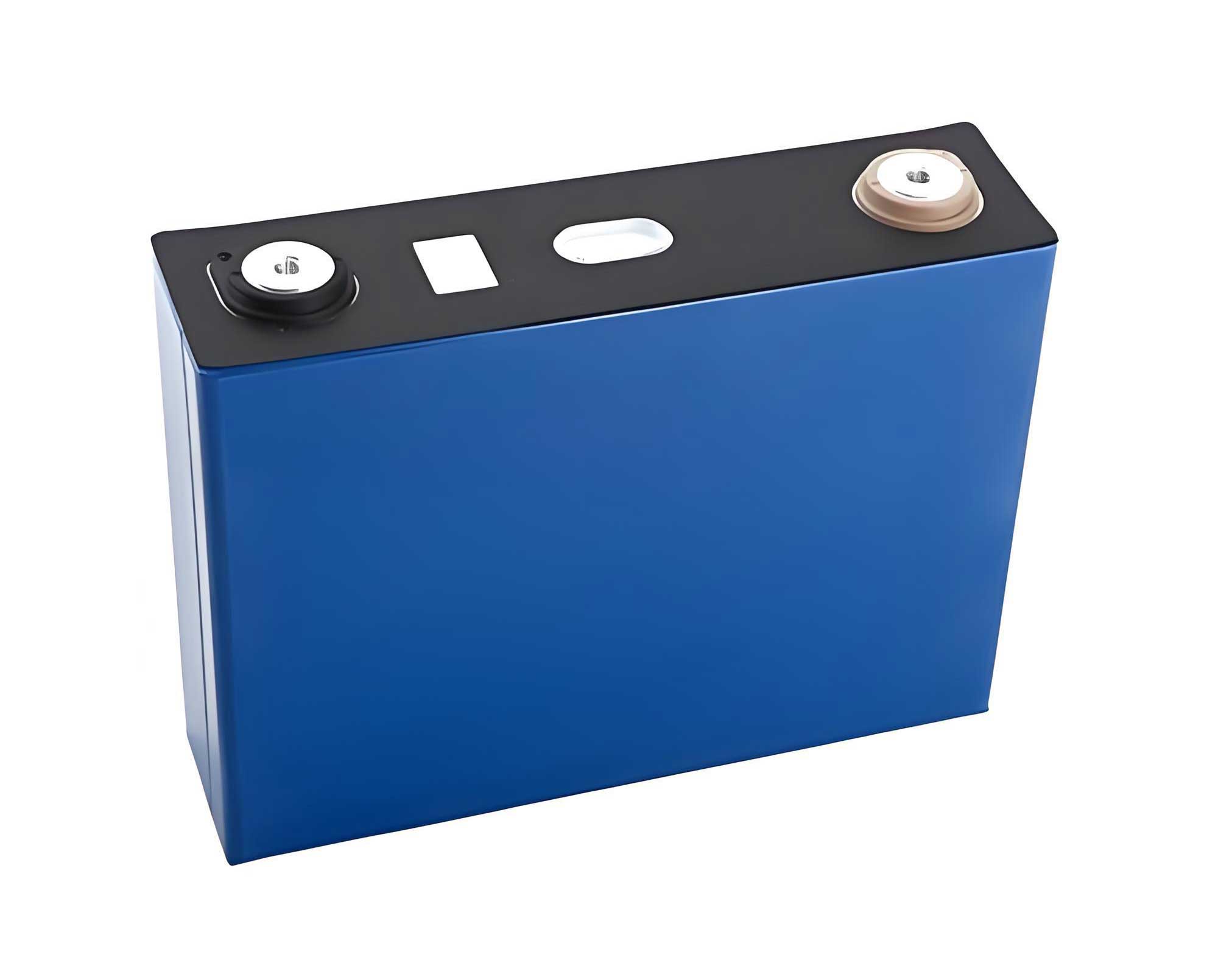
The rapid proliferation of the lithium-ion battery industry, particularly driven by the electric vehicle market, has inevitably led to a growing stream of end-of-life (EOL) batteries. Among these, the lithium iron phosphate (LiFePO4) battery stands out due to its excellent safety, long cycle life, and cost-effectiveness. However, the disposal of spent LiFePO4 batteries poses significant environmental and resource challenges if not managed properly. The recovery of valuable materials from these spent lifepo4 battery units is not only crucial for mitigating environmental pollution from heavy metals and electrolytes but also essential for establishing a sustainable circular economy for critical raw materials like lithium, iron, and copper. While hydrometallurgy and pyrometallurgy are common, they often involve high energy consumption, complex chemical processes, and hazardous by-products. This study explores a cleaner, more direct physical separation method leveraging the unique capabilities of ultrasonic cavitation, offering a promising alternative for the recycling of lifepo4 battery components.
The core challenge in direct material recovery from spent lifepo4 battery electrodes lies in the robust adhesion between the active material coating and the metal foil current collector. This bond is facilitated by polymeric binders—polyvinylidene fluoride (PVDF) for the cathode and typically water-soluble binders like carboxymethyl cellulose (CMC) for the anode. Traditional mechanical methods often lead to incomplete separation or cross-contamination. Ultrasonic cleaning, which utilizes the phenomenon of cavitation, presents a compelling solution. When high-frequency sound waves propagate through a liquid medium, they create alternating high-pressure and low-pressure cycles. During the low-pressure cycle, microscopic vacuum bubbles or cavities form. These cavities implode violently during the subsequent high-pressure cycle, generating localized extreme temperatures and pressures, along with powerful micro-jets and shockwaves. This intense localized energy can effectively attack the interface between the binder and the foil, facilitating the detachment of the active material coating. The effectiveness of this process for lifepo4 battery recycling depends critically on several operational parameters.
The overarching goal of this research is to develop and optimize an efficient, environmentally benign process for separating and recovering high-purity materials from spent lifepo4 battery electrodes. The specific objectives are: 1) To investigate the influence of ultrasonic power and time on the detachment efficiency of anode (graphite) and cathode (LiFePO4) materials using pure water as the medium. 2) To introduce and evaluate low-temperature heat treatment as a pre-treatment step to degrade the PVDF binder in the cathode, thereby enhancing the subsequent ultrasonic separation efficiency. 3) To characterize the separation outcomes using advanced techniques like Scanning Electron Microscopy (SEM), X-ray Diffraction (XRD), and digital image processing to quantify purity and separation efficacy. 4) To define the optimal combined parameters for the heat treatment-ultrasonic process to maximize material recovery rate and purity while minimizing energy consumption and aluminum foil corrosion.
1. Materials, Methodology, and Analytical Framework
1.1 Source Materials and Pre-Treatment
Spent LiFePO4 prismatic cells were sourced as the raw material. The initial, crucial safety step involved complete discharge to eliminate residual electrical energy and prevent short-circuiting or thermal events during disassembly. This was achieved by immersing the cells in a 5 wt.% sodium chloride (NaCl) solution for a minimum of 24 hours. Following discharge, the cells were manually dismantled in a fume hood to remove the plastic casing, and the electrode assembly (jelly roll) was carefully unrolled. This yielded the primary components for study: the aluminum-foil-based cathode sheets coated with LiFePO4/PVDF/carbon black composite, and the copper-foil-based anode sheets coated with graphite/CMC. The plastic separator was also removed. Residual electrolyte on the electrode surfaces was allowed to evaporate in the fume hood. For experimental consistency, the electrode sheets were cut into uniform rectangular strips of defined dimensions (e.g., 5 cm x 3 cm).
1.2 Core Experimental Procedures
The experimental workflow was divided into two main streams: one for the anode and one for the cathode, reflecting their different binder systems.
1.2.1 Ultrasonic Cleaning of Anode: Given the water-soluble nature of the CMC binder in the typical lifepo4 battery anode, a straightforward ultrasonic cleaning process was employed. Deionized water at room temperature (25°C) was used as the cavitation medium. An initial scoping study determined that effective separation occurred at relatively low power. A focused experiment was conducted at 100W ultrasonic power, with the separation process monitored over time until complete visual detachment was achieved.
1.2.2 Cathode Recycling – The Combined Heat Treatment-Ultrasonic Process: The robust PVDF binder necessitated a two-stage approach.
Stage 1: Low-Temperature Heat Treatment. Cathode strips were subjected to thermal pre-treatment in a programmable muffle furnace. The objective was to degrade the PVDF binder’s adhesive strength without fully oxidizing or altering the crystalline structure of the LiFePO4. A factorial experiment was designed, exploring different temperatures (200°C, 250°C, 300°C, 350°C) and durations (30 min, 60 min, 90 min). After treatment, samples were cooled to room temperature in a desiccator.
Stage 2: Ultrasonic Cleaning. Both heat-treated and untreated (for control) cathode strips were cleaned in an ultrasonic bath (40 kHz frequency) with deionized water. A full factorial orthogonal experimental design was implemented to systematically study the effects of the key parameters. The design matrix is shown in Table 1.
| Experiment No. | Heat Treatment Temperature (°C) | Heat Treatment Time (min) | Ultrasonic Power (W) | Ultrasonic Time (min) |
|---|---|---|---|---|
| 1 | 200 | 30 | 350 | 10 |
| 2 | 200 | 60 | 450 | 20 |
| 3 | 200 | 90 | 550 | 30 |
| 4 | 250 | 30 | 450 | 30 |
| 5 | 250 | 60 | 550 | 10 |
| 6 | 250 | 90 | 350 | 20 |
| 7 | 300 | 30 | 550 | 20 |
| 8 | 300 | 60 | 350 | 30 |
| 9 | 300 | 90 | 450 | 10 |
1.3 Characterization and Evaluation Metrics
1.3.1 Separation Efficiency (Detachment Rate): A quantitative metric was developed using digital image analysis. After ultrasonic cleaning and drying, the cathode strip was laid flat and photographed under consistent lighting. Using Python with the OpenCV library, an image processing algorithm was implemented:
- Convert the image to the HSV color space to isolate the exposed, shiny aluminum foil.
- Apply a threshold to create a binary image where white pixels represent exposed aluminum foil and black pixels represent remaining active coating.
- Calculate the detachment rate (DR) using the formula:
$$ DR (\%) = \frac{N_{white}}{N_{white} + N_{black}} \times 100\% $$
where \(N_{white}\) and \(N_{black}\) are the counts of white and black pixels, respectively. This method was validated against a gravimetric method (dissolving aluminum in NaOH and weighing the remaining coating), showing an error margin of less than 0.5%.
1.3.2 Product Purity Analysis: The detached powder collected from the ultrasonic bath was filtered, dried, and analyzed by X-ray Diffraction (XRD) using a Cu-Kα radiation source. The relative phase abundance (i.e., purity) of LiFePO4 in the recovered cathode powder was estimated using the Reference Intensity Ratio (RIR) method based on the integrated intensities of the major peaks. For the anode, the purity of the recovered graphite and the integrity of the copper foil were assessed.
1.3.3 Morphological and Interfacial Analysis: Scanning Electron Microscopy (SEM) was employed to examine the surface morphology of the cathode coating before and after heat treatment, and the condition of the aluminum foil after ultrasonic cleaning. This provided direct visual evidence of binder degradation and interface delamination.
2. Results and Discussion: Decoupling the Electrodes
2.1 Anode Recycling: A Simple and Efficient Process
The recycling of the graphite anode from the spent lifepo4 battery proved to be remarkably straightforward. Upon immersion in the ultrasonic bath at 100W power, the water-soluble CMC binder began to dissolve almost immediately, weakening the adhesive bond. The mechanical effects of cavitation then efficiently stripped the graphite coating from the copper foil. Within 300 seconds (5 minutes), the separation was complete. The resulting copper foil was clean, intact, and free of visible graphite residue. Conversely, the recovered graphite slurry, once dried, formed a fine black powder. XRD analysis confirmed the high purity of both products, with crystallographic signatures corresponding to metallic copper and graphite, each achieving a purity exceeding 99.0%. This simple, rapid, and effective process underscores a key advantage in recycling the anode side of a spent lifepo4 battery.
2.2 Cathode Recycling: The Challenge of PVDF and the Path to Optimization
The cathode presented a significantly greater challenge, defining the core of this research on lifepo4 battery recycling.
2.2.1 Ultrasonic Cleaning Alone: Limitations and Trade-offs
Initial experiments using only ultrasonic cleaning revealed a strong dependence on power and time, but with a critical drawback. At powers below 450W, even with extended processing times up to 60 minutes, the detachment of LiFePO4 from the aluminum foil was minimal (<10%), demonstrating the tenacity of the PVDF bond.
As ultrasonic power increased to 550W and 650W, the detachment rate improved substantially due to more intense cavitation implosions attacking the binder-foil interface. However, a severe secondary effect emerged: the cavitation energy began to erode and pit the exposed aluminum foil itself. This corrosion led to the contamination of the recovered LiFePO4 powder with fine aluminum particles. The data from these trials is summarized in Table 2.
| Ultrasonic Power (W) | Time (min) | Avg. Detachment Rate (DR%) | LiFePO4 Purity in Recovered Powder (%) | Observation |
|---|---|---|---|---|
| 350 | 60 | 20.3 | 95.8 | Minor detachment, no visible Al corrosion. |
| 450 | 60 | 42.0 | 89.6 | Moderate detachment, onset of Al pitting. |
| 550 | 60 | 77.2 | 83.1 | Significant detachment, clear Al corrosion and powdering. |
| 650 | 60 | 76.1 | 76.2 | High detachment but severe Al loss and contamination. |
The inverse relationship between detachment rate and product purity creates a fundamental trade-off. The XRD patterns clearly showed the appearance and growth of aluminum peaks (e.g., at ~38.5°, 44.7°, 65.1° 2θ) as power increased. The purity of LiFePO4 can be modeled as a function of ultrasonic power (P) and the inherent erosion factor (k):
$$ \text{Purity}_{LiFePO_4}(P) \approx \frac{1}{1 + k \cdot (P – P_{threshold})} \times 100\% $$
where \(P_{threshold}\) is the power level (~350W) at which aluminum corrosion begins. This equation highlights the unsuitability of relying solely on high-power ultrasonication for high-purity recovery from the spent lifepo4 battery cathode.
2.2.2 The Role of Low-Temperature Heat Treatment: Binder Degradation Mechanism
To break the purity-detachment trade-off, low-temperature heat treatment was introduced as a pre-conditioning step. PVDF is known to undergo thermal decomposition in stages. Around 300-400°C, it starts to lose hydrogen fluoride (HF) and form unsaturated carbon bonds, leading to embrittlement and loss of adhesive properties. SEM analysis provided direct evidence of this mechanism. Micrographs of untreated cathode showed a continuous, dense coating firmly adhered to the foil. In contrast, cathode samples heat-treated at 300°C for 60 minutes revealed a distinct, gap-forming delamination at the coating-foil interface and a cracked, porous coating structure. This morphological change is critical, as it creates pathways for water penetration and drastically reduces the mechanical strength the ultrasonic waves must overcome. The effectiveness of different heat treatment conditions is qualitatively compared in Table 3.
| Temperature (°C) | Time (min) | Coating Physical State Post-Treatment | Estimated Binder Degradation |
|---|---|---|---|
| 200 | 30-90 | No visible change, remains flexible and adherent. | Negligible |
| 250 | 60-90 | Slight discoloration, some stiffness. | Partial, surface only | 300 | 30 | Noticeable brittleness, coating can be partially scraped off. | Significant, through bulk |
| 300 | 60 | Highly brittle, extensive cracking and spontaneous partial detachment. | Near-complete at interface |
| 350 | 30 | Extremely brittle and charred, full detachment possible. | Complete, risk of LiFePO4 oxidation |
2.2.3 Optimized Combined Process: Synergy of Heat and Cavitation
The synergistic effect of combining heat treatment with ultrasonication was profound. Cathode strips pre-treated at 300°C for 60 minutes were then subjected to ultrasonic cleaning. The required ultrasonic power and time for complete separation were dramatically reduced. At 550W, complete detachment (DR ≈ 99.5%) was achieved within 20 minutes, compared to only 77% detachment after 60 minutes without pre-treatment.
More importantly, the purity of the recovered LiFePO4 powder was preserved. Because the weakened coating detached easily under milder cavitation, the aluminum foil experienced minimal corrosion. XRD analysis of powder recovered via this optimal combined route showed dominant LiFePO4 peaks with only trace aluminum signals. Using the RIR method, the LiFePO4 purity was calculated to be 98.6%. The cleaned aluminum foil remained largely intact and could be recycled as scrap metal. Figure 1 (conceptual) illustrates the comparative outcomes of the different process routes for the lifepo4 battery cathode.
The optimal process parameters can be defined within an operational window. The heat treatment should be sufficient to embrittle the PVDF but not so severe as to oxidize the LiFePO4 (which begins above ~350°C in air). A temperature of 300°C for 60 minutes was found to be optimal. The subsequent ultrasonic step should use sufficient power to remove the embrittled coating efficiently but not exceed the threshold for significant aluminum erosion—550W for 20 minutes was ideal. This process can be described by a synergistic efficiency parameter (SEP):
$$ SEP = \frac{DR_{final} \times \text{Purity}_{LiFePO_4}}{E_{thermal} + E_{ultrasonic}} $$
where \(E\) represents energy input. The combined process maximizes the SEP by achieving high numerator values (detachment and purity) with relatively low energy inputs in the denominator.
3. Comprehensive Analysis and Process Implications
3.1 Economic and Environmental Merits
The proposed heat treatment-ultrasonic process offers distinct advantages for recycling the spent lifepo4 battery:
Environmental: It is a physical process using only water and thermal energy, avoiding the use of toxic organic solvents (like N-Methyl-2-pyrrolidone for PVDF dissolution) or strong acids/oxidants. It generates no liquid waste streams containing heavy metals or complex chemicals, significantly reducing downstream processing and environmental liability.
Economic: The process is relatively simple and scalable. The equipment (furnace, ultrasonic bath) is standard industrial machinery. The high purity (~98.6%) of the recovered LiFePO4 powder is a key economic driver, as it can potentially be directly regenerated or used as a high-quality precursor for new cathode synthesis, commanding a higher market value than contaminated powder. The recovery of clean aluminum and copper foils adds further revenue streams.
| Method | Key Process | LiFePO4 Purity | Environmental Impact | Operational Complexity | Capital Cost |
|---|---|---|---|---|---|
| Pyrometallurgy | High-temperature smelting | Low (mixed in slag) | High (GHG, toxic fumes) | Medium | Very High |
| Hydrometallurgy | Acid leaching, solvent extraction | High (as Li, Fe, P salts) | Medium-High (acid waste) | High | High |
| Solvent-Assisted Ultrasonic | Ultrasonic in NMP/Acid | High | Medium (toxic solvent/acid use) | Medium | Medium |
| This Work (Heat+Ultrasonic) | Thermal degradation + cavitation in water | Very High (~98.6%) | Low (water only, no waste) | Low-Medium | Medium |
3.2 Scalability and Integration into a Full Recycling Flow
The process integrates seamlessly into a holistic recycling flow for the spent lifepo4 battery:
- Discharge & Dismantling: Safe discharge and mechanical separation of cells, casing, and modules.
- Electrode Isolation: Unwinding of jelly rolls to separate anodes, cathodes, and separators.
- Anode Processing: Direct low-power ultrasonic cleaning in water to recover graphite and copper foil.
- Cathode Processing: Batch or continuous low-temperature thermal treatment followed by medium-power ultrasonic cleaning in water to recover high-purity LiFePO4 powder and aluminum foil.
- Material Refining: The recovered LiFePO4 powder may undergo minor purification or direct solid-state relithiation for regeneration into new cathode material.
Scalability involves engineering considerations such as continuous belt furnaces for heat treatment and large-scale, high-volume ultrasonic transducers or tank systems for cleaning. The process is particularly well-suited for recycling lines handling large volumes of spent lifepo4 battery cells.
3.3 Limitations and Future Research Directions
While promising, the process has areas for further investigation:
Energy Balance: The thermal treatment step consumes energy. Future work should perform a detailed life-cycle assessment (LCA) to compare the total energy and carbon footprint against other recycling methods, factoring in the avoided impacts of mining and primary material production.
Binder Variability: Different battery manufacturers may use slightly different PVDF formulations or co-binders. The optimal heat treatment temperature and time may require adjustment based on the specific binder system of the spent lifepo4 battery.
Powder Collection & Finishing: Efficient separation of the fine LiFePO4 powder from the water medium and its subsequent drying need optimization for industrial application. Research into the electrochemical performance of directly regenerated material from this process is also crucial.
4. Conclusion
This study successfully developed and optimized a clean, efficient, and scalable process for recycling key materials from spent lithium iron phosphate (lifepo4 battery) batteries based on the principle of ultrasonic cavitation, augmented by a strategic thermal pre-treatment. The research clearly demonstrates a dichotomy in electrode recycling difficulty: the graphite anode from a spent lifepo4 battery can be effortlessly and completely separated using mild ultrasonic cleaning in water alone, yielding high-purity copper and graphite. In stark contrast, the LiFePO4 cathode presents a significant challenge due to the robust PVDF binder. Relying solely on ultrasonication creates an untenable trade-off between separation efficiency and product purity due to concomitant aluminum foil corrosion.
The introduction of a low-temperature heat treatment step (300°C for 60 minutes) as a pre-conditioning stage fundamentally alters this dynamic. It thermally degrades and embrittles the PVDF binder, causing interfacial delamination and coating cracking, as confirmed by SEM analysis. This pre-weakened state allows for highly efficient and complete coating removal during subsequent ultrasonic cleaning at moderated power (550W for 20 minutes). This synergistic two-stage process breaks the purity-efficiency trade-off, enabling the recovery of LiFePO4 powder with a purity of 98.6% while preserving the aluminum foil for recovery.
The proposed methodology stands out for its environmental benignity, as it uses only water and heat, avoiding hazardous chemicals. It offers a practical, potentially cost-effective pathway for the direct physical recovery of high-value materials from the ever-growing stream of spent lifepo4 battery units. This work contributes significantly to advancing sustainable and circular economy strategies for the lithium-ion battery industry, particularly for the widely deployed lifepo4 battery technology.