
The pursuit of sustainable and cost-effective energy storage solutions has intensified in recent decades. While lithium-ion batteries (LIBs) have dominated the market for portable electronics and electric vehicles, concerns regarding the geographical concentration, long-term availability, and rising cost of lithium resources have spurred significant interest in alternative chemistries. Among these, the sodium-ion battery (SIB) stands out as a highly promising candidate for large-scale stationary energy storage and potentially for specific mobility applications. The fundamental appeal of the sodium-ion battery lies in the natural abundance and uniform global distribution of sodium, which is the fourth most abundant element in the Earth’s crust. Furthermore, aluminum, which is cheaper and lighter than copper, can be used as the anode current collector in a sodium-ion battery, as it does not alloy with sodium at low potentials, offering additional cost and weight benefits.
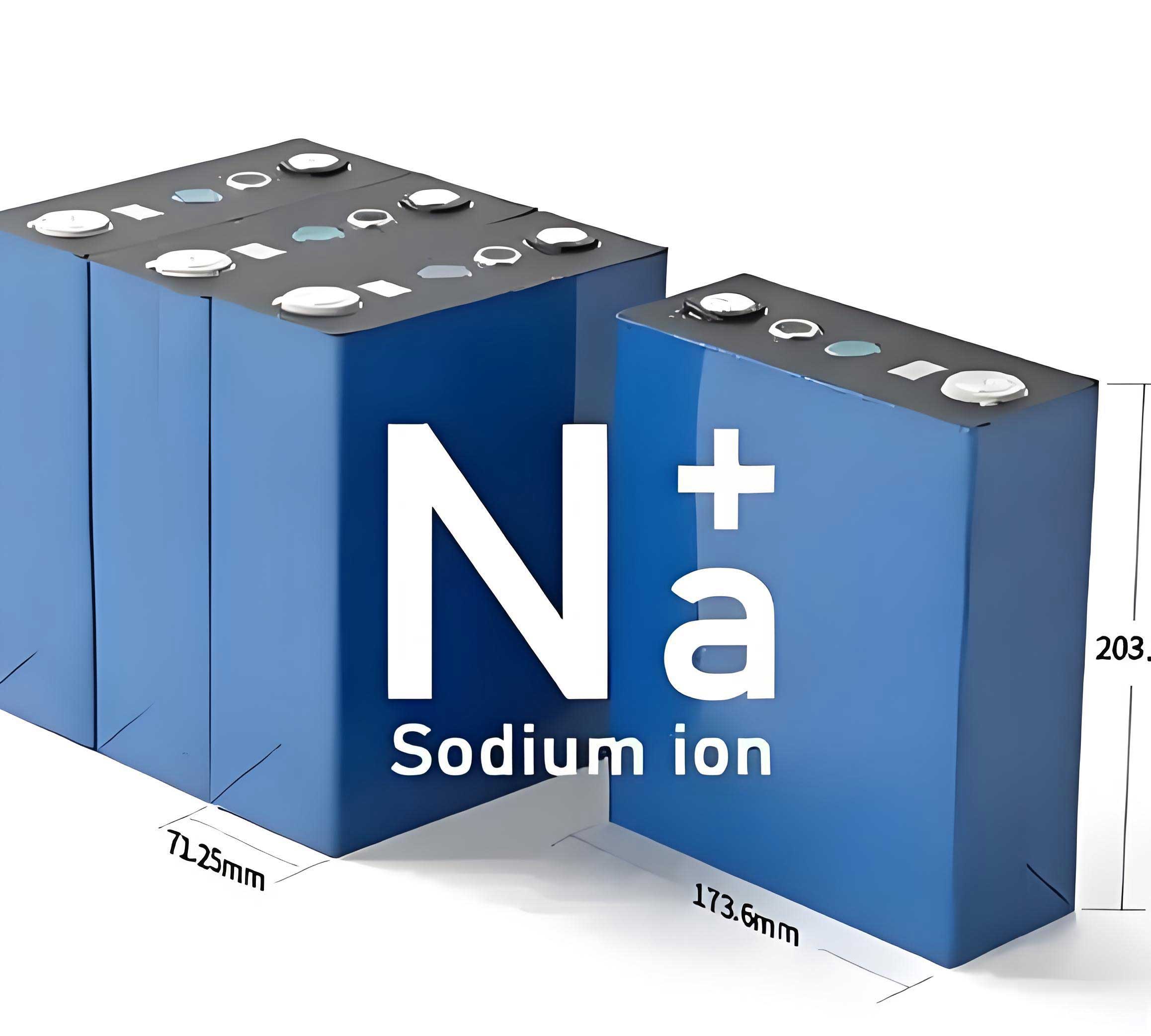
However, the development of practical sodium-ion battery technology faces distinct challenges, primarily stemming from the larger ionic radius of Na+ (1.02 Å) compared to Li+ (0.76 Å). This larger size leads to slower diffusion kinetics and more significant volumetric strain during insertion and extraction processes within host materials. Consequently, anode materials that perform excellently in LIBs, such as graphite, are often unsuitable for sodium-ion battery applications. The anode is a critical component determining the energy density, cycle life, rate capability, and safety of the sodium-ion battery. Therefore, the quest for high-performance, cost-effective, and durable anode materials is a central focus of SIB research. Anode materials for sodium-ion batteries primarily operate via three distinct mechanisms:
Intercalation/Insertion: Na+ ions are reversibly inserted into the interstitial spaces of a host material with minimal structural change.
$$ \text{xNa}^+ + \text{xe}^- + \text{Host} \rightleftharpoons \text{Na}_x\text{Host} $$
Alloying: Na+ ions react with certain elements (e.g., Sn, Sb, P) to form intermetallic alloys, typically offering high capacity but accompanied by large volume expansion.
$$ \text{M} + \text{yNa}^+ + \text{ye}^- \rightleftharpoons \text{Na}_y\text{M} $$
Conversion: The anode material (usually a metal compound) undergoes a redox reaction with Na+, leading to the formation of metallic nanoparticles embedded in a matrix of sodium salts.
$$ \text{M}_x\text{X}_y + (n y)\text{Na}^+ + (n y)\text{e}^- \rightleftharpoons x\text{M} + y\text{Na}_n\text{X} \quad (\text{X = O, S, P, etc.}) $$
This review provides a comprehensive analysis of the major families of anode materials for sodium-ion batteries, discussing their storage mechanisms, inherent challenges, and the extensive modification strategies employed to enhance their electrochemical performance.
Carbon-Based Anode Materials
Carbonaceous materials are the most extensively studied anodes for sodium-ion batteries due to their conductivity, chemical stability, abundance, and relatively low cost. Their performance varies dramatically with structure and degree of graphitization.
Graphite
Graphite is the cornerstone anode for commercial LIBs, where Li+ forms staged intercalation compounds (LiC6). In contrast, the direct formation of binary Na-Graphite Intercalation Compounds (Na-GICs) like NaC6 is thermodynamically unfavorable in conventional carbonate electrolytes, leading to negligible capacity. This was long attributed to the insufficient interlayer spacing of graphite (~0.335 nm) for the larger Na+ ion. However, the successful intercalation of even larger ions like K+ and Rb+ suggests the issue is more complex, involving unfavorable energetics of Na+ placement within the graphene gallery. A breakthrough was achieved using ether-based electrolytes (e.g., diglyme), which enable the co-intercalation of solvated Na+ ions, forming ternary GICs. This process yields reasonable capacities (~100-150 mAh g-1) and excellent rate capability due to the fast kinetics of solvated-ion intercalation. The reaction can be expressed as:
$$ \text{xNa}^+ + \text{xe}^- + \text{y(solvent)} + \text{Graphite} \rightleftharpoons \text{Na}^+(\text{solvent})_y[\text{Graphite}]^{x-} $$
Despite this progress, the large volume expansion during co-intercalation and the limited capacity compared to other anodes restrict graphite’s viability as a mainstream sodium-ion battery anode.
Hard Carbon (HC)
Non-graphitizable, or hard carbon, is currently the most promising and commercially targeted anode material for sodium-ion batteries. Derived from the pyrolysis of biomass, resins, or polymers at temperatures typically between 1000-1500°C, HC features a highly disordered structure comprising randomly oriented graphitic nano-domains, defects, and nanopores. This structure provides abundant active sites for Na storage. The widely accepted mechanism for sodium storage in hard carbon involves a combination of processes: 1) Sloping Region (above ~0.1 V vs. Na/Na+): Adsorption of Na+ on defect sites and pseudo-graphitic surfaces, and possibly intercalation into enlarged interlayer spacings (>0.37 nm). 2) Low-voltage Plateau Region (below ~0.1 V): Quasi-metallic pore-filling or deposition of Na in the closed nanopores.
$$ \text{Na}^+ + \text{e}^- + \text{“Pore Site”} \rightleftharpoons \text{Na(pore)} $$
This mechanism allows hard carbon to deliver reversible capacities of 250-350 mAh g-1. However, key challenges persist for hard carbon anodes in sodium-ion batteries, including low initial Coulombic efficiency (ICE, often 70-85%) due to irreversible electrolyte decomposition on the large surface area, and the safety concern of sodium plating/dendrite formation on the low-voltage plateau. Strategies like high-temperature treatment to reduce surface defects, heteroatom doping, and electrolyte optimization (e.g., using NaPF6 in EC:PC with FEC additive) are crucial to improve ICE and cycle life.
Soft Carbon
Soft carbon (graphitizable carbon) can be transformed into graphite at high temperatures (>2500°C). When carbonized at lower temperatures (e.g., 800-1400°C), it retains a partially ordered structure. Its sodium storage typically exhibits only a sloping voltage profile without a distinct low plateau, which minimizes the risk of Na plating. While this enhances safety, the capacity is usually lower (150-250 mAh g-1) than that of hard carbon. Its more ordered surface often leads to a thinner, more stable Solid Electrolyte Interphase (SEI), which can be beneficial. Soft carbon is frequently used as a conductive coating on other active materials to improve rate performance and SEI stability in sodium-ion battery anodes.
New Carbon Allotropes and Nanostructures
Research into novel carbon structures aims to overcome the limitations of traditional carbons. Materials like graphene, carbon nanotubes (CNTs), and graphdiyne offer unique properties. For instance, few-layer graphene or heteroatom-doped (N, S, P) graphene can provide enhanced interlayer spacing and active sites for Na+ adsorption. Three-dimensional porous carbon networks facilitate electrolyte penetration and shorten ion diffusion paths. Theoretical studies also propose novel 2D carbon allotropes (e.g., biphenylene, penta-graphene derivatives) with predicted high capacities and low diffusion barriers for Na+. While promising, the scalable and cost-effective synthesis of these materials remains a significant hurdle for their application in commercial sodium-ion batteries.
| Carbon Type | Structure | Na-Storage Mechanism | Typical Capacity (mAh g⁻¹) | Advantages | Challenges |
|---|---|---|---|---|---|
| Graphite | Layered, ordered | Co-intercalation (in ethers) | 100-150 | High electronic conductivity, stable | Low capacity, large volume change during co-intercalation |
| Hard Carbon (HC) | Highly disordered, porous | Adsorption, pore-filling | 250-350 | High capacity, low cost, abundant precursors | Low ICE, voltage hysteresis, Na plating risk |
| Soft Carbon | Partially ordered | Adsorption, intercalation | 150-250 | Good rate capability, stable SEI, safe profile | Moderate capacity |
| Graphene/Carbon Nanostructures | 2D/1D, tunable | Adsorption, intercalation | 200-500+ (theoretical) | High surface area, excellent conductivity, tunable properties | Complex synthesis, low packing density, high cost |
Metal-Based Anode Materials
Metal-based anodes, including oxides, sulfides, phosphides, and pure alloying metals, offer significantly higher theoretical specific and volumetric capacities than carbon materials, making them attractive for high-energy-density sodium-ion batteries.
Metal Oxides
Metal oxides for sodium-ion battery anodes primarily operate via conversion or intercalation mechanisms. Conversion-type oxides (e.g., Fe2O3, Co3O4, SnO2) undergo the reaction:
$$ \text{M}_x\text{O}_y + 2y\text{Na}^+ + 2y\text{e}^- \rightleftharpoons x\text{M} + y\text{Na}_2\text{O} $$
Some, like SnO2, undergo a combined conversion-alloying process:
$$ \text{SnO}_2 + 4\text{Na}^+ + 4\text{e}^- \rightarrow \text{Sn} + 2\text{Na}_2\text{O} $$
$$ \text{Sn} + 3.75\text{Na}^+ + 3.75\text{e}^- \rightleftharpoons \text{Na}_{3.75}\text{Sn} $$
While capacities can be very high (>500 mAh g-1), they suffer from huge volume changes, poor conductivity, and sluggish kinetics. Intercalation-type oxides, particularly titanium-based compounds like TiO2 (anatase, bronze) and Na2Ti3O7, offer excellent structural stability and cycle life due to the minimal lattice strain during Na+ insertion. However, their capacities are modest (150-250 mAh g-1) and their operating potential is relatively high (~0.7-1.0 V vs. Na/Na+), which reduces the overall cell voltage.
Metal Sulfides/Selenides
Metal sulfides (e.g., MoS2, SnS2, FeS2, Sb2S3) generally exhibit better electronic conductivity than their oxide counterparts due to the less ionic M–S bond. Many have layered structures that facilitate Na+ intercalation. Their reaction mechanism often involves intercalation followed by conversion:
$$ \text{MoS}_2 + x\text{Na}^+ + x\text{e}^- \rightleftharpoons \text{Na}_x\text{MoS}_2 \quad (\text{Intercalation}) $$
$$ \text{Na}_x\text{MoS}_2 + (4-x)\text{Na}^+ + (4-x)\text{e}^- \rightleftharpoons \text{Mo} + 2\text{Na}_2\text{S} \quad (\text{Conversion}) $$
Despite high capacities, dissolution of polysulfide intermediates in carbonate electrolytes causes rapid capacity fading and shuttle effects. Designing composites with conductive matrices (like graphene) and using suitable electrolytes are key mitigation strategies for sulfide-based sodium-ion battery anodes.
Metal Phosphides
Metal phosphides (e.g., Sn4P3, GeP, FeP, Ni2P) are attractive due to their high theoretical capacity and relatively good electronic conductivity. Phosphorus itself has an exceptionally high capacity (2596 mAh g-1 for Na3P) but suffers from enormous volume expansion (>300%) and poor conductivity. Combining P with an electroactive metal (M) can buffer the volume change and improve kinetics via a combined conversion-alloying mechanism:
$$ \text{M}_x\text{P}_y + (3y)\text{Na}^+ + (3y)\text{e}^- \rightarrow x\text{M} + y\text{Na}_3\text{P} $$
$$ \text{M} + z\text{Na}^+ + z\text{e}^- \rightleftharpoons \text{Na}_z\text{M} $$
For example, Sn4P3 can deliver capacities over 700 mAh g-1. Nanostructuring and carbon encapsulation are essential to maintain electrical contact and structural integrity during cycling in a sodium-ion battery.
Alloy-Type Anodes
Elements from groups 14 (Si, Ge, Sn, Pb) and 15 (P, As, Sb, Bi) can alloy with sodium, offering very high capacities. For instance:
$$ \text{Sn} + 3.75\text{Na}^+ + 3.75\text{e}^- \rightleftharpoons \text{Na}_{3.75}\text{Sn} \quad (\text{Theoretical: 847 mAh g}^{-1}) $$
$$ \text{Sb} + 3\text{Na}^+ + 3\text{e}^- \rightleftharpoons \text{Na}_3\text{Sb} \quad (\text{Theoretical: 660 mAh g}^{-1}) $$
The primary and most severe challenge is the massive volume expansion (>200-400%) upon alloying, which leads to particle pulverization, loss of electrical contact, and continuous SEI reformation, resulting in rapid capacity decay. To address this, sophisticated nanostructure design is employed: creating nanoparticles to reduce absolute strain, designing yolk-shell or porous structures to accommodate expansion, and forming composites with elastic carbon matrices (e.g., graphene, CNTs) to maintain conductivity and structural integrity.
MXenes
MXenes, a family of 2D transition metal carbides/nitrides (e.g., Ti3C2Tx, V2CTx), are emerging as interesting anode materials. Their general formula is Mn+1XnTx, where M is a transition metal, X is C or N, and Tx represents surface terminations (-O, -OH, -F). The layered structure, metallic conductivity, and tunable interlayer spacing via intercalation make them suitable for Na+ storage, often showing pseudocapacitive behavior. However, they tend to restack, reducing accessible surface area. Combining MXenes with other active materials (e.g., MoS2 on Ti3C2) creates synergistic heterostructures that enhance capacity and stability for sodium-ion battery applications.
| Material Class | Example | Mechanism | Theoretical Capacity (mAh g⁻¹) | Key Challenge | Mitigation Strategy |
|---|---|---|---|---|---|
| Conversion Oxides | Fe2O3 | Conversion | ~1007 | Large volume change, poor kinetics | Nanostructuring, carbon compositing |
| Intercalation Oxides | TiO2 | Intercalation | ~335 (for 1 Na) | Low capacity, higher voltage | Nanocrystallization, doping |
| Metal Sulfides | MoS2 | Intercalation + Conversion | ~670 (for 4 Na) | Polysulfide dissolution | Conductive encapsulation, ether electrolytes |
| Metal Phosphides | Sn4P3 | Conversion + Alloying | ~1132 | Large volume change | Nanocomposite design, carbon coating |
| Alloying Elements | Sb | Alloying | 660 | Extreme volume expansion (>200%) | Nano-/porous structuring, carbon matrix |
Organic Anode Materials
Organic materials, derived from abundant elements (C, H, O, N, S), represent a sustainable and structurally tunable class of anodes for sodium-ion batteries. They store Na+ via the redox reactions of functional groups such as carbonyl (C=O), imine (C=N), azo (N=N), or carboxylate (COO–Na+). For a carbonyl-based material (quinone), the reaction is:
$$ \text{C=O} + \text{Na}^+ + \text{e}^- \rightleftharpoons \text{C-O}^- \text{Na}^+ $$
Advantages include molecular-level tunability of voltage and capacity, potential for low-cost production from biomass, and environmental friendliness. Small molecules like disodium terephthalate (Na2C8H4O4) have demonstrated capacities around 250 mAh g-1. However, critical drawbacks have hindered their adoption: 1) Low electronic conductivity: Most organics are insulators. 2) Dissolution in organic electrolytes: This leads to active material loss and rapid capacity fade. 3) Low density: Resulting in low volumetric energy density. Strategies to overcome these include polymerizing small molecules into insoluble conjugated polymers, creating organic-inorganic composites, and developing aqueous or solid-state electrolytes that suppress dissolution. While not yet competitive for high-energy applications, organic anodes hold promise for specialized, sustainable sodium-ion battery systems.
Fundamental Challenges and Modification Strategies
The path to commercializing high-performance anodes for sodium-ion batteries is paved with material-specific and universal challenges. Key among these are low initial Coulombic efficiency (ICE), insufficient cycling stability, inadequate rate capability, and large volume changes. A multifaceted arsenal of material engineering strategies has been developed to address these issues.
1. Nanostructural and Morphological Design
Reducing the particle size to the nanoscale shortens the diffusion path for both Na+ and electrons, significantly improving rate capability. It also better accommodates mechanical strain, reducing pulverization. Sophisticated architectures are designed:
0D Nanoparticles: Maximize surface area but can agglomerate.
1D Nanowires/Nanorods: Provide direct electron pathways and strain relaxation along the long axis.
2D Nanosheets: Offer large exposed surfaces and short in-plane diffusion distances.
3D Porous/Hierarchical Structures: Facilitate electrolyte infiltration, provide ample space to buffer volume expansion, and maintain structural integrity.
Hollow/Yolk-Shell Structures: The internal void space acts as a perfect buffer for volume expansion of the active core, preserving the outer shell (often carbon) which maintains electrical contact and a stable SEI.
2. Carbon Composite/Hybrid Design
Combining active materials with conductive carbon matrices (graphene, CNTs, amorphous carbon coating) is arguably the most effective and universal strategy. The carbon matrix serves multiple functions: 1) Enhances overall electronic conductivity. 2) Physically confines active material nanoparticles, preventing aggregation. 3) Buffers volume changes. 4) Can contribute additional capacity via Na+ adsorption. 5) Helps form a more stable and uniform SEI. For example, embedding SnS2 nanosheets between graphene layers creates a robust, conductive, and elastic architecture that delivers high capacity and long cycle life for sodium-ion batteries.
3. Defect Engineering and Heteroatom Doping
Introducing defects (e.g., vacancies) or doping carbon matrices/ metal compounds with heteroatoms (N, S, P, B) can dramatically alter electronic and chemical properties.
Electronic Structure: Doping can increase the electronic conductivity and the number of active sites for Na+ adsorption.
Interlayer Spacing: S or P doping in carbon can expand the interlayer distance, facilitating Na+ intercalation.
Wettability and Binding Energy: Heteroatoms improve electrolyte wettability and can increase the binding energy between the host material and Na+, enhancing reversible capacity.
For metal oxides, creating oxygen vacancies can significantly improve electronic conductivity and provide more active sites for sodium storage in a sodium-ion battery.
4. Electrolyte and Interphase Engineering
The performance of an anode is inseparable from the electrolyte it operates in. Electrolyte optimization is critical for forming a stable, ionically conductive but electronically insulating SEI. A poor SEI leads to continuous electrolyte decomposition, low ICE, and capacity fade. Strategies include:
Electrolyte Formulation: Using fluorinated ethylene carbonate (FEC) as an additive is almost universal in SIB research, as it promotes the formation of a robust, NaF-rich SEI. Ether-based electrolytes (e.g., diglyme) often yield superior kinetics and SEI stability for many anode materials compared to traditional carbonates.
Salt Concentration: Highly concentrated electrolytes (>3 M) can suppress solvent co-intercalation and lead to thinner, more inorganic SEI layers.
Solid-State Electrolytes: Replacing liquid electrolytes with solids (polymers, ceramics) can completely eliminate dissolution issues (e.g., of organics or polysulfides) and improve safety, though interfacial resistance remains a major challenge.
The ideal SEI for a sodium-ion battery anode should be thin, uniform, mechanically flexible to withstand volume changes, and rich in stable inorganic components like NaF and Na2CO3.
Conclusion and Future Perspective
The development of anode materials for sodium-ion batteries has progressed remarkably, transitioning from fundamental curiosity to the brink of commercialization. Hard carbon, despite its challenges with ICE and voltage hysteresis, currently leads the race due to its balanced performance, low cost, and manufacturability, and it is being deployed in the first generation of commercial sodium-ion battery cells. For the future, the pursuit of higher energy density will continue to drive research into alloying and conversion materials. The key to unlocking their potential lies in mastering the nano-architecture and interface engineering to manage their colossal volume changes effectively.
Beyond traditional materials, several frontiers are emerging. The exploration of novel carbon allotropes and the precise engineering of defects and porosity in carbon materials promise further gains in capacity and kinetics for sodium-ion battery anodes. Organic electrodes, with their limitless molecular design space and sustainability credentials, may find niche applications where cost and environmental impact are paramount. Furthermore, the interplay between anode, electrolyte, and SEI must be studied as an integrated system. Advanced in situ/operando characterization techniques and machine learning-guided material discovery will be indispensable tools in this endeavor.
In conclusion, the sodium-ion battery represents a vital piece of the future energy storage puzzle. While the anode presents significant scientific and engineering challenges, the diversity of material options and the depth of understanding gained from LIB research provide a strong foundation. The continued convergence of nanostructuring, composite design, doping, and electrolyte engineering will undoubtedly yield increasingly performant and robust anode materials, accelerating the adoption of sodium-ion battery technology for grid storage and beyond.