
The global transition towards sustainable energy and the exponential growth of the electric vehicle sector have created an unprecedented demand for high-performance energy storage systems. Among these, the li ion battery reigns supreme due to its favorable balance of energy density, power capability, and cycle life. However, the relentless pursuit of higher energy density faces a fundamental roadblock: significant initial active lithium loss during the first charge-discharge cycle, which severely curtails the practical capacity and longevity of advanced cells. Prelithiation, the process of introducing supplemental active lithium into the electrode prior to cell operation, has emerged as the most promising strategy to overcome this hurdle. This review provides an in-depth analysis of one particularly effective prelithiation agent: Stabilized Lithium Metal Powder (SLMP). We will systematically explore the root causes of initial capacity loss, detail the mechanisms and applications of SLMP-based prelithiation, compare its various implementation methods, and discuss ongoing challenges and future perspectives for integrating this technology into the next generation of high-energy li ion battery systems.
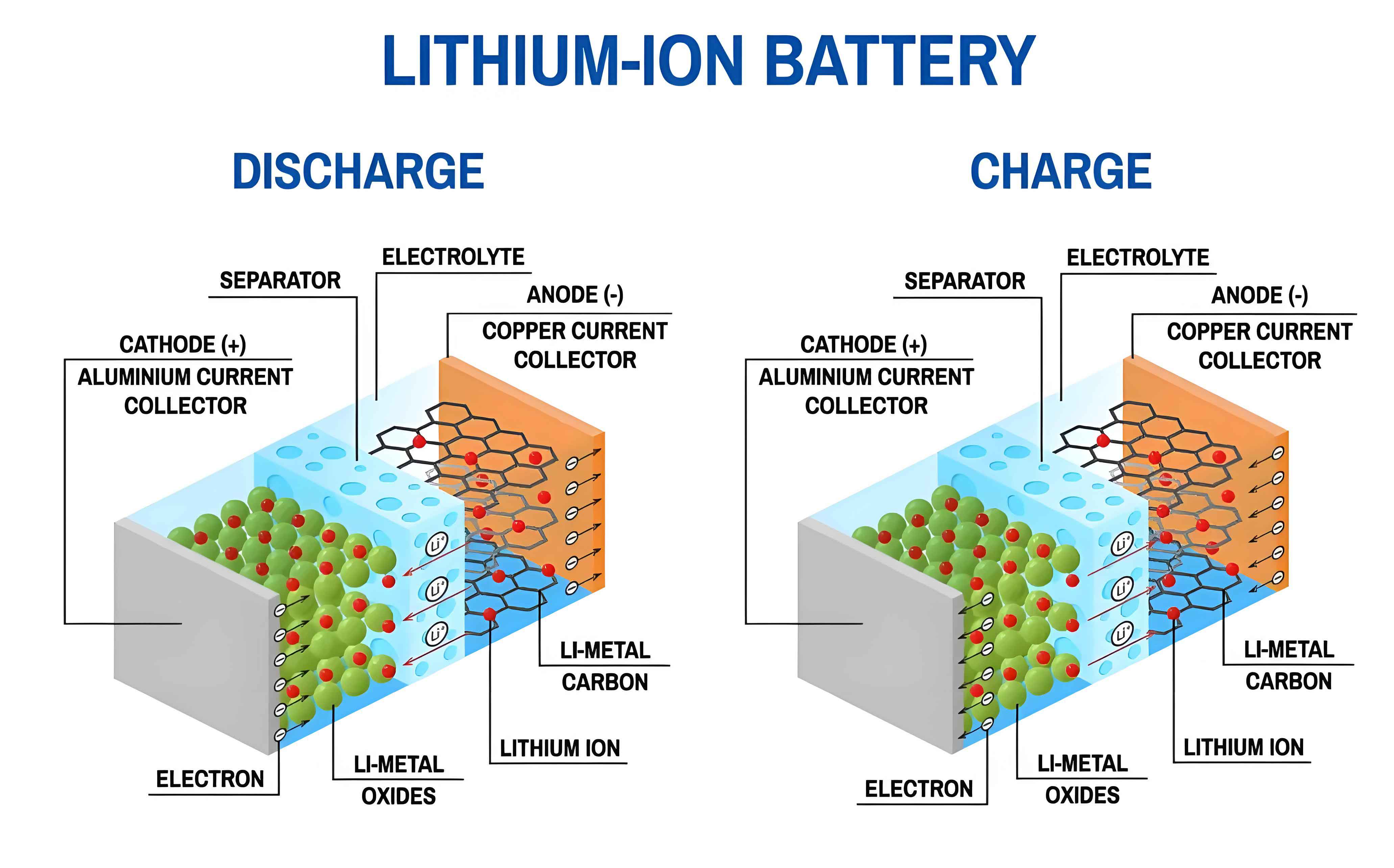
The quest for greater energy density in the li ion battery has driven the development of anode materials with much higher specific capacities than conventional graphite (372 mAh g⁻¹). Silicon (Si), tin (Sn), and their oxides (e.g., SiOx) are prime candidates, offering theoretical capacities an order of magnitude larger (e.g., 3579 mAh g⁻¹ for Li15Si4). However, their commercialization is hampered by a critically low Initial Coulombic Efficiency (ICE). The ICE of a typical graphite anode exceeds 90%, whereas for silicon-based anodes, it can be as low as 70-85% for composites and even lower for pure Si or SiOx. This inefficiency directly translates to a permanent loss of cyclable lithium, diminishing the full-cell energy density and increasing cost due to the need for excess cathode material. The sources of this irreversible lithium loss are multifaceted and intrinsic to the operation of a li ion battery with high-capacity anodes.
Fundamental Sources of Irreversible Lithium Loss in Li Ion Battery Anodes
The initial lithium loss can be attributed to three primary, often interconnected, mechanisms: Solid Electrolyte Interphase (SEI) formation, mechanical degradation from volume changes, and lithium trapping at defect sites. A comprehensive understanding of these processes is essential for designing effective prelithiation countermeasures.
1. Solid Electrolyte Interphase (SEI) Formation
Upon contact with the organic electrolyte, the anode surface (especially at low potentials) is thermodynamically unstable. This triggers the reductive decomposition of electrolyte components, forming a passivating layer known as the SEI. An ideal SEI is electronically insulating but ionically conductive, allowing Li⁺ transport while preventing further electrolyte breakdown. However, its initial formation consumes a substantial amount of lithium ions irreversibly. The SEI is not a static layer; its composition evolves. Early-cycle SEI often contains metastable organic species like lithium ethylene dicarbonate (LEDC), which can dissolve into the electrolyte. This leads to continuous SEI reformation and thickening during subsequent cycles, consuming additional lithium. The kinetics of SEI growth and dissolution can be modeled, contributing to the observed capacity fade. The consumption of Li⁺ for SEI formation represents the single largest source of initial capacity loss in a li ion battery.
2. Mechanical Degradation and “Dead Lithium” Formation
High-capacity alloying anodes like silicon undergo enormous volume expansion during lithiation (∼300% for Si). This repeated expansion and contraction exerts tremendous mechanical stress on the electrode architecture. The brittle SEI layer cracks, exposing fresh electrode surface to the electrolyte and triggering the formation of new SEI, a process that continuously depletes the lithium inventory. Furthermore, the severe volumetric swings can lead to particle isolation, electrical contact loss, and electrode delamination. Perhaps more insidiously, the large concentration gradients of lithium within the electrode during (de)lithiation can cause some lithium to be deposited in locations from which it cannot be extracted in subsequent cycles, forming electrochemically inactive “dead lithium.” This trapped lithium contributes significantly to capacity fade beyond the first cycle. The stress (σ) generated during volume change can be related to the strain (ε) and the material’s elastic modulus (E), approximately by Hooke’s Law for small deformations: $$ \sigma = E \cdot \varepsilon $$. In reality, for large deformations in a li ion battery anode, the behavior is highly nonlinear and contributes to mechanical failure.
3. Lithium Trapping at Defect Sites and Irreversible Reactions
Structural defects, grain boundaries, and impurity atoms within the active material can act as deep traps for lithium ions, forming strong bonds that prevent subsequent delithiation within the normal operational voltage window. In silicon oxide (SiOx) anodes, an additional, major source of irreversible loss exists. During the first lithiation, a lithium silicate matrix (e.g., Li4SiO4) forms alongside the electroactive Li15Si4 phase. The delithiation of this Li4SiO4 matrix requires a high voltage (>1.5 V vs. Li⁺/Li) that is outside the typical charge cutoff potential for anodes in a li ion battery, rendering that portion of lithium permanently inactive. While this inert matrix can buffer volume changes, its formation comes at a steep cost in initial lithium loss.
| Mechanism | Primary Cause | Impact on ICE | Long-term Effect |
|---|---|---|---|
| SEI Formation | Electrolyte reduction at anode surface | High (Main Contributor) | Continued growth consumes Li⁺, increases impedance |
| Volume Change & “Dead Li” | Mechanical stress, Li concentration gradients | Medium to High | Accelerated capacity fade, particle isolation |
| Defect/Reaction Trapping | Irreversible Li alloying/silicate formation | High (especially for SiOx) | Permanent loss of active Li inventory |
The total irreversible capacity loss (Qirr) in the first cycle can thus be conceptualized as the sum of these contributions:
$$ Q_{irr} = Q_{SEI} + Q_{dead-Li} + Q_{trap} $$
where QSEI is the charge consumed for SEI formation, Qdead-Li is the charge equivalent of permanently trapped lithium, and Qtrap is the charge consumed in irreversible chemical reactions (e.g., silicate formation). Prelithiation aims to supply an additional lithium source, Qpre, such that:
$$ Q_{pre} \geq Q_{irr} $$
This compensates for the loss and allows the cathode’s lithium to be fully utilized for reversible cycling, thereby maximizing the energy density of the li ion battery.
Stabilized Lithium Metal Powder (SLMP): A Premier Prelithiation Agent
Among various prelithiation techniques (chemical, electrochemical, sacrificial salts), the use of SLMP stands out due to its exceptionally high theoretical capacity, straightforward application, and potential for industrial integration. SLMP is a commercially developed material consisting of microparticles of metallic lithium (∼97 wt%) encapsulated by a thin, continuous passivation layer of lithium carbonate (Li2CO3, ∼3 wt%). This core-shell structure is typically fabricated via an emulsion droplet process, where molten lithium is dispersed in an inert medium and surface-oxidized to form the stable shell.
The Li2CO3 shell is crucial; it renders the powder safe to handle in dry air environments, dramatically mitigating the reactivity and flammability hazards associated with bulk lithium metal. The prelithiation process involves applying SLMP to the anode, followed by a mechanical pressure step (e.g., calendering) to fracture the brittle shell at specific points. This exposes the underlying metallic lithium core, allowing it to make direct electronic and ionic contact with the anode material. Subsequently, a spontaneous electrochemical reaction occurs, transferring lithium ions from the SLMP particle into the anode host. The process can be represented simplistically as:
$$ \text{SLMP (Li⁰ core)} + \text{Anode Host} \rightarrow \text{Li}_x\text{Anode Host} + \text{Spent SLMP residue} $$
The ultra-high specific capacity of the metallic lithium core (3860 mAh g⁻¹) gives SLMP a decisive advantage over other prelithiation additives like lithium-rich cathodes or lithium sacrificial salts, which offer much lower supplemental capacity. The following sections detail the primary methodologies for implementing SLMP prelithiation in the manufacturing process of a li ion battery.
SLMP Prelithiation Methodologies: Techniques and Comparisons
The effectiveness of SLMP prelithiation hinges on achieving uniform distribution and effective electrical contact with the target anode material. Several application methods have been developed, each with its own procedural nuances, advantages, and limitations.
1. Drop-Casting (Drip) Method
This is a common lab-scale technique. SLMP powder is first dispersed in a non-polar, low-reactivity organic solvent (e.g., toluene, hexane) to create a suspension. This suspension is then drop-cast onto the surface of the dry anode electrode using a micropipette or syringe. After solvent evaporation, the electrode is calendered under significant pressure (e.g., 10-30 MPa) to mechanically fracture the SLMP shells and initiate the prelithiation reaction.
Advantages: Simple, allows for precise dosing of SLMP on small samples, good for parameter studies.
Challenges: Poor scalability. The suspension is unstable (SLMP floats), requiring constant agitation. Solvent evaporation can lead to uneven distribution. Prelithiation is often superficial unless combined with electrolyte wetting. The use of volatile organic compounds poses health and safety concerns. Achieving uniform prelithiation deep within a thick electrode is difficult, often leading to localized overlithiation at contact points.
2. Spray-Coating (Airbrush) Method
To improve distribution uniformity, the SLMP suspension can be applied using a spray-coating technique, such as an airbrush or automated spray nozzle, within a dry atmosphere glovebox. The fine mist of droplets allows for a more even coating over larger electrode areas. After spraying and solvent drying, a manual or mechanical rolling step is used to press and activate the SLMP particles.
Advantages: Better uniformity than drop-casting, more practical for larger electrodes, closer to industrial coating processes.
Challenges: Still relies on organic solvents. Requires careful control of spray parameters (pressure, distance, speed) to avoid agglomeration. The post-spray calendering step is critical for activation but can be difficult to optimize uniformly across the electrode. Residual solvent may affect electrode properties.
3. Slurry Integration Method
This method seeks to integrate SLMP directly into the anode slurry during electrode fabrication. Since traditional polar solvents like N-Methyl-2-pyrrolidone (NMP) react violently with SLMP, this approach necessitates a special slurry system. A typical formulation involves using a non-polar solvent (toluene/hexane), a elastomeric binder like Styrene-Butadiene Rubber (SBR) for dispersion and adhesion, and optionally a fluoropolymer like Polyvinylidene Fluoride (PVDF) pre-coated on the active material to provide compatibility and enhance cycling performance. The SLMP, conductive carbon, and binder are mixed in the solvent and then coated onto the current collector.
Advantages: Excellent potential for uniform SLMP distribution within the electrode bulk. Compatible with standard roll-to-roll slurry coating manufacturing. The prelithiation reaction initiates upon electrolyte filling during cell assembly, which can lead to more homogeneous lithium incorporation.
Challenges: Requires a complete reformulation of the anode slurry system, moving away from industry-standard water- or NMP-based processes. All processing must occur in a strictly dry environment, increasing manufacturing complexity and cost. The long-term stability of SLMP within the slurry before cell assembly needs assurance.
4. Other Innovative Methods
Researchers have explored alternative architectures to leverage SLMP. One concept involves creating a bilayer electrode, where a separate layer of SLMP mixed with binder is coated on the backside of the current collector or on a separate foil, creating a lithium reservoir. Another approach is to coat the separator with a SLMP-containing layer, effectively turning it into a lithium-source functional separator that compensates for anode loss during the initial cycle. These methods decouple the lithium source from the active layer but add complexity to cell stacking and may increase overall cell thickness or resistance.
| Method | Process Description | Uniformity | Scalability | Key Challenges |
|---|---|---|---|---|
| Drop-Casting | Manual dispensing of SLMP suspension | Low | Very Low (Lab-scale) | Solvent use, uneven distribution, superficial lithiation |
| Spray-Coating | Aerosol deposition of suspension | Medium | Medium | Solvent use, parameter control, post-activation |
| Slurry Integration | Mixing SLMP into anode slurry | Potentially High | High | Dry room requirement, new slurry chemistry, cost |
| Separator Coating | Applying SLMP layer on separator | Depends on coating | Medium-High | Increased cell impedance, possible delamination |
Optimization and Challenges in SLMP Prelithiation for Li Ion Batteries
Successfully implementing SLMP technology requires addressing several critical parameters and inherent challenges beyond the choice of application method.
1. Precise Dosage Control
The amount of SLMP added must be carefully calibrated to match the irreversible capacity loss (Qirr) of the specific anode. Insufficient SLMP leaves residual irreversible loss, failing to maximize ICE. Over-compensation (excess SLMP) can be equally or more detrimental. It may lead to lithium metal plating on the anode surface during the first charge, creating unstable, mossy lithium deposits that accelerate electrolyte decomposition, increase impedance, and pose severe safety risks from dendrite growth and short circuits. The optimal mass of SLMP (mSLMP) can be estimated by:
$$ m_{SLMP} = \frac{Q_{irr} \cdot m_{anode}}{C_{SLMP} \cdot \eta_{pre}} $$
where Qirr is the areal/specific irreversible capacity of the anode, manode is the anode active mass, CSLMP is the specific capacity of SLMP (~3860 mAh g⁻¹), and ηpre is the efficiency of the prelithiation reaction itself (typically <100%).
2. The Issue of Subsequent Coulombic Efficiency (SCE)
A critical, sometimes overlooked, aspect is the behavior of the prelithiated anode in cycles after the first one. For anodes like SiOx, the irreversible reduction of the oxide matrix is not a one-time first-cycle event but a continuous process that proceeds slowly over dozens of cycles. Therefore, even after perfect first-cycle compensation with SLMP, the anode may continue to consume lithium in subsequent cycles, leading to a gradual capacity fade in the full li ion battery. Strategies such as high-temperature initial formation cycles have been proposed to drive the SiOx reduction reaction to near-completion early on, improving the SCE and stabilizing long-term cycling.
3. Stability and Safety of the Lithium Powder
While the Li2CO3 shell provides handling stability in dry air, SLMP remains a finely divided, highly energetic material. Its long-term storage stability, sensitivity to trace moisture during processing, and overall safety in large-scale battery manufacturing environments are paramount concerns. Any breach of the passive layer can lead to exothermic reactions. This necessitates rigorous dry room controls (dew point < -40°C) throughout the SLMP handling and incorporation processes, adding significant cost to li ion battery production.
Beyond SLMP: Advanced Stabilization of Lithium Metal Powders
The core-shell concept of SLMP has inspired research into other engineered lithium powder systems with enhanced stability or functionality. The goal is to create prelithiation reagents that are even more air-stable, easier to handle, and integrate seamlessly into electrode structures.
1. Alternative Coating Materials
Replacing or supplementing the Li2CO3 shell with other compounds can improve properties. For instance, creating a shell rich in Lithium Fluoride (LiF) is highly desirable because LiF is a key, stable component of high-performance SEI layers. LiF-rich shells can be formed by reacting lithium with fluorinated compounds or via electrodeposition in fluoride-containing electrolytes. Other inorganic coatings like Li3N or Li2O have also been explored. Organic polymer coatings represent another avenue; a thin, conformal polymer layer could provide mechanical flexibility and better compatibility with polymeric binders in the electrode.
2. Electrochemically Synthesized Air-Stable Lithium Spheres
Research has demonstrated the synthesis of micron-scale lithium spheres with a Li2CO3 or LiF/LixOy shell via electrochemical deposition techniques. These “Air-Stable Lithium Spheres” (ASLSs) exhibit similar core-shell architecture and prelithiation capability as SLMP but are synthesized via a bottom-up electrochemical process that allows for precise size control. Reports indicate that such spheres can maintain their activity even after limited exposure to humid air, pushing the boundaries of practicality for li ion battery manufacturing.
| Stabilization Approach | Coating/Shell Material | Proposed Advantages | Potential Drawbacks |
|---|---|---|---|
| Inorganic Passivation | Li2CO3, LiF, Li3N, Li2O | High chemical/electrochemical stability, good Li⁺ conductivity (for some) | Brittleness, may fracture easily, specific synthesis conditions needed |
| Organic/Polymetric Coating | Paraffin, PVDF, specialized polymers | Flexible, may improve electrode integration, tunable properties | Potential electronic insulation, may decompose at high voltage |
| Hybrid/Composite Shell | LiF-Organic matrix, Multi-layer structures | Combines benefits: stability + flexibility, better SEI-forming ability | Complex synthesis and characterization |
Conclusion and Future Perspectives
Stabilized Lithium Metal Powder prelithiation represents a powerful and direct strategy to combat the initial active lithium loss that plagues high-capacity anode materials, thereby unlocking the full energy density potential of next-generation li ion battery systems. Its ultra-high capacity, combined with relatively simple application principles, makes it a frontrunner among practical prelithiation technologies. The drop-casting, spray-coating, and slurry integration methods offer a pathway from lab validation to potential industrial adoption.
However, significant challenges remain before SLMP can be ubiquitously deployed in commercial li ion battery production. These include: (1) Achieving perfectly uniform and controlled prelithiation within thick, high-loading electrodes; (2) Managing the inherent safety risks and stringent dry-environment requirements associated with handling reactive lithium powders at scale; (3) Fully understanding and mitigating the long-term impacts of prelithiation on subsequent cycle efficiency and electrode degradation mechanisms; (4) Reducing the overall cost contribution of the SLMP material and its specialized processing.
Future research directions should focus on:
Advanced Material Design: Developing next-generation stabilized lithium powders with more robust, multi-functional shells (e.g., LiF-rich, polymer-composite) that offer superior air stability and integrate better with electrode components.
Process Innovation: Creating novel, solvent-free, or dry-powder application techniques (e.g., electrostatic spraying, powder lamination) that eliminate VOC use and improve distribution control.
Fundamental Understanding: Employing advanced in-situ and operando characterization tools to visualize and quantify the prelithiation reaction in real-time, its impact on local microstructure, and the evolution of the resulting SEI.
System-Level Integration: Holistically optimizing the full li ion battery system—including cathode choice, electrolyte formulation, and formation protocols—around prelithiated anodes to maximize synergistic benefits in energy density, cycle life, and safety.
In conclusion, while hurdles exist, the continued refinement of SLMP and related lithium powder prelithiation technologies holds immense promise. By effectively returning “lost” lithium to the system, these strategies are poised to play a pivotal role in realizing the ambitious energy density goals required for the future of electric transportation and grid storage, solidifying the dominance of the advanced li ion battery in the global energy landscape.