
The global energy transition, driven by the imperative to reduce carbon emissions, has led to the rapid proliferation of renewable energy sources, with photovoltaic (PV) generation constituting a significant and growing share of modern power systems. These distributed generation resources are typically interfaced with the utility grid through power electronic converters, most commonly utility interactive inverters. However, the geographically dispersed nature of these installations, combined with the inherent impedance of long transmission and distribution lines, often results in the grid connection point exhibiting characteristics of a “weak grid.” A weak grid is primarily defined by a relatively high grid impedance and the presence of background voltage harmonics at the point of common coupling (PCC). The increased grid impedance introduces strong dynamic coupling between the grid and the inverters, which can severely degrade system stability, leading to harmonic oscillations or even instability. Simultaneously, background harmonics can distort the grid-injected current, compromising power quality. Therefore, ensuring the stable and high-quality operation of utility interactive inverters under weak grid conditions is a critical challenge for the reliable integration of large-scale renewable energy.
To mitigate the impact of grid voltage disturbances and background harmonics on the output current, a grid voltage feedforward control loop is commonly employed in utility interactive inverters. While effective for harmonic suppression, this feedforward path introduces an additional feedback loop for the grid current. In weak grids with substantial impedance, this interaction can significantly reduce the phase margin of the inverter’s output impedance in the low-frequency range. The stability of a grid-connected system can be assessed using the impedance-based stability criterion, which states that the system remains stable if the ratio of the inverter output impedance to the grid impedance satisfies the Nyquist stability criterion. A key indicator is the phase margin at their frequency intersection. As grid impedance increases, this intersection point shifts to lower frequencies where the inverter’s output impedance phase, already reduced by the feedforward, may be critically low. A phase margin approaching or falling below zero indicates negative damping, leading to resonance amplification and potential instability.
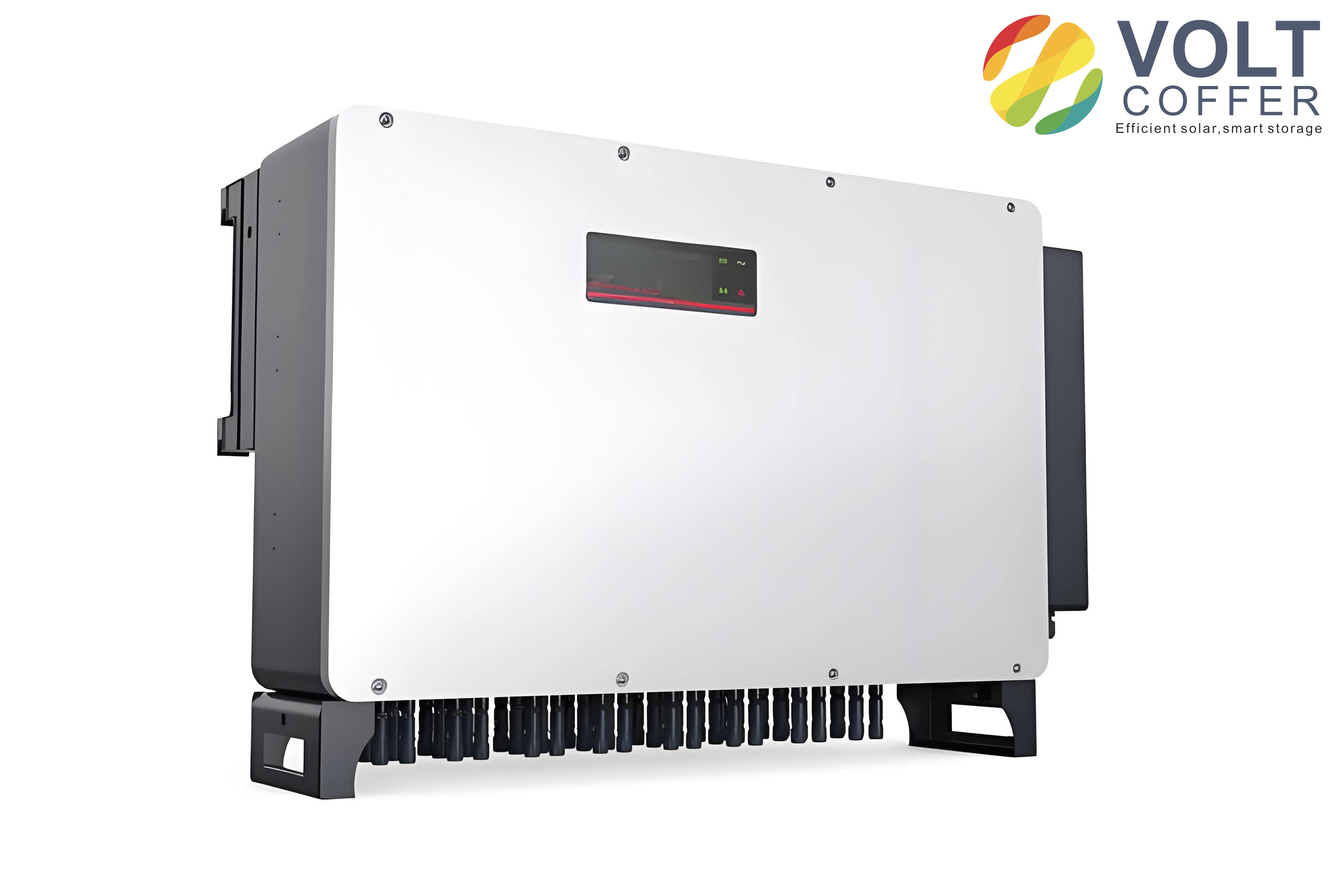
The problem is exacerbated in systems with multiple parallel-connected utility interactive inverters, a standard configuration in medium- to large-scale PV plants and wind farms. The coupling effect through the common grid impedance means that the stability of each individual utility interactive inverter is not independent. The presence of other inverters effectively increases the equivalent grid impedance seen by each unit. Consequently, the stability margin of the entire system diminishes as more inverters are connected or as the grid becomes weaker. Existing stability enhancement strategies, such as active damping via virtual impedance or feedforward path modification, often focus on improving the phase characteristic of a single inverter’s output impedance. However, these methods may not adequately address the compounded stability challenge in multi-inverter weak-grid scenarios and might inadvertently weaken the system’s ability to reject background harmonics. Therefore, a comprehensive control strategy that simultaneously enhances stability robustness against grid impedance variations and maintains strong background harmonic rejection for multi-inverter systems is essential.
This article addresses this challenge by first establishing a precise impedance model for a multi-inverter grid-connected system. The analysis decouples the complex interactions using the concept of equivalent grid impedance, clearly elucidating the mechanism of stability degradation. Subsequently, an improved control strategy is proposed. The core of the strategy involves incorporating an all-pass filter into the grid voltage feedforward path. This filter provides a phase lead compensation specifically tailored to the critical low-frequency range, thereby elevating the phase of the inverter’s output impedance and improving the system’s phase margin without altering the magnitude of the feedforward signal. To counteract the potential reduction in background harmonic attenuation caused by the modified feedforward, a selective harmonic compensator is integrated into the current control loop. This combined approach ensures that the multi-inverter system maintains high stability in weak grids while preserving excellent power quality by effectively suppressing grid-induced harmonics. The effectiveness of the proposed strategy is rigorously validated through detailed theoretical analysis and simulation studies.
Impedance Modeling of the Utility Interactive Inverter
The foundation of stability analysis lies in an accurate frequency-domain model. Consider a three-phase LCL-filter-based utility interactive inverter with standard control in the stationary (αβ) reference frame. The system comprises an LCL filter (with inverter-side inductance \(L_1\), grid-side inductance \(L_2\), and filter capacitance \(C\)), a grid represented by a voltage source \(u_g\) in series with an inductance \(L_g\), and a line inductance \(L_l\). The control system typically includes a current regulator \(G_i(s)\) (often a quasi-Proportional-Resonant controller), capacitor current active damping with coefficient \(H_{i1}\), grid current feedback with coefficient \(H_{i2}\), a grid voltage feedforward path \(G_f(s)\), and the inverter’s PWM gain \(K_{PWM}\). The quasi-PR current regulator is given by:
$$G_i(s) = K_p + \sum_{h} \frac{2K_{i,h} \omega_c s}{s^2 + 2\omega_c s + \omega_h^2}$$
For fundamental control, it simplifies to \(K_p + \frac{2K_i \omega_0 s}{s^2 + 2\omega_0 s + \omega_0^2}\).
To derive the inverter’s equivalent output impedance, the control block diagram is systematically reduced. The inverter can be represented by a Norton equivalent circuit as seen from the PCC, consisting of a controlled current source \(I_1(s)\) and an output admittance \(Y_0(s)\). The relationship between the grid current \(i_g(s)\), the reference current \(i_{ref}(s)\), and the PCC voltage \(u_{PCC}(s)\) is:
$$i_g(s) = \frac{T_0(s)}{1 + T_0(s)H_{i2}} i_{ref}(s) – Y_0(s) u_{PCC}(s) = G_c(s)i_{ref}(s) – Y_0(s) u_{PCC}(s)$$
Here, \(T_0(s)\) is the open-loop transfer function, and \(Y_0(s)\) is the closed-loop output admittance. Their expressions, considering the feedforward \(G_f(s)\), are:
$$T_0(s) = G_{x1}(s)G_{x2}(s)H_{i2}$$
$$Y_0(s) = \frac{[s^2 L_1 C + s C H_{i1} K_{PWM} + 1 – G_f(s)K_{PWM} G_{x1}(s)] K_{PWM} G_{x2}(s)}{1 + T_0(s)}$$
where \(G_{x1}(s)\) and \(G_{x2}(s)\) are intermediate transfer functions related to the LCL filter and current controller:
$$G_{x1}(s) = \frac{K_{PWM} G_i(s)}{s^2 L_1 C + s C H_{i1} K_{PWM} + 1}$$
$$G_{x2}(s) = \frac{1}{s^3 L_1 L_2 C + s^2 L_2 C H_{i1} K_{PWM} + s(L_1+L_2)}$$
The corresponding output impedance is \(Z_o(s) = 1 / Y_0(s)\). The Norton equivalent model for a single utility interactive inverter connected to the grid is shown below, where \(Y_g = 1/(s L_g)\) and \(Y_l = 1/(s L_l)\).
[A conceptual Norton equivalent circuit block diagram would be described here: A current source \(I_1=G_c i_{ref}\) in parallel with admittance \(Y_0\), connected to the parallel combination of line admittance \(Y_l\) and grid admittance \(Y_g\), with the grid voltage \(u_g\) in series with \(Y_g\). The PCC voltage \(u_{PCC}\) appears across \(Y_l\) and \(Y_g\).]
Stability Analysis of Multi-Inverter Parallel Systems
System Modeling and Coupling Analysis
For a system with \(n\) parallel utility interactive inverters, each can be represented by its Norton equivalent (current source \(I_m\) and output admittance \(Y_m\), where \(m=1,2,…,n\)). The network includes their respective line admittances \(Y_{l,m}\) and the common grid admittance \(Y_g\). Using nodal analysis with the PCC as node \(n+1\), the grid current injected by the \(m\)-th inverter, \(i_{L,m}\), can be expressed as the sum of three components:
$$i_{L,m} = \underbrace{R_m(s)I_m(s)}_{\text{Self-coupling}} – \underbrace{\sum_{k=1, k \neq m}^{n} P_{m,k}(s)I_k(s)}_{\text{Inter-inverter coupling}} – \underbrace{S_{g,m}(s)u_g(s)}_{\text{Grid coupling}}$$
The coefficients \(R_m, P_{m,k}, S_{g,m}\) are functions of all admittances in the system. This equation reveals the fundamental coupling mechanism: due to the shared grid impedance (\(Y_g\)), the output current of each utility interactive inverter is influenced not only by its own reference but also by the currents of other inverters and the grid voltage. The total grid current \(i_g\) is the sum of all \(i_{L,m}\).
Decoupling Analysis Using Equivalent Grid Impedance
To decouple this complex interaction and analyze individual inverter stability, the concept of equivalent grid impedance is introduced. The current \(i_{L,m}\) can be decomposed into the component that actually enters the grid, \(i_{g,m}\), and interactive currents \(i_{mi}\) that circulate between inverters. Crucially, the sum of all interactive currents is zero (\(\sum i_{mi} = 0\)), meaning they cancel out internally and do not flow into the grid. Therefore, the total grid current depends solely on the sum of the individual grid-injected currents: \(i_g = \sum_{m=1}^{n} i_{g,m}\).
Each \(i_{g,m}\) can be reformulated to resemble the equation of a single inverter connected to an equivalent grid:
$$i_{g,m} = \frac{1}{1 + Y_{g,m} Z_{eq,m}} (I_{eq,m} – Y_{eq,m} u_g)$$
In this formulation:
– \(I_{eq,m} = \frac{Y_{l,m}}{Y_{l,m}+Y_m} I_m\) is an equivalent current source.
– \(Y_{eq,m} = \frac{1}{Z_{eq,m}} = \frac{Y_m Y_{l,m}}{Y_m + Y_{l,m}}\) is the equivalent output admittance of the \(m\)-th inverter, seen from the PCC, including its own line impedance.
– \(Y_{g,m} = \frac{Y_g}{ \sum_{i=1}^{n} Y_{eq,i} / Y_{eq,m} }\) is the equivalent grid admittance seen by the \(m\)-th inverter. The corresponding equivalent grid impedance is \(Z_{g,m} = 1/Y_{g,m}\).
A critical finding is that \(Z_{g,m} = Z_g || (Z_{eq,1} + … + Z_{eq,n})\), which simplifies to approximately \(n \cdot Z_g\) when all inverters have identical parameters. This clearly shows that both increasing the number of utility interactive inverters (\(n\)) and increasing the actual grid impedance (\(L_g\)) lead to a larger equivalent grid impedance for each unit.
This decoupling allows the stability assessment of the multi-inverter system to be transformed into analyzing \(n\) single-inverter-like systems. Each subsystem is stable if: 1) the inverter itself is stable when \(Z_g=0\), and 2) the loop gain \(T_m^*(s) = Y_{g,m} Z_{eq,m}\) satisfies the Nyquist criterion (i.e., the Nyquist plot of \(Z_{eq,m}/Z_{g,m}\) does not encircle (-1, j0)).
Stability Degradation Mechanism in Weak Grids
The phase margin \(PM\) at the frequency \(f_0\) where \(|Z_{eq}(j2\pi f_0)| = |Z_{g}(j2\pi f_0)|\) is a key metric:
$$PM = 180^\circ + \angle Z_{eq}(j2\pi f_0) – \angle Z_{g}(j2\pi f_0) \approx 90^\circ + \angle Z_{eq}(j2\pi f_0)$$
For stability, \(PM > 0^\circ\), and a sufficient margin (e.g., > \(30^\circ\)) is required for robustness. The inclusion of grid voltage feedforward negatively impacts \(\angle Z_{eq}\) in the low-frequency range, reducing its phase. In a weak grid, as \(Z_g\) increases, the intersection frequency \(f_0\) decreases, moving to a region where \(\angle Z_{eq}\) is even lower due to the feedforward effect. This double impact—lower phase from feedforward and lower intersection frequency—drives the phase margin downward. If \(PM\) becomes negative, the system exhibits negative damping, leading to oscillatory instability. The problem is magnified in multi-inverter systems because the effective \(Z_{g,m}\) is larger, pushing \(f_0\) even lower and further eroding stability.
The following table summarizes key parameters for a typical utility interactive inverter used in this analysis.
| System Parameter | Symbol | Value |
|---|---|---|
| Grid Voltage (RMS, line-to-neutral) | \(U_g\) | 220 V |
| Inverter-side Inductance | \(L_1\) | 0.8 mH |
| Grid-side Inductance | \(L_2\) | 0.1 mH |
| Filter Capacitance | \(C\) | 10 µF |
| Line Inductance | \(L_l\) | 0.1 mH |
| PR Controller: Proportional Gain | \(K_p\) | 0.68 |
| PR Controller: Resonant Gain | \(K_i\) | 85 |
| Capacitor Current Feedback Coefficient | \(H_{i1}\) | 0.12 |
| Grid Current Feedback Coefficient | \(H_{i2}\) | 0.05 |
| PWM Gain | \(K_{PWM}\) | 1 |
Proposed Enhanced Control Strategy
The analysis identifies two primary requirements for a utility interactive inverter in weak, multi-inverter grids: 1) High phase margin (robust stability against grid impedance variation), and 2) Strong rejection of background harmonics (good power quality). Conventional phase compensation methods that reshape the inverter’s original output impedance or modify the feedforward path often address only the first requirement, potentially compromising the second. The proposed strategy synergistically combines two elements to meet both requirements effectively.
Phase Compensation via All-Pass Filter in Feedforward Path
To directly combat the phase lag introduced by the standard feedforward path, a first-order all-pass filter \(G_b(s)\) is inserted in series with the feedforward transfer function \(G_f(s)\). The combined feedforward becomes \(G_f(s)G_b(s)\). The all-pass filter is designed to provide phase lead without affecting the signal magnitude, thereby preserving the harmonic rejection intent of the feedforward. Its transfer function is:
$$G_b(s) = \frac{s^2 – (\omega_e / Q)s + \omega_e^2}{s^2 + (\omega_e / Q)s + \omega_e^2}$$
where \(\omega_e = 2\pi f_e\) is the center frequency for phase compensation, and \(Q\) is the quality factor (typically set to \(0.707\) for a balanced response). By choosing \(f_e\) in the low-frequency range where the impedance intersection occurs (e.g., a few hundred Hz), the filter provides a significant phase boost to \(Z_{eq}(s)\) precisely where it is needed. This elevates the phase margin at the crossover frequency, greatly enhancing the system’s robustness to increasing grid impedance.
Enhanced Harmonic Rejection via Selective Harmonic Compensator
While the all-pass filter improves stability, it slightly reduces the magnitude of the inverter’s output impedance \(|Z_o|\) at harmonic frequencies compared to a standard proportional feedforward. A lower \(|Z_o|\) implies reduced attenuation of background harmonic voltages \(U_{gh}\) according to \(I_{gh} = U_{gh} / (Z_o + Z_g)\). To compensate, a harmonic resonant compensator \(G_{HR}(s)\) is added in parallel to the fundamental current regulator \(G_i(s)\). It targets specific low-order harmonics (e.g., 5th, 7th, 11th) prevalent in weak grids:
$$G_{HR}(s) = \sum_{h \in \{5,7,11,…\}} \frac{K_{h} \omega_h s}{s^2 + 2\omega_h s + \omega_h^2}$$
This compensator introduces very high gain at the selected harmonic frequencies \(\omega_h\), dramatically increasing the magnitude of the output impedance \(Z_o\) at those frequencies. This actively suppresses the corresponding harmonic currents, ensuring low total harmonic distortion (THD) in the grid current even in the presence of distorted grid voltage.
Overall Control Structure and Impact
The complete proposed control structure for each utility interactive inverter integrates the standard current control loop (with PR controller \(G_i(s)\) and active damping \(H_{i1}\)), the all-pass filtered grid voltage feedforward \(G_f(s)G_b(s)\), and the parallel harmonic compensator \(G_{HR}(s)\). This integrated strategy ensures that the modified output impedance \(Z_o^{new}(s)\) possesses both a favorably increased phase characteristic in the low-frequency crossover region and significantly increased magnitude at key harmonic frequencies. The following table contrasts the focus of different control approaches.
| Control Strategy | Primary Mechanism | Stability Robustness | Background Harmonic Rejection |
|---|---|---|---|
| Standard PR + Feedforward | Feedforward cancellation | Poor in weak grid | Good |
| Active Damping (Virtual Impedance) | Reshapes \(Z_o\) phase via inner loop | Good | May be reduced |
| Modified Feedforward (e.g., LPF) | Reduces feedforward impact on \(Z_o\) phase | Improved | Reduced |
| Proposed Strategy | All-pass filter + Harmonic Compensator | Excellent | Excellent |
The mathematical expression for the new output impedance \(Z_o^{new}(s)\) becomes:
$$Z_o^{new}(s) = \frac{1 + T_0(s)}{Y_0^{new}(s)}$$
with $$Y_0^{new}(s) = \frac{[s^2 L_1 C + s C H_{i1} K_{PWM} + 1 – G_f(s)G_b(s)K_{PWM} G_{x1}^{new}(s)] K_{PWM} G_{x2}(s)}{1 + T_0^{new}(s)}$$
and $$G_{x1}^{new}(s) = \frac{K_{PWM} (G_i(s)+G_{HR}(s))}{s^2 L_1 C + s C H_{i1} K_{PWM} + 1}$$, $$T_0^{new}(s) = G_{x1}^{new}(s)G_{x2}(s)H_{i2}$$.
Simulation Verification
To validate the proposed strategy, a simulation model of a multi-utility interactive inverter system was built in MATLAB/Simulink using the parameters from Table 1. The performance was tested under various weak-grid conditions characterized by the Short-Circuit Ratio (SCR), where a lower SCR indicates a weaker grid (higher \(L_g\)). Background harmonics of 2.5% 5th and 1.5% 7th were added to the grid voltage when specified.
Single Inverter Performance under Varying Grid Strength
First, a single utility interactive inverter with the proposed control was tested. With standard control, as the SCR decreased from 10 to 2, the grid current THD increased dramatically from 4.4% to 27%, showing severe instability. With the proposed all-pass filter and harmonic compensator enabled, the system remained stable and produced high-quality current at all SCR levels, with THD values below 2.5%.
Multi-Inverter System with Parameter Variations
A more realistic scenario with two parallel utility interactive inverters was simulated, where the inverters had slight parameter mismatches (e.g., \(L_1\): 0.8mH vs. 0.85mH, \(C\): 10µF vs. 9µF). Under a very weak grid (SCR=2), the standard control failed with a THD over 30%. The proposed control maintained stable operation with a THD of 2.93% without background harmonics and 3.81% with background harmonics, demonstrating its robustness to both grid conditions and inverter parameter variations.
Four-Inverter Parallel System
Scaling up the system to four parallel utility interactive inverters further stressed the stability. As theorized, the coupling effect was stronger. Standard control resulted in oscillatory currents with THD around 30-33%. The proposed strategy successfully stabilized the system, yielding grid currents with THD of 2.85% and 3.66% without and with background harmonics, respectively.
Comparative Analysis with Other Methods
A direct comparison was made against two other stability-enhancing methods: Method 1 (phase compensation via modified active damping) and Method 2 (low-pass filtered feedforward). The simulation sequentially applied these methods and the proposed strategy under weak-grid (SCR low) conditions with background harmonics. The results are summarized below:
| Control Strategy | Grid Current THD (No B/H) | Grid Current THD (With B/H) | Stability | Key Observation |
|---|---|---|---|---|
| Standard Feedforward | 20.35% | 23.46% | Unstable | Severe oscillation |
| Method 1 | 4.08% | 6.78% | Stable | Improved but poor harmonic rejection |
| Method 2 | 2.23% | 6.43% | Stable | Improved but poor harmonic rejection |
| Proposed Strategy | 1.59% | 3.11% | Stable | Excellent stability & harmonic rejection |
The results clearly show that while Methods 1 and 2 can stabilize the system, they perform poorly in suppressing the injected background harmonics, leading to elevated THD (6-7%). In contrast, the proposed strategy provides the lowest THD (3.11%) under the same challenging conditions, successfully meeting both the stability and power quality objectives for the utility interactive inverter system.
Conclusion
This article has presented a comprehensive analysis and a novel solution for the stability challenge of multi-utility interactive inverter systems in weak grids. The stability degradation mechanism was clearly elucidated: the grid voltage feedforward loop reduces the phase of the inverter’s output impedance, and the presence of multiple inverters amplifies the effective grid impedance seen by each unit, collectively driving down the system’s phase margin and leading to oscillatory instability. The proposed control strategy offers a synergistic solution by integrating an all-pass filter into the feedforward path to provide precise phase-lead compensation, thereby robustly improving stability margins. This is complemented by a selective harmonic compensator that actively enhances the inverter’s rejection of background harmonics, ensuring high power quality. The combined approach effectively decouples the design objectives of stability robustness and harmonic attenuation. Theoretical analysis and detailed simulation results under various weak-grid scenarios, including multi-inverter operation with parameter mismatches, confirm that the proposed strategy significantly outperforms conventional methods. It ensures stable operation of utility interactive inverters under extreme weak-grid conditions while maintaining superior grid current quality, thereby facilitating the reliable and high-performance integration of large-scale renewable energy sources.