
The escalating global energy crisis and pressing environmental concerns stemming from the rapid depletion of fossil fuels have catalyzed an urgent quest for sustainable, clean energy solutions. In this landscape, efficient and reliable energy storage systems are paramount. Lithium-ion batteries have emerged as the dominant technology, powering everything from portable electronics to electric vehicles and grid-scale storage, due to their high energy density, long cycle life, and relatively low self-discharge rate. However, the continuous push for higher performance, faster charging, and greater safety necessitates relentless innovation in electrode materials. The anode, a critical component, has seen graphite as the longstanding commercial standard, yet its theoretical capacity (372 mAh g⁻¹) is becoming a bottleneck for next-generation applications. Consequently, exploring alternative anode materials with superior specific capacity is a major research frontier.
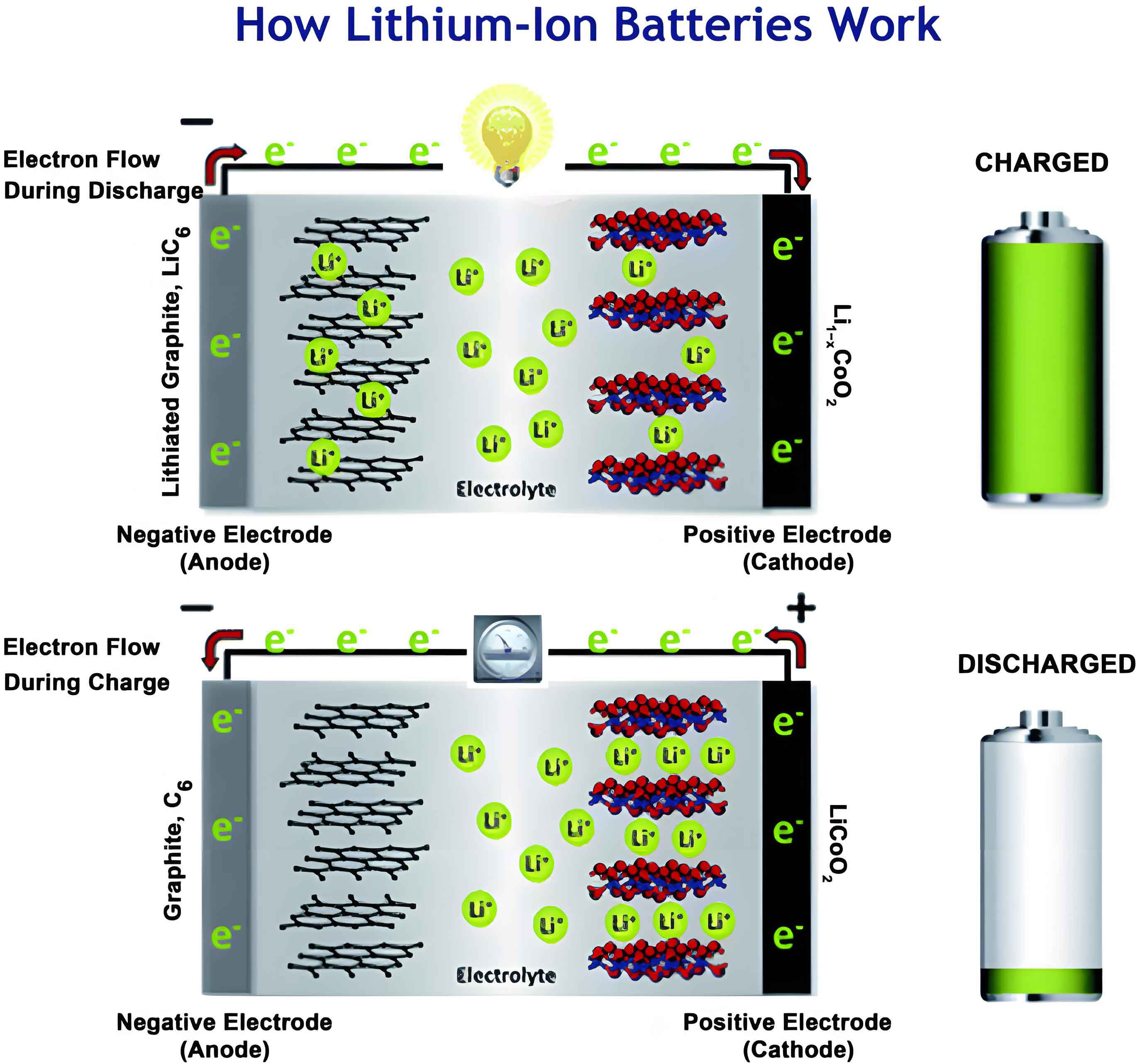
Among the plethora of candidates, layered metal dichalcogenides have garnered significant attention. Tin disulfide (SnS₂) stands out as a particularly promising anode material for lithium-ion batteries. Its appeal lies in a compelling combination of properties: a high theoretical capacity based on a combined conversion and alloying mechanism, abundant natural reserves, low cost, and environmental benignity. The crystal structure of SnS₂ consists of Sn atoms sandwiched between two layers of hexagonally close-packed S atoms, forming S–Sn–S trilayers held together by weak van der Waals forces. This provides a wide interlayer spacing (≈0.59 nm) along the c-axis, which far exceeds the ionic radius of Li⁺ (0.076 nm), facilitating facile intercalation and de-intercalation processes. The overall lithiation mechanism can be described in two main steps:
1. Intercalation and Conversion Reaction: Initially, Li⁺ ions insert into the van der Waals gaps of SnS₂, forming LixSnS₂, followed by a conversion reaction that breaks down the layered structure into metallic Sn nanoparticles embedded in a Li₂S matrix.
$$ \text{SnS}_2 + 4\text{Li}^+ + 4e^- \rightarrow \text{Sn} + 2\text{Li}_2\text{S} $$
2. Alloying Reaction: The generated metallic Sn further reacts with Li⁺ to form various Li–Sn alloys, contributing the majority of the capacity.
$$ \text{Sn} + x\text{Li}^+ + xe^- \leftrightarrow \text{Li}_x\text{Sn} \quad (0 \leq x \leq 4.4, \text{maximum Li}_{22}\text{Sn}_5) $$
The theoretical capacity from the complete conversion of SnS₂ to Li₂S and subsequent alloying to Li₂₂Sn₅ is approximately 1231 mAh g⁻¹, which is over three times that of graphite. This high capacity makes SnS₂ a compelling candidate for the next generation of lithium-ion battery anodes.
However, the practical deployment of pure SnS₂ anodes is severely hindered by several intrinsic drawbacks common to alloying/conversion-type materials. The most critical issue is the enormous volume variation (often exceeding 200%) associated with the Li–Sn alloying/de-alloying process. This repetitive expansion and contraction cause severe mechanical stress, leading to electrode pulverization, loss of electrical contact, and continuous reformation of the solid-electrolyte interphase (SEI). Consequently, rapid capacity fading and poor cycling stability ensue. Additionally, SnS₂ suffers from relatively low intrinsic electronic conductivity and sluggish Li⁺ ion diffusion kinetics, impairing its rate capability. The dissolution and shuttling of polysulfides (Li₂Sx, 2 < x ≤ 8) generated during the conversion reaction can also lead to active material loss and electrolyte depletion.
To overcome these formidable challenges and unlock the full potential of SnS₂, sophisticated material engineering strategies have been developed. Our focus is to explore the significant research progress centered on designing advanced SnS₂-based nanocomposites. We will delve into three primary modification pathways: nanostructural design of pure SnS₂, compositing with various carbonaceous materials, and constructing heterostructures with other metal sulfides. Each strategy aims to mitigate volume change, enhance conductivity, and stabilize the electrode/electrolyte interface, ultimately leading to superior electrochemical performance in lithium-ion batteries.
Nanostructural Engineering of Pure SnS₂
The first line of defense against the detrimental effects of volume strain is to reduce the absolute dimensions of the active material. Designing SnS₂ with various nano-architectures (e.g., nanosheets, nanoflowers, hollow spheres) can effectively shorten the diffusion path for both Li⁺ ions and electrons, provide a larger electrode-electrolyte contact area for faster reaction kinetics, and, to some extent, better accommodate mechanical stress due to available void spaces. The synthesis of such nanostructures is typically achieved through wet-chemical methods, most commonly hydrothermal/solvothermal synthesis, which allows for good control over morphology.
For instance, researchers have successfully synthesized SnS₂ hollow microspheres assembled from two-dimensional (2D) nanosheets. This unique structure provides internal void space to buffer volume expansion. When tested in a half-cell configuration versus Li/Li⁺, this material delivered an initial reversible capacity of around 592 mAh g⁻¹ at 0.1 A g⁻¹ and retained 532 mAh g⁻¹ after 60 cycles. In another study, two-dimensional SnS₂ nanoplates were fabricated. Their thin, plate-like morphology favored rapid ion transport. This electrode maintained a capacity of 521 mAh g⁻¹ after 50 cycles at 0.1 A g⁻¹, corresponding to a capacity retention of about 90% from its initial reversible value.
A more controlled synthesis using a microwave-hydrothermal method with a chelating agent produced uniform SnS₂ nanosheets. This electrode exhibited an exceptionally high initial discharge capacity of 1485.8 mAh g⁻¹ at 0.1 A g⁻¹, though a significant portion of this is attributed to irreversible side reactions like SEI formation. After 100 cycles, a stabilized reversible capacity of 327.3 mAh g⁻¹ was maintained with a high Coulombic efficiency of ~99.8%, indicating improved reversibility in later cycles.
While nanostructuring undoubtedly improves performance compared to bulk SnS₂, the benefits are often insufficient for long-term cycling. The high surface area of nanomaterials can exacerbate side reactions with the electrolyte, leading to thick and unstable SEI growth. Furthermore, nanoparticles tend to agglomerate during cycling, and the intrinsic volume change stress, although mitigated, is not fully eliminated. Therefore, while an essential foundational step, pure SnS₂ nanostructures typically require further integration with other functional components to achieve truly durable high-performance anodes for lithium-ion batteries. The capacity decay, even in nanostructured forms, can be modeled empirically by a equation considering both SEI growth and active material loss:
$$ C_n = C_0 – k_1 \sqrt{n} – k_2 n $$
where \(C_n\) is the capacity at cycle \(n\), \(C_0\) is the initial capacity, \(k_1\) is a constant related to diffusion-limited SEI growth, and \(k_2\) is a constant related to cumulative irreversible active material loss.
SnS₂/Carbonaceous Composites: A Synergistic Alliance
Compositing SnS₂ with carbon materials is arguably the most prevalent and effective strategy to enhance anode performance. Carbon matrices (graphene, carbon nanotubes, porous carbon, etc.) serve multiple roles: (i) they provide a highly conductive network for rapid electron transport; (ii) they act as a mechanical buffer to confine volume expansion of SnS₂; (iii) they prevent the aggregation and restacking of SnS₂ nanosheets; and (iv) they can contribute to capacity via Li⁺ storage at defects or edges. The resulting synergistic effects lead to dramatically improved cycling stability and rate capability.
SnS₂/Graphene and Reduced Graphene Oxide (rGO) Composites
Graphene and its derivative, rGO, are ideal substrates due to their excellent conductivity, mechanical flexibility, and high surface area. SnS₂ nanoparticles or nanosheets can be anchored onto graphene sheets via in-situ growth during hydrothermal reactions. For example, a SnS₂@graphene nanosheet (GNS) composite delivered a high capacity of 1250.8 mAh g⁻¹ after 150 cycles at 0.1 A g⁻¹ and maintained 798.6 mAh g⁻¹ at a higher current density of 0.5 A g⁻¹. First-principles calculations reveal that the graphene substrate donates electrons to the SnS₂ layer, inducing a semiconductor-to-metal transition in the composite and reducing the Li adsorption energy, which thermodynamically favors Li storage and suppresses Li clustering.
rGO, with its residual oxygen functional groups, often allows for stronger interfacial bonding with SnS₂. An ion-liquid-assisted synthesis of SnS₂@rGO demonstrated exceptional long-term stability, retaining 1045.8 mAh g⁻¹ after 700 cycles at 0.5 A g⁻¹. In another design, sheet-stacked SnS₂/rGO heterostructures were developed, where the intimate contact and sufficient buffer space enabled a capacity of 840 mAh g⁻¹ after 120 cycles at 0.2 A g⁻¹ and 450 mAh g⁻¹ after 1000 cycles at 1 A g⁻¹. Further functionalization, such as sulfur-doping of the rGO (S-rGO), can create covalent C-S bonds with SnS₂. This strong coupling effectively prevents direct contact between SnS₂ and the electrolyte, inhibiting irreversible conversion to sulfites and enhancing stability. The SnS₂/S-rGO electrode maintained an impressive 1776.4 mAh g⁻¹ after 200 cycles at 1 A g⁻¹.
SnS₂/Carbon Nanotube (CNT) Composites
CNTs, with their one-dimensional tubular structure, high aspect ratio, and excellent conductivity, can weave through SnS₂ architectures to form highly conductive and mechanically robust networks. A composite of SnS₂ grown on CNTs showed a reversible capacity of 660 mAh g⁻¹ after 100 cycles at 0.1 A g⁻¹. A more advanced design involved coating the CNT/SnS₂ structure with a porous amorphous carbon layer (CNT/SnS₂@C). This dual-carbon confinement strategy—where CNTs provide axial conductivity and the porous carbon shell offers volumetric buffering—was highly effective. Density Functional Theory (DFT) calculations supported the enhanced Li adsorption capability of this structure. The CNT/SnS₂@C anode retained 837 mAh g⁻¹ after 100 cycles at 0.1 A g⁻¹ and 529.8 mAh g⁻¹ after 1000 cycles at 1.0 A g⁻¹.
SnS₂ with Other Carbon Architectures
Various other carbon forms are also employed. Carbon spheres can act as cores for a core-shell structure (C@SnS₂), where SnS₂ nanosheets grow radially on the surface. This 0D/2D composite retained 802 mAh g⁻¹ at 0.1 A g⁻¹ after 100 cycles and 442 mAh g⁻¹ at 1 A g⁻¹ after 600 cycles. The carbon core provides structural integrity and conductivity. Helical carbon nanofibers (HCNFs) offer a unique 3D spiral structure that effectively dissipates stress. The HCNFs@SnS₂ composite exhibited a reversible capacity of 901.6 mAh g⁻¹ and maintained 470.9 mAh g⁻¹ after 1000 cycles at 2 A g⁻¹. Perhaps one of the most striking performances comes from SnS₂ confined within N-doped porous carbon nanofibers (SnS₂@N-HPCNFs). This design features hierarchical porosity and conductive networks, enabling an ultra-high rate capability. The anode delivered 1935.5 mAh g⁻¹ at 0.1C (≈0.12 A g⁻¹), retained 289.6 mAh g⁻¹ at an ultra-high rate of 30C, and showed 84% capacity retention after 3000 cycles at 20C.
The synergistic effect in carbon composites can be conceptually summarized. The carbon matrix enhances the overall electronic conductivity (\(\sigma_{\text{eff}}\)) which can be approximated by a percolation model when above a critical filler concentration:
$$ \sigma_{\text{eff}} \propto (p – p_c)^t $$
where \(p\) is the volume fraction of the conductive carbon phase, \(p_c\) is the percolation threshold, and \(t\) is a critical exponent. Simultaneously, it constrains the volume expansion of SnS₂, reducing the effective strain (\(\epsilon_{\text{eff}}\)) experienced by the active material particle of radius \(r\) compared to its free expansion (\(\epsilon_{\text{free}}\)):
$$ \epsilon_{\text{eff}} \approx \epsilon_{\text{free}} \cdot f(r, E_{\text{carbon}}, \text{morphology}) $$
where \(f\) is a reducing function dependent on particle size, the elastic modulus of the carbon matrix \(E_{\text{carbon}}\), and the composite morphology.
| Material | Key Morphology | Key Performance Metric (Capacity / Current Density / Cycle Number) |
|---|---|---|
| SnS₂ Hollow Microspheres | 3D Hollow spheres from 2D nanosheets | 532 mAh g⁻¹ / 0.1 A g⁻¹ / after 60 cycles |
| SnS₂ Nanoplates | 2D Plate-like | 521 mAh g⁻¹ / 0.1 A g⁻¹ / after 50 cycles |
| SnS₂@GNS | Nanoparticles on graphene sheets | 1250.8 mAh g⁻¹ / 0.1 A g⁻¹ / after 150 cycles |
| SnS₂@rGO | Sheet-stacked heterostructure | 840 mAh g⁻¹ / 0.2 A g⁻¹ / after 120 cycles |
| CNT/SnS₂@C | SnS₂ on CNT with carbon coating | 837 mAh g⁻¹ / 0.1 A g⁻¹ / after 100 cycles |
| C@SnS₂ | Core-shell (Carbon sphere @ SnS₂ nanosheets) | 442 mAh g⁻¹ / 1 A g⁻¹ / after 600 cycles |
| SnS₂@N-HPCNFs | SnS₂ confined in porous N-doped carbon nanofibers | ~1935 mAh g⁻¹ / 0.1C / initial; 84% retention after 3000 cycles at 20C |
SnS₂/Metal Sulfide Heterostructures: Harnessing Interface Engineering
Beyond carbon, constructing heterostructures between SnS₂ and other metal sulfides (e.g., CoS₂, MoS₂, ZnS, FeS₂) represents a sophisticated approach to further boost performance. These composites leverage synergistic effects where different components can offer complementary properties: one may provide high conductivity, another high capacity, and another strong polysulfide adsorption. Furthermore, the built-in electric field at the heterojunction interface can accelerate charge transfer and ion diffusion kinetics.
• SnS₂/CoS₂: Coupling SnS₂ with highly conductive CoS₂ can enhance the overall electronic transport. A smart design encapsulated CoS₂/SnS₂ heterojunctions within a sulfur-doped carbon layer. The internal void space buffered strain, while the S-doped carbon shell improved electronic transfer and suppressed polysulfide dissolution, leading to enhanced performance in potassium-ion batteries, a concept transferable to lithium-ion batteries.
• SnS₂/MoS₂: Both are layered sulfides with similar structures. A 3D layered MoS₂/SnS₂-graphene (GS) composite was synthesized. The heterojunction between MoS₂ and SnS₂ facilitated Li⁺ migration, while the graphene backbone ensured high conductivity and structural flexibility. This composite demonstrated exceptional capacities of 2007.4 mAh g⁻¹ after 100 cycles at 0.1 A g⁻¹ and 3224.3 mAh g⁻¹ after 600 cycles at 0.5 A g⁻¹, showcasing the power of triple-component synergy.
• SnS₂/SnS Heterojunction: Creating a p-n heterojunction within the material itself can be highly effective. A composite of SnS₂-SnS quantum dots (QDs) tightly bonded to rGO sheets was developed. The ultra-long p-n junction interface within the QDs created a built-in electric field that significantly accelerated Li⁺ diffusion. The SnS₂-SnS/rGO electrode showed outstanding rate performance (926 mAh g⁻¹ at 5 A g⁻¹) and ultralong cycle life, maintaining 1075 mAh g⁻¹ after 1000 cycles at 1 A g⁻¹.
• SnS₂/FeS₂: Binary sulfide heterostructures (FeS₂/SnS₂) encapsulated in N-doped carbon and graphene (FSS@NC/rGO) were fabricated. The heterojunction enhanced ion/electron transport, while the double carbon matrix provided conductivity and volume accommodation. The anode delivered 1192.2 mAh g⁻¹ at 0.2 A g⁻¹ and retained 724.9 mAh g⁻¹ after 500 cycles at 2 A g⁻¹.
• Multi-metal Sulfide Systems: Even more complex systems show promise. For example, rGO-supported SnS₂/ZnS heterostructure nanosheets provided short Li⁺ paths and an extra charge transfer drive, achieving 1458.3 mAh g⁻¹ at 0.2 A g⁻¹ and remarkable stability over 4000 cycles at 10 A g⁻¹ (432.4 mAh g⁻¹). Another innovative design involved a triple-phase ZnS/SnS₂/CuS heterostructure inside N-doped carbon nanocubes as a host for Li-SeS₂ batteries, demonstrating high capacity and excellent cycle life due to strong adsorption and catalytic activity towards polyselenides/polysulfides.
The enhanced kinetics in a heterostructure can be related to the reduced activation energy for charge transfer at the interface. The current density \(i\) across the interface under an applied overpotential \(\eta\) can be described by a modified Butler-Volmer equation considering the built-in potential \(V_{bi}\):
$$ i = i_0 \left[ \exp\left(\frac{\alpha F (\eta + V_{bi})}{RT}\right) – \exp\left(-\frac{(1-\alpha) F (\eta + V_{bi})}{RT}\right) \right] $$
where \(i_0\) is the exchange current density, \(\alpha\) is the charge transfer coefficient, \(F\) is Faraday’s constant, \(R\) is the gas constant, and \(T\) is temperature. The built-in field effectively reduces the kinetic barrier for the reaction.
Challenges, Future Perspectives, and Conclusion
Despite remarkable progress, several challenges must be addressed to bridge the gap between laboratory excellence and commercial application in lithium-ion batteries.
1. Deeper Mechanistic Understanding: While the general conversion/alloying mechanism is known, real-time, operando studies (using techniques like in-situ TEM, XRD, and XAS) are needed to precisely elucidate phase evolution, SEI dynamics, and failure mechanisms at the nanoscale in these complex composites. This knowledge is crucial for targeted material design.
2. Optimization of Multi-component Composites: The future lies in rationally designed multi-component systems. The most promising path involves integrating SnS₂ with a conductive metal sulfide (to boost kinetics and provide additional capacity) and a robust, conductive carbon matrix (to ensure mechanical integrity and long-range electron transport). The optimization of ratios, interfacial bonding, and hierarchical porosity in such ternary or quaternary composites is key. The volumetric energy density of such composites, a critical parameter for practical cells, needs more focus and can be estimated as:
$$ E_v = \frac{C_m \cdot \rho_{\text{composite}}}{3.6} $$
where \(E_v\) is in Wh L⁻¹, \(C_m\) is the gravimetric capacity in mAh g⁻¹, and \(\rho_{\text{composite}}\) is the tap density of the composite electrode in g cm⁻³. Maximizing both \(C_m\) and \(\rho_{\text{composite}}\) is a non-trivial engineering challenge.
3. Scalable and Sustainable Synthesis: Many synthesis routes for these advanced nanostructures involve multiple steps, expensive precursors, or harsh conditions. Developing simpler, scalable, low-cost, and environmentally friendly fabrication methods (e.g., solid-state reactions, mechanochemical synthesis) is essential for industrial translation.
<strong.4. evaluation: The vast majority of studies report half-cell performance versus Li metal. Rigorous evaluation in full-cell configurations paired with commercial or high-voltage cathodes (like NMC or LFP) under realistic conditions (limited Li inventory, lean electrolyte) is the ultimate test for any new anode material and is urgently needed for SnS₂-based anodes.
5. Addressing the Sulfide Shuttle: For conversion-type sulfides, strategies to definitively trap lithium polysulfides within the anode structure—through strong chemical bonding or physical confinement—remain an important area of research to improve Coulombic efficiency and cycle life.
In conclusion, SnS₂ stands as a highly promising high-capacity anode material for next-generation lithium-ion batteries. Its inherent limitations of volume expansion and poor conductivity have been creatively addressed through nanostructuring and, more effectively, through compositing with carbon materials and engineering heterostructures with other metal sulfides. These strategies have yielded composites with dramatically improved cycling stability, rate capability, and specific capacity, often exceeding 1000 mAh g⁻¹ over hundreds of cycles. The continuous evolution from simple nanostructures to complex, multi-functional composites highlights the sophisticated material engineering approaches driving the field forward. While challenges in scalability, cost, and full-cell integration remain, the research trajectory for SnS₂-based anodes is clearly pointed toward high-performance, durable energy storage. Future efforts focused on rational multi-component design, sustainable synthesis, and rigorous full-cell testing will be pivotal in transforming these promising laboratory materials into commercially viable technologies that can power the future of lithium-ion batteries.