
The global imperative for carbon peaking and carbon neutrality, set against a backdrop of resource constraints and environmental degradation, has catalyzed the vigorous development of new energy industries worldwide. The battery energy storage system (BESS) sector, poised at the heart of this transition, presents immense growth potential. However, its trajectory is fraught with significant challenges, including prominent product safety concerns and a lag in standardization. This article, drawing upon an analysis of relevant policies, regulations, and standards, examines the developmental trends and current state of standardization within the BESS industry. By integrating technological advancements and market demands, it explores pathways for refining detection and evaluation standards. The discussion herein aims to provide substantial theoretical reference and practical guidance for fostering the healthy and sustainable development of the battery energy storage system ecosystem.
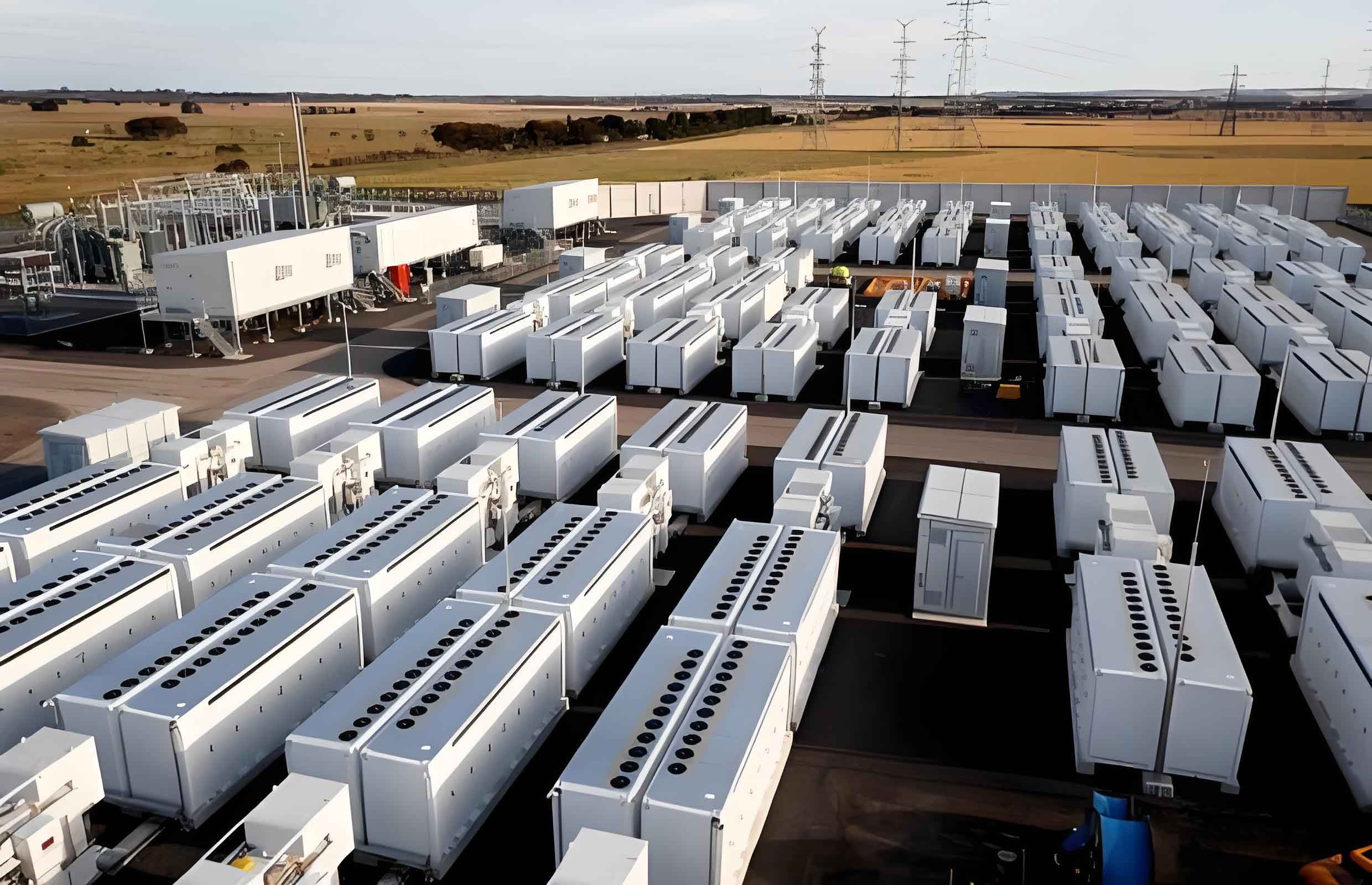
A battery energy storage system serves as a pivotal device in the energy storage domain, enabling the interconversion and storage of electrical and chemical (or physical/kinetic) energy. It plays an indispensable role in enhancing energy utilization efficiency, promoting the application of clean energy, and facilitating the global energy transition. In recent years, electrochemical storage has seen its share of the global energy storage market surge rapidly. Lithium-ion batteries, owing to their superior overall performance, dominate the market, while flow batteries and sodium-sulfur batteries fulfill unique roles in specific applications. Data from industry analyses indicate explosive growth in shipments, underscoring the centrality of the battery energy storage system in modern energy infrastructure. Unlike traditional consumer batteries, the core function of a battery energy storage system is the long-duration storage of vast amounts of energy coupled with frequent, high-efficiency charge-discharge cycles. This capability is critical for diverse application scenarios such as grid peak shaving and valley filling, renewable energy integration, and emergency backup power. Nevertheless, persistent issues related to safety, cycle life, reliability assurance, and full lifecycle cost remain key bottlenecks constraining its wider adoption. Consequently, establishing a scientific and rigorous standard system for testing and evaluating battery energy storage systems is of paramount importance. Such standards are essential for ensuring product safety and reliability, enhancing performance and quality, guiding technological progress, reducing application costs, and promoting fair market competition.
Evolutionary Trends in the Battery Energy Storage System Industry
Rapid Expansion of Market Scale
Driven by policy incentives and market demand, the energy storage industry is flourishing. The global energy transition and the increasing penetration of wind and solar renewables have created a robust and growing demand for energy storage solutions. Electrochemical storage, particularly lithium-ion-based battery energy storage systems, has become a cornerstone for grid stability due to its advantages of fast response, high efficiency, and flexible deployment. Concurrently, continuous technological advancements and economies of scale have led to significant cost reductions, greatly improving the economic viability of storage projects. Furthermore, the application scenarios for battery energy storage systems are continually expanding. Moving beyond traditional grid ancillary services, they are now proliferating in customer-side applications such as commercial & industrial storage, residential storage, as well as in telecommunications base stations, data centers, and electric vehicle charging infrastructure. This diversification is propelling the battery energy storage system industry into a period of high-speed growth, as illustrated by the following projected capacity additions:
| Application Segment | Key Driver | Typical BESS Configuration Focus |
|---|---|---|
| Grid-Scale Services (Frequency Regulation, Peak Shaving) | Grid Stability, Renewable Integration Mandates | High Power, Rapid Response, Long Cycle Life |
| Commercial & Industrial (C&I) | Demand Charge Reduction, Energy Arbitrage, Backup Power | Balance of Energy & Power, Safety, ROI |
| Residential | Self-Consumption, Backup Power, Time-of-Use Optimization | Safety, Compact Size, Ease of Installation, Cycle Life |
| Off-Grid & Microgrids | Energy Access, Grid Independence, Diesel Replacement | High Reliability, Deep-Cycle Capability, Wide Temperature Range |
Diversification of Technology Pathways
The technology landscape for battery energy storage systems is evolving towards greater diversity to meet the differentiated requirements of various applications concerning cost, lifespan, safety, energy density, and power characteristics. Each battery chemistry presents a unique set of advantages and limitations, collectively enriching the technology portfolio available for deploying a battery energy storage system.
| Technology | Key Advantages | Primary Challenges | Relevant Standardization Focus |
|---|---|---|---|
| Lithium-ion (NMC, LFP, etc.) | High energy density, long cycle life, mature supply chain, declining cost. | Thermal runaway risk, resource dependency (Li, Co, Ni), aging mechanisms. | Safety (cell to system), performance degradation, reliability, recycling. |
| Sodium-ion | Abundant resources, low-cost potential, good low-temperature performance, enhanced safety. | Lower energy density vs. mature Li-ion, shorter demonstrated cycle life, nascent supply chain. | Performance benchmarking, safety testing protocols, transportation standards. |
| Flow Batteries (e.g., Vanadium Redox) | High intrinsic safety, very long cycle life, decoupled power & energy, recyclability. | Lower energy density, system complexity, higher upfront capital cost. | System efficiency, stack durability, electrolyte stability, long-term reliability. |
| Lead-Acid / Lead-Carbon | Mature technology, low cost, established recycling, excellent high-rate performance. | Low energy density, limited cycle life, sulfation at partial state-of-charge. | Cycle life testing for new variants (lead-carbon), capacity validation. |
This diversification necessitates a nuanced approach to standardizing the evaluation of each battery energy storage system technology, as a one-size-fits-all methodology is insufficient.
Current Landscape of Battery Energy Storage System Testing Standards
Lithium-ion Battery Standards
As the dominant market technology, the standard framework for lithium-ion based battery energy storage systems is relatively mature yet requires continuous refinement. Standards operate at multiple levels: international, regional/national, and industry-specific.
International Standards: IEC 62619 specifies safety requirements for secondary lithium cells and batteries used in industrial applications, including stationary energy storage. IEC 62620 focuses on performance testing for such batteries. IEC 63056 provides safety requirements and tests for secondary lithium batteries and cells specifically for electrical energy storage (EES) systems, covering aspects like insulation, overcharge/discharge protection, short circuit, and reverse connection protection. In North America, UL 1973 is a widely adopted standard evaluating the safety and performance of batteries for use in stationary, vehicle auxiliary power, and light electric rail applications. It encompasses electrical, mechanical, environmental, and functional safety tests critical for a comprehensive battery energy storage system assessment.
National Standards: China’s GB/T 36276—2023 “Lithium-ion battery for electrical energy storage” defines requirements for appearance, dimensions, electrical performance, environmental adaptability, durability, and safety. Supporting standards like GB/T 43522—2023 provide guidance for quality surveillance during manufacturing, and T/CES 172—2022 details testing specifications for the Battery Management System (BMS). Despite this coverage, gaps remain. For instance, standardized accelerated aging test protocols that accurately correlate with real-world degradation across diverse grid-duty cycles are needed. The evaluation of propagation resistance within a battery energy storage system module or enclosure during a thermal runaway event also requires more harmonized and severe test methods. A generalized formula for capacity fade, a key performance metric, is often modeled as:
$$ Q_{loss} = A \cdot \exp\left(-\frac{E_a}{k_B T}\right) \cdot (t)^n $$
where $Q_{loss}$ is the capacity loss, $A$ is a pre-exponential factor, $E_a$ is the activation energy, $k_B$ is Boltzmann’s constant, $T$ is the absolute temperature, $t$ is time, and $n$ is the time exponent. Standards must define acceptable parameters and testing conditions for such models.
Lead-Acid / Lead-Carbon Battery Standards
Standards for these technologies primarily regulate capacity retention, cycle durability, and basic safety. Internationally, IEC 61427 addresses batteries for renewable energy storage, while IEC 60896 covers general requirements, test methods, and safety for stationary lead-acid batteries. Nationally, GB/T 22473.1—2021 details key indicators like capacity, consistency, sealing, charge acceptance, and cycle life for lead-acid batteries in off-grid photovoltaic storage. For the advanced lead-carbon variant, GB/T 36280—2023 “Lead-carbon battery for electrical energy storage” stipulates characteristics and test methods from appearance to safety, acknowledging its improved charge acceptance and cycle life. The performance of a lead-carbon battery energy storage system in high-rate partial-state-of-charge (HRPSoC) operation, a common duty cycle, requires specific standardized testing profiles distinct from those for traditional lead-acid or lithium-ion systems.
Flow Battery Standards
The standardization for flow battery energy storage systems is evolving from component-level to comprehensive system-level assessment. The IEC 62932 series is a pivotal international standard covering general requirements, performance, and safety for flow battery energy storage systems. In China, GB/T 33339—2016 and GB/T 43512—2023 provide testing and reliability evaluation methods for all-vanadium flow battery systems, respectively. Component standards like NB/T 42133—2017 specify technical conditions for electrolytes. Emerging chemistries like zinc-bromine and zinc-nickel flow batteries are also developing dedicated test method standards (e.g., NB/T 11224—2023). Key performance metrics for a flow battery energy storage system, such as round-trip energy efficiency ($\eta_{RT}$) over time, are crucial and can be expressed as:
$$ \eta_{RT}(t) = \frac{E_{discharge}(t)}{E_{charge}(t)} \times 100\% $$
Standards must define stable operating conditions and measurement protocols for this and other parameters like capacity decay rate and crossover effects.
Optimization Recommendations for Battery Energy Storage System Testing Standards
The dynamic innovation in battery energy storage system technologies and the increasing complexity of market demands necessitate that standards evolve to be more detailed, scenario-specific, and forward-looking.
Deepening and Systematizing Safety Performance Standards
Safety is the non-negotiable foundation for any battery energy storage system deployment. Future standards must adopt a risk-based, full-lifecycle approach. This involves:
- Chemistry and Form-Factor Specific Tests: Tailoring abuse tests (thermal, mechanical, electrical) to the specific failure modes of different chemistries (e.g., LFP vs. NMC) and cell formats (prismatic, cylindrical, pouch).
- Application-Specific Risk Profiles: Differentiating safety requirements between energy-oriented (long duration) and power-oriented (fast response) battery energy storage systems. The former may prioritize long-term chemical stability, while the latter may focus on high-rate thermal management.
- Full-Lifecycle Safety: Extending safety evaluation beyond initial production to cover transportation, installation, operation (including various states of charge and health), maintenance, decommissioning, and second-life or recycling phases. Standards should mandate safety assessments at defined aging milestones, e.g., after 20% and 50% capacity fade.
- System-Level Integration Safety: Strengthening standards for the integrated safety of the entire battery energy storage system. This includes rigorous testing of the functional safety (e.g., ISO 26262 / IEC 61508 adapted for BESS) of the BMS, the reliability of thermal management systems, and the efficacy of fire suppression and propagation mitigation designs under realistic conditions. A system-level hazard analysis should be a required part of the certification process for any large-scale battery energy storage system.
The progression of thermal runaway, a critical safety event, can be modeled by equations considering heat generation and transfer. Standards could reference such models for defining worst-case test conditions:
$$ \rho C_p \frac{\partial T}{\partial t} = \nabla \cdot (k \nabla T) + \dot{q}_{gen} $$
where $\rho$ is density, $C_p$ is heat capacity, $T$ is temperature, $t$ is time, $k$ is thermal conductivity, and $\dot{q}_{gen}$ is the internal heat generation rate from reactions.
Unifying and Accelerating Cycle Life & Reliability Standards
Cycle life is a cornerstone of the levelized cost of storage (LCOS) for a battery energy storage system. The current lack of harmonized testing protocols hinders objective comparison and slows deployment.
- Unified Test Protocols: Industry consortia should establish benchmark duty cycles representing major applications (e.g., solar smoothing, daily arbitrage, frequency regulation). Standards must precisely define charge/discharge C-rates, depth of discharge (DOD) windows, temperature profiles, rest periods, and end-of-life criteria (e.g., capacity fade to 80% of initial or increase in internal resistance beyond a threshold).
- Accelerated Testing Methodologies: Developing and validating scientifically robust accelerated aging tests is crucial. Standards should outline methods using elevated temperature and/or altered voltage windows, with clear acceleration factors and correlation requirements to real-world operation. This allows for faster qualification of new battery energy storage system technologies.
- Comprehensive Reliability Metrics: Beyond mean time between failures (MTBF), standards need to incorporate metrics for performance consistency across cells/modules within a battery energy storage system, early failure rate (infant mortality), and failure mode distribution. Reliability block diagrams and probabilistic reliability assessment methods should be integrated into testing and reporting standards.
A standardized cycle life model under specific conditions could be expressed as:
$$ N_{EOL} = \alpha \cdot (DOD)^{-\beta} \cdot \exp\left(-\frac{\gamma}{T}\right) $$
where $N_{EOL}$ is the number of cycles to end-of-life, $DOD$ is the depth of discharge, $T$ is the operating temperature, and $\alpha, \beta, \gamma$ are technology-dependent constants derived from standardized tests.
Comprehensive and Scenario-Driven Environmental Adaptation Standards
A battery energy storage system must operate reliably across diverse and often harsh global environments. Existing standards need significant expansion.
- Expanded Environmental Stress Factors: Beyond basic high/low temperature and humidity, standards must incorporate test requirements for:
- Corrosive Atmospheres: Salt spray (for coastal installations), sulfur dioxide (for industrial areas).
- Particulate Contamination: Sand and dust ingress (for desert environments).
- Geophysical Factors: Vibration and shock profiles for seismic zones, performance at high altitudes (low pressure).
- Biological Factors: Resistance to mold and fungus (for humid tropical climates).
- Electrical Environment: More stringent electromagnetic compatibility (EMC) tests for immunity and emissions, especially when a battery energy storage system is collocated with sensitive grid equipment.
- Combined Stress Testing: Moving from single-factor tests to multi-stress, sequential, or combined tests that better simulate real-world conditions. For example, a test sequence might involve thermal cycling combined with vibrational stress, followed by a humidity freeze cycle, mimicking seasonal changes and operational wear on a containerized battery energy storage system.
- Region-Specific Profiles: Developing regional application notes or annexes within international standards that define representative environmental profiles for major markets (e.g., Nordic cold, Middle Eastern heat and dust, Tropical humidity).
The degradation due to combined stresses can be non-linear. A framework for a combined stress test might be defined by a matrix of conditions, and the performance retention $R$ could be evaluated as:
$$ R = f(T_{min}, T_{max}, \Delta T_{cycle}, RH\%, [Salt], t_{vibe}, …) $$
where the function $f$ is defined by the standard’s specific test sequence and pass/fail criteria for the battery energy storage system’s key performance indicators.
Conclusion
The battery energy storage system industry is navigating a period of rapid expansion and profound technological change. A robust, adaptive, and comprehensive standard system for testing and evaluation forms the essential bedrock for its safe, reliable, and sustainable growth. While existing international and national standards provide a crucial foundation for mainstream technologies, significant opportunities for enhancement remain in terms of systemic coherence, risk-targeted specificity, future-oriented foresight, and global harmonization. The path forward for battery energy storage system standards must prioritize: the deepening and systematization of safety protocols across the entire lifecycle; the unification and scientific acceleration of cycle life and reliability assessments; and the comprehensive, scenario-driven expansion of environmental adaptability requirements. The continuous development, revision, and rigorous implementation of such standards will be instrumental in ensuring product quality and safety, guiding innovation towards market needs, establishing fair competitive practices, and ultimately, empowering battery energy storage systems to fulfill their critical role in achieving a sustainable global energy future.