
As a researcher in the field of energy storage and fire safety, I have been closely monitoring the adoption of lithium iron phosphate (LiFePO4) batteries in substation DC power systems. These batteries offer significant advantages over traditional lead-acid batteries, such as longer cycle life, superior rate performance, good temperature characteristics, and environmental friendliness. However, the inherent safety of LiFePO4 batteries remains a critical concern, especially in unmanned substations where thermal runaway events can lead to fires or explosions, jeopardizing grid reliability. In this article, I will review the current research progress on fire safety technology for LiFePO4 batteries in substations, covering combustion mechanisms, causes of thermal runaway, mitigation strategies, safety warning systems, and fire suppression methods. My goal is to provide a comprehensive overview that can guide future developments and practical applications.
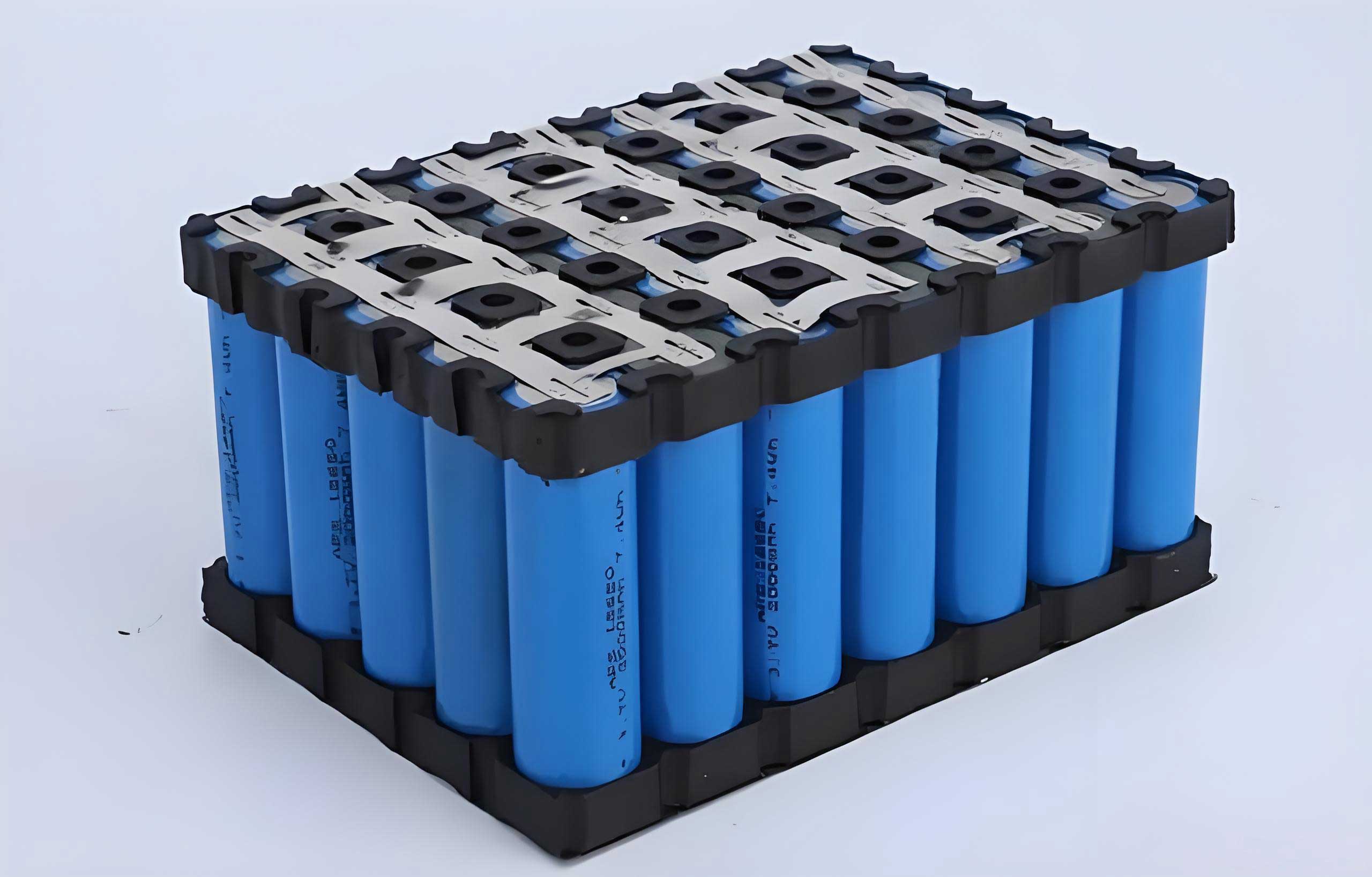
The combustion mechanism of a LiFePO4 battery fundamentally stems from thermal runaway and thermal propagation. Typically, a LiFePO4 battery consists of a LiFePO4 cathode, graphite anode, and an electrolyte like 1 mol/L LiPF6 in a mixture of ethylene carbonate (EC) and dimethyl carbonate (DMC). The thermal runaway process can be modeled in stages. First, the solid electrolyte interphase (SEI) layer on the graphite anode decomposes at elevated temperatures, exposing lithiated graphite to the electrolyte and triggering exothermic reactions that produce hydrocarbon gases such as C2H4 and C2H6. This can be represented by the reaction: $$ \text{SEI} \rightarrow \text{Li}^+ + \text{e}^- + \text{hydrocarbons} $$ Second, as temperature and gas generation accelerate, the separator melts or shrinks, causing internal short circuits. The LiFePO4 cathode may decompose, releasing oxygen: $$ \text{LiFePO}_4 \rightarrow \text{FePO}_4 + \text{Li}^+ + \text{O}_2 $$ Third, the electrolyte decomposes through oxidation by O2, reactions with lithium metal, and LiPF6 breakdown, producing CO2, H2O, and heat. The decomposition of LiPF6 yields PF5, which further reacts with solvents, exacerbating heat generation: $$ \text{LiPF}_6 \rightarrow \text{LiF} + \text{PF}_5 $$ $$ \text{PF}_5 + \text{solvent} \rightarrow \text{exothermic products} $$ Finally, synergistic exothermic reactions between electrode materials and the electrolyte cause a rapid rise in temperature and pressure, leading to venting, combustion, or explosion. For battery packs, thermal propagation occurs through conduction, convection, and radiation, potentially triggering cascading thermal runaway events across multiple LiFePO4 battery cells. The heat transfer can be described by the equation: $$ \frac{\partial T}{\partial t} = \alpha \nabla^2 T + \dot{q} $$ where \( T \) is temperature, \( t \) is time, \( \alpha \) is thermal diffusivity, and \( \dot{q} \) is the heat generation rate per unit volume.
The causes of thermal runaway in LiFePO4 batteries can be categorized into intrinsic battery failures and abuse conditions. I have analyzed these factors based on field observations and experimental studies. Intrinsic failures may arise from manufacturing defects, such as substandard thermal stability of materials, burrs on electrodes that pierce separators, or separator damage. As LiFePO4 batteries age in substation environments, material degradation can compromise safety. Electrical abuse, including overcharge and over-discharge, is common due to cell inconsistencies in battery packs. Even batteries from the same batch exhibit variations, leading to individual cells operating outside safe limits. Thermal abuse results from inadequate temperature management, especially in high-ambient conditions where cooling systems fail. Mechanical abuse, such as挤压, impact, or跌落 during installation or transport, can cause internal short circuits or electrolyte leakage. To quantify these risks, I have compiled data from various studies into Table 1, which summarizes the primary triggers and their effects on LiFePO4 battery safety.
| Trigger Category | Specific Causes | Potential Consequences | Risk Level |
|---|---|---|---|
| Intrinsic Failures | Manufacturing defects, aging | Internal short circuit, reduced thermal stability | High |
| Electrical Abuse | Overcharge, over-discharge | Gas generation, thermal runaway | Medium-High |
| Thermal Abuse | High ambient temperature, poor cooling | Accelerated degradation, overheating | Medium |
| Mechanical Abuse | 挤压, impact, vibration | Structural damage, electrolyte leakage | Medium |
To eliminate thermal runaway risks, I propose a multi-faceted approach focusing on enhancing intrinsic safety, designing protective devices, and optimizing battery management systems (BMS). For intrinsic safety, improvements in materials are crucial. The LiFePO4 cathode can be coated with carbon or oxides like Al2O3 to enhance structural and thermal stability, as shown by the modified surface energy equation: $$ E_{\text{surface}} = \gamma A + \Delta G_{\text{coating}} $$ where \( \gamma \) is surface energy, \( A \) is area, and \( \Delta G_{\text{coating}} \) is the Gibbs free energy change due to coating. Graphite anodes benefit from polymer or carbon coatings to stabilize the SEI layer. Electrolyte modifications include using additives such as trimethyl phosphate (TMP) for flame retardancy or 4-tert-butyl-1,2-dimethoxybenzene (TDB) for overcharge protection. The effectiveness of these additives can be compared using the oxygen consumption calorimetry formula: $$ \text{Heat release rate} = \Delta H_c \cdot \dot{m} $$ where \( \Delta H_c \) is the heat of combustion and \( \dot{m} \) is the mass loss rate. Separators with ceramic coatings or inorganic materials improve mechanical and thermal properties. Solid-state electrolytes offer a promising alternative by eliminating flammable liquids and preventing lithium dendrite penetration. In manufacturing, processes like stacking instead of winding reduce internal stress, as seen in blade-type LiFePO4 battery designs that enhance散热 and safety.
Safety devices include pressure relief valves, thermal barriers, and circuit protections. Pressure valves release gases during thermal runaway but must be calibrated to avoid air ingress. Thermal barriers, such as silica or silicon nitride inserts, inhibit heat propagation with low thermal conductivity \( k \), governed by Fourier’s law: $$ q = -k \nabla T $$ where \( q \) is heat flux. Circuit protections like fuses or positive temperature coefficient (PTC) devices limit current during faults. For BMS optimization, I emphasize thermal management and state monitoring. A BMS should track voltage, current, state of charge (SOC), and temperature for each LiFePO4 battery cell. The SOC can be estimated using coulomb counting: $$ \text{SOC}(t) = \text{SOC}_0 – \frac{1}{C_{\text{nom}}} \int_0^t I(\tau) \, d\tau $$ where \( C_{\text{nom}} \) is nominal capacity and \( I \) is current. Advanced BMS algorithms can predict thermal runaway by detecting anomalies, enabling early intervention such as disconnecting circuits or activating cooling.
Early warning systems are vital for preventing catastrophic failures. I have investigated parameters like temperature, voltage, and characteristic gases. Internal temperature monitoring using embedded thermocouples provides more accurate data than surface measurements. Voltage drops can signal internal short circuits; studies show that for 18650-type LiFePO4 batteries, a sharp voltage decline occurs 127–409 seconds before thermal runaway, offering a预警 window. Gas detection focuses on CO, CO2, and hydrocarbons. The concentration of CO, for instance, can be modeled by the reaction kinetics equation: $$ \frac{d[\text{CO}]}{dt} = k e^{-E_a/(RT)} [\text{precursors}] $$ where \( k \) is rate constant, \( E_a \) activation energy, \( R \) gas constant, and \( T \) temperature. In substations, integrating gas sensors with BMS can provide real-time alerts. Table 2 compares预警 parameters based on sensitivity and response time for LiFePO4 battery systems.
| Warning Parameter | Detection Method | Advantages | Limitations |
|---|---|---|---|
| Temperature | Thermocouples, infrared sensors | Direct indicator of heat buildup | May lag behind internal events |
| Voltage | Voltage sensors in BMS | Early sign of internal short circuits | Affected by load conditions |
| Gases (e.g., CO) | Electrochemical or NDIR sensors | High sensitivity to early reactions | Requires密封 environment |
When thermal runaway escalates to fire, effective灭火 is essential. I have evaluated various灭火 agents, including gaseous, liquid, and solid types. Gaseous agents like heptafluoropropane (HFC) work by interrupting free radical reactions, while CO2 and IG-541 reduce oxygen concentration. Liquid agents such as water, Novec 1230 (perfluorohexanone), and aqueous film-forming foam (AFFF) cool and smother fires. Solid agents like dry powder and aerosols inhibit combustion through chemical or physical means. The灭火 efficiency can be assessed using the extinguishing coefficient \( K \): $$ K = \frac{\dot{m}_{\text{fuel}}}{\dot{m}_{\text{agent}}} $$ where \( \dot{m}_{\text{fuel}} \) and \( \dot{m}_{\text{agent}} \) are mass loss rates of fuel and agent, respectively. Experiments on LiFePO4 battery fires show that water has superior cooling效果, followed by Novec 1230, HFC, ABC dry powder, and CO2. However, in substation settings, factors like electrical conductivity and residue must be considered. For instance, water may cause short circuits, while gaseous agents leave no residue but require密封 enclosures. I recommend a tailored approach based on LiFePO4 battery pack configuration and substation layout.
In conclusion, the adoption of LiFePO4 batteries in substations presents both opportunities and challenges. While these batteries offer performance benefits, safety concerns related to thermal runaway persist. Through my review, I have highlighted key areas for improvement: enhancing material stability, integrating robust safety devices, optimizing BMS for early detection, and selecting appropriate灭火 systems. Future research should focus on developing LiFePO4 battery designs specifically for substation environments, incorporating advanced thermal management and real-time monitoring technologies. Additionally, standardized testing protocols for safety and消防 are needed to ensure reliability. As the grid evolves towards greater sustainability, addressing these safety issues will be crucial for the widespread deployment of LiFePO4 battery systems in power infrastructure. I believe that with continued innovation and collaboration, we can achieve a balance between performance and safety, enabling LiFePO4 batteries to become a trusted component in substation直流 systems worldwide.
To further support this discussion, I have included mathematical models for thermal runaway prediction. For instance, the Arrhenius equation can describe temperature-dependent reaction rates in a LiFePO4 battery: $$ r = A e^{-E_a/(RT)} $$ where \( r \) is reaction rate, \( A \) pre-exponential factor, \( E_a \) activation energy, \( R \) universal gas constant, and \( T \) absolute temperature. This helps in simulating heat generation during abuse conditions. Another useful formula is for heat dissipation from a LiFePO4 battery pack: $$ Q_{\text{dissipated}} = h A (T_{\text{battery}} – T_{\text{ambient}}) $$ where \( h \) is heat transfer coefficient and \( A \) surface area. By balancing heat generation and dissipation, engineers can design better cooling systems. These models underscore the importance of interdisciplinary approaches in advancing LiFePO4 battery safety.
In terms of practical applications, I suggest that substation operators implement regular inspections and maintenance for LiFePO4 battery systems. This includes checking for physical damage, monitoring temperature trends, and calibrating sensors. Training personnel on emergency procedures for LiFePO4 battery fires is also essential. Moreover, collaboration with manufacturers to customize batteries for substation use—such as incorporating built-in thermal barriers or advanced BMS—can mitigate risks. As research progresses, we may see innovations like self-healing materials or AI-driven预警 systems that further enhance the safety of LiFePO4 batteries. Ultimately, the goal is to ensure that these energy storage solutions contribute to grid resilience without compromising safety.
Reflecting on the broader context, the transition to LiFePO4 batteries aligns with global trends towards clean energy and electrification. However, safety must not be overlooked. By addressing the technical challenges outlined in this article, we can accelerate the adoption of LiFePO4 batteries in substations and other critical infrastructure. I encourage continued investment in R&D for fire safety technologies, as well as knowledge sharing among industry stakeholders. Together, we can build a safer and more reliable power grid for the future, with LiFePO4 batteries playing a pivotal role in energy storage and management.