
In the pursuit of sustainable energy solutions, the development of efficient and safe energy storage systems is paramount. Among these, lithium ion batteries have emerged as a cornerstone technology, powering everything from portable electronics to electric vehicles. However, the use of flammable organic electrolytes poses significant safety and environmental concerns. This has spurred intensive research into aqueous lithium ion batteries, which employ water-based electrolytes to enhance safety and reduce costs. In this article, I will summarize recent progress in electrode materials for aqueous lithium ion batteries, focusing on both cathode and anode materials, and discuss modification strategies such as carbon coating, doping, and nanostructuring. The goal is to provide a comprehensive overview that highlights the potential of aqueous lithium ion batteries for large-scale energy storage applications.
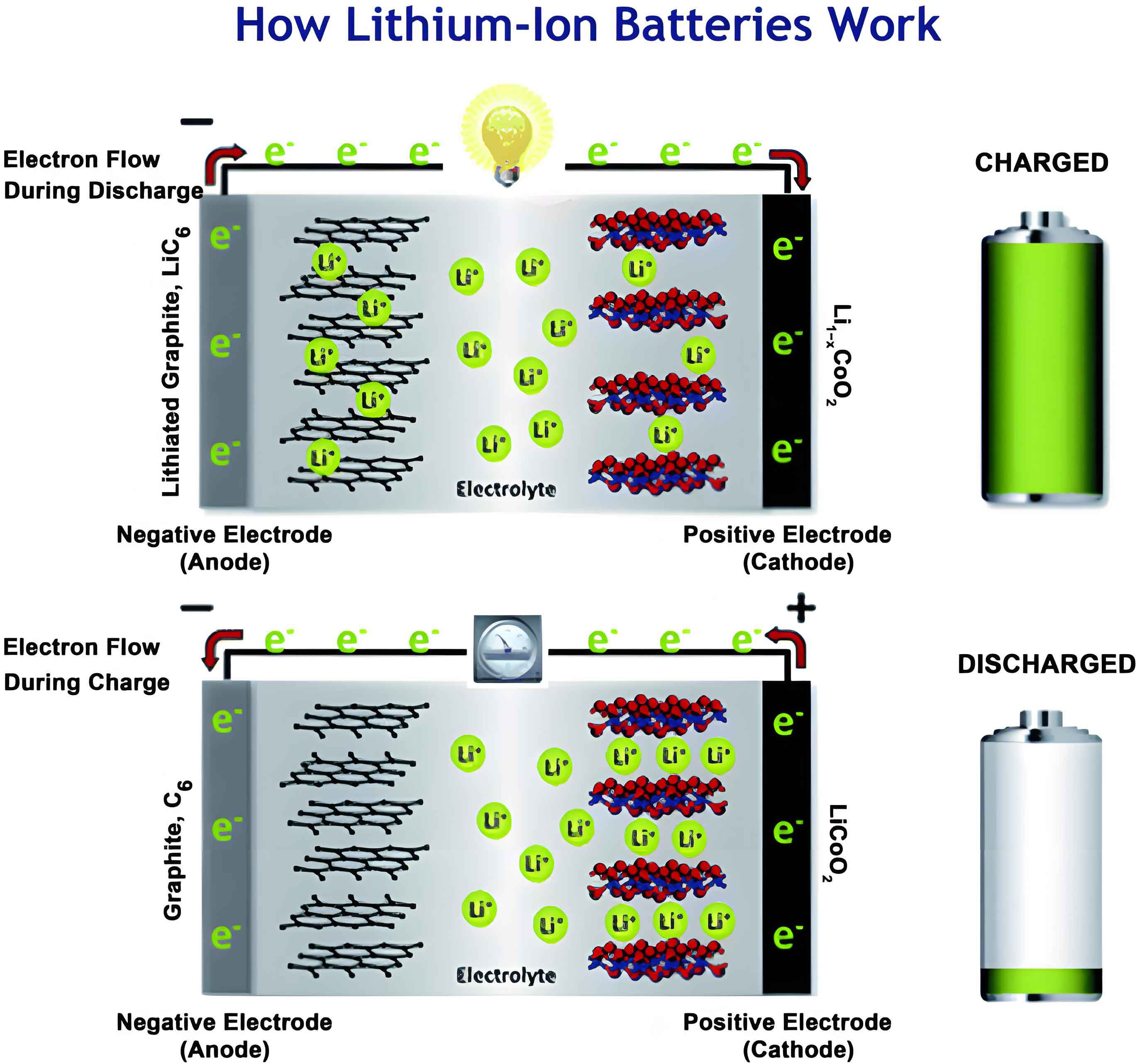
The concept of aqueous lithium ion batteries was first introduced in the 1990s, offering a greener alternative to conventional systems. These batteries utilize aqueous electrolytes, which are non-flammable and environmentally benign, addressing critical safety issues associated with organic solvents. Despite these advantages, aqueous lithium ion batteries face challenges such as limited voltage windows, side reactions (e.g., hydrogen evolution and electrode dissolution), and lower energy density compared to their non-aqueous counterparts. To overcome these hurdles, researchers have explored various electrode materials and modification techniques. This article delves into the latest advancements, with an emphasis on how material design can improve the electrochemical performance of aqueous lithium ion batteries.
Lithium ion batteries rely on the reversible insertion and extraction of lithium ions between cathode and anode materials. In aqueous systems, the choice of electrode materials is crucial due to the reactive nature of water. Ideal materials should exhibit high ionic conductivity, structural stability, and compatibility with aqueous electrolytes. Over the years, numerous materials have been investigated, including oxides and phosphates for cathodes, and vanadium-based compounds for anodes. I will analyze these materials in detail, supported by tables and formulas to illustrate key properties and mechanisms.
Cathode Materials for Aqueous Lithium Ion Batteries
Cathode materials in aqueous lithium ion batteries typically consist of lithium-containing oxides or phosphates that provide high capacity and voltage. Among these, spinel LiMn2O4 and layered LiCoO2 are prominent examples. These materials have been extensively studied due to their favorable electrochemical properties in aqueous media.
Spinel LiMn2O4 is a widely used cathode material for aqueous lithium ion batteries. Its three-dimensional tunnel structure facilitates rapid lithium ion diffusion, making it suitable for high-rate applications. The material offers a moderate voltage plateau (around 1.5 V vs. standard hydrogen electrode) and good capacity retention. However, challenges such as manganese dissolution and Jahn-Teller distortion can degrade performance. To address these issues, researchers have employed strategies like lithium content adjustment and nanostructuring. For instance, varying the lithium content in Li1+xMn2-xO4 can influence manganese oxidation states, as shown by X-ray photoelectron spectroscopy (XPS) analysis. Higher manganese oxidation states (e.g., Mn4+) tend to suppress dissolution and improve stability. The electrochemical performance can be summarized using the following formula for capacity retention: $$ C_r = \frac{C_n}{C_0} \times 100\% $$ where \( C_r \) is the capacity retention, \( C_n \) is the capacity after n cycles, and \( C_0 \) is the initial capacity. For LiMn2O4>, typical values range from 80% to 95% after 500 cycles in optimized electrolytes.
Layered LiCoO2 is another important cathode material, known for its high voltage and capacity. In aqueous lithium ion batteries, LiCoO2 can deliver stable performance but may suffer from cobalt dissolution and phase transitions at the electrode-electrolyte interface. Recent studies have shown that excess lithium incorporation, such as in Li1+xCoO2, can enhance structural stability. The reaction mechanism involves lithium ion intercalation: $$ \text{LiCoO}_2 \leftrightarrow \text{Li}_{1-x}\text{CoO}_2 + x\text{Li}^+ + xe^- $$ This process is reversible in aqueous electrolytes with proper modification. Additionally, flexible electrodes based on LiCoO2 and carbon nanotubes have demonstrated excellent performance in wearable devices, highlighting the versatility of aqueous lithium ion batteries.
To compare different cathode materials, Table 1 summarizes key properties, including specific capacity, voltage, and cycling stability. This information is crucial for selecting materials for specific applications in aqueous lithium ion batteries.
| Material | Specific Capacity (mAh/g) | Voltage (V vs. SHE) | Cycling Stability (Capacity Retention after 500 cycles) | Key Challenges |
|---|---|---|---|---|
| LiMn2O4 | 100-120 | 1.5-1.8 | 85-95% | Mn dissolution, Jahn-Teller distortion |
| LiCoO2 | 140-160 | 1.9-2.2 | 80-90% | Co dissolution, phase instability |
| LiNi1/3Co1/3Mn1/3O2 | 150-170 | 1.8-2.0 | 75-85% | Transition metal dissolution |
| LiFePO4 | 150-160 | 1.5-1.7 | 90-95% | Low conductivity, need for carbon coating |
In addition to these materials, phosphate-based cathodes like LiFePO4 have gained attention for their stability and safety. However, their low electronic conductivity necessitates carbon coating or doping to improve performance in aqueous lithium ion batteries. The modification strategies will be discussed in a later section.
Anode Materials for Aqueous Lithium Ion Batteries
Anode materials in aqueous lithium ion batteries must operate at low potentials to maximize cell voltage while maintaining stability in water. Common choices include titanium-based phosphates and vanadium oxides, which offer suitable insertion potentials and minimal side reactions.
LiTi2(PO4)3 is a promising anode material due to its open three-dimensional structure, which allows fast lithium ion transport. It exhibits a flat voltage plateau around 1.5 V vs. Li+/Li, making it compatible with aqueous electrolytes. However, the lack of a solid electrolyte interphase (SEI) in aqueous systems can lead to direct exposure of the electrode to water, causing degradation. Carbon coating has been widely adopted to mitigate this issue. For example, composites like LiTi2(PO4)3@C/CNTs show improved cycling performance, with capacity retention exceeding 90% after 500 cycles at high rates. The effect of carbon coating can be quantified using the formula for conductivity enhancement: $$ \sigma_{\text{composite}} = \sigma_{\text{material}} + \sigma_{\text{carbon}} $$ where \( \sigma \) represents electronic conductivity. This approach is essential for boosting the performance of aqueous lithium ion batteries.
Vanadium-based oxides, such as VO2 and LiV3O8, are another class of anode materials. VO2 exists in multiple polymorphs (e.g., VO2(B) and VO2(D)), which can be tailored via synthesis methods. These materials offer high capacities but may suffer from vanadium dissolution. Nanostructuring, such as creating submicron spherical hierarchies, has been shown to enhance stability. The lithium insertion reaction for VO2 can be expressed as: $$ \text{VO}_2 + x\text{Li}^+ + xe^- \leftrightarrow \text{Li}_x\text{VO}_2 $$ where \( x \) represents the lithium content. In full cells paired with LiMn2O4 cathodes, these anodes deliver capacities around 100 mAh/g with good rate capability.
Li3VO4 is an emerging anode material with moderate ionic conductivity and low cost. Its performance can be improved through metal ion doping (e.g., with Mg2+ or Mo6+) to create lattice vacancies or expand the structure. Additionally, compounding with carbon materials like graphene or carbon nanotubes enhances electronic conductivity. The capacity of Li3VO4 can be calculated using: $$ C = \frac{nF}{3.6M} $$ where \( C \) is the specific capacity in mAh/g, \( n \) is the number of electrons transferred (typically 2 for Li3VO4), \( F \) is Faraday’s constant (96485 C/mol), and \( M \) is the molar mass (g/mol). This yields theoretical capacities around 400 mAh/g, though practical values are lower due to kinetic limitations.
Table 2 provides a comparison of anode materials for aqueous lithium ion batteries, highlighting their electrochemical properties and modification needs.
| Material | Specific Capacity (mAh/g) | Voltage (V vs. Li+/Li) | Cycling Stability (Capacity Retention after 500 cycles) | Common Modifications |
|---|---|---|---|---|
| LiTi2(PO4)3 | 120-140 | 1.4-1.6 | 85-95% | Carbon coating, composite with CNTs |
| VO2 | 200-250 | 1.2-1.5 | 80-90% | Nanostructuring, doping |
| LiV3O8 | 250-300 | 1.0-1.3 | 75-85% | Surface coating, morphology control |
| Li3VO4 | 300-400 | 0.8-1.2 | 70-80% | Carbon composite, metal ion doping |
The development of advanced anode materials is critical for improving the energy density and lifespan of aqueous lithium ion batteries. Future research may explore new compounds or hybrid structures to further optimize performance.
Modification Strategies for Electrode Materials
To address the limitations of electrode materials in aqueous lithium ion batteries, various modification techniques have been developed. These include carbon coating, ion doping, and nanostructuring, each aimed at enhancing conductivity, stability, or kinetics.
Carbon coating involves encapsulating electrode particles with a thin carbon layer, which improves electronic conductivity and protects against side reactions. This method is particularly effective for materials like LiTi2(PO4)3 and LiFePO4. The carbon layer can be derived from organic sources (e.g., citric acid) or inorganic sources (e.g., carbon nanotubes). The thickness and uniformity of the coating influence performance, as described by the equation for charge transfer resistance: $$ R_{ct} = \frac{RT}{nF} \cdot \frac{1}{k_0} $$ where \( R_{ct} \) is the charge transfer resistance, \( R \) is the gas constant, \( T \) is temperature, \( n \) is electron number, \( F \) is Faraday’s constant, and \( k_0 \) is the standard rate constant. A well-designed carbon coating reduces \( R_{ct} \), leading to better rate capability in aqueous lithium ion batteries.
Ion doping involves substituting host ions with foreign ions to alter electronic or ionic conductivity. For example, doping LiMn2O4 with aluminum or magnesium can stabilize the spinel structure and suppress manganese dissolution. Similarly, doping Li3VO4 with transition metals enhances lithium ion diffusion. The effect of doping can be modeled using the Nernst equation for electrode potential: $$ E = E^0 – \frac{RT}{nF} \ln Q $$ where \( E \) is the electrode potential, \( E^0 \) is the standard potential, and \( Q \) is the reaction quotient. Doping may shift \( E^0 \) or affect \( Q \), thereby tuning the electrochemical behavior of aqueous lithium ion batteries.
Nanostructuring reduces particle size to nanoscale dimensions, increasing surface area and shortening lithium ion diffusion paths. This improves rate performance and cycling stability. Common nanostructures include nanoparticles, nanowires, and nanosheets. For instance, VO2 nanorods exhibit higher capacity than bulk materials due to enhanced kinetics. The relationship between particle size and diffusion time can be expressed as: $$ t = \frac{L^2}{D} $$ where \( t \) is diffusion time, \( L \) is diffusion length (related to particle size), and \( D \) is diffusion coefficient. Smaller \( L \) reduces \( t \), enabling faster charging and discharging in aqueous lithium ion batteries.
Table 3 summarizes the impact of these modification strategies on key electrochemical parameters for aqueous lithium ion batteries.
| Modification Method | Target Material | Effect on Conductivity | Effect on Capacity Retention | Typical Improvement |
|---|---|---|---|---|
| Carbon coating | LiTi2(PO4)3, LiFePO4 | Increases electronic conductivity by 10-100 times | Improves by 10-20% after 500 cycles | Enhanced rate capability and stability |
| Ion doping | LiMn2O4, Li3VO4 | Modifies ionic conductivity and structural stability | Improves by 5-15% after 500 cycles | Suppresses dissolution and phase transitions |
| Nanostructuring | VO2, LiCoO2 | Enhances surface area and shortens ion paths | Improves by 15-25% after 500 cycles | Higher capacity and faster kinetics |
| Composite formation | Various electrodes | Combines conductivity and stability benefits | Improves by 20-30% after 500 cycles | Synergistic effects for overall performance |
These modification strategies are essential for advancing aqueous lithium ion batteries toward commercial viability. Continued innovation in material design will likely yield even better performance in the future.
Challenges and Future Directions
Despite significant progress, aqueous lithium ion batteries still face several challenges that hinder widespread adoption. Key issues include narrow electrochemical stability windows of water (theoretically 1.23 V), which limit cell voltage and energy density. Side reactions such as hydrogen evolution at the anode and oxygen evolution at the cathode can degrade electrodes and reduce efficiency. Additionally, electrode materials may dissolve or undergo irreversible phase changes in aqueous electrolytes. To overcome these obstacles, future research should focus on developing new electrolyte formulations (e.g., “water-in-salt” electrolytes that expand voltage windows), advanced electrode materials with inherent stability, and innovative cell designs.
One promising direction is the exploration of multi-valent ion systems (e.g., using Zn2+ or Mg2+) in aqueous batteries, which could offer higher energy densities. However, lithium ion batteries remain attractive due to their well-understood chemistry and high performance. For aqueous lithium ion batteries, integrating machine learning and computational modeling may accelerate material discovery and optimization. Furthermore, scaling up production and ensuring cost-effectiveness will be crucial for real-world applications such as grid storage and electric vehicles.
In conclusion, aqueous lithium ion batteries represent a safe and sustainable alternative to conventional lithium ion batteries. Through continuous improvement of electrode materials via carbon coating, doping, nanostructuring, and other modifications, their electrochemical performance can be significantly enhanced. As research advances, we anticipate that aqueous lithium ion batteries will play a vital role in the global transition to renewable energy, offering reliable storage for solar and wind power. The journey toward commercialization requires collaborative efforts across disciplines, but the potential benefits for safety and environmental impact make it a worthwhile pursuit.
The field of aqueous lithium ion batteries is dynamic and evolving, with new discoveries emerging regularly. By staying informed about the latest developments, we can contribute to the advancement of this technology. I encourage researchers to explore novel materials and strategies, always keeping in mind the ultimate goal of creating efficient, durable, and eco-friendly energy storage solutions. The future of aqueous lithium ion batteries looks bright, and I am optimistic about their role in shaping a sustainable energy landscape.