
In the context of global energy transition and the pursuit of carbon neutrality, energy storage technologies have become pivotal. Among them, the lithium-ion battery stands out due to its high energy density, long cycle life, and environmental friendliness, making it a cornerstone for renewable energy integration and electric mobility. The manufacturing process of lithium-ion batteries is complex, with electrode drying being a critical step that significantly impacts performance, safety, and cost. This article delves into the drying techniques, mechanisms, influencing factors, and future directions for lithium-ion battery electrodes, emphasizing the need for optimized drying processes to enhance battery quality and efficiency.
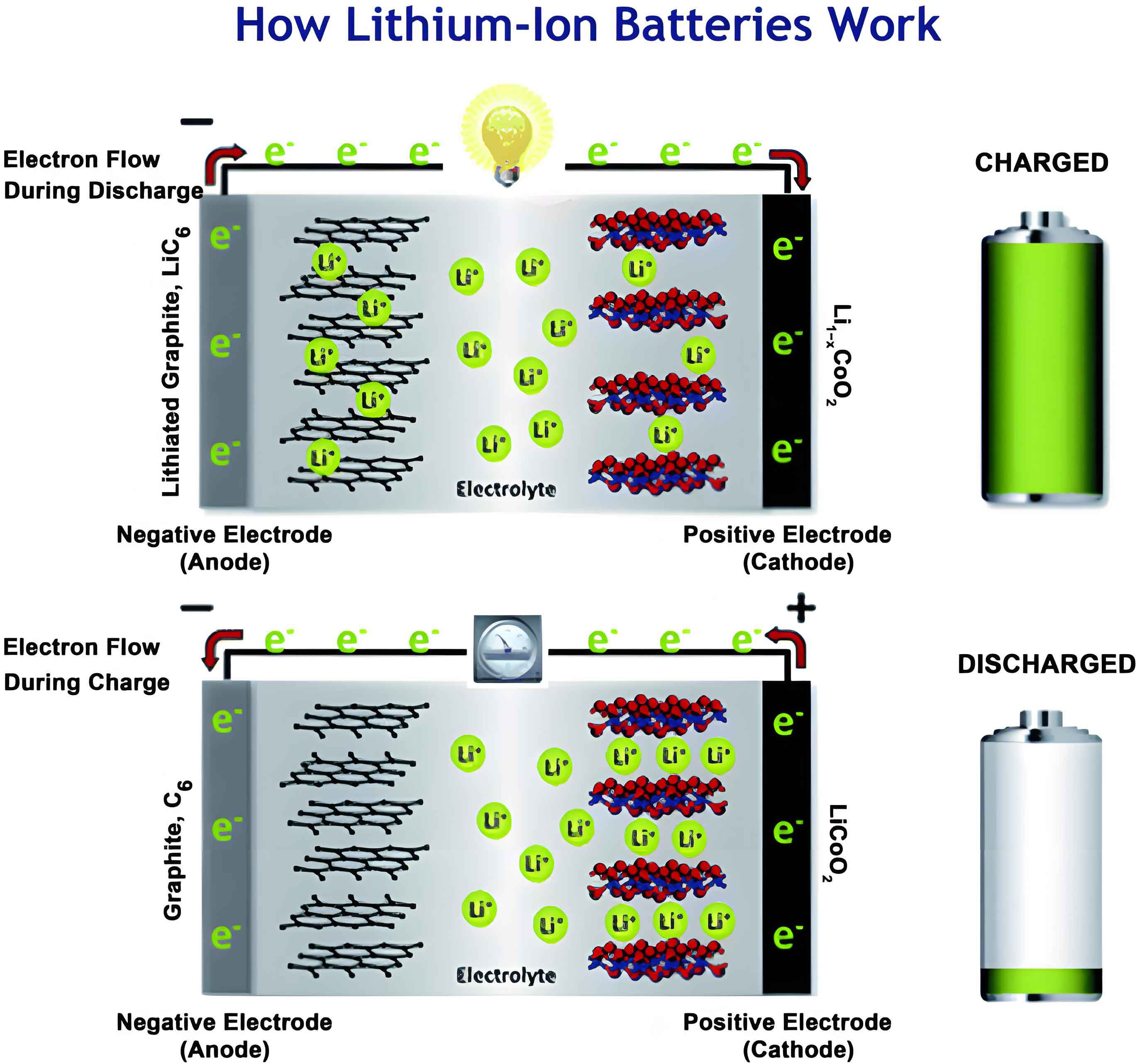
The drying of lithium-ion battery electrodes involves removing solvents from the coated slurry to form a porous structure that facilitates ion and electron transport. Inadequate drying can lead to residual moisture, which reacts with electrolytes, increasing internal resistance, reducing cycle life, and posing safety hazards. Therefore, understanding and improving drying processes is essential for advancing lithium-ion battery technology. This review explores common drying methods, heat and mass transfer mechanisms, key parameters affecting drying quality, and future research trends, with the aim of providing theoretical insights and technical support for the lithium-ion battery industry.
Common Drying Techniques for Lithium-Ion Battery Electrodes
Various drying techniques are employed in lithium-ion battery electrode manufacturing, each with distinct principles and applications. The choice of drying method affects drying rate, energy consumption, and electrode quality. Below, I summarize the primary drying technologies used for lithium-ion battery electrodes.
| Drying Technique | Principle | Advantages | Disadvantages | Typical Parameters |
|---|---|---|---|---|
| Convective Drying | Uses heated air as a medium to transfer heat via convection, evaporating solvent from the electrode surface and internal layers. | Simple operation, wide applicability, high production efficiency, low equipment cost. | High energy consumption, slow drying rate, risk of non-uniform heating and electrode defects. | Air temperature: 70–110°C; Air velocity: 0.5–2 m/s; Drying time: 1–10 min. |
| Infrared Drying | Utilizes infrared radiation to directly heat the electrode interior, creating a temperature gradient from inside to out. | Fast drying due to direct internal heating, reduced energy consumption, lower risk of cracking. | High equipment cost, difficulty in ensuring uniform radiation for large electrodes. | Power: 100–200 W; Radiation distance: 100–150 mm; Temperature: 50–80°C. |
| Vacuum Drying | Reduces pressure to lower the boiling point of solvents, enabling evaporation at lower temperatures with pressure and concentration gradients. | Low-temperature operation, high efficiency, reduced energy use, minimal thermal damage. | High equipment cost, need for precise control of temperature and pressure. | Vacuum pressure: 10–100 Pa; Temperature: 50–100°C; Drying time: 0.5–2 h. |
| Microwave Drying | Employs microwave radiation to generate internal heat through dipole rotation, rapidly evaporating solvents. | Very fast drying, uniform heating, energy-efficient for certain materials. | Risk of hotspots, high cost, limited to specific slurry compositions. | Frequency: 2.45 GHz; Power: 500–1000 W; Drying time: seconds to minutes. |
| Laser Drying | Uses focused laser beams to locally heat and evaporate solvents, offering precise control. | High precision, reduced energy consumption, minimal thermal stress. | Complex setup, high cost, scalability challenges. | Laser power: 10–50 W; Scan speed: 1–10 mm/s; Spot size: 0.1–1 mm. |
Convective drying is the most widely used method in lithium-ion battery production due to its simplicity and cost-effectiveness. However, it often leads to high energy consumption and potential defects like cracking or non-uniform drying. Infrared drying, on the other hand, offers faster drying by penetrating the electrode, but uniformity issues arise with large-scale applications. Vacuum drying is advantageous for sensitive materials but requires sophisticated equipment. Emerging techniques like microwave and laser drying show promise for rapid, efficient drying but need further development for industrial adoption. In practice, hybrid approaches, such as combining convective and infrared drying, are increasingly explored to balance efficiency and quality in lithium-ion battery electrode manufacturing.
Drying Mechanisms and Kinetic Models for Lithium-Ion Battery Electrodes
The drying of lithium-ion battery electrodes is a complex process involving simultaneous heat and mass transfer in a porous medium. Understanding the underlying mechanisms is crucial for optimizing drying parameters and improving electrode quality. I will discuss solvent migration patterns, drying stages, and mathematical models that describe these phenomena.
Solvent Migration and Drying Stages
During drying, solvent evaporation occurs primarily at the surface, creating concentration and temperature gradients that drive internal solvent migration. For a lithium-ion battery electrode, the process can be divided into three stages: preheating, constant rate, and falling rate. The drying rate, defined as the change in moisture content per unit time, varies across these stages.
In the preheating stage, the electrode temperature rises, and solvent evaporation accelerates. The drying rate increases until it reaches a maximum. In the constant rate stage, evaporation is sustained by solvent transport from the interior to the surface, maintaining a steady rate. This stage dominates the drying process, removing over 60% of the solvent. Finally, in the falling rate stage, internal diffusion limits solvent migration, and the drying rate decreases until equilibrium is reached.
The solvent migration can be described by Fick’s law of diffusion for mass transfer and Fourier’s law for heat transfer. For a one-dimensional model, the flux of solvent (J) and heat (q) can be expressed as:
$$ J = -D \frac{\partial C}{\partial x} $$
$$ q = -k \frac{\partial T}{\partial x} $$
where \( D \) is the diffusion coefficient, \( C \) is the solvent concentration, \( x \) is the spatial coordinate, \( k \) is the thermal conductivity, and \( T \) is the temperature. In lithium-ion battery electrodes, these parameters depend on material properties like porosity and binder content.
A more comprehensive model considers coupled heat and mass transfer. The energy conservation equation for the electrode during drying can be written as:
$$ \rho C_p \frac{\partial T}{\partial t} = \nabla \cdot (k \nabla T) – \lambda \dot{m} $$
where \( \rho \) is the density, \( C_p \) is the specific heat capacity, \( t \) is time, \( \lambda \) is the latent heat of evaporation, and \( \dot{m} \) is the evaporation rate. The mass conservation equation for solvent is:
$$ \frac{\partial C}{\partial t} = \nabla \cdot (D \nabla C) – \dot{m} $$
These equations highlight the interplay between temperature and concentration gradients in lithium-ion battery electrode drying.
Drying Kinetic Models
Several kinetic models have been developed to predict drying behavior for lithium-ion battery electrodes. These models range from empirical to physics-based approaches. I summarize key models in the table below.
| Model Type | Description | Key Equations | Applicability |
|---|---|---|---|
| Moving Drying Front Model | Assumes a sharp interface between dry and wet regions that moves inward over time. | $$ \frac{dX}{dt} = -k (X – X_e) $$ where \( X \) is moisture content, \( X_e \) is equilibrium moisture content, and \( k \) is a rate constant. | Useful for thick electrodes where internal resistance dominates; often applied to lithium-ion battery electrodes with high solvent loads. |
| Volume Averaging Model | Applies continuum mechanics to average properties over a representative volume, deriving macroscopic transport equations. | $$ \langle \phi \rangle = \frac{1}{V} \int_V \phi \, dV $$ where \( \phi \) is a scalar field (e.g., temperature or concentration). The averaged heat and mass transfer equations incorporate porosity effects. | Suitable for heterogeneous porous media like lithium-ion battery electrodes; requires assumptions of uniformity. |
| Pore Network Model | Represents the porous structure as a network of pores and throats, simulating drying at the microscopic scale. | Flow in each throat governed by: $$ Q = \frac{\pi r^4}{8 \mu L} \Delta P $$ where \( Q \) is flow rate, \( r \) is throat radius, \( \mu \) is viscosity, \( L \) is length, and \( \Delta P \) is pressure difference. | Captures effects of pore structure on drying; computationally intensive but insightful for lithium-ion battery electrode design. |
| 3D Discrete Element Method (DEM) | Models particle-level interactions and solvent evaporation using discrete elements for active materials and binders. | Particle motion: $$ m_i \frac{d\mathbf{v}_i}{dt} = \sum_j \mathbf{F}_{ij} $$ where \( m_i \) is mass, \( \mathbf{v}_i \) is velocity, and \( \mathbf{F}_{ij} \) is force between particles. | Effective for studying binder migration and cracking in lithium-ion battery electrodes during drying. |
| Non-Steady-State Drying Model | Accounts for transient effects in heat and mass transfer, dividing drying into stages with different rate controls. | For constant rate stage: $$ \dot{m} = h_m (C_s – C_\infty) $$ where \( h_m \) is mass transfer coefficient, \( C_s \) is surface concentration, and \( C_\infty \) is ambient concentration. | Widely used for lithium-ion battery electrodes to optimize drying schedules and reduce defects. |
These models help in predicting drying times and optimizing parameters for lithium-ion battery electrodes. For instance, the moving drying front model is effective for thick coatings, while pore network models provide insights into microstructure evolution. In practice, a combination of models is often employed to address the multi-scale nature of drying in lithium-ion battery production.
Factors Influencing Drying Quality of Lithium-Ion Battery Electrodes
The quality of dried lithium-ion battery electrodes is influenced by various process parameters and material properties. Key factors include drying temperature, coating thickness, slurry characteristics, and convective velocity. Understanding these factors is essential for achieving uniform drying, minimizing defects, and enhancing battery performance.
Drying Temperature
Drying temperature is a critical parameter that directly affects the evaporation rate and electrode properties. For lithium-ion battery electrodes, temperatures typically range from 60°C to 170°C, depending on the drying stage. Higher temperatures increase drying speed but can lead to issues like binder migration and cracking.
The effect of temperature on drying rate can be described by the Arrhenius equation:
$$ k = A \exp\left(-\frac{E_a}{RT}\right) $$
where \( k \) is the drying rate constant, \( A \) is the pre-exponential factor, \( E_a \) is the activation energy, \( R \) is the gas constant, and \( T \) is the absolute temperature. For lithium-ion battery electrodes, \( E_a \) varies with solvent type and electrode composition.
Excessive temperatures cause non-uniform binder distribution, increasing electrode resistance and reducing adhesion. Optimal temperature profiles, such as multi-zone drying, can mitigate these issues. For example, a two-stage drying process with an initial high temperature for rapid solvent removal followed by a lower temperature for gradual drying improves electrode integrity in lithium-ion batteries.
Coating Thickness
Coating thickness influences drying time and uniformity. Thicker coatings store more active material but require longer drying times and are prone to defects like cracking due to increased internal stress. The drying time \( t_d \) for a lithium-ion battery electrode can be approximated as:
$$ t_d \propto \frac{L^2}{D_{\text{eff}}} $$
where \( L \) is the coating thickness and \( D_{\text{eff}} \) is the effective diffusion coefficient. This square-law relationship highlights the challenge with thick electrodes in lithium-ion battery manufacturing.
Thicker coatings also alter capillary forces and solvent migration paths, leading to cluster drying phenomena where dry and wet regions coexist. This non-uniformity can compromise electrode performance in lithium-ion batteries.
Slurry Characteristics
Slurry properties, such as solvent type, solid content, and binder distribution, play a significant role in drying behavior. Traditional solvents like N-methyl-2-pyrrolidone (NMP) are being replaced by water-based systems for environmental and economic reasons. Water has a higher equilibrium vapor pressure, leading to faster drying, but requires careful control to prevent reactions with electrode materials.
The solid content \( \phi_s \) affects the drying kinetics. Higher solid content reduces solvent volume but increases viscosity, influencing solvent migration. A balance is needed to avoid segregation in lithium-ion battery electrodes. The binder concentration gradient during drying can be modeled as:
$$ \frac{\partial C_b}{\partial t} = \nabla \cdot (D_b \nabla C_b) – v \cdot \nabla C_b $$
where \( C_b \) is binder concentration, \( D_b \) is binder diffusion coefficient, and \( v \) is the velocity field due to slurry contraction. This equation helps in optimizing binder distribution for better adhesion in lithium-ion battery electrodes.
Convective Velocity
In convective drying, air velocity impacts heat and mass transfer coefficients. Higher velocities enhance solvent removal but may increase energy consumption. The mass transfer coefficient \( h_m \) is related to velocity \( u \) by empirical correlations like:
$$ h_m \propto u^n $$
where \( n \) is typically between 0.5 and 0.8 for laminar flow. For lithium-ion battery electrode drying, optimizing velocity alongside temperature can reduce drying time without compromising quality.
To summarize these factors, I present a table detailing their effects on lithium-ion battery electrode drying.
| Factor | Effect on Drying Rate | Effect on Electrode Quality | Optimal Range for Lithium-Ion Batteries |
|---|---|---|---|
| Drying Temperature | Increases with higher temperature, following Arrhenius behavior. | High temperatures cause binder migration and cracking; moderate temperatures improve uniformity. | 70–110°C for constant rate; up to 170°C for falling rate, with multi-zone control. |
| Coating Thickness | Decreases with thinner coatings due to shorter diffusion paths. | Thick coatings lead to longer drying times, cracking, and non-uniformity; thin coatings enhance rate capability. | 50–200 μm, depending on battery design and drying method. |
| Solvent Type | Water-based slurries dry faster than NMP-based due to higher vapor pressure. | Water can cause material reactions; NMP is toxic but offers better control. Binder distribution varies with solvent. | Water for anodes, NMP for cathodes, with proper drying protocols. |
| Solid Content | Higher solid content reduces solvent load, shortening drying time. | Too high solid content increases viscosity and segregation risk; optimal content ensures homogeneity. | 40–60% by weight for typical lithium-ion battery electrodes. |
| Air Velocity | Increases with velocity, enhancing convective transfer. | High velocities may cause defects like film lifting; balanced velocity ensures uniform drying. | 0.5–2 m/s for convective drying, depending on oven design. |
| Vacuum Pressure | Lower pressure reduces boiling point, accelerating evaporation. | Prevents thermal degradation but requires precise control; can affect electrode porosity. | 10–100 Pa for vacuum drying of sensitive lithium-ion battery components. |
These factors interplay complexly, necessitating integrated optimization for lithium-ion battery electrode drying. For instance, a high temperature with low air velocity might be optimal for thick coatings, while thin coatings benefit from lower temperatures and higher velocities.
Future Directions in Lithium-Ion Battery Electrode Drying
As the demand for high-performance lithium-ion batteries grows, advancing drying technology is crucial. Future research should focus on multi-technology coupling, mechanistic understanding, and quantitative parameter analysis to achieve “quality improvement and consumption reduction” in lithium-ion battery manufacturing.
Multi-Technology Coupling
Combining different drying methods can leverage their advantages. For example, integrating infrared with convective drying enhances heat transfer efficiency, while vacuum-assisted microwave drying offers rapid, low-temperature processing. Hybrid systems should be designed with thermodynamic analysis to minimize energy losses. The overall efficiency \( \eta \) of a coupled system can be expressed as:
$$ \eta = \frac{Q_{\text{useful}}}{Q_{\text{input}}} $$
where \( Q_{\text{useful}} \) is the heat used for solvent evaporation and \( Q_{\text{input}} \) is the total energy input. Optimizing this ratio for lithium-ion battery electrode drying can significantly reduce carbon footprint.
Mechanistic Studies and Modeling
There is a need for more accurate models that capture the multi-scale nature of drying in lithium-ion battery electrodes. Advanced simulations, such as 3D DEM coupled with computational fluid dynamics (CFD), can predict defects like cracking and binder migration. Developing universal models that account for various electrode materials and solvents will aid in process design.
Key research areas include:
- Real-time monitoring of drying using sensors to track moisture content and temperature.
- Machine learning algorithms to optimize drying parameters based on historical data from lithium-ion battery production.
- Microstructural analysis to correlate drying conditions with electrode porosity and ionic conductivity.
Quantitative Parameter Analysis
While qualitative effects of parameters are known, quantitative relationships are less explored. Future work should establish critical thresholds for parameters like temperature and coating thickness to prevent defects. For instance, the critical heat flux \( q_{\text{crit}} \) for cracking in lithium-ion battery electrodes can be defined as:
$$ q_{\text{crit}} = f(\text{binder content, thickness, solvent type}) $$
Experimental and numerical studies can derive such functions, enabling precise control in lithium-ion battery manufacturing.
Sustainability and Cost Reduction
Drying accounts for a large portion of energy use in lithium-ion battery production. Innovations like heat pump-assisted drying and waste heat recovery can cut energy consumption by over 50%. Additionally, transitioning to water-based slurries reduces costs and environmental impact, though challenges like corrosion need addressing. Life cycle assessment (LCA) tools should be employed to evaluate the sustainability of new drying technologies for lithium-ion batteries.
Conclusion
The drying of lithium-ion battery electrodes is a vital process that直接影响 battery performance, safety, and cost. This article has reviewed common drying techniques, emphasizing convective, infrared, and vacuum methods, along with emerging approaches like microwave and laser drying. The mechanisms of solvent migration and heat transfer were discussed, highlighting the importance of drying stages and kinetic models such as the moving front and pore network models. Key factors influencing drying quality, including temperature, coating thickness, slurry properties, and convective velocity, were analyzed, with tables summarizing their effects. Future directions point toward multi-technology coupling, advanced modeling, and quantitative parameter optimization to enhance the efficiency and sustainability of lithium-ion battery manufacturing.
As the lithium-ion battery industry expands, continuous improvement in drying technology will be essential for meeting the demands of energy storage and electric vehicles. By integrating theoretical insights with practical innovations, we can achieve higher-quality electrodes, reduced energy consumption, and lower costs, ultimately contributing to the global transition to clean energy. The journey toward optimal drying for lithium-ion batteries is ongoing, and collaborative research across disciplines will pave the way for breakthroughs in this critical field.