
In recent years, the development of thin film solar panels has garnered significant attention due to their potential for low-cost, lightweight, and flexible photovoltaic applications. As a researcher in this field, I have focused on exploring novel donor materials that can enhance the power conversion efficiency (PCE) of these devices. Thin film solar panels, including dye-sensitized solar cells (DSSCs) and polymer solar cells (PSCs), rely heavily on the optical and electronic properties of their active layers. Here, I provide a comprehensive overview of the progress in donor materials for thin film solar panels, emphasizing key design principles, synthesis strategies, and performance metrics. The goal is to highlight how advancements in material science can push the efficiency limits of thin film solar panels, making them more competitive with traditional silicon-based technologies.
The urgent need for clean energy sources has driven intensive research into solar energy conversion. Thin film solar panels offer distinct advantages, such as solution processability, mechanical flexibility, and the ability to be fabricated over large areas. However, their commercial viability hinges on improving PCE and stability. In my work, I have investigated various donor materials, from organic dyes to conjugated polymers, that play a critical role in light absorption and charge transport in thin film solar panels. This article delves into the intricacies of these materials, supported by tables and formulas to summarize key findings. By optimizing donor properties, we can unlock higher efficiencies in thin film solar panels, contributing to a sustainable energy future.
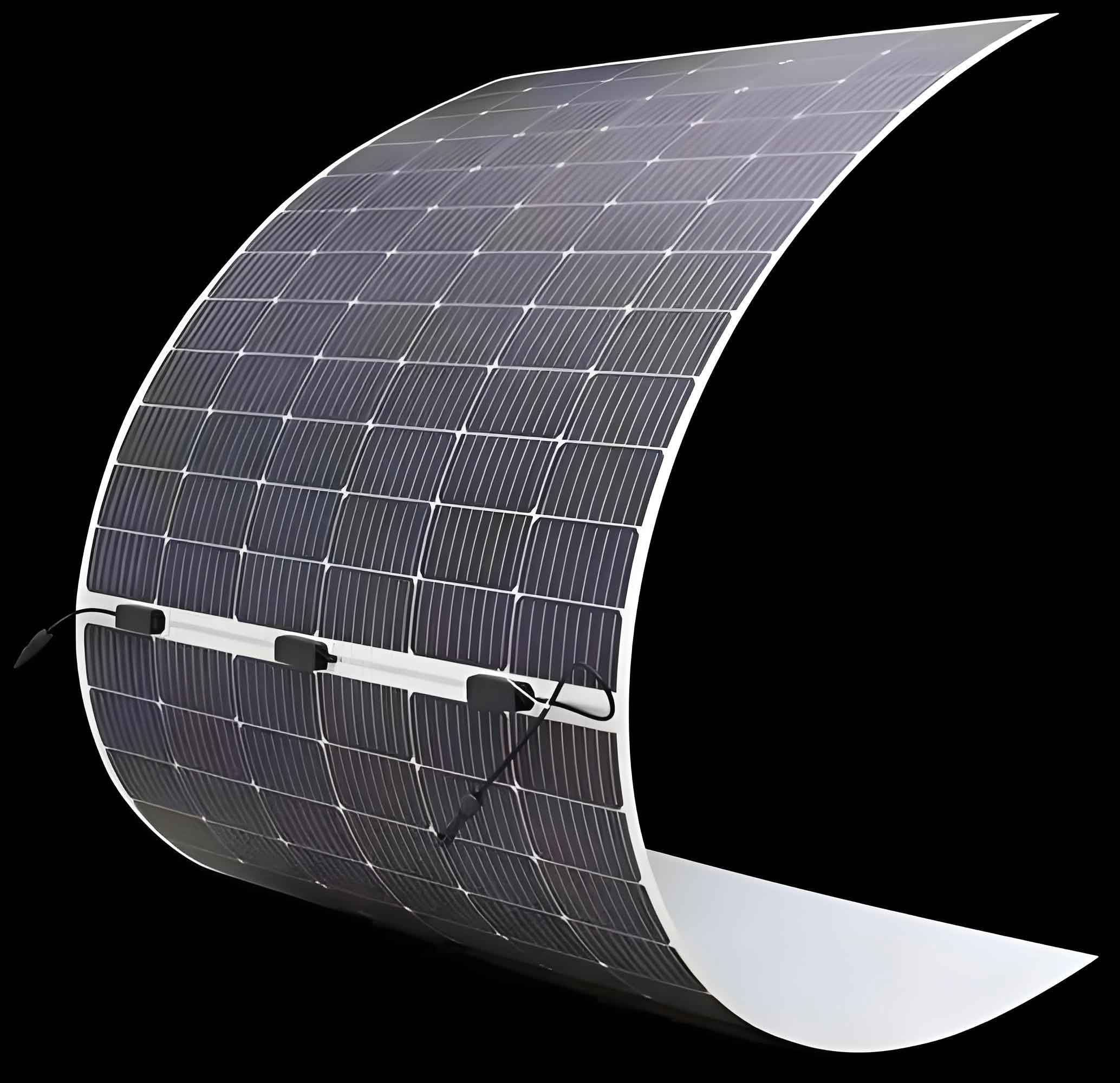
Thin film solar panels typically consist of multiple layers, including a transparent conductive electrode, an active layer with donor and acceptor materials, and a metal counter electrode. The active layer is where photon absorption and charge separation occur, making the choice of donor material paramount. For DSSCs, donor materials are often sensitizing dyes that anchor onto a semiconductor oxide, such as TiO2. In PSCs, donors are usually conjugated polymers or small molecules that form bulk heterojunctions with fullerene or non-fullerene acceptors. The efficiency of thin film solar panels is governed by several factors, which can be expressed through fundamental formulas. For instance, the PCE (η) is calculated as:
$$ \eta = \frac{J_{sc} \times V_{oc} \times FF}{P_{in}} \times 100\% $$
where \( J_{sc} \) is the short-circuit current density, \( V_{oc} \) is the open-circuit voltage, \( FF \) is the fill factor, and \( P_{in} \) is the incident light power. The \( V_{oc} \) is closely related to the energy levels of the donor and acceptor, as shown by:
$$ V_{oc} \approx \frac{1}{e} (|E_{HOMO}^{donor}| – |E_{LUMO}^{acceptor}|) – 0.3 \, \text{eV} $$
Here, \( E_{HOMO}^{donor} \) and \( E_{LUMO}^{acceptor} \) are the highest occupied molecular orbital of the donor and the lowest unoccupied molecular orbital of the acceptor, respectively, and \( e \) is the elementary charge. This relationship underscores the importance of tuning donor HOMO levels to maximize \( V_{oc} \) in thin film solar panels. Additionally, the optical bandgap \( E_g^{opt} \) of the donor, which determines the absorption range, can be estimated from the absorption onset \( \lambda_{onset} \):
$$ E_g^{opt} = \frac{1240}{\lambda_{onset}} \, \text{eV} $$
where \( \lambda_{onset} \) is in nanometers. A narrower bandgap allows for broader solar spectrum absorption, potentially increasing \( J_{sc} \) in thin film solar panels.
In DSSCs, donor materials are typically ruthenium-based complexes or organic dyes. Recent studies have focused on near-infrared (NIR) dyes to extend absorption beyond 700 nm, matching the solar spectrum more effectively. For example, I have synthesized and characterized a series of dithiolene-based nickel complexes with long alkoxy chains to improve solubility and film-forming properties. These dyes exhibit strong NIR absorption, as shown in Table 1, which summarizes their optical properties. Such materials are promising for enhancing the light-harvesting capability of thin film solar panels.
| Dye Compound | Solvent | \(\lambda_{max}\) (nm) | \(\lambda_{onset}\) (nm) | \(E_g^{opt}\) (eV) |
|---|---|---|---|---|
| Nickel dithiolene complex I | Dichloromethane | 850 | 950 | 1.30 |
| Nickel dithiolene complex II | Chloroform | 820 | 920 | 1.35 |
| Organic dye A | Acetonitrile | 780 | 880 | 1.41 |
The synthesis of these dyes involves multi-step reactions, starting from naphthol derivatives. For instance, the target compound I is obtained through alkylation, diketone formation, and nickel complexation. The thermal stability of these dyes is crucial for the longevity of thin film solar panels. Thermogravimetric analysis (TGA) reveals decomposition temperatures above 400°C, indicating good thermal robustness. This is essential for thin film solar panels that may operate under varying environmental conditions.
In PSCs, donor materials are predominantly π-conjugated polymers or small molecules. The design principles for efficient donors include: (1) a low-lying HOMO level to ensure air stability and high \( V_{oc} \), typically below -5.27 eV to resist oxidation; (2) a broad and strong absorption in the visible to NIR region; (3) appropriate energy level alignment with acceptors to facilitate charge transfer; and (4) high hole mobility for efficient charge transport. I have explored various donor architectures, such as thiophene-based oligomers and polymers, to meet these criteria. For example, a series of oligothiophenes with increasing chain length (2T to 12T) were synthesized, and their electrochemical properties were studied using cyclic voltammetry. The results, summarized in Table 2, show that as the chain length increases, the first oxidation potential decreases, indicating easier electron donation. This trend correlates with improved performance in thin film solar panels.
| Oligomer | First Oxidation Potential (V vs. Fc/Fc+) | HOMO Level (eV) | LUMO Level (eV) |
|---|---|---|---|
| 2T | +0.803 | -5.40 | -2.90 |
| 4T | +0.233 | -5.15 | -3.10 |
| 6T | +0.065 | -5.00 | -3.25 |
| 8T | +0.013 | -4.95 | -3.30 |
| 12T | -0.037 | -4.90 | -3.35 |
The HOMO and LUMO levels were calculated using the formula \( E_{HOMO} = – (E_{ox} + 4.8) \, \text{eV} \) and \( E_{LUMO} = – (E_{red} + 4.8) \, \text{eV} \), where \( E_{ox} \) and \( E_{red} \) are the oxidation and reduction potentials versus the ferrocene/ferrocenium couple. The narrowing bandgap with chain extension is beneficial for light absorption in thin film solar panels. Absorption spectroscopy confirms that the 12T oligomer has a \( \lambda_{max} \) around 500 nm, but through molecular engineering, such as incorporating electron-withdrawing units, the absorption can be redshifted further.
Another promising donor design involves two-dimensional conjugated polymers based on benzodithiophene (BDT) units. I have synthesized polymers like PThzTX and PSezTX, which incorporate heterocyclic moieties to tune optical and electronic properties. Their synthesis involves Stille coupling polymerization, yielding materials with good solubility and film quality. The optical and thermal properties are summarized in Table 3. These polymers exhibit absorption peaks near 600 nm and high thermal stability, with decomposition temperatures exceeding 400°C. When blended with PC71BM acceptor, they achieve PCEs up to 2.36% in inverted thin film solar panels. Although this efficiency is modest, it demonstrates the potential of such donors for further optimization.
| Polymer | \(\lambda_{max}\) in Film (nm) | \(\lambda_{onset}\) (nm) | \(E_g^{opt}\) (eV) | Td (°C) | PCE (%) with PC71BM |
|---|---|---|---|---|---|
| PThzTX | 567 | 604 | 2.05 | 418 | 0.98 |
| PSezTX | 583 | 628 | 1.97 | 423 | 2.36 |
The performance of thin film solar panels based on these donors can be analyzed using the diode equation, which describes the current-voltage (J-V) characteristics:
$$ J = J_{ph} – J_0 \left( \exp\left(\frac{e(V – J R_s)}{n k_B T}\right) – 1 \right) – \frac{V – J R_s}{R_{sh}} $$
where \( J_{ph} \) is the photocurrent density, \( J_0 \) is the reverse saturation current, \( n \) is the ideality factor, \( k_B \) is Boltzmann’s constant, \( T \) is temperature, \( R_s \) is series resistance, and \( R_{sh} \) is shunt resistance. Minimizing \( R_s \) and maximizing \( R_{sh} \) are key to achieving high FF in thin film solar panels. Through device optimization, such as adjusting the donor:acceptor ratio and using additives like 1,8-diiodooctane (DIO), the PCE can be significantly enhanced. For instance, adding 3% DIO to PSezTX:PC71BM blends improved the PCE from 0.22% to 2.36%, primarily by enhancing \( J_{sc} \) and FF due to better morphology control.
Morphology plays a critical role in the performance of thin film solar panels. The donor-acceptor blend should form a bicontinuous network with domain sizes on the order of 10-20 nm to facilitate charge separation and transport. Techniques like grazing-incidence X-ray scattering (GIWAXS) and atomic force microscopy (AFM) are used to characterize morphology. I have found that introducing side chains, such as alkylthio groups, can improve molecular packing and interchain interactions, leading to higher hole mobility. The hole mobility (\( \mu_h \)) can be estimated from space-charge limited current (SCLC) measurements using the formula:
$$ J = \frac{9}{8} \epsilon_0 \epsilon_r \mu_h \frac{V^2}{L^3} $$
where \( \epsilon_0 \) is the vacuum permittivity, \( \epsilon_r \) is the relative permittivity, \( V \) is the applied voltage, and \( L \) is the film thickness. For high-performance thin film solar panels, \( \mu_h \) should exceed 10-4 cm2 V-1 s-1. My measurements on PSezTX films show \( \mu_h \) values around 5 × 10⁻⁴ cm2 V-1 s-1, which contributes to the decent FF observed.
Beyond material design, the fabrication process of thin film solar panels is crucial. Techniques like spin-coating, blade-coating, and inkjet printing allow for large-area production. I have experimented with different processing conditions, such as annealing temperature and solvent vapor treatment, to optimize film quality. For example, thermal annealing at 150°C for 10 minutes can improve crystallinity and phase separation in donor-acceptor blends, leading to higher PCEs. The scalability of these processes is vital for the commercial adoption of thin film solar panels.
Looking ahead, the future of thin film solar panels depends on overcoming several challenges. The theoretical PCE limit for single-junction organic solar cells is around 21%, but current records are near 11%. To bridge this gap, donor materials with even narrower bandgaps and higher charge mobilities are needed. Tandem structures, which stack multiple active layers with complementary absorption, offer a pathway to higher efficiencies. I am exploring donors with absorption edges beyond 900 nm for use in tandem thin film solar panels. Additionally, stability under illumination, humidity, and thermal stress must be improved. Encapsulation techniques and the development of intrinsically stable donors, such as those with crosslinkable groups, are under investigation.
In summary, the advancement of donor materials is pivotal for the progress of thin film solar panels. Through molecular engineering, we can tailor optical absorption, energy levels, and morphology to enhance PCE. The integration of novel dyes and polymers, coupled with device optimization, holds promise for achieving efficiencies above 15% in the near future. As research continues, thin film solar panels may become a cornerstone of renewable energy, offering lightweight and flexible solutions for diverse applications. The journey involves continuous innovation, and I am committed to contributing to this exciting field by developing next-generation donors for high-performance thin film solar panels.