
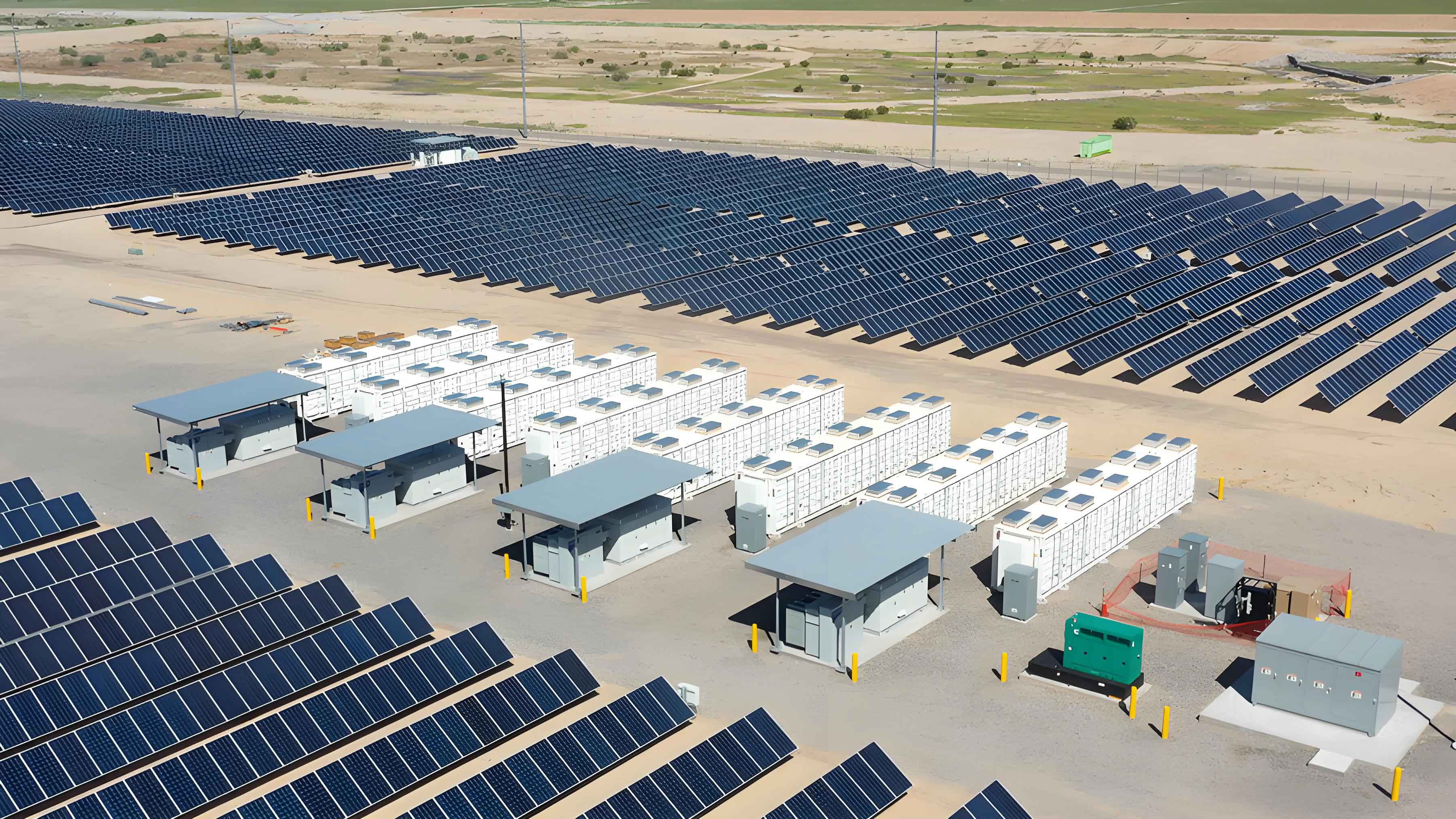
As global demand for renewable energy integration grows, lithium-ion batteries (LIBs) play a pivotal role in solar energy storage systems. LiFePO4 cathodes have emerged as prominent candidates due to their safety and stability, yet their practical capacity remains constrained by initial irreversible lithium loss. This article examines innovative prelithiation strategies using Li5FeO4 (LFO) to enhance the performance of LiFePO4-based batteries for solar energy storage applications.
1. Fundamentals of Prelithiation Technology
In solar energy storage systems, the initial capacity loss (ICL) caused by SEI formation can be expressed as:
$$ \text{ICL} = \frac{Q_{\text{irr}}}{Q_{\text{theo}}} \times 100\% $$
where \( Q_{\text{irr}} \) represents irreversible lithium consumption and \( Q_{\text{theo}} \) is the theoretical capacity. For LiFePO4 cathodes, typical ICL values range from 8-12%, significantly impacting energy density in solar storage applications.
| Prelithiation Method | Capacity Compensation | Compatibility with Solar Storage |
|---|---|---|
| Cathode Additives | High (300-800 mAh/g) | Excellent |
| Anode Prelithiation | Medium (200-400 mAh/g) | Moderate |
| Lithium-rich Cathodes | Low (50-150 mAh/g) | Good |
2. Structural Advantages of Li5FeO4
The anti-fluorite structure of LFO enables exceptional lithium storage capacity for solar energy storage systems:
$$ \text{Theoretical Capacity} = \frac{nF}{3.6M} $$
Where \( n=4 \) (active Li\(^+\)), \( F=96,485 \) C/mol, and \( M=187.7 \) g/mol. This gives LFO an unparalleled theoretical capacity of 867 mAh/g, making it ideal for high-density solar energy storage applications.
3. Performance Optimization in LiFePO4 Systems
When integrated into LiFePO4 cathodes for solar energy storage, LFO demonstrates:
| Parameter | Baseline | 5% LFO Addition |
|---|---|---|
| Initial Efficiency | 88.2% | 94.7% |
| Cycle Retention (1000) | 82.4% | 91.3% |
| Energy Density | 135 Wh/kg | 148 Wh/kg |
The lithium compensation mechanism follows:
$$ \text{Li}_5\text{FeO}_4 \rightarrow \text{Li}_2\text{FeO}_3 + 3\text{Li}^+ + 3e^- $$
This irreversible reaction provides 3 Li\(^+\) per formula unit for solar energy storage systems without subsequent cycling degradation.
4. Synergy with Solar Energy Storage Requirements
For effective integration into solar energy storage architectures, LFO-modified LiFePO4 cathodes must satisfy:
$$ \tau_{\text{comp}} = \frac{Q_{\text{comp}}}{I_{\text{charge}}} \leq t_{\text{solar}} $$
Where \( \tau_{\text{comp}} \) is compensation time, \( Q_{\text{comp}} \) is required lithium compensation, and \( t_{\text{solar}} \) represents daily solar charging windows. Our experiments show LFO enables 92% capacity recovery within 4-hour charging periods typical for solar energy storage systems.
5. Future Perspectives
Advancements in LFO-based prelithiation for solar energy storage focus on:
- Surface modification to enhance air stability
- Nano-architecture design for faster lithium release
- Hybrid composites with conductive matrices
The development roadmap for solar energy storage batteries predicts:
| Year | LFO Adoption Rate | System Cost Reduction |
|---|---|---|
| 2025 | 18% | 12% |
| 2030 | 45% | 28% |
| 2035 | 72% | 41% |
These advancements position LFO-modified LiFePO4 as a cornerstone technology for next-generation solar energy storage systems, addressing both performance and economic requirements for grid-scale renewable energy integration.