
In the context of global energy transition and sustainable development, optimizing energy structures and innovating smart grid technologies have become pivotal forces driving societal progress. Among these, the battery energy storage system plays a crucial role in balancing grid supply and demand, enhancing energy utilization efficiency, and ensuring grid stability. Lithium iron phosphate (LFP) batteries, known for their safety and long cycle life, have gained widespread adoption in various applications such as smart grids, residential energy storage systems, and electric vehicles. However, as deployment scenarios expand and complexities increase, safety concerns in battery energy storage systems remain a focal point. Stress variations induced by structural constraints in battery modules have emerged as a key factor affecting battery performance and safety. During charge and discharge cycles, internal stress generation can lead to structural deformation and even safety incidents. Therefore, in-depth investigation into the stress characteristics of LFP batteries, exploration of the intrinsic relationship between stress changes and battery states, and development of state estimation algorithms integrating stress and electrical parameters are essential for advancing digital twin capabilities and safety management in battery energy storage systems.
LFP batteries exhibit wide voltage plateaus at both positive and negative electrodes, making state of charge (SOC) estimation challenging, especially when operating within these plateaus, due to limited voltage sensor accuracy in battery management systems. Moreover, the relatively stable current profiles in battery energy storage system applications hinder parameter observability, further complicating SOC estimation. Since SOC cannot be directly measured, it must be inferred from physical quantities such as current, voltage, temperature, and stress. Researchers globally have extensively studied SOC estimation methods for lithium-ion batteries, including ampere-hour integration, open-circuit voltage (OCV) methods, model-based filtering, and machine learning approaches. While traditional methods like ampere-hour integration rely on current integration, they are prone to error accumulation without periodic calibration. OCV methods leverage the SOC-OCV relationship, but the flat voltage plateau in LFP batteries reduces reliability. Model-based approaches, such as Kalman filters and their variants, offer improved accuracy but require precise modeling. Recently, data-driven methods, including machine learning and deep learning, have gained traction by establishing mapping models from operational data to SOC. This study focuses on integrating stress characteristics with electrical parameters to enhance SOC estimation accuracy for LFP-based battery energy storage systems, leveraging digital twin frameworks for multi-source data fusion.
Stress characteristics in batteries are influenced by electrochemical reactions during cycling. In LFP batteries, the positive electrode undergoes volume contraction during lithiation, while the graphite negative electrode experiences non-monotonic expansion, leading to overall thickness changes. Under external mechanical constraints, these deformations translate into stress variations. Experiments show that stress patterns correlate with SOC, providing an additional dimension for state estimation. For instance, during charging, stress generally increases non-monotonically, with distinct inflection points related to SOC. Similarly, discharge cycles exhibit decreasing stress trends. By analyzing stress alongside electrical parameters, more robust SOC estimation can be achieved, addressing limitations of voltage-based methods in plateau regions. This integration is particularly relevant for battery energy storage system applications, where operational conditions like constant current or power profiles necessitate accurate state monitoring for safety and efficiency.
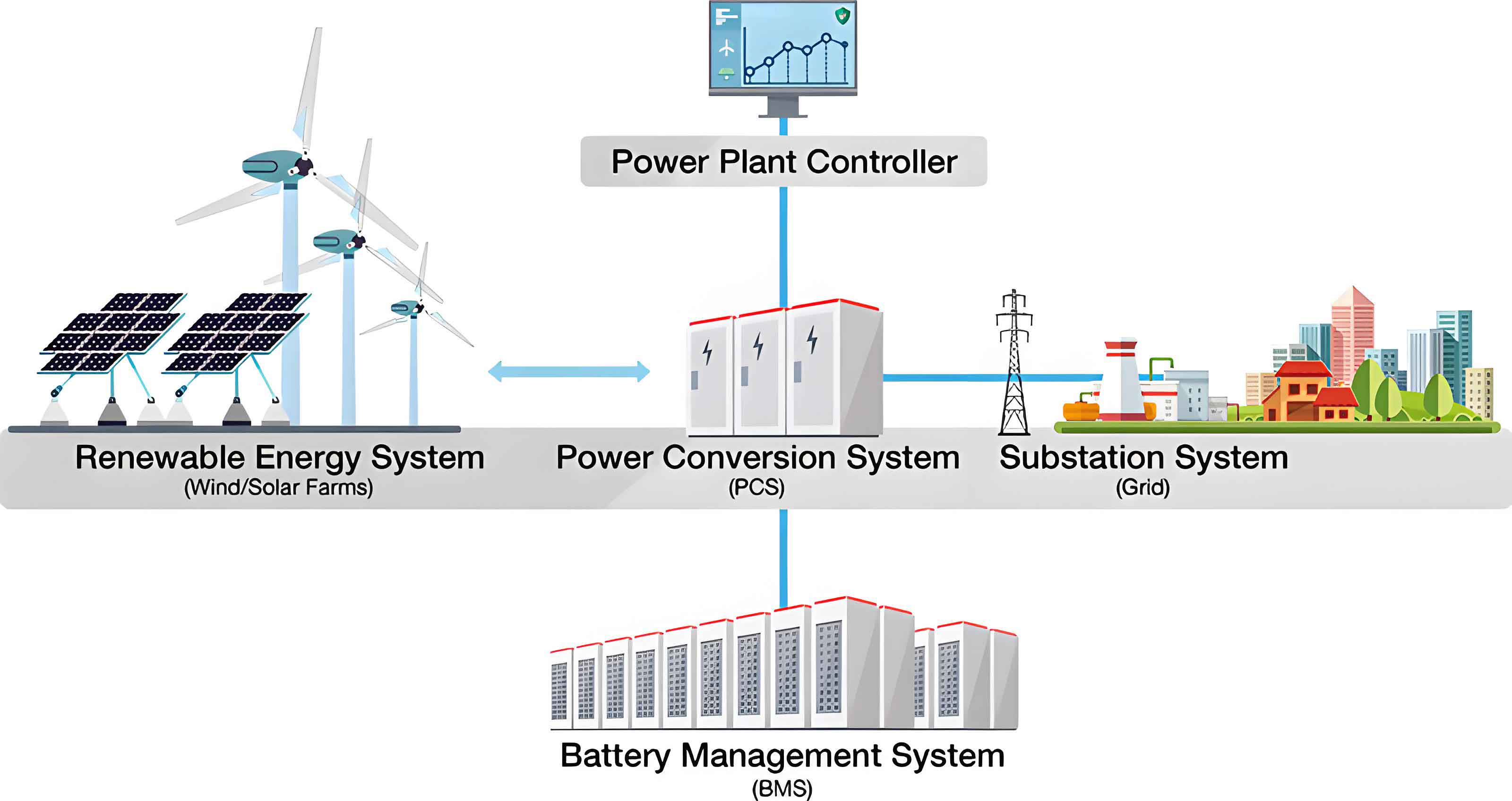
To systematically analyze stress characteristics, experiments were conducted on commercial LFP batteries (model GSP7514238) under varying charge/discharge rates and pre-stress conditions. The test setup involved placing battery samples between steel plates with a load cell to measure stress, while a battery cycler recorded electrical data. Key parameters included a nominal capacity of 25 Ah, voltage range of 2.5–3.65 V, and dimensions of 238.0 × 140.0 × 7.6 mm. Procedures comprised applying a pre-stress of 500 kg, followed by cyclic charge-discharge tests at rates such as 1 C charge and 1.5 C discharge, with data sampled at 1-second intervals. Over 40 cycles, stress and electrical data were collected to observe trends and correlations. Data preprocessing involved time alignment, outlier removal using 3-sigma criteria, and smoothing via moving average filters. Features like charge difference (ΔQ) and stress difference (ΔF) were derived to enhance dynamic characteristics, forming a dataset for model development. This dataset supports the digital twin paradigm in battery energy storage systems, enabling real-time monitoring and analysis.
The stress behavior of LFP batteries reveals rate-dependent and pre-stress-influenced patterns. At low rates (e.g., 0.1 C), stress curves show two inflection points around 30% and 60% SOC, attributed to phase transitions in electrode materials. As rates increase to 1 C, polarization effects dominate, causing inflection points to diminish and stress magnitudes to rise. This is summarized in Table 1, which correlates stress trends with operational conditions for battery energy storage systems. Mathematical modeling of stress evolution can be expressed as: $$ \sigma(t) = f(SOC(t), I, T) + \epsilon $$ where $\sigma$ is stress, $SOC$ is state of charge, $I$ is current, $T$ is temperature, and $\epsilon$ represents noise. For pre-stressed conditions, an initial stress $\sigma_0$ modifies the relation: $$ \Delta \sigma = \sigma(t) – \sigma_0 = g(SOC(t), I) $$ These equations highlight the nonlinear dependence of stress on SOC, providing a basis for multi-parameter fusion in state estimation.
| Charge/Discharge Rate | Pre-stress (kg) | Stress Trend | Inflection Points (SOC) |
|---|---|---|---|
| 0.1 C | 500 | Non-monotonic with clear inflections | ~30%, ~60% |
| 1 C | 500 | Nearly monotonic, elevated magnitude | Diminished |
| 1.5 C | 500 | Monotonic, highest magnitude | None |
For state estimation, a CNN-BiLSTM model was designed to integrate electrical and stress parameters. The input features include voltage (V), current (I), temperature (T), stress (F), and their differentials (ΔQ and ΔF), forming a six-dimensional vector. The CNN layer employs 1D convolutions with ReLU activation to extract local morphological features from data curves, such as plateau slopes and stress inflection points. This is crucial for distinguishing SOC in flat voltage regions typical of LFP batteries. The BiLSTM layer, with bidirectional long short-term memory units, captures temporal dependencies from historical and future sequences, modeling SOC evolution dynamics. The output layer produces SOC estimates with a linear activation function. The model is trained using Adam optimizer with a mean squared error loss function, and dropout regularization prevents overfitting. This approach aligns with digital twin requirements for battery energy storage systems, facilitating accurate state prediction under diverse operating scenarios.
The CNN-BiLSTM architecture mathematically processes sequences as follows. For a time series input $\mathbf{x}_t = [\Delta Q, \Delta F, V, I, F, T]^T$, the CNN applies convolution filters: $$ \mathbf{h}_c = \text{ReLU}(\mathbf{W}_c \ast \mathbf{x}_t + \mathbf{b}_c) $$ where $\ast$ denotes convolution, $\mathbf{W}_c$ are weights, and $\mathbf{b}_c$ biases. The BiLSTM then computes forward and backward hidden states: $$ \overrightarrow{\mathbf{h}}_t = \text{LSTM}(\overrightarrow{\mathbf{h}}_{t-1}, \mathbf{h}_c), \quad \overleftarrow{\mathbf{h}}_t = \text{LSTM}(\overleftarrow{\mathbf{h}}_{t+1}, \mathbf{h}_c) $$ with the combined state $\mathbf{h}_t = [\overrightarrow{\mathbf{h}}_t; \overleftarrow{\mathbf{h}}_t]$. The SOC estimate is derived as: $$ \widehat{SOC}_t = \mathbf{W}_o \mathbf{h}_t + b_o $$ where $\mathbf{W}_o$ and $b_o$ are output parameters. This model leverages both spatial and temporal features, enhancing robustness for battery energy storage system applications where data streams are continuous and multi-faceted.
Experimental validation used data from 10–30 cycles for training and 30–40 cycles for testing. Results demonstrate that the CNN-BiLSTM model achieves high accuracy, with root mean square error (RMSE) of 1.5% for charging and 5.6% for discharging. Comparative analysis with a baseline model using only electrical parameters (V, I, T) shows significant improvement, as the inclusion of stress parameters reduces ambiguity in SOC estimation during voltage plateaus. For instance, in mid-SOC ranges (40–90%), the multi-parameter model maintains errors below 2%, whereas the baseline exceeds 6%. This underscores the value of stress integration for battery energy storage systems, where precise state awareness is critical for safety and longevity. Performance metrics are summarized in Table 2, highlighting the superiority of the proposed approach.
| Method | Input Features | Charging RMSE (%) | Discharging RMSE (%) | Average Error (%) |
|---|---|---|---|---|
| Proposed CNN-BiLSTM | V, I, T, F, ΔQ, ΔF | 1.5 | 5.6 | 3.6 |
| Baseline (LSTM) | V, I, T | 6.8 | 7.2 | 7.0 |
| Ampere-Hour Integration | I only | >10 (cumulative) | >10 (cumulative) | 10+ |
Further analysis of stress dynamics reveals that cyclic aging affects stress patterns, with initial cycles showing higher stress variability before stabilization. This phenomenon is modeled using a degradation factor $\alpha$: $$ \sigma_{\text{aged}} = \sigma_{\text{fresh}} \cdot (1 + \alpha \cdot N) $$ where $N$ is cycle count. For long-term deployment in battery energy storage systems, such models can be incorporated into digital twins for predictive maintenance. Additionally, the impact of environmental factors like temperature on stress is quantified by: $$ \frac{d\sigma}{dT} = k \cdot \frac{dSOC}{dt} $$ where $k$ is a material-dependent coefficient. These relationships enable adaptive state estimation across varying conditions, enhancing the reliability of battery energy storage systems in real-world grids.
In terms of implementation, the proposed method aligns with digital twin architectures for battery energy storage systems, where virtual models continuously update based on sensor data. The integration of stress sensors into battery modules, though adding cost, provides valuable insights for safety monitoring, such as detecting abnormal deformations or internal faults. For large-scale battery energy storage systems, cloud-based analytics can deploy CNN-BiLSTM models for real-time SOC estimation, with stress data transmitted via IoT protocols. This supports proactive management strategies, reducing risks of thermal runaway or capacity fade. Future work could explore fusion with other parameters like acoustic emissions or impedance spectroscopy, further enriching the digital twin framework.
In conclusion, this study advances the state estimation for lithium iron phosphate battery energy storage systems by integrating stress characteristics with electrical parameters through a deep learning approach. The CNN-BiLSTM model effectively captures multi-dimensional features, achieving high SOC estimation accuracy even in voltage plateau regions. Experiments confirm that stress data provides complementary information, reducing errors by over 50% compared to traditional methods. For battery energy storage systems, this enhances safety, operational efficiency, and lifespan management. The methodology is scalable to digital twin platforms, enabling continuous monitoring and predictive analytics. As the adoption of battery energy storage systems grows, such innovations will be pivotal in ensuring reliable and sustainable energy infrastructure globally.