
The pursuit of energy storage solutions with superior fast-charging capabilities, or ultra-high rate performance, is a central focus in contemporary research. Among the various contenders for next-generation batteries, the sodium-ion battery presents a compelling alternative to the dominant lithium-ion technology, primarily due to the abundant natural reserves and lower cost of sodium. However, the larger ionic radius and mass of Na+ compared to Li+ pose significant challenges in finding suitable host materials that can accommodate rapid and reversible insertion/extraction cycles. In this context, Prussian blue analogs (PBAs) have emerged as a highly promising class of cathode materials for sodium-ion batteries. Their unique open three-dimensional framework, built from metal ions connected by cyanide (C≡N) bridges, provides spacious channels conducive to the storage and diffusion of sodium ions. Despite this favorable structural feature, the practical deployment of PBAs is often hindered by two intrinsic limitations: poor ionic conductivity due to structural imperfections and crystal water, and inherently low electronic conductivity arising from the insulating nature of the cyanide ligands. This article delves into the recent research progress aimed at overcoming these conductivity bottlenecks, which is crucial for unlocking the full potential of PBAs in high-power sodium-ion battery applications.
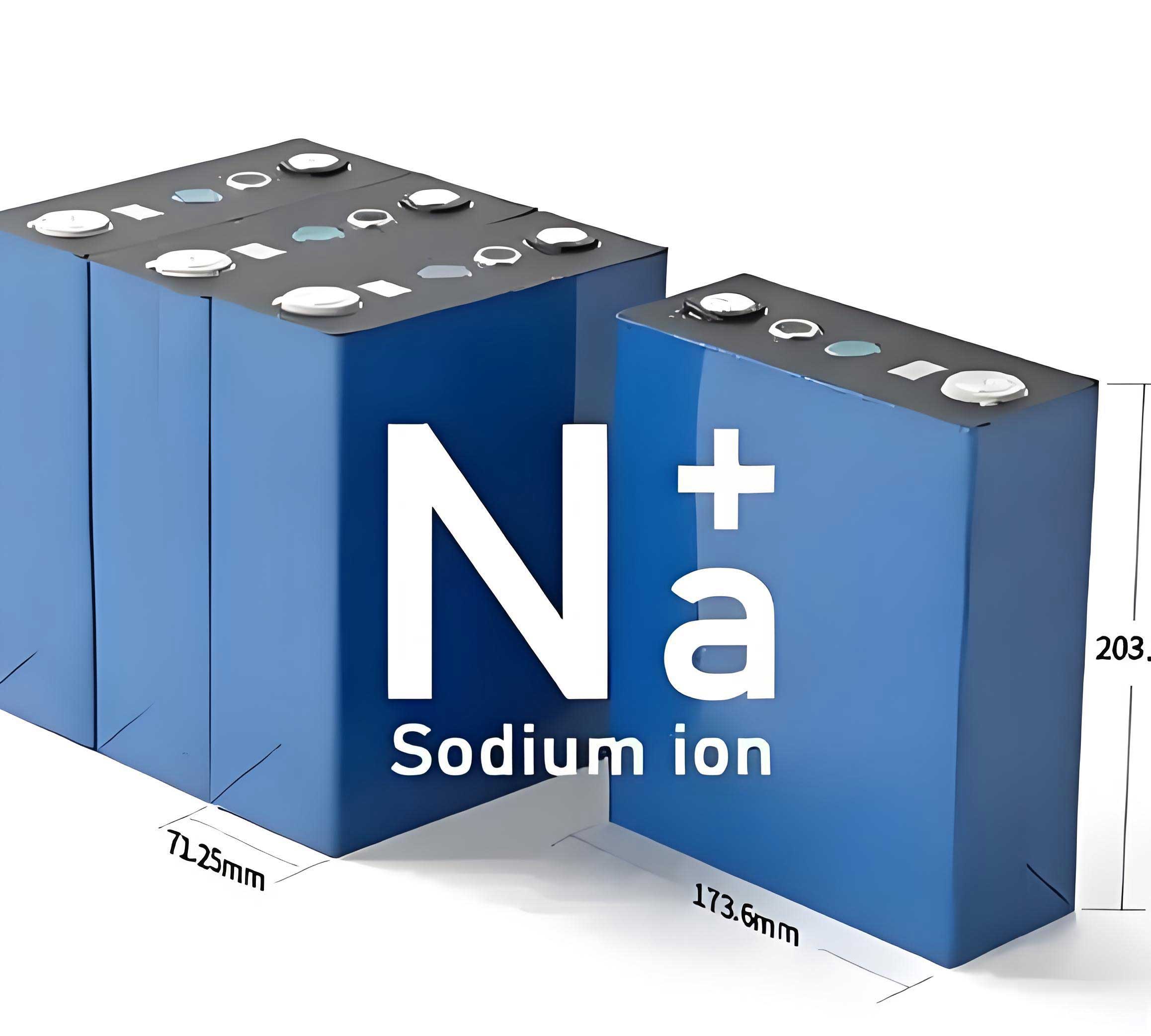
The electrochemical performance of a sodium-ion battery cathode is a complex interplay between ionic and electronic transport. For PBAs, ionic conductivity refers to the mobility of Na+ within the open framework, while electronic conductivity pertains to the movement of electrons through the material’s bulk and across particle boundaries to the current collector. The ideal PBA lattice is a face-centered cubic structure with the general formula AxM[M'(CN)6]1-y·□y·nH2O, where A is an alkali metal (Na), M and M’ are transition metals, □ represents [Fe(CN)6] vacancies, and nH2O is coordinated and interstitial water. Unfortunately, materials synthesized via conventional aqueous co-precipitation often deviate from this ideal, containing a high density of vacancies and water molecules. These defects disrupt the continuous migration pathways for Na+. The Na+ migration is theorized to follow a W-shaped path between face-centered sites, and vacancies can break this path. Furthermore, interstitial water occupies sites that would otherwise be available for Na+ storage and creates steric hindrance, increasing the activation energy for ion hopping. The electronic structure of PBAs, where redox-active metal centers are separated by insulating cyanide bridges, results in low intrinsic electronic conductivity. This forces electrons to tunnel or hop over large distances, creating significant charge transfer resistance (Rct) at the electrode-electrolyte interface and within the electrode composite. The combined effect of these two resistive components severely limits the rate capability of the sodium-ion battery. The strategies to enhance conductivity, therefore, target these two aspects independently or synergistically, as summarized in the following discussion and tables.
I. Perfecting the PBA Crystal Structure: The Foundation for Ionic Transport
Enhancing the intrinsic ionic conductivity begins with synthesizing PBAs with high crystallinity, low vacancy concentration, and minimal water content. The primary goal is to create a clean, uninterrupted lattice for Na+ diffusion.
1.1 Chelator-Assisted Co-Precipitation: This is a highly effective method to control crystallization kinetics. Chelating agents like sodium citrate or EDTA bind to transition metal ions in solution, slowing down their release during precipitation. This reduced supersaturation leads to a slower nucleation rate, allowing for the growth of larger, more perfect crystals with fewer defects. The chelator can also facilitate the de-solvation of metal ions, reducing the incorporation of coordinated water. The general effect can be described by modifying the classical nucleation theory, where the growth rate G is inversely related to the chelator concentration [C]:
$$ G \propto \frac{1}{[C]} $$
A higher [C] leads to slower growth and better-defined crystals. Studies have shown that PBAs synthesized with optimal chelator ratios exhibit higher Na content (x in NaxPBA), lower water content (n), and significantly improved rate performance in sodium-ion batteries.
1.2 Single Iron Source Method: This approach involves the controlled decomposition of a single precursor, such as K3[Fe(CN)6], under acidic and heated conditions. The slow release of Fe ions allows for a more controlled reaction with the remaining cyanometalate complex, fostering the growth of high-quality crystals with low defect density. While excellent for fundamental studies, the method often involves toxic byproducts and has low yield, limiting its scalability for sodium-ion battery production.
1.3 Anti-Oxidation Protection: During synthesis, Fe2+ can be oxidized to Fe3+, leading to the formation of [Fe(CN)6] vacancies to maintain charge balance. Employing reducing agents (e.g., ascorbic acid) or conducting reactions under an inert atmosphere prevents this oxidation. This results in a product closer to the “Prussian White” state (with more Fe2+), characterized by higher sodium content and fewer vacancies, directly enhancing the capacity and ionic mobility for the sodium-ion battery.
1.4 Reducing Crystal Water Content: Post-synthesis treatments like thermal annealing under vacuum or inert gas can remove interstitial and some coordinated water. This dehydration process opens up migration channels and increases the number of available Na+ sites. However, excessive heat can damage the framework. Alternative synthetic routes in non-aqueous or solid-state media have also been explored to minimize water incorporation from the outset, yielding PBAs with superior electrochemical kinetics for sodium-ion battery applications.
The following table summarizes the key methods for perfecting PBA structure and their impact on properties relevant to sodium-ion battery performance.
| Synthesis Strategy | Key Principle | Effect on PBA Structure | Impact on Sodium-Ion Battery Performance |
|---|---|---|---|
| Chelator-Assisted Co-precipitation | Controls metal ion release rate via complexation. | Increases crystallite size, reduces vacancies & water. | Higher capacity, improved rate capability. |
| Single Iron Source Method | Slow decomposition of a single precursor. | Produces high-purity, low-defect crystals. | Excellent intrinsic kinetics but poor scalability. |
| Anti-Oxidation Protection | Uses reductants/inert atmosphere to prevent Fe2+ oxidation. | Increases Na content, reduces vacancy concentration. | Enhances specific capacity and cycle stability. |
| Dehydration (Thermal Treatment) | Removes interstitial/coordinated water post-synthesis. | Increases free volume, reduces Na+ diffusion barrier. | Boosts rate performance, especially at high C-rates. |
II. Morphological Engineering: Shortening the Ionic Path
Beyond perfecting the atomic-scale lattice, designing the particle morphology at the nano- or micro-scale is a powerful strategy to enhance ionic transport kinetics. The core idea is to minimize the solid-state diffusion distance for Na+ and maximize the contact area with the electrolyte.
2.1 Acid/Alkali Etching: Controlled chemical etching can sculpt PBA crystals. Mild acid treatment can create surface pores or nanogrooves, effectively increasing the specific surface area and providing more entry points for Na+. This reduces the effective diffusion length (Leff) within the particle. According to Fick’s law, the time (τ) for diffusion scales with the square of the distance:
$$ \tau \approx \frac{L_{\text{eff}}^2}{D} $$
where D is the diffusion coefficient. By reducing Leff through etching, the time for Na+ to reach the interior is drastically shortened, benefiting the high-rate performance of the sodium-ion battery. Alkali etching can induce more dramatic transformations, such as converting microcubes into nanosheet assemblies or nanoflowers, which offer even shorter and more accessible diffusion paths.
2.2 Core-Shell and Hollow Structures: Constructing particles with hollow interiors or a core-shell heterostructure addresses multiple issues. The hollow space accommodates volume changes during cycling, improving structural integrity. More importantly, it creates a thin shell of active material. For a hollow sphere with shell thickness δ and radius R, the diffusion time is proportional to δ2, not R2. If δ << R, diffusion kinetics are vastly improved. Core-shell structures, such as a manganese-based PBA core with a nickel-based PBA shell, can combine the high capacity of one with the stable interface and fast kinetics of the other, synergistically enhancing the performance of the sodium-ion battery cathode.
2.3 Low-Dimensional and Templated Structures: Two-dimensional (2D) nanosheets or one-dimensional (1D) tubular structures provide large exposed surfaces and extremely short in-plane or axial diffusion distances. These can be achieved via templated growth or self-assembly during synthesis. For instance, growing PBAs on layered templates like MoS2 or fabricating tubular PBAs can yield materials where Na+ transport is highly facilitated. The enhanced kinetics directly translate to superior power density in the assembled sodium-ion battery.
The table below contrasts different morphological engineering approaches and their advantages for sodium-ion battery applications.
| Morphology Type | Typical Synthesis Method | Advantage for Ionic Conductivity | Benefit to Sodium-Ion Battery |
|---|---|---|---|
| Etched/Porous Particles | Controlled acid/alkali etching. | Reduces solid-state diffusion length, increases electrolyte contact. | Improved rate capability and accessible capacity. |
| Hollow Nanostructures | Template-assisted synthesis or Ostwald ripening. | Ultra-thin active walls minimize Leff; void buffers strain. | Excellent high-rate performance and long cycle life. |
| Core-Shell Heterostructures | Sequential precipitation or cation exchange. | Combines fast-kinetic shell with high-capacity core; stabilizes interface. | High capacity retention at high currents. |
| 2D Nanosheets / 1D Tubes | Template-directed growth or self-assembly. | Provides shortest possible in-plane/axial diffusion paths. | Outstanding power density and fast charging potential. |
III. Conductive Composites: Building Electronic Highways
While the previous strategies primarily target ionic conductivity, the poor electronic conductivity of PBAs remains a critical bottleneck. Integrating PBAs with conductive materials creates composite electrodes where electrons can travel rapidly through a percolating network, ensuring that the redox reactions are not limited by charge transfer.
3.1 Carbon Material Integration: Carbon is the most ubiquitous conductive additive. Strategies go beyond simple physical mixing. In-situ growth of PBA nanocrystals on conductive carbon scaffolds (e.g., carbon cloth, 3D porous carbon, carbon nanotubes) ensures intimate contact. This coating creates a “highway” for electrons around the insulating PBA particles. The effective electronic conductivity (σeff) of the composite can be modeled percolation theory, where it increases dramatically once the carbon content exceeds a critical volume fraction (φc). The coating also constrains PBA particle size and buffers volume changes. Such carbon-PBA composites consistently show lower Rct and superior rate performance in sodium-ion battery tests.
3.2 Conductive Polymer Coating: Polymers like polypyrrole (PPy), polyaniline (PANI), and PEDOT:PSS can be coated onto PBA surfaces via in-situ polymerization. These polymers are electronically conductive and often electrochemically active in the operating voltage window. A uniform polymer coating not only facilitates electron transport but can also act as a protective layer, suppressing the dissolution of transition metal ions from the PBA into the electrolyte—a common degradation mechanism in sodium-ion batteries. The polymer’s flexibility helps maintain electrical contact during cycling.
3.3 Composite with Other Conductors: Emerging materials like MXenes (e.g., Ti3C2Tx) offer metallic conductivity and a hydrophilic surface for good interfacial bonding. Composites of PBAs with MXenes can form flexible, binder-free electrodes with excellent charge transfer characteristics. Composites with ionically conductive phases like NASICON-type materials (e.g., Na3(VOPO4)2F) are a novel concept. Here, the coating enhances both Na+ transport at the interface and electronic contact, addressing both conductivity issues simultaneously for the sodium-ion battery cathode.
The effectiveness of a conductive coating can be conceptualized using a simplified equivalent circuit model for the electrode-electrolyte interface. A pristine PBA particle has a large charge transfer resistance Rct,PBA. When coated with a conductive phase, the effective charge transfer resistance becomes a parallel combination, significantly lowering the total Rct:
$$ \frac{1}{R_{\text{ct,eff}}} = \frac{1}{R_{\text{ct,PBA}}} + \frac{1}{R_{\text{ct,coating}}} $$
Since Rct,coating is very small, Rct,eff is dramatically reduced, accelerating the Faradaic reaction kinetics.
The table below compares different conductive composite strategies for enhancing PBA-based sodium-ion battery cathodes.
| Composite Type | Conductive Component | Primary Role & Mechanism | Outcome for Sodium-Ion Battery |
|---|---|---|---|
| Carbon Composites | CNTs, Graphene, Porous Carbon | Provides electron percolation network; constrains particle growth. | Lower impedance, high-rate capability, stable cycling. |
| Conductive Polymer Composites | PPy, PANI, PEDOT:PSS | Enhances surface electronic conductivity; protects against dissolution. | Improved rate performance and enhanced cycle life. |
| MXene-Based Composites | Ti3C2Tx etc. | Metallic conductivity + mechanical flexibility enable binder-free electrodes. | High power density, excellent flexibility. |
| Mixed Ionic-Electronic Conductors | NASICON phases, TCNQ molecules | Enhances both interfacial ion and electron transfer kinetics. | Superior comprehensive rate performance from synergistic effects. |
IV. Summary and Future Perspectives
In summary, enhancing the conductivity of Prussian blue analogs is a multi-faceted endeavor critical for their success in high-performance sodium-ion batteries. The strategies can be categorized into three interconnected pillars: (1) Perfecting the crystal structure to create an optimal, low-resistance highway for Na+ diffusion; (2) Engineering particle morphology to shorten the travel distance for ions; and (3) Forming composites with conductive phases to build efficient electron transport networks. Each approach has contributed significantly to improving the rate capability and power density of PBA-based cathodes.
Looking forward, the research trajectory points toward the intelligent integration of these strategies. The future lies in designing “smart” PBA architectures where structural perfection, nanoscale morphological control, and intimate integration with multi-functional conductive matrices are achieved simultaneously. For instance, one could envision a material consisting of low-defect, single-crystalline PBA nanosheets (for short ionic paths) grown directly on a 3D interconnected scaffold of a mixed conductor like a carbon-MXene hybrid (for rapid electron and ion delivery). Such a holistic design would address all transport limitations concurrently.
Furthermore, advanced characterization techniques and computational modeling will play an increasingly vital role. In-situ and operando studies are needed to precisely elucidate the dynamic changes in ionic and electronic transport properties during the cycling of a sodium-ion battery. Machine learning could accelerate the discovery of optimal synthesis parameters and composite formulations. The ultimate goal is to develop PBA-based cathodes that not only match but exceed the power performance of commercial lithium-ion battery materials, thereby enabling the widespread adoption of cost-effective and sustainable sodium-ion battery technology for large-scale energy storage and power-intensive applications.