
My focus in this work is on enhancing the accuracy of electrochemical parameter identification for LiFePO4 batteries, with particular emphasis on the voltage plateau region. The voltage plateau of a LiFePO4 battery is a critical feature that directly reflects the lithium intercalation and de-intercalation capabilities of its positive and negative electrodes. Traditional identification methods often minimize a global least-squares error between simulated and measured terminal voltage, which tends to prioritize accuracy at the beginning and end of the discharge curve where voltage changes rapidly. This approach can lead to significant inaccuracies during the long, flat voltage plateau, which contains vital information about the electrode’s health and kinetics. To address this, I have developed a parameter identification framework using an enhanced Single Particle Model (SPM) and a refined optimization objective that explicitly accounts for the characteristic voltage plateaus, especially those originating from the graphite negative electrode.
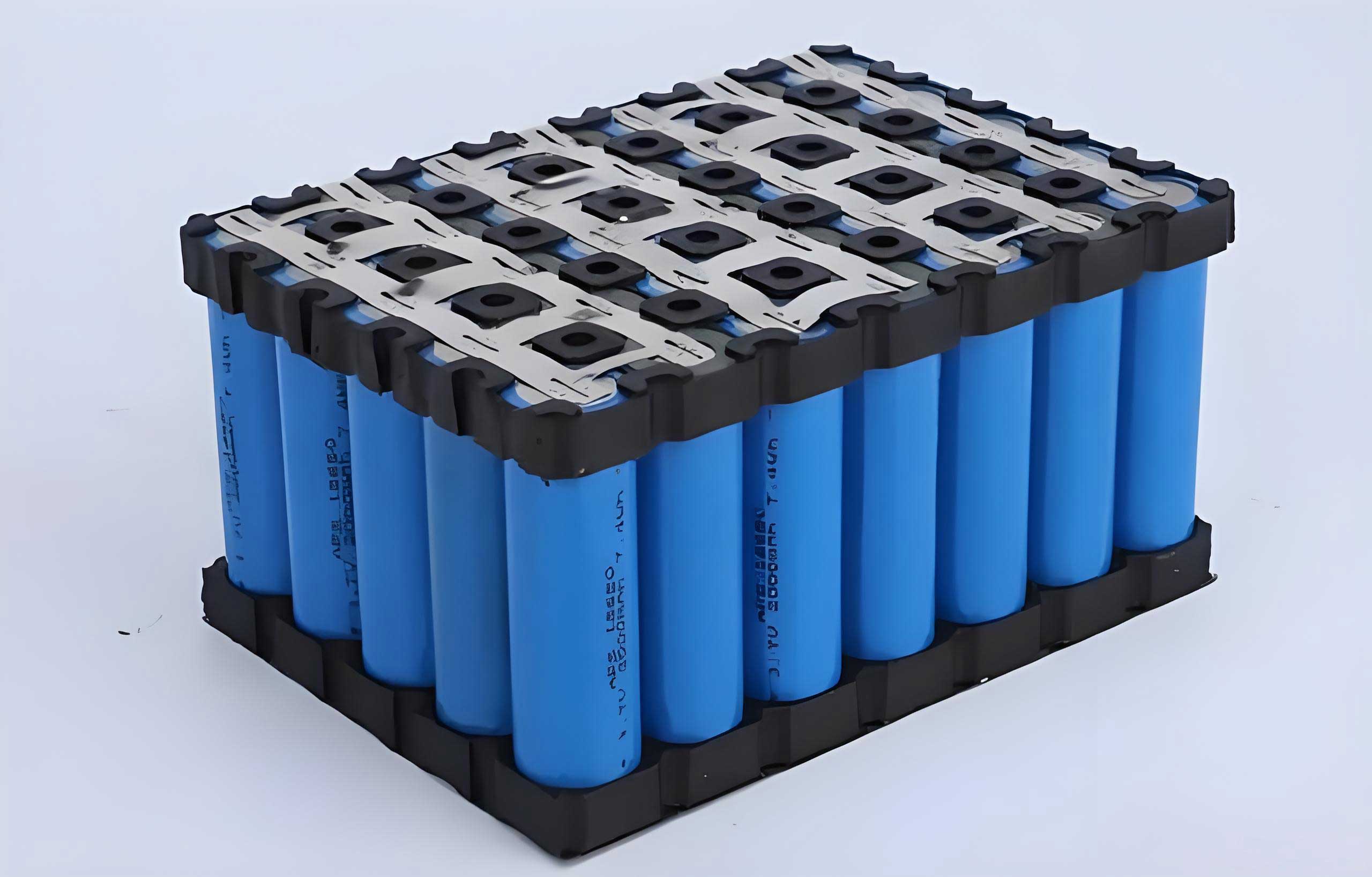
The electrochemical behavior of a LiFePO4 battery is fundamentally governed by its electrode materials. The positive electrode, composed of olivine-structured LiFePO4, undergoes a two-phase transformation between FePO4 and LiFePO4, resulting in a single, very flat voltage plateau. The negative electrode, typically graphite, exhibits multiple phase transitions during lithiation, leading to several voltage plateaus. Among these, two are particularly distinct in the context of a full LiFePO4 battery. These plateaus correspond to specific stage transformations in the graphite intercalation compounds and are key features in the battery’s incremental capacity (dQ/dV) curve. Accurately capturing these plateaus in a model is therefore essential for obtaining physically meaningful electrochemical parameters that truly represent the state of the LiFePO4 battery.
I employ an improved Single Particle Model as the core for simulation and parameter identification. While the classic SPM simplifies each electrode to a single spherical particle and ignores electrolyte concentration gradients, it loses accuracy at higher C-rates due to the neglected ohmic drop in the electrolyte. My enhanced model incorporates this liquid phase potential, significantly improving fidelity across a wider range of discharge rates without the computational burden of the full pseudo-two-dimensional (P2D) model. The governing equations are summarized below.
The current density at the electrode surface is given by:
$$i_j = \frac{I}{S_j}$$
where \(I\) is the applied current and \(S_j\) is the total electroactive surface area for electrode \(j\) (p for positive, n for negative). The pore wall flux of lithium ions is:
$$J_j = \frac{i_j}{nF}$$
with \(F\) being Faraday’s constant and \(n=1\). This flux is governed by the Butler-Volmer kinetics:
$$J_j = k_j (c_{s,j,max} – c_{s,j,surf})^{0.5} (c_{s,j,surf})^{0.5} \left( c_{e} \right)^{0.5} \sinh\left(\frac{\eta_j}{2RT}\right)$$
where \(k_j\) is the reaction rate constant, \(c_{s,j,surf}\) and \(c_{s,j,max}\) are the surface and maximum solid-phase lithium concentrations, \(c_e\) is the electrolyte concentration, and \(\eta_j\) is the surface overpotential.
The overpotential and cell voltage are defined as:
$$\eta_j = \phi_{s,j} – \phi_{l,j} – U_j(\text{SOL}_j)$$
$$V_{cell} = \phi_{s,p} – \phi_{s,n}$$
The final expression for the terminal voltage, incorporating the liquid phase potential \(U_l\), is:
$$V_{cell} = U_p(\text{SOL}_p) – U_n(\text{SOL}_n) + \eta_p – \eta_n + U_l$$
The liquid phase potential is approximated as:
$$U_l = \frac{2RT(1-t_+)}{F} \ln\left(\frac{c_{e,L}}{c_{e,0}}\right) + \frac{I}{A_{cell}} \left( \frac{L_n}{2\kappa \epsilon_n^{1.5}} + \frac{L_s}{\kappa \epsilon_s^{1.5}} + \frac{L_p}{2\kappa \epsilon_p^{1.5}} \right)$$
where \(t_+\) is the transference number, \(L\) are thicknesses, \(\kappa\) is electrolyte conductivity, and \(\epsilon\) are porosities.
The open-circuit potentials \(U_p\) and \(U_n\) for the LiFePO4 and graphite electrodes, respectively, are empirical functions of the surface state-of-lithiation (SOL):
$$U_p(x) = 3.4323 – 0.8428\exp[-80.2493(1-x)] – 3.2474\times10^{-6}\exp[20.2645(1-x)] + 3.2484\times10^{-6}\exp[20.2646(1-x)]$$
$$U_n(x) = 0.6379 + 0.5416\exp(-305.5309x) – 0.044\tanh\left(\frac{x-0.1958}{0.1088}\right) – 0.1978\tanh\left(\frac{x-1.0571}{0.0854}\right) + 0.6875\tanh\left(\frac{x+0.0117}{0.0529}\right) – 0.0175\tanh\left(\frac{x-0.5692}{0.0875}\right)$$
where \(x\) represents \(\text{SOL}_j = c_{s,j,surf} / c_{s,j,max}\).
Solid-phase diffusion is simplified using a transcendental solution for constant current, providing the surface concentration without solving partial differential equations:
$$\text{SOL}_{j,surf} = \text{SOL}_{j,ini} + \delta_j \left[ \frac{3D_{s,j}t}{R_j^2} + \frac{1}{5} \right] – \frac{2\delta_j}{R_j^2} \sum_{k=1}^{10} \frac{D_{s,j}}{\lambda_k^2} \exp\left(-\frac{D_{s,j} \lambda_k^2 t}{R_j^2}\right)$$
where \(\delta_p = -\frac{I R_p}{S_p F D_{s,p} c_{s,p,max}}\), \(\delta_n = \frac{I R_n}{S_n F D_{s,n} c_{s,n,max}}\), and \(\lambda_k\) are roots of a characteristic equation.
For parameter identification, I focus on key kinetic and stoichiometric parameters that significantly influence the voltage response, particularly the plateau regions. The parameters to be identified are the initial lithium states in the positive and negative particles (\(x_{p,0}\), \(x_{n,0}\)), the reaction rate constants (\(k_p\), \(k_n\)), and the solid-phase diffusion coefficients (\(D_{s,p}\), \(D_{s,n}\)). Other geometric and transport parameters are kept constant based on typical literature values for a LiFePO4 battery.
The core innovation lies in the formulation of the optimization objective. Instead of a simple sum of squared voltage errors, I construct a composite objective function \(f\) that penalizes errors in specific features:
$$f = \rho_1 e_V^{all} + \rho_2 e_V^{plateau} + \rho_3 e_t^{total} + \rho_4 e_t^{plateau}$$
where:
1. \(e_V^{all}\): The average absolute relative error between the entire simulated and experimental voltage curves.
2. \(e_V^{plateau}\): The relative error in the voltage levels at the two main graphite plateaus (Peaks I & II in the dQ/dV curve).
3. \(e_t^{total}\): The absolute relative error in total discharge time to the cutoff voltage.
4. \(e_t^{plateau}\): The average relative error in the time spans (or voltage intervals) associated with the two graphite plateaus.
This multi-objective approach ensures the optimization algorithm does not sacrifice plateau accuracy for a better fit at the curve endpoints. To assign appropriate weights \(\rho_i\) to these objectives, I employ the Analytic Hierarchy Process (AHP). A judgment matrix is constructed based on the relative importance of each error component for accurately characterizing the LiFePO4 battery behavior.
| Error Component | \(e_V^{all}\) | \(e_V^{plateau}\) | \(e_t^{total}\) | \(e_t^{plateau}\) |
|---|---|---|---|---|
| \(e_V^{all}\) | 1 | 3 | 5 | 4 |
| \(e_V^{plateau}\) | 1/3 | 1 | 3 | 2 |
| \(e_t^{total}\) | 1/5 | 1/3 | 1 | 1/2 |
| \(e_t^{plateau}\) | 1/4 | 1/2 | 2 | 1 |
Solving this matrix yields the priority vector (weights) after consistency verification (CR < 0.1):
$$\rho = \begin{bmatrix} 5.4621 \times 10^{-1} \\ 2.3230 \times 10^{-1} \\ 8.3753 \times 10^{-2} \\ 1.3772 \times 10^{-1} \end{bmatrix}$$
These weights are then used in the composite objective function \(f\).
I utilize the Simulated Annealing (SA) algorithm to minimize \(f\) and identify the optimal parameter set. SA is a global optimization heuristic well-suited for nonlinear problems with multiple local minima. It works by iteratively proposing new parameter sets, accepting those that lower the objective function, and occasionally accepting worse solutions with a probability that decreases over the “cooling” process, thus helping to escape local optima.
The identification is performed using experimental data from a commercial LiFePO4 battery discharged at a low rate of C/20. The results demonstrate a marked improvement. Compared to identification using only the global voltage error, my plateau-aware method produces a simulated voltage curve where the characteristic plateaus align almost perfectly with the experimental data. The voltage error during the long mid-discharge plateau is reduced to within 10 mV, a significant enhancement. The identified parameters are listed below.
| Electrode | Initial SOL (x) | Reaction Rate Constant \(k\) (m2.5/(mol0.5·s)) | Solid Diffusion Coefficient \(D_s\) (m2/s) |
|---|---|---|---|
| Positive (LiFePO4) | 0.0375 | 3.1125 × 10⁻¹¹ | 1.1810 × 10⁻¹⁸ |
| Negative (Graphite) | 0.8753 | 1.6077 × 10⁻¹² | 3.5085 × 10⁻¹⁴ |
To validate the generality of the identified parameters, I test the model against independent experimental data at higher discharge rates (0.5C and 1.0C). The model, parameterized with the values from the low-rate C/20 identification, shows good predictive capability. While errors at the very beginning and end of discharge persist due to inherent limitations in the open-circuit potential functions and model simplifications, the accuracy in the critical voltage plateau regions remains high. This confirms that the parameters identified by my method are not merely a fit to a specific curve but capture the fundamental electrochemical kinetics of the LiFePO4 battery more authentically.
In conclusion, this work presents a refined methodology for electrochemical parameter identification of LiFePO4 batteries. By shifting the focus from a generic global error minimization to a feature-aware optimization that specifically targets the graphite negative electrode’s voltage plateaus, I achieve a more accurate and physically representative parameter set. The enhanced Single Particle Model with liquid phase potential provides a efficient yet accurate platform for this identification. The parameters obtained through this process better reflect the true intercalation dynamics and health state of the LiFePO4 battery, which is crucial for advanced battery management, state-of-health estimation, and performance prediction. This approach underscores the importance of tailoring identification strategies to the unique electrochemical signatures, like the distinct voltage plateaus, of specific battery chemistries such as the LiFePO4 battery.