
The relentless consumption of traditional fossil fuels has precipitated a global dual crisis of energy and environment. To address the intertwined challenges of energy security, environmental pollution, and sustainable economic development, nations worldwide are actively exploring energy transition pathways. Leveraging geographical and climatic conditions, diverse renewable energy modes such as solar, wind, geothermal, and tidal power have emerged. However, the inherent intermittency, instability, and regional constraints of most renewables hinder their direct, large-scale integration into power grids, making energy storage a critical component of the new energy paradigm. The lithium-ion battery, renowned for its high energy density and power output, has become the cornerstone technology for energy storage applications. Driven by governmental support and the “Dual Carbon” goals, China’s new energy industrial chain is developing rapidly, leading the world from upstream power generation to downstream energy storage. Lithium-ion batteries are now ubiquitously used in electric vehicles and hold immense potential for large-scale clean energy storage. Nonetheless, a critical issue looms: the impending wave of end-of-life lithium-ion batteries. These devices contain significant amounts of heavy metals, organic compounds, and other hazardous pollutants. If not properly treated and disposed of, they pose severe risks to ecosystems and human health. Conversely, these new energy solid wastes are rich in high-value metallic elements like nickel, cobalt, lithium, and others (from other devices like photovoltaic panels). Their rational recovery can alleviate shortages of strategic metal resources and generate considerable economic benefits.
The course “Solid Waste Treatment and Disposal” is a core component of environmental science and engineering curricula, focusing on the management, disposal, and resource recovery of solid waste in the context of rapid development. The 21st century’s industrial acceleration inevitably generates novel industrial solid waste streams. Therefore, the pedagogy of this course must evolve with the times and demonstrate foresight. In the new energy context, university-level solid waste education must be grounded in the industry’s needs, cultivating talent across R&D, process engineering, and production management. Given the robust growth of the new energy sector and the impending retirement of vast quantities of related components, universities, as vital talent incubators, must prioritize reforming teaching models. Reform should be guided by industry demands, continuously updating content and methodology to align teaching with cutting-edge research and industrial practices, thereby supplying innovative talent for national new energy development. This article, using the lithium-ion battery as a central case study, discusses the treatment and resource recovery of such end-of-life new energy solid wastes and proposes a comprehensive teaching reform framework for the new era.
I. Expanding the Scope of Theoretical Knowledge
The “Solid Waste Treatment and Disposal” course traditionally covers waste from various sectors like kitchen waste, municipal solid waste, and general industrial waste. However, the physical and chemical properties of solid waste differ markedly across industries. Therefore, handling novel waste streams requires first a thorough understanding of their composition before applying targeted strategies: recovering valuable components and safely treating or reducing the volume of non-valuable or hazardous fractions.
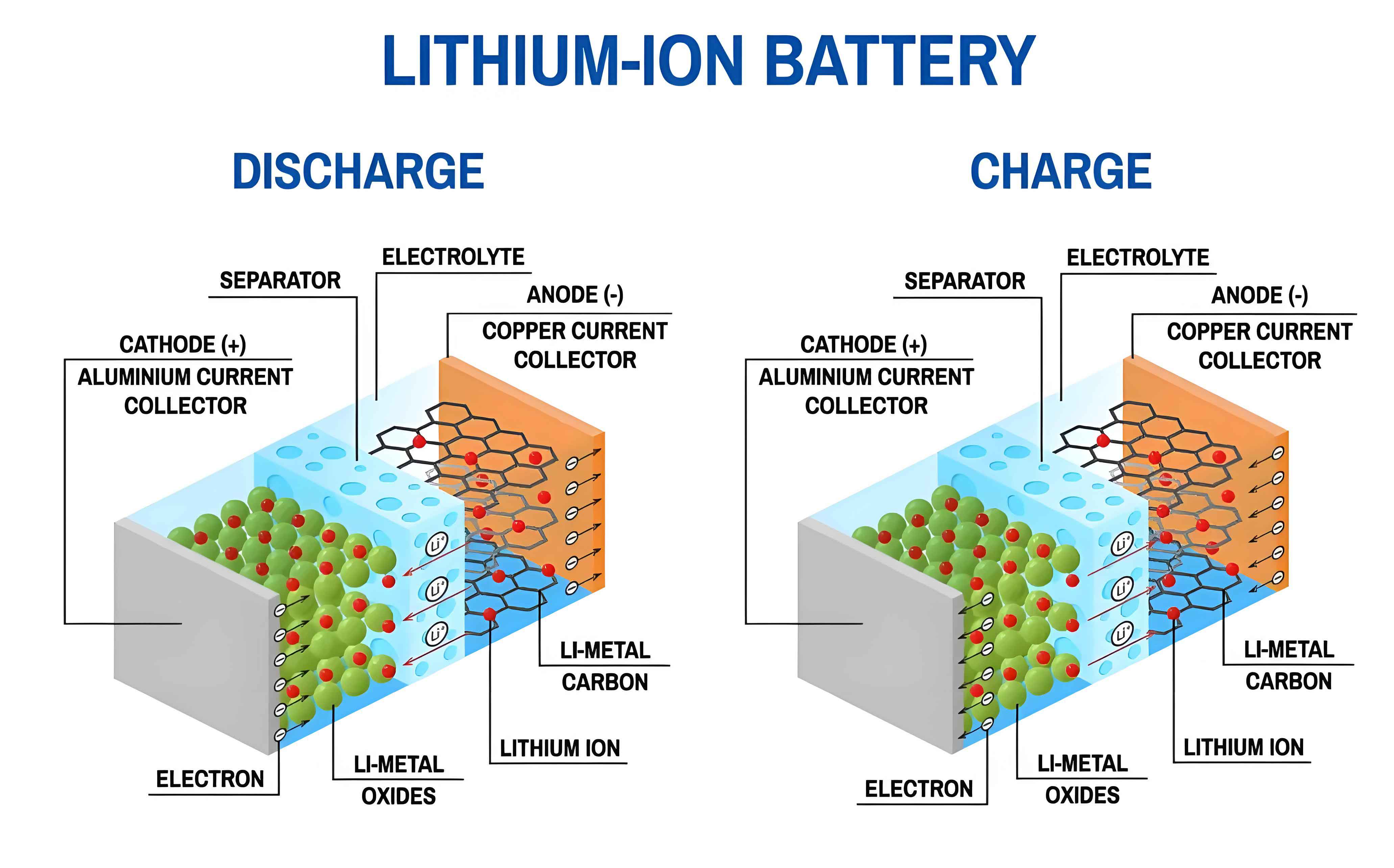
Taking an end-of-life lithium-ion battery as an example, its core components are the cathode, anode, separator, and electrolyte. The cathode alone constitutes 30-50% of the battery’s cost (varying with metal prices) and contains valuable metals like Li, Co, Ni, and Mn. Thus, cathode recycling should prioritize resource recovery to mitigate resource scarcity and maximize economic return from the spent battery. In contrast, the electrolyte contains hazardous organic components and fluorine-based compounds, such as carbonate solvents and LiPF6 salt. Its treatment is key to the safe, environmentally sound processing of spent lithium-ion batteries. Teaching must ensure students master the composition of a spent lithium-ion battery, understand the environmental impact and physicochemical properties of each component, and fundamentally grasp the principles behind various recovery methods.
To cultivate innovative talent, students must thoroughly understand both mainstream and frontier recycling processes for spent lithium-ion batteries. Firstly, using established industrial-scale processes as benchmarks, students should critically analyze each step: collection/sorting, discharge/disassembly, metal extraction, and material regeneration. They should evaluate the advantages and limitations of each stage, fostering the critical thinking necessary for future process improvement. Secondly, to keep students abreast of technological advancements, recent scientific literature on battery recycling should be incorporated. Promising mainstream and emerging processes (e.g., pyrometallurgy, hydrometallurgy including novel acid-leaching systems, direct regeneration) should be categorized and analyzed, helping students grasp the core concepts and theoretical foundations of each approach.
| Waste Category | Typical Components | Primary Hazards | Key Valuable Components | Core Treatment Objectives |
|---|---|---|---|---|
| Municipal Solid Waste | Organics, plastics, inert materials | Leachate, methane, odors | Recyclables (plastic, metal, glass) | Volume reduction, stabilization, material recovery |
| Spent Lithium-ion Battery | Cathode (LiMO2), Anode (Graphite), Electrolyte (LiPF6 in organic solvent) | Heavy metals (Co, Ni), toxic fluorine, flammable organics | Li, Co, Ni, Mn, Cu, Al | High-value metal recovery, safe electrolyte destruction, hazard elimination |
The core chemical reaction for metal extraction from a cathode material like LiCoO2 via hydrometallurgy (acid leaching with a reductant) can be summarized as:
$$2 \text{LiCoO}_2(s) + 3 \text{H}_2\text{SO}_4(aq) + \text{H}_2\text{O}_2(aq) \rightarrow 2 \text{CoSO}_4(aq) + \text{Li}_2\text{SO}_4(aq) + 4 \text{H}_2\text{O}(l) + \text{O}_2(g)$$
Where the reductant (H2O2) facilitates the dissolution of Co(III) by reducing it to Co(II). Teaching should delve into the thermodynamics and kinetics of such reactions.
II. Enhancing Experimental and Practical Teaching
Solid waste management is a practice-oriented discipline. Beyond theoretical foundations, students must learn to apply theory to practice, improving their hands-on skills and gaining tangible experience in waste processing stages. This practical foundation is crucial for solving real-world problems in their future careers. An experimental module centered on recycling a spent lithium-ion battery is proposed to deepen student understanding.
1. Solid Waste Characterization and Pre-treatment
Unlike traditional mixed waste, new energy solid wastes like lithium-ion batteries have relatively simple but unique compositions. Characterization must go beyond standard parameters (pH, moisture, combustible content) to include state-of-charge (SOC), specific organic constituents, and phase composition of electrode materials. Students must master these analytical techniques.
Experimental Design: Students measure the open-circuit voltage of a spent lithium-ion battery cell using a multimeter to assess its SOC. For safety, the cell is then fully discharged in a saturated NaCl solution to eliminate residual charge and prevent short-circuiting during disassembly. After discharge, the voltage is re-checked. This teaches battery operation principles, short-circuit hazards, and discharge chemistry. The discharged cell is then manually dismantled to separate components: cathode sheet (Al foil coated with active material), anode sheet (Cu foil with graphite), separator, and casing. To recover the cathode powder, the cathode sheet is subjected to vacuum pyrolysis (~500°C, 2h) to decompose the polyvinylidene fluoride (PVDF) binder. The resulting powder is scraped off and analyzed by X-ray Diffraction (XRD) to determine its phase composition (e.g., LiCoO2, LiFePO4, LiNixMnyCozO2).
2. Cathode Material Leaching Experiment
This experiment demonstrates the core hydrometallurgical process. Students leach cathode powder (e.g., from LiFePO4) using sulfuric acid with hydrogen peroxide as a reductant/oxidant, depending on the cathode chemistry. The leaching of LiFePO4 can be represented as:
$$2 \text{LiFePO}_4(s) + 4 \text{H}_2\text{SO}_4(aq) + \text{H}_2\text{O}_2(aq) \rightarrow 2 \text{LiH}_2\text{PO}_4(aq) + \text{Fe}_2(\text{SO}_4)_3(aq) + 2 \text{H}_2\text{O}(l)$$
Students monitor and control the pH during leaching. The concentration of target metals (Li, Fe, etc.) in the leachate is quantified via Atomic Absorption Spectroscopy (AAS) or Inductively Coupled Plasma (ICP), and the leaching efficiency is calculated:
$$\text{Leaching Efficiency (\%)} = \frac{\text{Mass of metal in leachate}}{\text{Mass of metal in feed cathode powder}} \times 100\%$$
3. Lithium Recovery via Precipitation
Following leaching, metal separation is required. For a LiFePO4 leachate, iron is first removed by pH adjustment (e.g., using NaOH to pH ~4-5) to precipitate Fe(OH)3:
$$\text{Fe}^{3+}(aq) + 3 \text{OH}^-(aq) \rightarrow \text{Fe(OH)}_3(s)$$
After filtration, lithium is recovered from the purified solution as lithium carbonate by adding sodium carbonate:
$$2\text{Li}^+(aq) + \text{CO}_3^{2-}(aq) \rightarrow \text{Li}_2\text{CO}_3(s)$$
Students calculate the stoichiometric amount of precipitant needed based on lithium concentration, perform the precipitation, and finally filter, wash, and dry the product. The purity of the recovered Li2CO3 can be assessed.
| Experiment Stage | Key Operations | Techniques/Equipment Used | Core Learning Objectives |
|---|---|---|---|
| 1. Pre-treatment & Characterization | Safety discharge, manual disassembly, vacuum pyrolysis | Multimeter, Glove Box, Tube Furnace, XRD | Understand battery components/SOC, safety protocols, binder removal, phase analysis |
| 2. Hydrometallurgical Leaching | Acid leaching with reductant, pH control, filtration | pH meter, Hotplate, AAS/ICP | Grasp leaching principles/kinetics, use of analytical instruments, efficiency calculation |
| 3. Metal Separation/Recovery | pH adjustment for impurity removal, chemical precipitation, product washing | Filter setup, Drying oven | Understand solution chemistry for purification, stoichiometric calculation, product recovery |
III. Diversifying Teaching Methodologies
As a comprehensive subject, teaching cannot rely solely on theoretical lectures. Much of the expertise in solid waste management stems from practical engineering cases. Therefore, the focus should be on analyzing various treatment/disposal technologies using real projects as examples, while using classroom theory to explain their underlying principles. Given the rapid pace of the new energy sector, textbook updates lag behind. The internet must be leveraged to find the latest case studies (e.g., tours of recycling plants via video, analysis of recent industrial reports). Students should compare new processes with traditional methods, analyzing the fundamental advantages of innovative techniques to keep their knowledge current.
For lithium-ion battery recycling, students need to understand both the device’s fundamentals and the industry’s current state—a broad scope covering multiple disciplines not fully captured in a single text. Online resources can vividly illustrate battery operation and structure. Videos from different recycling companies showcasing various process routes (hydrometallurgical vs. direct recycling plants) can be invaluable. During in-person sessions, instructors can lead interactive discussions on the principles of these showcased processes, encouraging student participation and critical thinking.
Furthermore, as a highly interdisciplinary field involving environmental, chemical, materials, and safety engineering, teaching should incorporate guest lectures from experts in these domains. A module on lithium-ion battery recycling could feature a chemical engineer discussing process safety and scale-up, a materials scientist explaining cathode crystal structures and regeneration mechanisms, and an industrial ecologist presenting lifecycle assessment results. This fosters holistic, systems-thinking skills.
For instance, safety is paramount. Students must learn to identify and mitigate hazards in battery recycling, such as risks from residual charge, flammable electrolytes, and fine metal powders. They should be taught hazard assessment protocols for specific processes, safe operating procedures, and emergency response measures.
| Teaching Mode | Description | Tools/Resources | Pedagogical Benefit |
|---|---|---|---|
| Theoretical Foundation | Lectures on principles of recycling processes (Pyro-, Hydro-, Bio-metallurgy, Direct Recycling). | Textbooks, Scientific Literature, Lecture Slides | Builds fundamental knowledge of chemical and physical principles. |
| Case-Based Learning | Analysis of real-world recycling plant flowsheets, techno-economic assessments, and environmental impact reports. | Industry White Papers, Company Websites, Environmental Reports | Connects theory to practice, develops analytical and critical evaluation skills. |
| Virtual/Online Exploration | Virtual tours of recycling facilities, animated videos of battery disassembly and material flows. | Educational Videos, Virtual Reality (VR) Simulations | Provides visual and immersive understanding of complex industrial processes. |
| Interdisciplinary Seminars | Guest lectures from chemical engineers, materials scientists, and industrial safety officers. | Expert Invitations, Collaborative Teaching | Broadens perspective, highlights cross-disciplinary connections and constraints (e.g., safety, economics). |
IV. Aligning with Industry Development and Needs
The ultimate goal of the “Solid Waste Treatment and Disposal” course is to cultivate innovative talent that meets the future human resource demands of the waste management and recycling industry. Course reform must align with national strategic goals and industry needs. Firstly, robust industry research is essential. Universities, as talent developers, must understand current industry dynamics and make informed predictions about future trends. This can involve faculty-led surveys or collaborations with professional agencies to analyze the new energy solid waste sector’s status, projected growth, and competency requirements. Curricula can then be adjusted accordingly, integrating the latest developments to meet future demand.
Secondly, strengthening university-industry collaboration is critical. As a practice-oriented field, hands-on experience is vital for talent development. Industry partnerships allow universities to stay updated on technological and market shifts, ensuring the relevance of their training. Simultaneously, such collaborations create internship opportunities, giving students exposure to professional equipment, industrial-scale processes, and real-world challenges, thereby deepening their applied understanding.
| Strategy | Action | Expected Outcome |
|---|---|---|
| Industry Needs Analysis | Conduct periodic surveys and workshops with recycling companies to identify skill gaps and emerging technological needs. | Curriculum remains relevant and responsive to the job market. |
| Establish Industrial Advisory Boards | Include industry experts in curriculum design and review committees. | Ensures course content meets professional standards and expectations. |
| Develop Internship/Practicum Programs | Formalize partnerships with recycling firms for student internships, co-op programs, or final-year projects. | Provides students with hands-on experience, professional networking, and potential employment pathways. |
| Invite Industry Practitioners | Regularly host lectures or workshops by plant managers, process engineers, and R&D leads from the lithium-ion battery recycling industry. | Brings real-world insights, current challenges, and career perspectives into the classroom. |
V. Reforming the Course Assessment System
The traditional assessment model for this course often relies heavily on a final exam (e.g., 70% weight) combined with a minor “participation” score (e.g., 30%). This format inadequately evaluates practical skills, problem-solving abilities, and the process of learning. A more comprehensive, process-oriented assessment is recommended.
1. Increasing the Weight of Process Assessment
Teaching and assessment are inseparable; assessment is key to understanding student learning and providing feedback for pedagogical improvement. To accurately reflect learning outcomes, the evaluation system needs adjustment. Moving away from a single high-stakes exam is crucial. For a practice-heavy course like this, final exams should not dominate the grade. Increasing the weight of continuous, process-based assessment motivates consistent student engagement and provides a more accurate measure of competency development. “Participation” should be assessed based on the quality of classroom contributions, initiative in problem identification, and analytical reasoning during case study discussions, rather than merely on attendance or routine homework submission.
2. Strengthening Assessment of Experimental and Practical Work
Given the importance of practical cognition, assessment must extend beyond written reports. The evaluation of lab work and internships should emphasize the process—technique, safety observance, data recording, adaptability, and teamwork—not just the final report. Rubrics should clearly define criteria for experimental procedure, data analysis, and collaborative skills. This approach helps students focus on mastering the process itself. Furthermore, practical work should explicitly foster and assess teamwork, communication, and project management abilities, which are essential for future engineers and scientists.
| Assessment Component | Weight | Description & Evaluation Focus |
|---|---|---|
| Continuous Process Evaluation | 40% | Based on active, thoughtful participation in class discussions, case study analyses, in-class problem-solving exercises, and preliminary design tasks. Quality of engagement over mere presence. |
| Experimental & Practical Work | 30% | Evaluation of hands-on skills, lab safety, experimental design execution, data quality, teamwork, and the process documented in lab notebooks. Final report quality is a subset of this grade. |
| Project/Design Report | 20% | Assessment of a small group or individual project (e.g., designing a conceptual flowsheet for a specific lithium-ion battery chemistry, conducting a simplified lifecycle assessment). Focus on creativity, application of principles, and report quality. |
| Final Knowledge Synthesis | 10% | A shorter final exam or comprehensive oral presentation focusing on synthesizing knowledge across different recycling methods, comparing them critically, and applying principles to novel scenarios. |
Conclusion
In the context of the global energy transition, the solid waste management sector must strategically address the burgeoning stream of new energy solid wastes. Driving reform in solid waste education is not only a national strategic imperative but also a demand of society and our times. Universities, as incubators of innovative talent, must proactively innovate teaching methodologies, modernize traditional pedagogical models, enrich theoretical content with contemporary case studies like lithium-ion battery recycling, conduct thorough research on industry trends, and actively align with sector-specific talent requirements. Through such multifaceted reforms—expanding theoretical scope, enhancing hands-on and experimental learning, diversifying delivery methods, forging industry links, and implementing a robust process-oriented assessment system—we can cultivate high-quality, interdisciplinary, and innovative talent equipped to tackle the challenges of new energy solid waste. This will provide essential human capital to support the sustainable development of the new energy industry and contribute significantly to achieving long-term environmental and climate goals.