
In the rapidly evolving landscape of energy storage systems, the lithium-ion battery stands as a cornerstone technology due to its high energy density, long cycle life, and versatility in applications ranging from electric vehicles to portable electronics. However, the performance of a lithium-ion battery inevitably degrades over time, primarily manifesting as a reduction in available capacity and an increase in internal resistance. Accurate estimation of the available capacity is crucial for ensuring the safe and efficient operation of lithium-ion battery systems, particularly as they approach end-of-life conditions. Traditional methods for capacity estimation often face challenges such as the need for complete discharge cycles, model complexity, or sensitivity to operating conditions. In this work, we address these limitations by proposing a data-driven approach that leverages an optimized support vector regression (SVR) algorithm, enhanced by the sparrow search algorithm (SSA), to achieve precise and efficient capacity estimation for lithium-ion batteries. Our methodology focuses on extracting robust aging features from incremental capacity (IC) curves and optimizing the SVR model parameters to track the nonlinear degradation trajectory of lithium-ion batteries. Through extensive experimentation and validation, we demonstrate that this approach not only improves estimation accuracy but also reduces computational time, making it suitable for real-world applications. This article delves into the details of our framework, from feature selection and algorithm optimization to experimental results and comparative analyses, all while emphasizing the central role of the lithium-ion battery in modern energy systems.
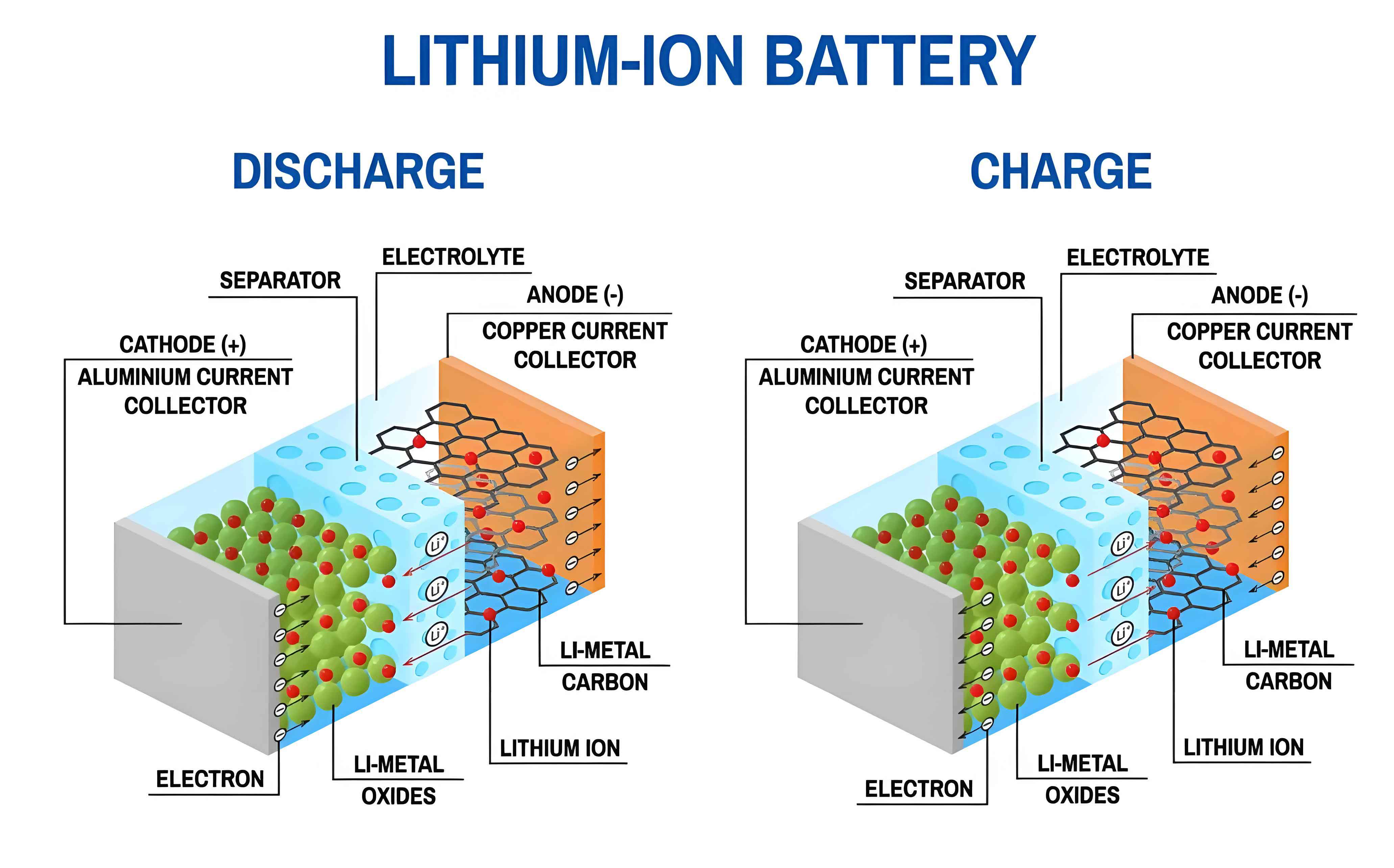
The degradation of a lithium-ion battery is a complex electrochemical process influenced by factors such as cycling history, temperature, and charge-discharge rates. As the lithium-ion battery ages, its ability to store and deliver energy diminishes, which can lead to performance issues and safety hazards if not monitored properly. Capacity estimation methods can be broadly categorized into direct measurement, model-based approaches, and data-driven techniques. Direct measurement, while accurate, is time-consuming and impractical for online applications. Model-based methods, such as electrochemical or empirical models, require precise parameter identification and may struggle with the nonlinearities inherent in lithium-ion battery aging. In contrast, data-driven methods, which include machine learning algorithms like support vector machines (SVM), Gaussian process regression (GPR), and long short-term memory (LSTM) networks, offer a flexible alternative by learning the relationship between battery operational data and capacity without explicit physical models. However, these methods often suffer from issues like inaccurate feature extraction, poor trend tracking, and lengthy parameter optimization. To overcome these drawbacks, we introduce a novel approach that combines the strengths of SVR with the optimization capabilities of SSA, tailored specifically for the lithium-ion battery context. Our work contributes to the field by providing a robust, efficient, and accurate solution for capacity estimation, which is essential for the lifecycle management of lithium-ion battery systems.
In the realm of data-driven capacity estimation for lithium-ion batteries, feature extraction plays a pivotal role. The incremental capacity (IC) analysis is a widely used technique that transforms voltage-capacity data into distinctive curves, revealing hidden patterns related to battery health. For a lithium-ion battery, the IC curve is derived from the derivative of capacity with respect to voltage during charge or discharge cycles. Mathematically, the IC value \( G \) at a given point can be expressed as:
$$ G = \frac{dQ}{dV} \approx \frac{\Delta Q}{\Delta V} = I \frac{\Delta t}{\Delta V} $$
where \( Q \) is the capacity, \( V \) is the terminal voltage, \( I \) is the current, and \( \Delta t \) is the time interval. This transformation amplifies the voltage plateaus characteristic of lithium-ion battery chemistry, making it easier to identify aging indicators. From the IC curves, we extract two key features: the absolute peak value of the IC curve (denoted as \( F_1 \)) and the voltage corresponding to this peak (denoted as \( F_2 \)). These features are chosen because they exhibit strong correlations with the capacity fade of lithium-ion batteries over cycles. To quantify this relationship, we employ the Pearson correlation coefficient \( r \), defined as:
$$ r = \frac{\sum_{i=1}^{n} (X_i – \bar{X})(Y_i – \bar{Y})}{\sqrt{\sum_{i=1}^{n} (X_i – \bar{X})^2 \sum_{i=1}^{n} (Y_i – \bar{Y})^2}} $$
where \( n \) is the number of samples, \( X_i \) and \( Y_i \) are the feature and capacity values, and \( \bar{X} \) and \( \bar{Y} \) are their respective means. Our analysis shows that for multiple lithium-ion battery cells, \( F_1 \) and \( F_2 \) consistently yield correlation coefficients above 0.9, confirming their suitability as health indicators. This strong association underscores the importance of these features in tracking the degradation of lithium-ion battery capacity.
The support vector regression (SVR) algorithm is a powerful machine learning tool for regression tasks, particularly effective in handling high-dimensional and nonlinear data. For a given training dataset \( \{ (x_i, y_i) | i = 1, 2, \ldots, n \} \), where \( x_i \) represents the input features (e.g., \( F_1 \) and \( F_2 \)) and \( y_i \) is the target output (available capacity), the SVR aims to find a function \( f(x) \) that deviates from \( y_i \) by at most \( \epsilon \) while remaining as flat as possible. The regression function is formulated as:
$$ f(x) = w \cdot \phi(x) + b $$
where \( w \) is the weight vector, \( b \) is the bias term, and \( \phi(x) \) is a mapping function to a higher-dimensional feature space. The optimization problem involves minimizing the regularization term and the loss, which can be expressed as:
$$ \min_{w, b, \xi, \xi^*} \frac{1}{2} \|w\|^2 + C \sum_{i=1}^{n} (\xi_i + \xi_i^*) $$
subject to:
$$ y_i – w \cdot \phi(x_i) – b \leq \epsilon + \xi_i $$
$$ w \cdot \phi(x_i) + b – y_i \leq \epsilon + \xi_i^* $$
$$ \xi_i, \xi_i^* \geq 0 $$
Here, \( C \) is the penalty parameter, \( \xi_i \) and \( \xi_i^* \) are slack variables, and \( \epsilon \) is the insensitivity parameter. Using the kernel trick, the solution can be written in terms of kernel functions \( K(x_i, x_j) \). We adopt the radial basis function (RBF) kernel, which is defined as:
$$ K(x_i, x_j) = \exp(-\gamma \|x_i – x_j\|^2) $$
where \( \gamma \) is the kernel parameter. The final SVR model becomes:
$$ f(x) = \sum_{j=1}^{n_{sv}} (\alpha_j – \alpha_j^*) K(x_j, x) + b $$
where \( \alpha_j \) and \( \alpha_j^* \) are Lagrange multipliers, and \( n_{sv} \) is the number of support vectors. The performance of SVR heavily depends on the selection of hyperparameters \( C \) and \( \gamma \). Traditional grid search or gradient-based methods for parameter tuning can be computationally expensive and prone to local optima, especially when dealing with large datasets from lithium-ion battery cycling tests.
To address this challenge, we integrate the sparrow search algorithm (SSA) into the SVR framework, creating an optimized SSA-SVR model for lithium-ion battery capacity estimation. SSA is a metaheuristic optimization algorithm inspired by the foraging behavior of sparrows, characterized by its simplicity, fast convergence, and strong global search ability. In SSA, the population consists of discoverers, followers, and scouts, each with specific update rules. The position update for discoverers is given by:
$$ X_{i,j}^{t+1} = \begin{cases}
X_{i,j}^t \cdot \exp\left(-\frac{i}{\alpha \cdot \text{iter}_{\text{max}}}\right), & \text{if } R_2 < ST \\
X_{i,j}^t + Q \cdot L, & \text{if } R_2 \geq ST
\end{cases} $$
where \( X_{i,j}^t \) is the position of the \( i \)-th sparrow in the \( j \)-th dimension at iteration \( t \), \( \alpha \) is a random number, \( \text{iter}_{\text{max}} \) is the maximum iterations, \( R_2 \) is an alarm value, \( ST \) is a safety threshold, \( Q \) is a random number from a normal distribution, and \( L \) is a matrix of ones. Followers update their positions based on the best discoverer, while scouts adjust positions to avoid predators. By using SSA to optimize \( C \) and \( \gamma \), we enhance the SVR model’s ability to accurately capture the degradation patterns of lithium-ion battery capacity. The optimization process minimizes the root mean square error (RMSE) between predicted and actual capacity values, ensuring that the model parameters are tailored to the specific characteristics of lithium-ion battery data.
Our experimental validation relies on cycling data from commercial lithium iron phosphate (LFP) graphite lithium-ion batteries, each with a nominal capacity of 1.1 Ah and a voltage range of 2.0–3.6 V. The aging tests involve repeated charge-discharge cycles under controlled conditions, with charging performed using multi-stage constant current and constant voltage protocols, and discharging at a 4 C rate until the voltage drops to 2.0 V. The lithium-ion battery is considered at end-of-life when its available capacity degrades to 80% of the initial value. We analyze data from five distinct lithium-ion battery cells, referred to as Cell 1 to Cell 5, to ensure robustness and generalizability. The available capacity decline curves for these lithium-ion battery cells exhibit a nonlinear trend, with an initial slow degradation followed by an accelerated fade after approximately 800 cycles, highlighting the complex aging dynamics of lithium-ion battery systems.
To evaluate the performance of our SSA-SVR model, we split the data into training and testing sets. Based on preliminary analysis, we use the first 60% of cycling data for training and the remaining 40% for testing, as this balance provides a good trade-off between estimation accuracy and computational efficiency. The training process involves feeding the extracted features \( F_1 \) and \( F_2 \) into the SSA-SVR model, where SSA optimizes the hyperparameters, and SVR learns the mapping to capacity. We compare our approach against several baseline methods, including traditional SVR without optimization, Gaussian process regression (GPR), and long short-term memory (LSTM) networks, all applied to the same lithium-ion battery dataset. Performance metrics include the coefficient of determination (\( R^2 \)), root mean square error (RMSE), average absolute error (AAE), and maximum absolute error (MAE), defined as:
$$ R^2 = 1 – \frac{\sum_{i=1}^{m} (y_i – \hat{y}_i)^2}{\sum_{i=1}^{m} (y_i – \bar{y})^2} $$
$$ \text{RMSE} = \sqrt{\frac{1}{m} \sum_{i=1}^{m} (y_i – \hat{y}_i)^2} $$
$$ \text{AAE} = \frac{1}{m} \sum_{i=1}^{m} |y_i – \hat{y}_i| $$
$$ \text{MAE} = \max |y_i – \hat{y}_i| $$
where \( m \) is the number of test samples, \( y_i \) is the true capacity, \( \hat{y}_i \) is the predicted capacity, and \( \bar{y} \) is the mean of true values. Lower RMSE, AAE, and MAE values, along with higher \( R^2 \) values, indicate better model performance for lithium-ion battery capacity estimation.
The results demonstrate the superiority of the SSA-SVR model in estimating the available capacity of lithium-ion batteries. For Cell 1, using 60% training data, the SSA-SVR achieves an MAE of 1.02%, an AAE of 0.11%, an RMSE of 0.22%, and an \( R^2 \) of 0.9977, significantly outperforming other methods. In contrast, traditional SVR yields an MAE of 8.48%, GPR an MAE of 6.75%, and LSTM an MAE of 1.96%, highlighting the challenges these methods face in tracking the nonlinear degradation of lithium-ion battery capacity. Moreover, the optimization time for SSA-SVR is only 1.77 seconds, compared to 3.13 seconds for genetic algorithm (GA)-optimized SVR and 4.47 seconds for particle swarm optimization (PSO)-optimized SVR, underscoring the efficiency of SSA in parameter tuning for lithium-ion battery applications. The following table summarizes the performance comparison for Cell 1:
| Model | MAE (%) | AAE (%) | RMSE (%) | \( R^2 \) | Optimization Time (s) |
|---|---|---|---|---|---|
| SSA-SVR | 1.02 | 0.11 | 0.22 | 0.9977 | 1.77 |
| Traditional SVR | 8.48 | 1.07 | 2.24 | 0.8969 | N/A |
| GPR | 6.75 | 1.25 | 2.41 | 0.9551 | N/A |
| LSTM | 1.96 | 0.28 | 0.56 | 0.9821 | N/A |
| GA-SVR | 3.98 | 0.38 | 0.83 | 0.9667 | 3.13 |
| PSO-SVR | 3.25 | 0.39 | 0.88 | 0.9626 | 4.47 |
To further assess the generalizability of our approach, we train the SSA-SVR model on data from Cell 1 and test it on the other lithium-ion battery cells (Cells 2–5). The results show consistent performance across different lithium-ion battery units, with MAE values all below 2%, indicating the model’s robustness. For instance, Cell 2 exhibits an MAE of 1.77%, Cell 3 an MAE of 1.95%, Cell 4 an MAE of 1.65%, and Cell 5 an MAE of 1.92%. The corresponding \( R^2 \) values range from 0.9551 to 0.9881, confirming that the SSA-SVR model effectively captures the aging trends of various lithium-ion battery cells. This cross-validation underscores the practical applicability of our method for diverse lithium-ion battery systems in real-world scenarios, where battery-to-battery variability is common.
The effectiveness of the SSA-SVR model can be attributed to several factors. First, the feature extraction process leverages IC analysis, which is inherently sensitive to the electrochemical changes in lithium-ion batteries during aging. The peaks and corresponding voltages in IC curves are directly linked to phase transitions and lithium inventory loss, making them reliable indicators of capacity fade. Second, the SSA optimizer efficiently navigates the hyperparameter space, avoiding local minima that often plague traditional optimization methods. This leads to a well-tuned SVR model that can approximate the complex nonlinear function between features and capacity for lithium-ion batteries. Third, the use of the RBF kernel in SVR allows for flexible modeling of high-dimensional relationships, which is essential given the multifaceted nature of lithium-ion battery degradation. Additionally, the computational efficiency of SSA-SVR makes it suitable for online implementation, where rapid capacity estimation is required for battery management systems (BMS) in electric vehicles or grid storage.
In comparison to other data-driven techniques, our approach offers distinct advantages. Traditional SVR without optimization suffers from poor parameter selection, resulting in large errors, especially as the lithium-ion battery ages. GPR, while capable of providing uncertainty estimates, becomes computationally expensive and may overfit with limited data. LSTM networks, though powerful for time-series data, demand large training datasets and are prone to overfitting in the context of lithium-ion battery capacity estimation. The SSA-SVR model strikes a balance by combining the regression strength of SVR with the optimization prowess of SSA, tailored specifically for the characteristics of lithium-ion battery aging data. Furthermore, the method’s ability to work with partial charging data (via IC curves) aligns with real-world constraints, where full discharge cycles are not always feasible for lithium-ion battery monitoring.
From a broader perspective, accurate capacity estimation is vital for the lifecycle management of lithium-ion battery systems. It enables predictive maintenance, optimal charging strategies, and timely replacement decisions, ultimately enhancing the safety, reliability, and economic value of energy storage solutions. Our work contributes to this goal by providing a scalable and accurate tool that can be integrated into BMS for continuous health assessment of lithium-ion batteries. Future research directions may include extending the model to estimate other state-of-health parameters, such as internal resistance or power capability, and adapting it for battery pack-level estimation in multi-cell configurations. Additionally, incorporating real-time data from sensors and operating conditions could further improve the model’s adaptability to dynamic environments for lithium-ion battery applications.
In conclusion, we have developed and validated an optimized support vector regression model, enhanced by the sparrow search algorithm, for accurate available capacity estimation of lithium-ion batteries. By extracting robust features from incremental capacity curves and efficiently tuning hyperparameters, our SSA-SVR framework achieves high precision with low computational cost, as evidenced by extensive testing on multiple lithium-ion battery cells. The model consistently outperforms traditional and alternative data-driven methods, with maximum absolute errors below 2% across different batteries, demonstrating its robustness and generalizability. This advancement holds significant promise for improving the management and longevity of lithium-ion battery systems in various applications, from electric vehicles to renewable energy storage. As the demand for reliable energy storage grows, such data-driven approaches will play an increasingly important role in ensuring the optimal performance and safety of lithium-ion battery technologies.