
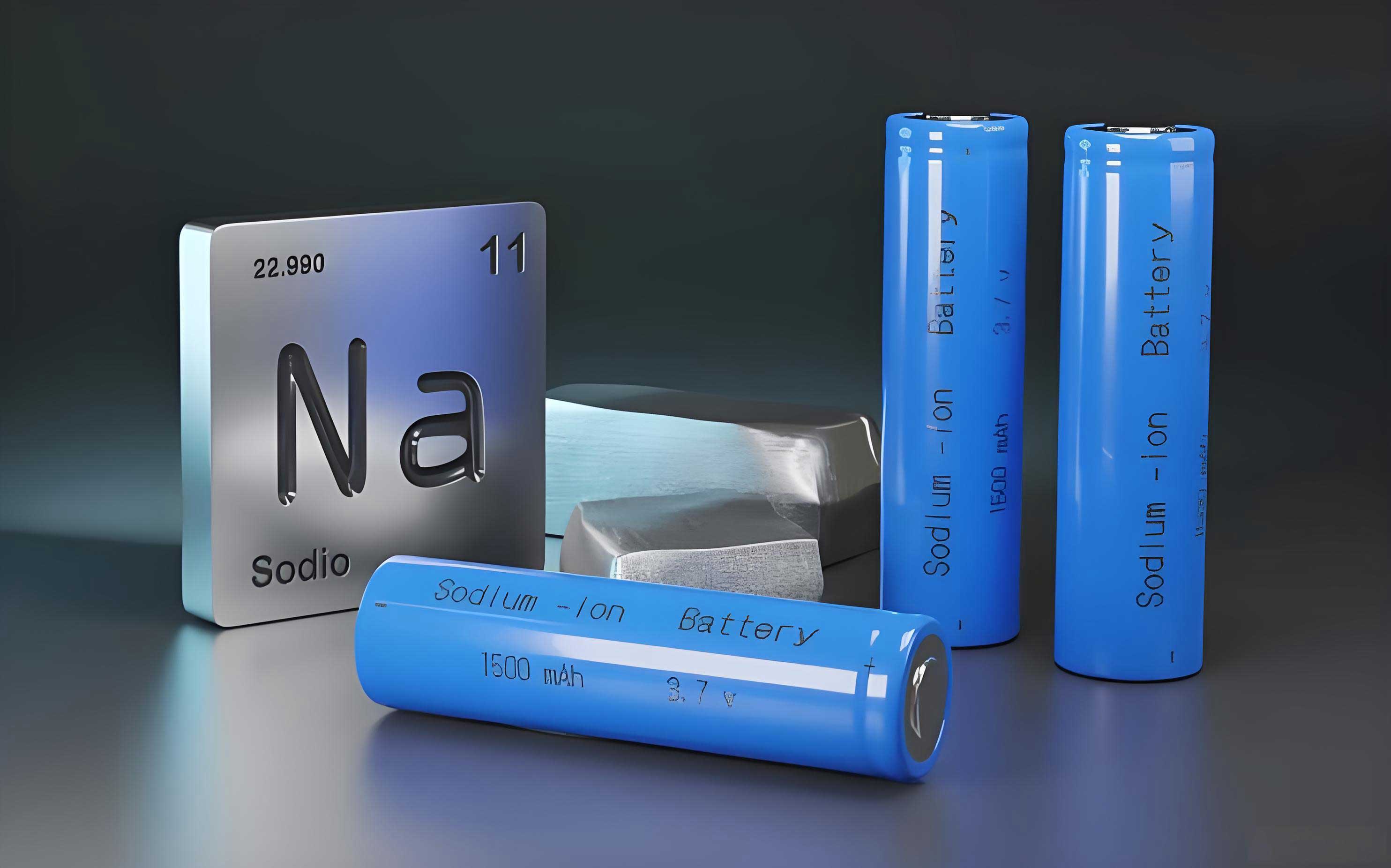
In my ongoing analysis of next-generation energy storage technologies, the rapid emergence of sodium-ion batteries (SIBs) presents a compelling narrative. Sharing similar rocking-chair working principles with their lithium-ion counterparts, SIBs offer a strategic pathway to mitigate concerns over lithium resource scarcity and cost volatility, given sodium’s significantly higher crustal abundance. The recent commercialization push, marked by product launches from leading manufacturers, has intensified global research and development efforts. Within the complex architecture of a sodium-ion battery, the electrolyte serves as the vital circulatory system, governing ion transport and interfacial stability. Electrolyte additives, though typically constituting less than 10 wt% of the formulation, are the precision tuners of this system, critically enhancing cycle life, safety, rate capability, and temperature tolerance. This article presents my comprehensive examination of the global patent landscape surrounding these crucial electrolyte additives for sodium-ion batteries, integrating quantitative trend analysis with a detailed qualitative dissection of technological directions.
My analytical framework was constructed using a major patent database, with a search strategy targeting patent families related to sodium-ion battery, electrolyte, and additive technologies, focusing on filings from 2010 onward. The dataset was deduplicated by earliest filing date to ensure a clean family count. I acknowledge a potential lag in the publication of recent filings (2023-2024), which may cause an undercount for those years. The methodology combines quantitative metrics—trends, geography, key players—with a deep qualitative review of the technical embodiments and claimed inventive concepts within the patent documents.
Quantitative Patent Landscape: Trends and Dominant Players
My analysis reveals two distinct phases in the innovation trajectory for sodium-ion battery electrolyte additives. The period from 2010 to 2020 can be characterized as a steady, foundational development phase, with annual patent filings remaining below 55 globally. A pronounced inflection point occurred around 2021, marking the beginning of a rapid growth phase. Global patent applications surged from approximately 108 in 2021 to over 357 in 2023, representing a more than threefold increase. This explosive growth aligns directly with industry announcements regarding the imminence of sodium-ion battery commercialization and underscores a strategic rush to secure intellectual property in a field perceived as nearing market readiness.
| Year | Global Patent Families | Patent Families in China |
|---|---|---|
| 2018 | 53 | ~12 |
| 2020 | ~40 | ~15 |
| 2021 | 108 | 46 |
| 2022 | 201 | 130 |
| 2023 | 357 | 282 |
Geographically, the patent filing activity is heavily concentrated. China is the undisputed epicenter, accounting for over 60% of all published patent applications in this sodium-ion battery domain. This is followed by international (PCT) applications, which offer a strategic, cost-effective route for multi-jurisdiction coverage. The major traditional markets of the United States, Japan, Europe, and Korea collectively account for a significant minority share, indicating broad global recognition of the technology’s potential.
| Jurisdiction (Patent Office) | Share of Publications |
|---|---|
| China (CNIPA) | >61% |
| International (WIPO) | ~10% |
| United States (USPTO) | ~7% |
| Japan (JPO) | ~7% |
An examination of the top applicants provides critical insight into the competitive landscape. The list is dominated by chemical and battery material corporations, alongside a few prominent research institutions. A leading battery manufacturer from China holds the top position by volume, reflecting its integrated strategy from core materials to cell production. Other Chinese specialty chemical companies also feature prominently. Notable international entities include a prominent U.S.-based company specializing in advanced electrolytes and a U.K.-based technology firm. The presence of French research organizations highlights strong academic contributions. This distribution confirms China’s formidable position in the volume of patent filings for sodium-ion battery electrolyte additives.
To move beyond mere quantity, I assessed qualitative proxies. While a majority of patents globally receive low citation counts, China’s share of highly cited documents (20+ citations) is proportionally lower than its share of the total portfolio. Furthermore, an analysis of claim scope (using word count of the first independent claim as a rough proxy) shows that a vast majority of patents with very concise claims originate from China. These observations suggest that while China has established a dominant quantitative footprint, there remains a strategic opportunity to bolster the foundational, pioneering inventions that often feature broader claims and attract higher academic and commercial citation.
Delving into the portfolio of the leading applicant reveals a sophisticated global filing strategy. While over half of its patents are filed domestically in China, a substantial portion (over 40%) are filed via the PCT system, deferring national entry decisions and costs. This is complemented by direct filings in key markets like Japan, Europe, and the United States. This pattern exemplifies a mature approach to building an international patent wall around sodium-ion battery technology.
Technical Deep Dive: Classification and Mechanisms of Action
The patent literature reveals a comprehensive exploration of additive chemistries, each designed to address specific failure modes in the sodium-ion battery. Additives primarily function by participating in controlled electrochemical reactions during initial cycles to form stable passivation layers on the electrodes: the Solid Electrolyte Interphase (SEI) on the anode and the Cathode Electrolyte Interphase (CEI) on the cathode. The quality of these layers dictates ion transport kinetics, parasitic reactivity, and overall cell longevity. The general formation reaction can be conceptually framed as:
$$ \text{Additive} + \text{Na}^+ + e^- \rightarrow \text{SEI/CEI Components (Na}_x\text{A)} + \text{by-products} $$
Where the additive ‘A’ reductively or oxidatively decomposes to form a protective film.
| Additive Class | Exemplary Compounds | Primary Postulated Function(s) |
|---|---|---|
| Boron-Containing | Trimethyl borate, Tris(trimethylsilyl) borate | Stabilizes electrolyte, forms robust B-O/Na containing SEI/CEI, scavenges HF. |
| Nitrogen-Containing | Succinonitrile, Organic nitrates (e.g., NaNO3) | Cyano-group coordinates metal ions; NO3– promotes stable Na-rich SEI; amines scavenge H2O/HF. |
| Fluorine-Containing | Fluoroethylene Carbonate (FEC), Difluoroethylene Carbonate | Gold-standard SEI former; strong -I effect of F promotes preferential reduction, forming NaF-rich interfaces. |
| Silicon-Containing | Silane coupling agents (e.g., with -OCH3, -N3) | Reactive Si-O/Si-N bonds decompose to form protective films; multi-functional groups can scavenge impurities. |
| Phosphorus-Containing | Phosphazenes (e.g., Hexamethoxycyclotriphosphazene), Black Phosphorus Quantum Dots | Flame retardancy via radical scavenging; quantum dots enhance conductivity and decompose into conductive interface phases. |
| Sulfur-Containing | 1,3-Propane Sultone, Sulfate esters (e.g., DMS), Sulfites | Forms organic-inorganic (Na2SO3, Na2S) rich interphases; improves high-temperature stability. |
| Inorganic Salts | NaPO3F2, NaBF4, NaPF6 (additional) | Directly modifies bulk electrolyte properties and interfacial chemistry; can provide a source of beneficial anions. |
| Others | Benzene, Bromobenzene, Acid Anhydrides | Overcharge protection (shuttling); forms polymeric/passivating SEI; suppresses gas generation. |
Boron and Silicon-Based Additives: These classes often feature multi-functional design. Borate esters, for instance, are known to react with trace water and HF, improving the stability of the sodium-ion battery electrolyte. Their decomposition products, containing B-O bonds, integrate into the interphase, enhancing its mechanical stability and ionic conductivity. The energy for this stabilization can be related to the interfacial energy reduction: $$ \Delta G_{\text{interface}} = \gamma_{\text{new}} – (\gamma_{\text{electrode}} + \gamma_{\text{electrolyte}}) $$ where a negative ΔG is driven by the formation of a stable borate-containing layer (γnew). Similarly, silane additives with alkoxy or azido groups perform dual functions: forming Si-O-Na based networks on the electrode and chemically neutralizing corrosive species.
Fluorine and Sulfur-Based Additives: FEC is arguably the most pivotal additive in sodium-ion battery development. Its lower reduction potential versus common carbonate solvents ensures it decomposes first, forming a compact, NaF-rich SEI. The NaF formation is favorable due to its high lattice energy, contributing to a dense barrier. The reaction can be simplified as: $$ \text{FEC} + \text{Na}^+ + e^- \rightarrow \text{NaF} \downarrow + \text{Organic Polycarbonates} $$ Sulfur-containing additives like sultones follow an analogous preferential reduction pathway, generating sodium sulfite/sulfide species which contribute to a stable, inorganic-rich interphase that effectively lowers charge transfer resistance.
Nitrogen and Phosphorus-Based Additives: Nitriles like succinonitrile act not just as film-formers but also as Lewis bases that can solvate Na+ ions differently, potentially altering desolvation kinetics at the interface. Phosphorus additives, particularly phosphazenes, introduce a critical safety dimension to the sodium-ion battery. Their flame-retardant action is often described through radical quenching mechanisms, interrupting the chain reactions of combustion.
Synergistic Formulations: A dominant trend in advanced patents is the use of multi-component additive systems. A typical formulation may combine a film-forming agent (e.g., FEC), a stabilizer (e.g., a borate), and a safety agent (e.g., a phosphazene). The claimed synergy often results in properties superior to the sum of individual components—for example, exceptional high-voltage (e.g., >4.2V) cycling stability combined with non-flammability.
Discussion and Future Trajectories
My analysis of the patent landscape paints a picture of a field transitioning from fundamental exploration to targeted, application-driven innovation for the sodium-ion battery. The technical evolution is progressing from single-additive “magic bullets” towards sophisticated, multi-functional cocktails designed for specific cell chemistries (e.g., layered oxide vs. polyanion cathodes, hard carbon vs. alloy anodes).
Several critical frontiers emerge for future research and IP creation. First, the mechanistic understanding needs to transition from phenomenological description (“improves cycle life”) to atomic/molecular-level insights. Patents that incorporate detailed characterization data (in-situ/ex-situ spectroscopy, computational modeling) to substantiate the precise composition and function of the formed interphases will constitute stronger, more defensible intellectual property. Linking additive structure to interfacial property (e.g., ionic diffusivity, DNa+, within the SEI) through formulas like the Nernst-Einstein relation $$ D_{\text{Na}^+} = \frac{\sigma k_B T}{n q^2} $$ (where σ is conductivity, n is carrier concentration) would represent a significant depth of invention.
Second, the pursuit of cost-effective additives compatible with low-concentration or low-cost electrolytes is a crucial commercialization driver. Patents covering additives that enable stable cycling with reduced salt concentration or that utilize abundant precursor materials will have high strategic value for the sodium-ion battery industry’s cost targets.
Finally, the integration of additive technology with other cell components presents a white space. Inventions that describe tailored additives for specific pairings—for instance, an additive that optimally passivizes a silicon-based anode or stabilizes a high-nickel sodium cathode—or that interact synergistically with novel binders or conductive agents, will be key to unlocking next-generation performance.
From an IP strategy perspective, while building a broad portfolio covering core additive classes is essential, the future battleground will lie in patents covering these synergistic combinations, deeply characterized mechanisms, and cost-optimized formulations. For new entrants, focusing on these complex, system-level inventions or on novel chemistries for emerging electrode materials may offer pathways to establish a strong position despite the existing volume of prior art.
Conclusion
In conclusion, my in-depth review of the global patent landscape confirms that electrolyte additive technology is a vibrant and strategically contested domain within sodium-ion battery development. The surge in patenting activity post-2021 signals its critical role in the impending industrialization phase. Chinese entities currently lead in filing volume, with global players actively building international portfolios. Technically, the field has systematically explored major additive families, with a clear shift towards multi-component synergistic systems aimed at solving the intertwined challenges of interfacial stability, safety, and rate capability in sodium-ion batteries. The trajectory for impactful future innovation points towards deeper mechanistic elucidation, tight integration with specific cell chemistries, and a relentless focus on cost reduction. The continued evolution of this patent landscape will be a reliable barometer for the technological and commercial maturation of the sodium-ion battery itself.