
The reliable and safe operation of energy storage systems is paramount to the stability of modern power grids and the advancement of electric mobility. Within this context, the lithium-ion battery stands as a cornerstone technology due to its high energy density, low self-discharge rate, and long cycle life. Accurately monitoring the degradation of these batteries is critical, as aging leads to capacity fade and increased internal resistance, which can compromise performance and safety. The State of Health (SOH) serves as a key metric for quantifying this degradation, typically defined as the ratio of current maximum capacity to its initial rated capacity. My research focuses on developing a robust, data-driven method for SOH estimation that leverages an often-overlooked operational phase: the voltage relaxation period following charge or discharge.
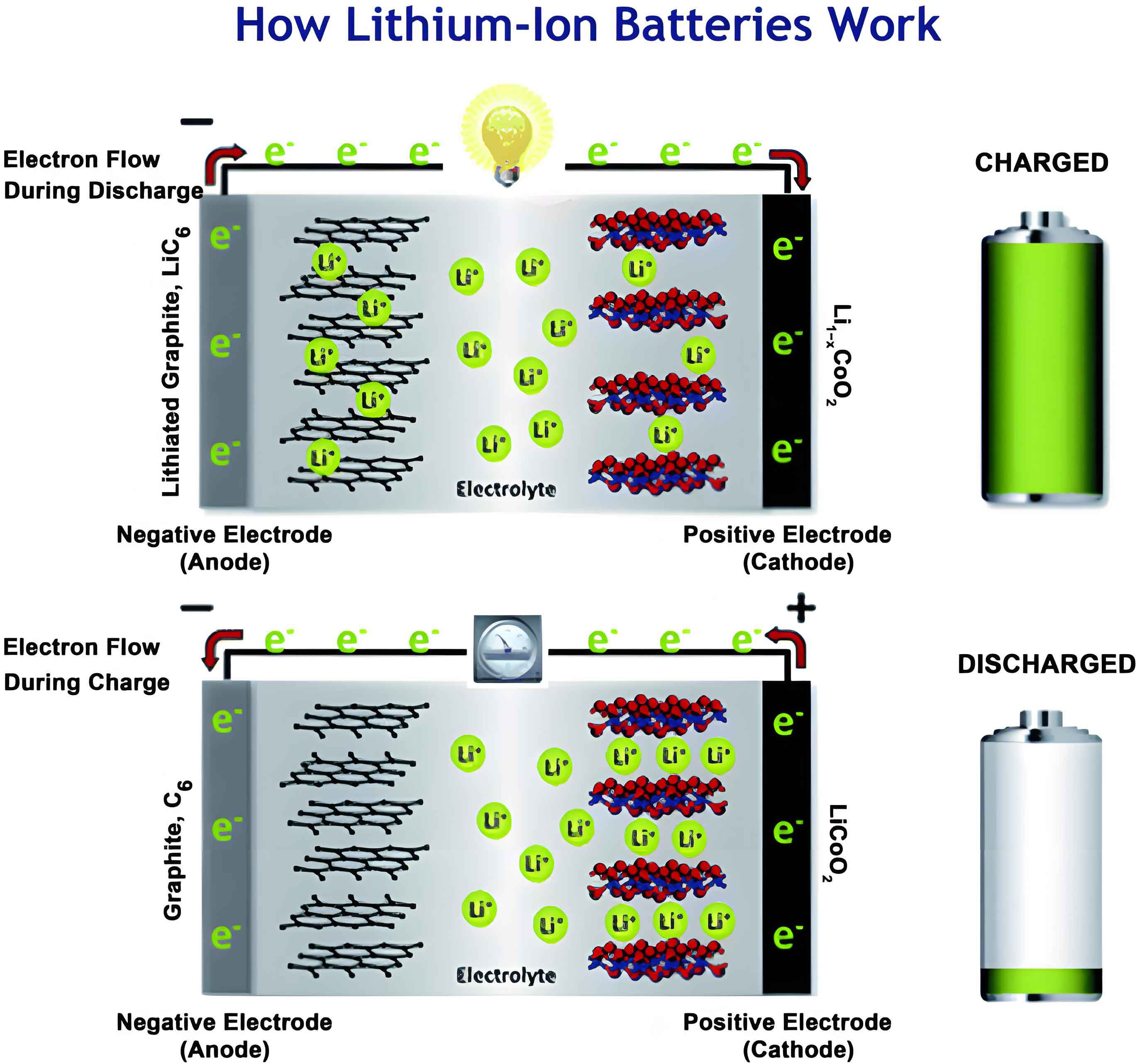
Traditional SOH estimation methods can be broadly categorized into model-based and data-driven approaches. Model-based methods, such as those employing equivalent circuit models (ECM) or electrochemical models with filters like Kalman or Particle filters, rely on the precise identification of physical parameters. Their accuracy, however, is inherently tied to the fidelity of the underlying model, which can be challenging to maintain across diverse and complex real-world operating conditions. In contrast, data-driven methods offer greater flexibility by establishing a direct mapping between measurable battery data features and the SOH using machine learning algorithms. The efficacy of these methods depends heavily on the relevance of the extracted health features (HFs) and the chosen regression algorithm. While extensive research has focused on extracting features from the charging curve or Incremental Capacity (IC) analysis, the relaxation voltage profile—a readily available signal during battery rest periods—remains a relatively underexplored source of health information. This work proposes a novel framework that extracts health features from the relaxation voltage transient and employs Gaussian Process Regression (GPR) to achieve high-accuracy SOH estimation for lithium-ion batteries.
Fundamentals of Voltage Relaxation in Lithium-Ion Batteries
Following the interruption of a charge or discharge current, the terminal voltage of a lithium-ion battery does not instantly settle to its equilibrium Open-Circuit Voltage (OCV). Instead, it undergoes a gradual relaxation process that can last for several hours. This transient response is driven by the slow redistribution of lithium ions and the stabilization of internal electrochemical potentials. The relaxation curve, therefore, encapsulates rich information about the internal state and health of the battery. The instantaneous voltage drop at the current interrupt moment is attributed to the ohmic resistance, while the subsequent slow decay is due to polarization effects governed by charge transfer kinetics and solid-state diffusion.
Mathematically, the State of Charge (SOC) and SOH are defined as:
$$
SOC(t) = \frac{1}{3600 \, C_M} \int_0^t I_L(\tau) \, d\tau
$$
$$
SOH = \frac{C_M}{C_{rated}}
$$
where \(C_M\) is the current maximum capacity, \(I_L\) is the load current, and \(C_{rated}\) is the initial rated capacity. During relaxation, the dynamic voltage \(U_{d,t}\) at time \(t\), representing the deviation from equilibrium, is given by:
$$
U_{d,t} = U_{L,t} – U_{oc}
$$
where \(U_{L,t}\) is the measured terminal voltage and \(U_{oc}\) is the OCV at the corresponding SOC. The speed of this voltage decay is characterized by a time constant. A critical insight is that this time constant is not fixed but evolves throughout the relaxation period as the dominant process shifts from charge transfer (shorter time constant) to diffusion (longer time constant). Therefore, modeling the relaxation with a single, constant time constant (as in a simple first-order RC model) is inadequate. We define an instantaneous time constant \(\tau_t\) for the interval between \(t-1\) and \(t\) as:
$$
\tau_t = \frac{1}{\ln(U_{d,t-1}) – \ln(U_{d,t})}
$$
Analysis of experimental data reveals that the trajectory of \(\tau_t\) over time changes systematically as the lithium-ion battery ages. This observed relationship forms the basis of our feature extraction methodology. To model this varying time constant effectively, we propose a power-law relationship:
$$
\tau_t = k \cdot t^{\sigma} + b
$$
where \(k\), \(\sigma\), and \(b\) are parameters that shape the curve. Consequently, the complete relaxation voltage model can be expressed as:
$$
U_{L,t} = U_{oc} – (U_{oc} – U_{L, t-1}) \cdot e^{ -\frac{1}{\tau_t} }
$$
This variable time-constant model provides a significantly more accurate fit to the empirical relaxation data of a lithium-ion battery compared to a fixed time-constant model, especially over extended periods.
Experimental Setup and Battery Testing Procedure
To develop and validate the proposed SOH estimation method, a comprehensive accelerated aging test was conducted on six commercial 18650 cylindrical lithium-ion batteries (NMC chemistry, nominal capacity 1500 mAh, voltage range 2.5V-4.2V). The test platform comprised a programmable charger/discharger, a thermal chamber maintained at 25°C, and a data acquisition system logging voltage, current, and temperature at 1 Hz.
The testing protocol interleaved characterization tests with aging cycles. Characterization tests were performed periodically to measure the evolving SOH and to record relaxation profiles at specific SOC points (0.2, 0.5, and 0.7). These involved a series of low-rate (0.75A) CC-CV cycles to determine the current maximum capacity, followed by a 4-hour relaxation period after charging to each target SOC to capture the full voltage transient. The aging phase consisted of repeated cycles designed to accelerate degradation. All batteries were discharged at a constant 1.5A rate. To investigate the impact of stress on the model’s generalizability, different charge currents were applied to different cell groups, as summarized in the table below.
| Cell Group | Charge Current | Discharge Current |
|---|---|---|
| Cell1 & Cell2 | 1 A | 1.5 A |
| Cell3 & Cell4 | 2 A | |
| Cell5 & Cell6 | 4 A |
This design yielded a rich dataset of relaxation curves across varying SOH levels, SOC points, and aging stressors, which is essential for training a robust machine learning model.
Health Feature Extraction from the Relaxation Profile
The core innovation of this work lies in extracting the parameters of the variable time-constant model (\(k, \sigma, b, U_{oc}\)) as health features. A key observation is that these parameters exhibit consistent, monotonic trends with respect to SOH degradation, regardless of the specific aging current rate, making them excellent candidates as health indicators for the lithium-ion battery.
The extraction process is formulated as a non-linear optimization problem. For a given measured relaxation voltage curve \(\mathbf{U_L} = [U_{L,1}, U_{L,2}, …, U_{L,N}]\), the goal is to find the parameter set \(\boldsymbol{\theta} = [k, \sigma, b, U_{oc}]\) that minimizes the difference between the measured data and the voltage simulated by our model \(f(\boldsymbol{\theta}, t)\):
$$
\min_{\boldsymbol{\theta}} \sum_{t=1}^{N} \left( U_{L,t} – f(\boldsymbol{\theta}, t) \right)^2
$$
The Nelder-Mead simplex search algorithm is employed to solve this optimization problem efficiently. This direct search method is well-suited for this non-linear, derivative-free problem. The algorithm iteratively updates a simplex (a geometric shape) in the parameter space, evaluating the error function at its vertices until it converges to a minimum. The optimal parameter set \(\boldsymbol{\theta}^*\) obtained for each relaxation test is then stored as a health feature vector associated with the corresponding SOC and measured SOH of the lithium-ion battery.
SOH Estimation Model using Gaussian Process Regression
With the health features extracted, the next step is to construct a mapping from the feature space to the SOH value. We selected Gaussian Process Regression (GPR) for this task due to its strong performance in handling small datasets, non-linear relationships, and providing uncertainty estimates—all characteristics relevant to our application with lithium-ion battery data.
GPR is a non-parametric, Bayesian approach. A Gaussian process is a collection of random variables, any finite number of which have a joint Gaussian distribution. It is completely specified by its mean function \(m(\mathbf{x})\) and covariance function \(k(\mathbf{x}, \mathbf{x’})\):
$$
f(\mathbf{x}) \sim \mathcal{GP}(m(\mathbf{x}), k(\mathbf{x}, \mathbf{x’}))
$$
We assume a prior mean function of zero. The choice of the covariance function, or kernel, dictates the properties of the functions that the GP can model. We use the popular squared exponential (Radial Basis Function) kernel:
$$
k(\mathbf{x}, \mathbf{x’}) = \sigma_f^2 \exp\left( -\frac{1}{2} (\mathbf{x} – \mathbf{x’})^\top \mathbf{M}^{-1} (\mathbf{x} – \mathbf{x’}) \right) + \sigma_n^2 \delta_{\mathbf{x}\mathbf{x’}}
$$
where \(\sigma_f^2\) is the signal variance, \(\mathbf{M}\) is a diagonal matrix of length-scale parameters \(l_i^2\) for each feature dimension, \(\sigma_n^2\) is the noise variance, and \(\delta\) is the Kronecker delta. The length-scales control the smoothness of the function along each input dimension.
Given a training dataset \(\mathcal{D} = \{(\mathbf{x}_i, y_i) | i=1,…,n\} = \{\mathbf{X}, \mathbf{y}\}\) with health features \(\mathbf{x}_i = [k_i, \sigma_i, b_i, U_{oc,i}]\) and target SOH \(y_i\), and assuming observed noise \(\epsilon \sim \mathcal{N}(0, \sigma_n^2)\), the joint distribution of the observed targets and the function values \(\mathbf{f}_*\) at new test points \(\mathbf{X}_*\) is:
$$
\begin{bmatrix}
\mathbf{y} \\
\mathbf{f}_*
\end{bmatrix}
\sim
\mathcal{N}
\left(
\mathbf{0},
\begin{bmatrix}
K(\mathbf{X}, \mathbf{X}) + \sigma_n^2\mathbf{I} & K(\mathbf{X}, \mathbf{X}_*) \\
K(\mathbf{X}_*, \mathbf{X}) & K(\mathbf{X}_*, \mathbf{X}_*)
\end{bmatrix}
\right)
$$
where \(K(\cdot,\cdot)\) denotes the covariance matrix computed using the kernel function. The predictive, posterior distribution for a new test point is also Gaussian:
$$
p(\mathbf{f}_* | \mathbf{X}, \mathbf{y}, \mathbf{X}_*) = \mathcal{N}(\bar{\mathbf{f}}_*, \operatorname{cov}(\mathbf{f}_*))
$$
with predictive mean and covariance given by:
$$
\bar{\mathbf{f}}_* = K(\mathbf{X}_*, \mathbf{X})[K(\mathbf{X}, \mathbf{X}) + \sigma_n^2\mathbf{I}]^{-1}\mathbf{y}
$$
$$
\operatorname{cov}(\mathbf{f}_*) = K(\mathbf{X}_*, \mathbf{X}_*) – K(\mathbf{X}_*, \mathbf{X})[K(\mathbf{X}, \mathbf{X}) + \sigma_n^2\mathbf{I}]^{-1}K(\mathbf{X}, \mathbf{X}_*)
$$
The hyperparameters \(\boldsymbol{\psi} = \{\sigma_f, l_1,…,l_d, \sigma_n\}\) are optimized by maximizing the log marginal likelihood of the training data. This Bayesian framework allows the GPR model to not only predict SOH but also quantify the confidence (uncertainty) in its prediction, which is highly valuable for battery management systems in lithium-ion battery packs.
Results, Validation, and Discussion
The proposed framework was implemented and evaluated. Data from Cells 1 through 5, covering all three SOC points and their entire aging trajectories, were used to train the GPR model. Cell 6, which aged under a different charging current (4A), was held out as a completely independent test set to evaluate the model’s generalizability. To assess practicality, we investigated the impact of using shorter, more easily obtainable relaxation data by training separate models using only the first 15 minutes and the first 60 minutes of each relaxation curve, respectively.
The performance of the GPR model was compared against two other common regression algorithms: Support Vector Regression (SVR) and Regression Trees. The estimation accuracy was quantified using Root Mean Square Error (RMSE), Mean Absolute Error (MAE), and the coefficient of determination (\(R^2\)). The results for the independent test set (Cell 6) are summarized below.
| Algorithm | Data Length | RMSE | MAE | R² |
|---|---|---|---|---|
| Regression Tree | 60 min | 0.0190 | 0.0119 | 0.91 |
| Regression Tree | 15 min | 0.0246 | 0.0132 | 0.85 |
| SVR | 60 min | 0.0154 | 0.0105 | 0.94 |
| SVR | 15 min | 0.0127 | 0.0080 | 0.96 |
| GPR (Proposed) | 60 min | 0.0064 | 0.0046 | 0.99 |
| GPR (Proposed) | 15 min | 0.0090 | 0.0057 | 0.98 |
The results clearly demonstrate the superiority of the GPR-based approach. When trained on 60-minute relaxation data, the GPR model achieved an exceptionally low RMSE of 0.64% and an R² of 0.99 on the unseen test data, significantly outperforming both SVR and Regression Trees. This highlights GPR’s exceptional capability in modeling the complex, non-linear relationship between the relaxation-derived health features and the SOH of a lithium-ion battery.
Perhaps more importantly, the model trained on only 15 minutes of data still maintained remarkable accuracy, with an RMSE below 1% (0.9%). This result has profound practical implications. In real-world applications, such as electric vehicles or grid storage, waiting for a full hour of battery rest may be impractical. The ability to achieve high-accuracy SOH estimation with just 15 minutes of relaxation data makes this method highly feasible for onboard or online implementation in battery management systems for lithium-ion battery packs.
Furthermore, the model’s performance was consistent across the different SOC points (0.2, 0.5, 0.7) tested. The health features extracted from the relaxation profile demonstrated strong robustness to the initial SOC, which is a common challenge for methods relying on charge curve analysis. This SOC-agnostic property enhances the method’s utility, as it can be triggered during any natural rest period of the lithium-ion battery, regardless of its present charge level.
Conclusion
In this work, I have presented a novel, data-driven framework for estimating the State of Health of lithium-ion batteries by harnessing the information embedded in the post-operation voltage relaxation transient. The method pivots on a fundamental modeling insight: the relaxation time constant is not static but follows a power-law decay, the parameters of which evolve systematically with battery degradation. By extracting these parameters (\(k, \sigma, b, U_{oc}\)) via an efficient optimization routine, we obtain health features that are intrinsically linked to the internal state of the lithium-ion battery.
Coupling these features with a Gaussian Process Regression model yields a powerful estimation tool. The GPR model excels in capturing the underlying non-linear mapping while providing probabilistic outputs. Validation on an independently aged battery cell confirmed the model’s high accuracy and generalizability. Critically, the research demonstrates that excellent estimation performance (RMSE < 1%) can be attained using only the first 15 minutes of relaxation data, addressing a key practicality concern for real-time battery management systems.
This approach offers a compelling alternative to traditional methods. It does not require complete or standardized charge cycles, is relatively insensitive to the starting SOC, and leverages a simple voltage signal available during any natural pause in operation. Future work will focus on validating this method across a wider array of lithium-ion battery chemistries, under more varied and realistic load profiles, and on integrating the uncertainty quantification from GPR into proactive battery management and lifetime prediction strategies. The proposed method stands as a significant step towards more intelligent, reliable, and practical health monitoring for the ubiquitous lithium-ion battery.